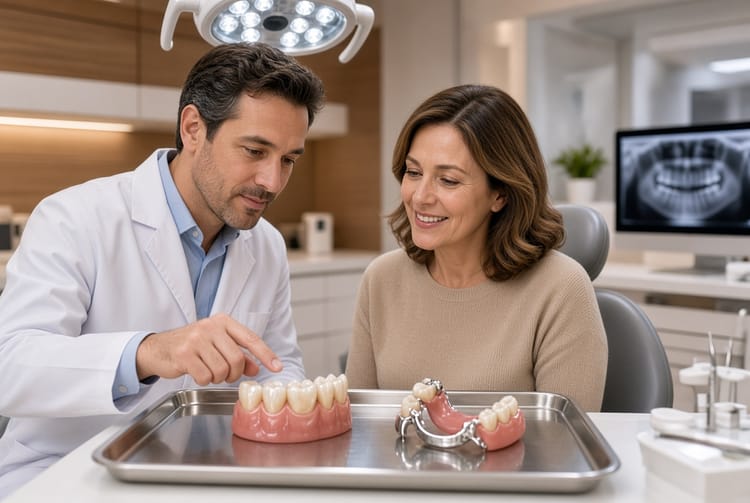
The Dental Implant Healing Stages: What to Expect Month by Month
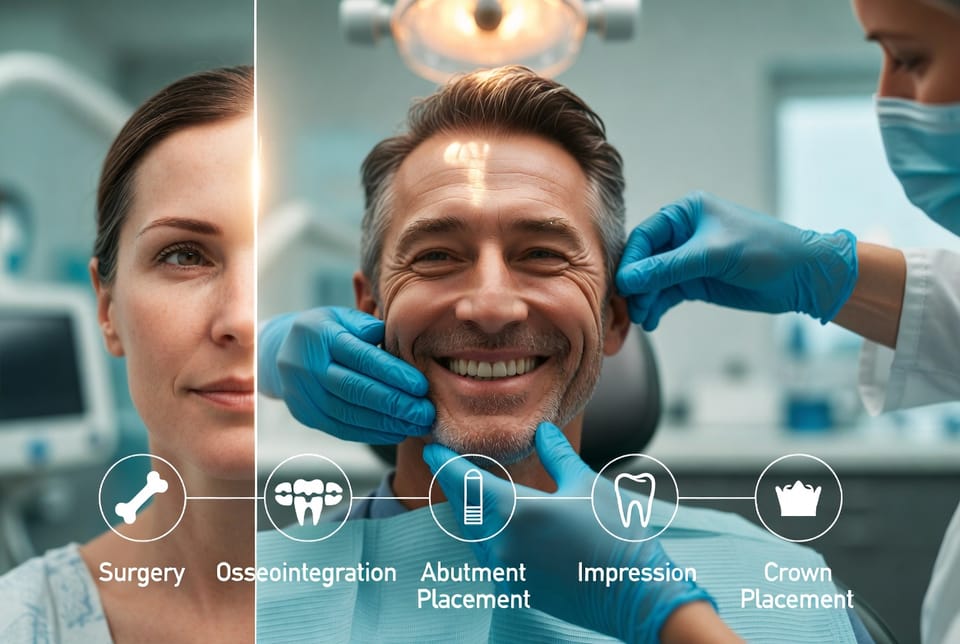
Dental implants represent one of the most reliable and long-lasting solutions for replacing missing teeth. With proper care, they can restore both function and aesthetics for decades. Understanding the dental implant healing stages helps patients feel informed, prepared, and reassured throughout the process. This comprehensive guide walks you through the complete timeline, from the day of surgery to the final crown placement.
Schedule Your Implant Consultation Today – Call Now!
At every stage, modern techniques and your body’s natural healing ability work together to create a strong, stable foundation. While individual experiences vary, most patients enjoy a smooth journey when following their dentist’s guidance.
The Osseointegration Process: Nature’s Perfect Fusion
Osseointegration is the biological cornerstone of dental implant success. It refers to the direct structural and functional connection between the titanium implant and your living jawbone.
During this process, bone cells gradually grow and attach to the implant’s specially textured surface, essentially making the implant part of your jaw. This fusion provides the rock-solid stability needed for chewing and speaking naturally.
Key benefits of successful osseointegration include:
- Unmatched strength comparable to natural tooth roots
- Prevention of bone loss that typically follows tooth extraction
- Long-term reliability with success rates often exceeding 95% in healthy patients
The process is gradual and requires patience, but the results are transformative.
Stage 1: Implant Placement Surgery (Day 0)
The journey begins with a precise surgical procedure performed under local anesthesia or sedation for maximum comfort. Your dentist places the titanium implant directly into the jawbone where the tooth root once was.
What to expect immediately after surgery:
- Mild swelling and minor discomfort (typically managed with prescribed medication)
- Temporary dietary restrictions (soft foods for the first 1–2 weeks)
- Stitches that usually dissolve on their own
Most patients return to normal activities within 1–3 days. The initial healing focuses on soft tissue closure over the implant site.
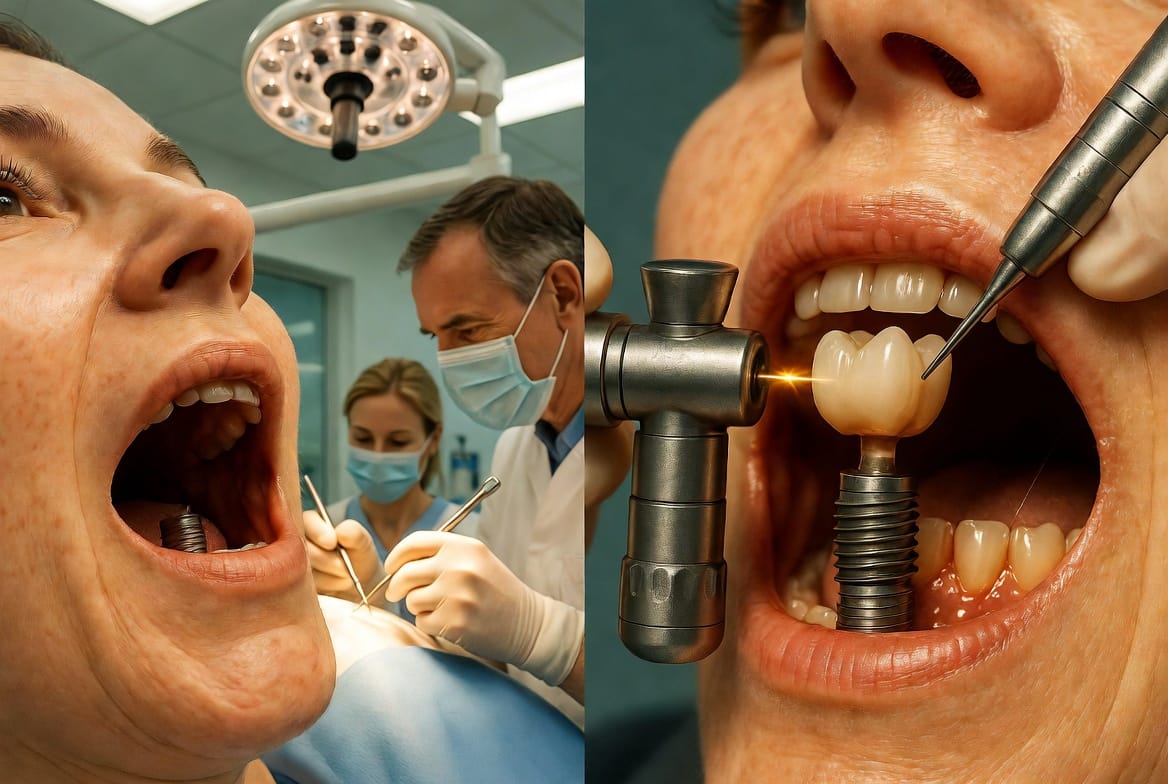
Stage 2: Initial Healing Period (Weeks 1–4)
During the first month, your body concentrates on soft tissue repair and early bone stabilization.
Typical experiences in Month 1:
- Gradual reduction in swelling and sensitivity
- Formation of a protective gum layer over the implant
- Continued soft diet recommendations
Bold tip: Maintain excellent oral hygiene without disturbing the surgical site. Gentle rinsing with prescribed solutions helps prevent infection while supporting healing.
By the end of Month 1, most patients report feeling significantly more comfortable.
Stage 3: Early Osseointegration (Months 1–3)
This phase marks the beginning of true bone integration. Bone cells start migrating toward the implant surface, creating initial stability.
Healing timeline differences:
- Lower jaw (mandible): Often faster healing — typically 3–4 months total
- Upper jaw (maxilla): Usually requires 4–6 months or longer due to softer bone density
During this period, the implant remains covered or protected with a healing cap. Regular check-ups allow your dentist to monitor progress through gentle examinations and occasional imaging.
Patients often enjoy improved confidence even at this stage, knowing the foundation is strengthening beneath the surface.
Stage 4: Advanced Osseointegration (Months 3–6)
By Months 3–6, osseointegration is usually well underway or complete for most patients. The implant becomes solidly fused with the jawbone, capable of withstanding normal biting forces.
Your dentist will assess integration using advanced tools. Once confirmed, the next phase begins.
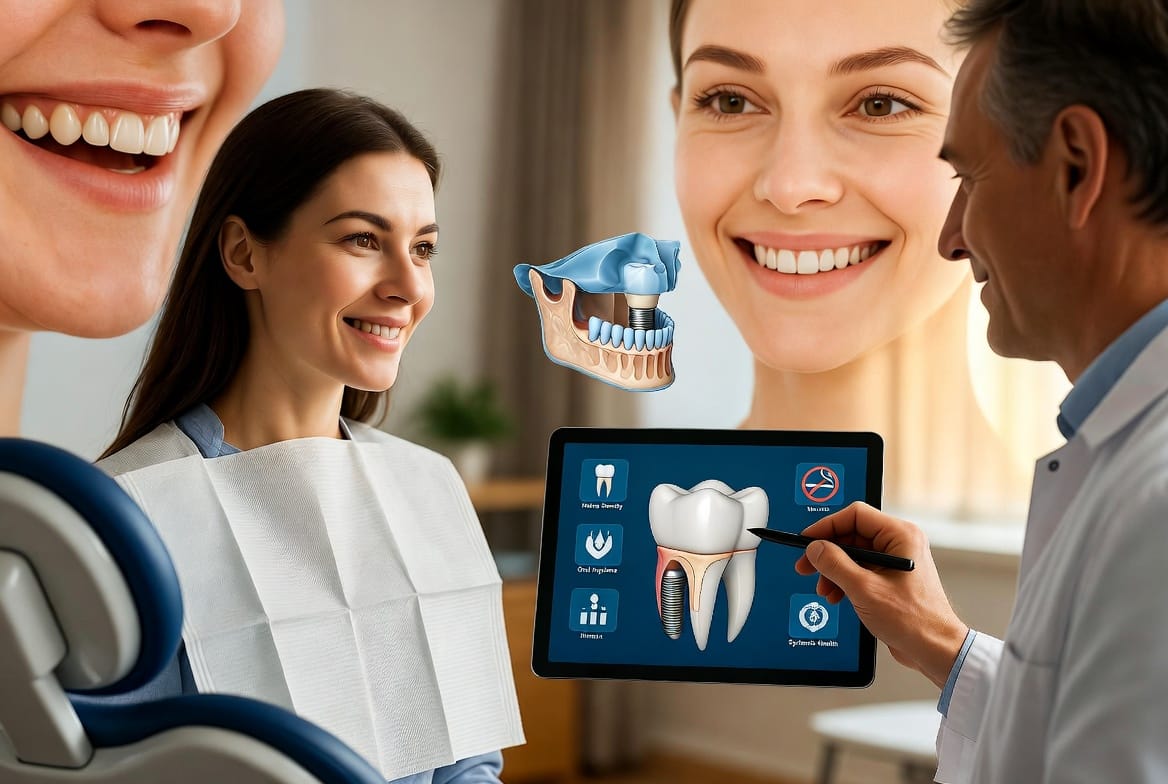
Factors that support faster, stronger integration:
- Optimal bone density at the surgical site
- Excellent oral hygiene habits
- Avoidance of smoking and tobacco products
- Well-controlled systemic health conditions (diabetes, osteoporosis, etc.)
Stage 5: Abutment Placement (Months 4–7)
Once osseointegration is confirmed, a minor procedure exposes the implant and attaches the abutment — the connector piece that links the implant to the final crown.
This step is usually quick and performed under local anesthesia. Healing of the gum tissue around the abutment takes 1–2 weeks.
Stage 6: Final Crown Placement (Months 5–8)
The crowning moment! Custom-crafted crowns are designed to match your natural teeth in color, shape, and function.
The final restoration is securely attached to the abutment, completing your new smile. Most patients notice immediate improvement in chewing ability and self-confidence.
Total timeline summary:
- Lower jaw: 4–6 months from surgery to crown
- Upper jaw: 6–9+ months depending on individual factors
- Full-mouth or complex cases may vary
Factors Affecting Dental Implant Healing Success
Several important elements influence how smoothly your healing progresses:
- Bone density and quality — Higher density typically speeds integration
- Smoking — Significantly increases risk of implant failure; quitting is highly recommended
- Oral hygiene — Consistent gentle cleaning prevents complications
- Systemic health — Conditions like uncontrolled diabetes or autoimmune disorders require careful management
- Age and lifestyle — Overall health and nutrition play supportive roles
Your dental team will evaluate these factors during planning to maximize success.
Reassuring note: Even with varying healing speeds, the vast majority of patients achieve excellent long-term results with proper care.
Tips for Optimal Healing at Every Stage
- Follow all post-operative instructions carefully
- Attend every scheduled follow-up appointment
- Maintain a soft-food diet during early weeks
- Stay hydrated and eat nutrient-rich foods
- Avoid putting pressure on the implant site
- Report any unusual symptoms promptly
Common Questions About Dental Implant Healing
Does the process hurt?
Most patients experience manageable discomfort similar to a tooth extraction, well-controlled with medication.
Can I work during healing?
Yes — many return to desk jobs within days. Physical labor may require more time off.
What if healing takes longer?
Extended timelines are normal in certain cases and do not indicate failure. Patience yields better outcomes.
Your Path to a Restored Smile
Understanding the dental implant healing stages empowers you to approach treatment with confidence and realistic expectations. Each month brings you closer to a strong, beautiful, and functional smile that can last a lifetime.
Know your implant timeline. Schedule a consultation today to learn how dental implants can transform your smile and quality of life.
Results may vary. Individual healing depends on personal health factors. Always consult with a qualified dental professional.
Discover Your Dental Implant Timeline – Book Now!