The Dental Bridge Alternative: Fixed Partial Dentures vs. Implants for Missing Teeth
Missing one or more teeth can significantly impact your daily life, from chewing comfortably to smiling with confidence. If you're exploring options for tooth replacement, you're not alone—millions seek reliable solutions each year. In this comprehensive guide, we'll delve into the dental bridge alternative, comparing fixed partial dentures (commonly known as bridges) with dental implants and removable partial dentures. We'll break down the pros and cons in terms of function, longevity, and cost, empowering you to make an informed decision. Rest assured, modern dentistry offers proven, durable options tailored to your needs.
Get Your Custom Dental Bridge or Implant Plan – Call Now
Understanding Tooth Loss and Replacement Needs
Tooth loss occurs for various reasons, including decay, injury, or periodontal disease. Whatever the cause, replacing missing teeth is crucial to maintain oral health, prevent bone loss, and preserve facial structure. Traditional methods like dental bridges have been staples for decades, but advancements in implant technology provide innovative alternatives. Let's explore these options step by step.
What Is a Traditional Dental Bridge?
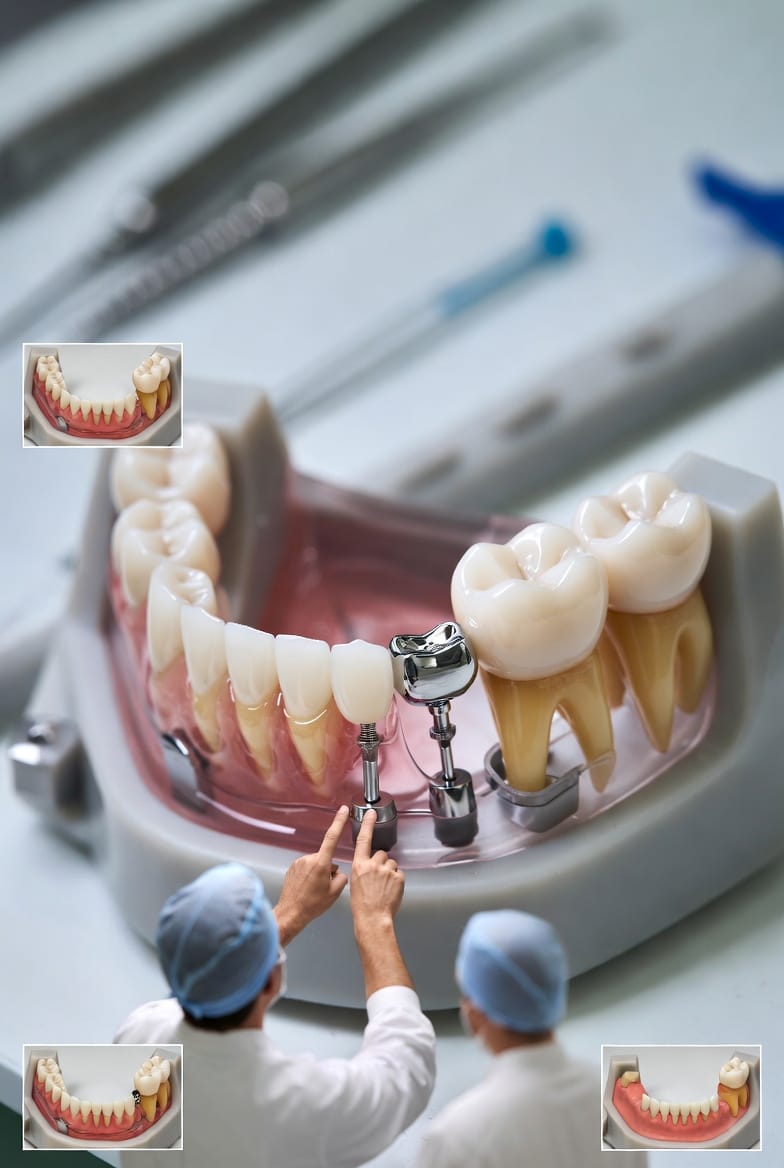
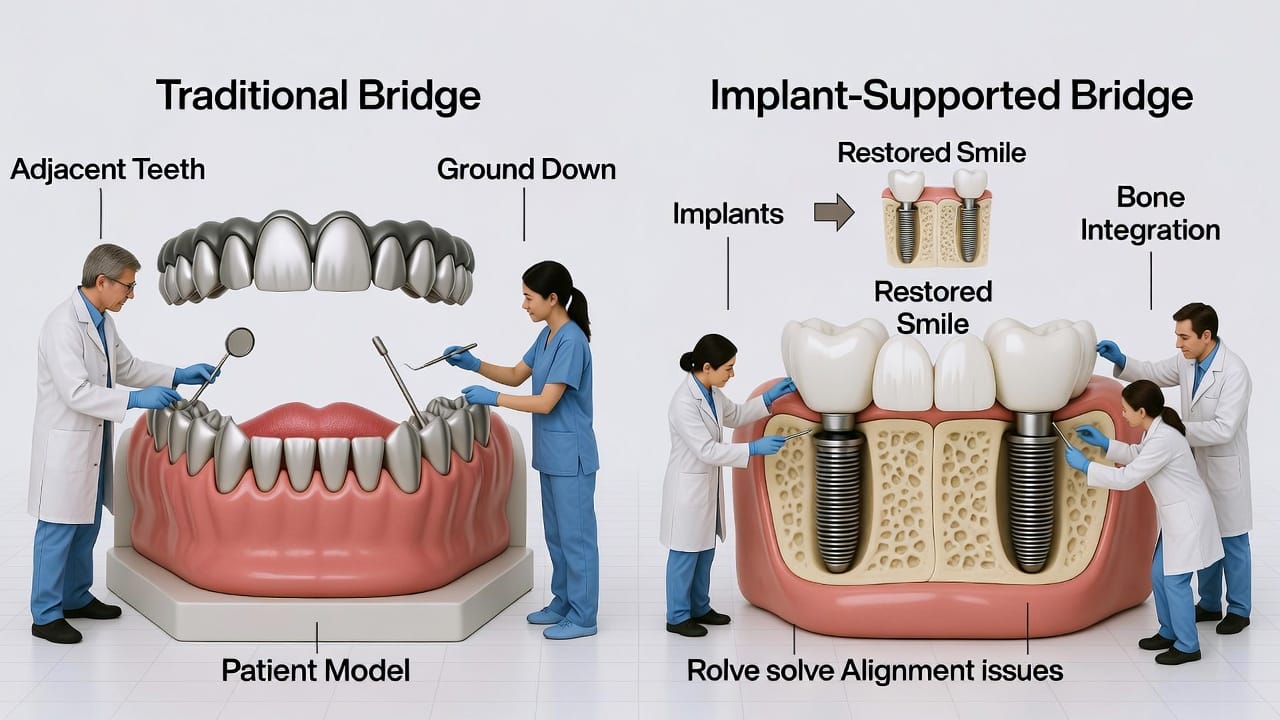
A traditional dental bridge, or fixed partial denture, is a prosthetic device that "bridges" the gap created by one or more missing teeth. It consists of artificial teeth (pontics) anchored by crowns placed on the adjacent natural teeth.
- Preparation Process: This involves grinding down the enamel of the healthy teeth on either side of the gap to make room for the crowns. While effective, this step is irreversible and may weaken the supporting teeth over time.
- Installation: The bridge is custom-made in a dental lab and cemented permanently in place, restoring your bite and aesthetics.
Pros of traditional bridges include quick placement (often in two visits) and immediate functionality. However, risks such as potential decay under the crowns or stress on abutment teeth warrant careful consideration.
Implant-Supported Bridges: A Modern Twist
For those seeking a more independent solution, implant-supported bridges offer a robust alternative. These bridges are secured by titanium implants surgically placed into the jawbone, mimicking natural tooth roots.
- How It Works: Implants fuse with the bone through osseointegration, providing a stable foundation without relying on neighboring teeth. The bridge is then attached to these implants.
- Benefits for Multiple Missing Teeth: Ideal for replacing several teeth in a row, this option distributes bite forces evenly, promoting long-term jaw health.
Unlike traditional bridges, implants preserve adjacent teeth integrity, reducing the risk of future complications. If you're concerned about surgery, know that it's a routine procedure with high success rates—over 95% in healthy patients.
Removable Partial Dentures: Flexibility with Trade-Offs
If a fixed solution isn't suitable, removable partial dentures provide a non-invasive option. These are custom appliances with artificial teeth attached to a metal or acrylic framework that clips onto remaining natural teeth.
- Design and Fit: They rest on the gums and use clasps for stability, making them easier to remove for cleaning.
- Suitability: Best for patients with multiple missing teeth across the arch or those not candidates for surgery.
While affordable and adjustable, they may feel less natural and require periodic relining as your mouth changes.
Comparing Function: Which Option Feels Most Natural?
Functionality is key when replacing missing teeth—after all, you want to eat, speak, and laugh without hesitation.
- Traditional Bridges: Offer excellent chewing efficiency, similar to natural teeth. However, they depend on the strength of adjacent teeth, which could lead to discomfort if those teeth weaken.
- Implant-Supported Bridges: Excel in function, as implants integrate with the bone, providing stability akin to real roots. Patients often report a more "natural" feel, with no slippage.
- Partial Dentures: Functional for basic needs but may shift during use, affecting speech or eating tough foods. Adjustments can mitigate this, ensuring comfort over time.
In terms of aesthetics, all options can be color-matched to your smile, but implants often provide the most seamless integration.
Longevity: Investing in Durability
Durability varies based on materials, oral hygiene, and lifestyle factors like grinding or smoking.
- Traditional Bridges: Typically last 5-15 years, with high-quality porcelain options extending lifespan. Risks include chipping or failure if supporting teeth decay—regular check-ups are essential.
- Implant-Supported Bridges: Boast impressive longevity, often 15-25 years or more, thanks to the biocompatible titanium. The bridge itself may need replacement, but implants can last a lifetime with proper care.
- Partial Dentures: Generally endure 5-10 years, though the framework can be relined. They're prone to wear from daily removal, but advancements in materials enhance resilience.
Choosing based on longevity? Implants often prove the most cost-effective long-term, despite higher upfront costs.
Cost Considerations: Balancing Budget and Value
Cost is a practical concern, influenced by location, materials, and complexity.
- Traditional Bridges: Range from $2,000-$5,000 per unit, covered partially by insurance. They're more affordable initially but may incur future expenses if adjacent teeth require treatment.
- Implant-Supported Bridges: Higher at $3,000-$25,000 (including implants), reflecting surgical expertise. Many plans now cover portions, and financing options make them accessible.
- Partial Dentures: The most budget-friendly at $300-$5,000, ideal for interim solutions. Maintenance costs are low, but replacements add up over time.
Factor in hidden savings: Implants prevent bone loss, potentially avoiding pricier interventions later.
Pros and Cons at a Glance
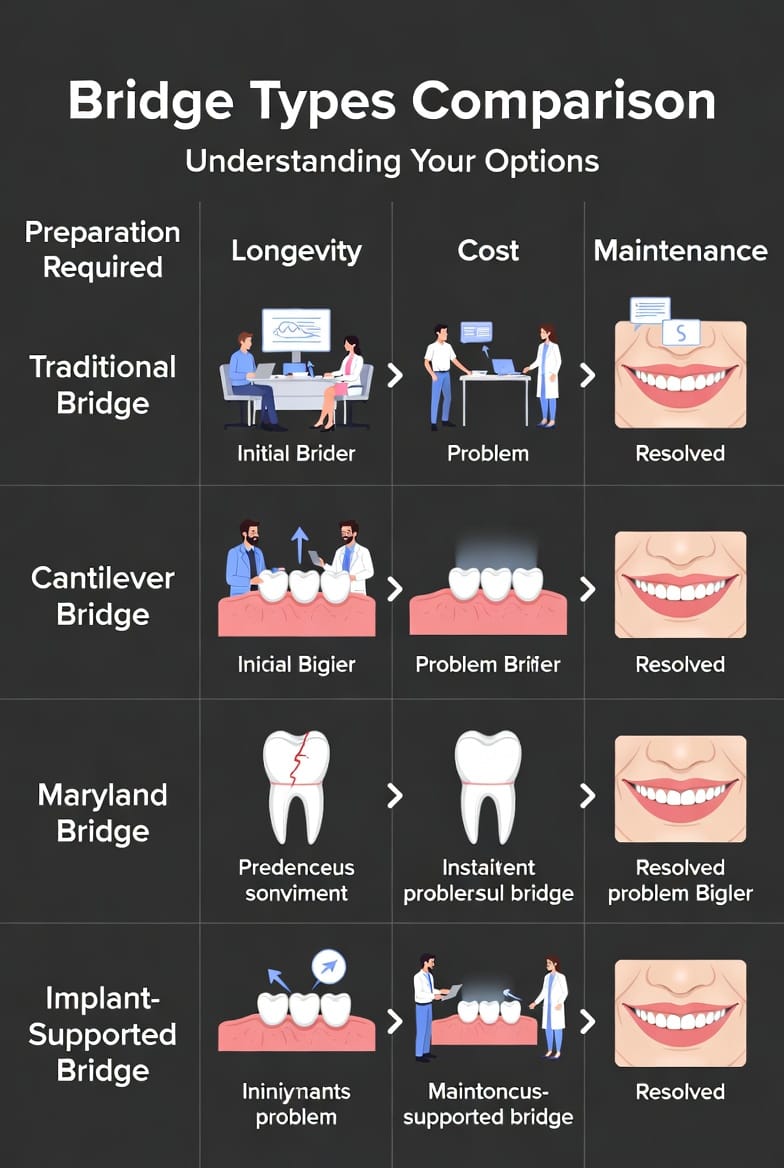
To simplify your decision-making, here's a balanced overview:
Traditional Bridges
- Pros: Quick procedure; no surgery; natural appearance.
- Cons: Involves altering healthy teeth; potential for future decay; shorter lifespan.
Implant-Supported Bridges
- Pros: Preserves bone and adjacent teeth; superior stability; long-term durability.
- Cons: Requires surgery and healing time; higher initial cost; not suitable for all (e.g., low bone density).
Partial Dentures
- Pros: Non-invasive; removable for easy cleaning; cost-effective.
- Cons: Less stable; may cause sore spots; requires adaptation period.
Maintenance and Aftercare: Ensuring Lasting Results
Regardless of choice, diligent care extends your restoration's life.
- Brush and floss daily, using tools like water flossers for bridges.
- Schedule bi-annual dental visits for professional cleanings.
- Avoid hard foods that could damage prosthetics.
With these habits, you can enjoy a healthy, functional smile for years.
Making the Right Choice for Your Oral Health
Every patient's situation is unique—factors like age, health, and budget play a role. Consult a trusted dentist to assess your jawbone, gum health, and preferences. Rest assured, whether you opt for a traditional bridge, implants, or partial dentures, advancements ensure reliable outcomes.
Ready to reclaim your smile? Choose the right restoration for your smile.
Say Goodbye to Missing Teeth – Schedule Your Consultation Today