The Confused Flour Beetle: Common Pest of Pantry Goods
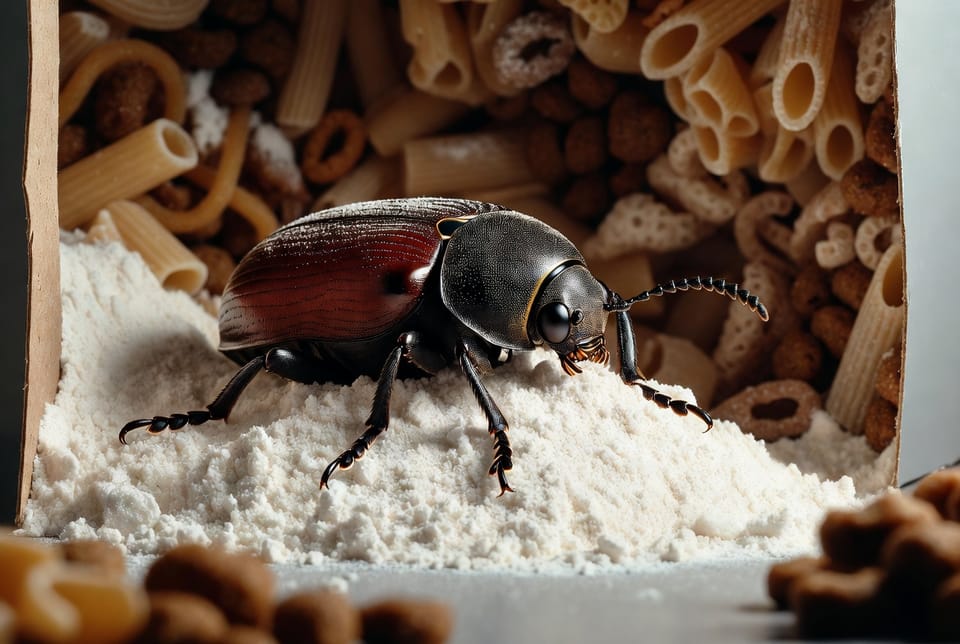
Pantry pests rarely announce themselves with drama. Instead, they settle quietly among the everyday staples that keep a household running. Among the most persistent of these uninvited guests is the confused flour beetle. This small insect thrives in the very products families rely on daily—flour, cereal, pasta, and pet food—turning trusted packages into sources of contamination. Understanding its habits, recognizing its appearance, and knowing exactly how to remove it restores confidence and protects the food supply. This guide delivers clear, actionable knowledge so every reader can reclaim a clean, safe pantry with authority and calm.
Protect Flour, Cereal & Pet Food Today – Call Pest Control!
Understanding the Confused Flour Beetle as a Storage Pest
The confused flour beetle belongs to a group of insects specially adapted to dried stored products. Unlike outdoor beetles that feed on living plants, this species has evolved to live entirely inside processed grains and their derivatives. It does not require moisture-rich environments or fresh vegetation; the low humidity of a typical kitchen cupboard is more than enough. Once established, colonies can persist for months, producing generation after generation inside sealed or partially sealed containers.
Adult beetles measure roughly one-eighth of an inch and appear reddish-brown. Their bodies are flattened, allowing them to slip through the narrowest gaps in packaging. Larvae are slender, cream-colored, and equally at home in finely milled products. Both stages feed continuously, generating fine powdery frass and a characteristic musty odor that signals heavy infestation long before numbers become obvious.
Because the insect spends its entire life cycle inside food packages, traditional outdoor pest barriers have little effect. The real defense begins with knowledge of what attracts it and how it spreads from one item to another.
Behavior: How the Confused Flour Beetle Feeds and Spreads
The confused flour beetle is a scavenger of damaged or processed grains. It shows a clear preference for products that have already been milled or cracked—flour, cereal, pasta, and pet food rank among its favorites. Whole, unbroken grains offer less appeal because the beetle’s mouthparts are better suited to soft, powdery material. Once a package is opened or develops even a tiny tear, the insects quickly locate the contents and begin feeding.
Adults are capable of flight but usually walk from one container to another. They can also crawl under lids or squeeze through folds in cardboard. A single contaminated bag of flour placed on a shelf can seed nearby cereal boxes and pet-food bags within days. Females lay eggs directly in the food, and the emerging larvae continue the cycle without ever leaving the package. Under warm kitchen temperatures the life cycle completes in as little as five to six weeks, allowing populations to explode if left unchecked.
Feeding activity produces two noticeable signs. First, the food develops a fine, dusty texture mixed with insect droppings. Second, a distinctive odor—often described as musty or slightly sweet—begins to permeate the package. These cues are early warnings that action is required before the infestation moves to additional shelves.
Accurate Identification: Separating the Confused Flour Beetle from Look-Alikes
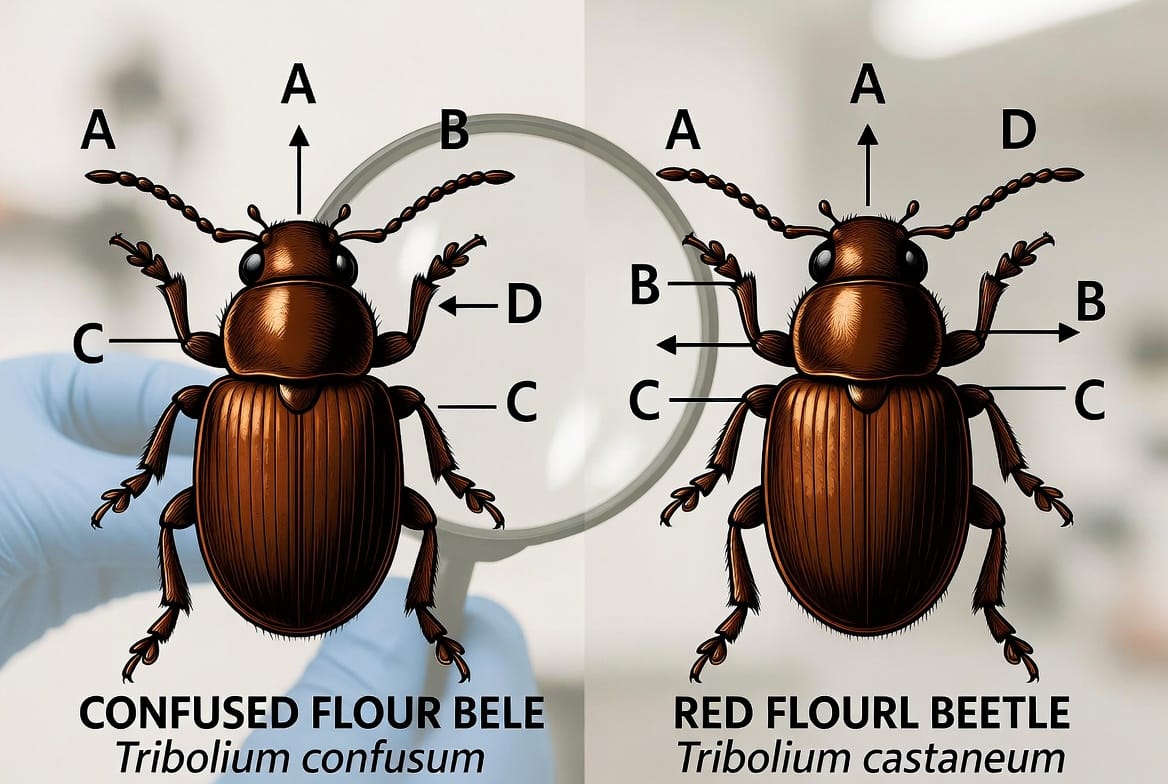
Correct identification prevents wasted effort and ensures the right control measures. The confused flour beetle is frequently mistaken for the red flour beetle, yet a few reliable differences settle the question quickly.
Both species share the same size and reddish-brown color. The decisive feature lies in the antennae. On the confused flour beetle the antennae thicken gradually toward the tip, forming a club of four or five segments that increase in size slowly. In contrast, the red flour beetle ends in a sharp three-segmented club that stands out clearly under magnification. Body shape offers a secondary clue: the confused flour beetle has a more parallel-sided thorax, while the red flour beetle appears slightly more rounded.
A simple hand lens or phone macro photo is usually enough to reveal the antennae structure. Once the species is confirmed, control steps can focus on the correct target rather than generic pantry sprays that may miss the true problem.
Vulnerable Pantry Goods and Why They Attract Infestation
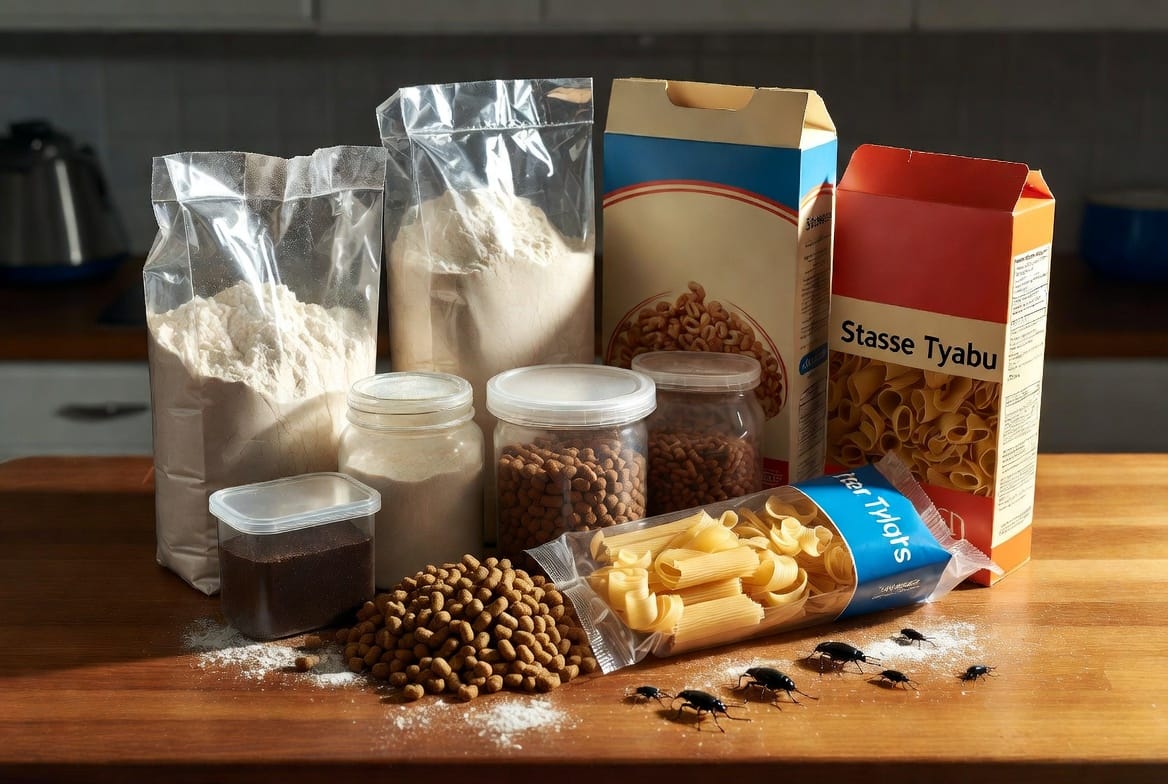
Certain household staples consistently rank as high-risk. Flour of every type—all-purpose, whole-wheat, cake, or specialty—provides ideal texture and nutrition. Cereal boxes, especially those containing wheat, corn, or rice flakes, offer both food and protective packaging that beetles easily penetrate. Pasta in cardboard cartons or thin plastic bags becomes a ready meal once the outer layer is breached. Pet food, whether dry kibble or specialty mixes, supplies the same grain-based ingredients and is often stored for longer periods, giving beetles extra time to establish colonies.
Even unopened packages can harbor insects if the manufacturing or shipping process introduced eggs. Once inside the home, temperature fluctuations and residual dust on shelves accelerate growth. Regular rotation of stock and visual inspection of seams and corners remain the most practical first defenses.
Risks Associated with an Established Infestation
Beyond the obvious loss of food, the confused flour beetle introduces several practical and health-related concerns. Continuous feeding contaminates products with insect fragments, cast skins, and fecal material. While these residues are not typically toxic in small amounts, they render the food unappetizing and can trigger allergic responses in sensitive individuals. Heavy infestations also produce quinone secretions that leave a persistent chemical odor and can stain packaging.
The greatest risk is secondary spread. A single overlooked package can seed an entire pantry, forcing repeated clean-outs and unnecessary expense. In commercial kitchens or large households the economic impact multiplies quickly. Early detection and decisive action eliminate these cascading problems before they escalate.
Step-by-Step Elimination: Discarding Infested Items and Restoring Cleanliness
Successful removal rests on one non-negotiable principle: discarding infested items. Any package showing live beetles, larvae, webbing, or the characteristic musty odor must leave the home immediately. Seal the contaminated product in a plastic bag and place it in an outdoor trash container to prevent re-entry.
After removal, empty every shelf and drawer. Vacuum cracks, corners, and the undersides of shelves thoroughly, paying special attention to hinge areas and shelf supports where fine dust accumulates. Wipe all surfaces with a mild detergent solution, then dry completely. Residual flour dust provides both food and hiding places; its complete elimination starves any remaining insects.
Inspect remaining packages carefully. Transfer uninfested dry goods into airtight glass or heavy plastic containers with tight-fitting lids. This step both protects clean food and isolates any late-emerging beetles. Freezing suspect items at 0 °F for four to seven days kills all life stages if disposal is not preferred, yet thorough cleaning remains essential regardless of freezing.
Chemical treatments are rarely necessary once physical removal and sanitation are complete. Residual dusts or targeted aerosols may be applied in cracks by trained professionals, but the foundation of control is always the mechanical elimination of food sources.
Long-Term Prevention Strategies That Keep Pantries Secure
Prevention is simpler and less stressful than repeated clean-outs. Store all dry goods in rigid, airtight containers rather than original cardboard or thin plastic. Rotate stock so older packages are used first. Wipe shelves monthly and vacuum any accumulated dust. Maintain moderate kitchen temperatures and avoid storing bulk purchases for extended periods without inspection.
When bringing new packages home, examine seams and corners before placing them on shelves. A quick visual check takes seconds and can intercept an infestation at the door. These habits, practiced consistently, reduce the likelihood of future problems to near zero.
Professional Support When Infestations Persist
Most household cases resolve completely with the steps outlined above. Occasionally, however, beetles continue to appear after thorough cleaning. Hidden reservoirs in wall voids, under appliances, or in seldom-used storage areas may sustain residual populations. In such situations, professional inspection provides peace of mind and targeted solutions that go beyond surface cleaning.
Experienced technicians locate every breeding site, apply precise treatments only where needed, and advise on structural improvements that prevent re-infestation. The result is a pantry restored to full safety without guesswork or repeated frustration.
A clean pantry is more than an organized space; it is a foundation of household health and daily confidence. By recognizing the confused flour beetle, identifying it accurately, discarding every affected package, and maintaining disciplined storage habits, any homeowner can eliminate the problem permanently and keep it from returning. The process is straightforward, the tools are already in most kitchens, and the outcome is lasting security for every bag of flour, box of cereal, package of pasta, and container of pet food.
Secure Your Stored Goods from Pantry Pests – Call Today!