The Compassionate Communication: Repairing Relationships in Recovery

Addiction does not merely affect the individual. It sends shockwaves through every meaningful connection, eroding trust, rewriting daily interactions, and leaving loved ones feeling isolated, confused, and exhausted. Yet within the structured path of recovery lies a powerful, learnable skill that can reverse this damage: compassionate communication. By mastering active listening, “I” statements, and genuine empathy, individuals in recovery and their families can rebuild the bridges that addiction once burned. This process is neither quick nor effortless, but it is profoundly possible—and it forms the foundation of lasting relational healing.
Rebuild Relationships in Recovery – Call Now
How Addiction Fractures the Bonds of Trust
Before recovery can repair what was broken, it is essential to understand the precise ways addiction damages relationships. Substance use disorders systematically undermine the very elements that keep connections healthy: honesty, consistency, emotional availability, and mutual respect.
When someone struggles with addiction, secrecy often becomes a survival strategy. Missed family dinners, unexplained absences, financial irregularities, and defensive outbursts create a climate of uncertainty. Loved ones begin to walk on eggshells, never knowing whether they will encounter the person they care about or the version shaped by craving and withdrawal. Over time, this unpredictability breeds chronic distrust. Partners may stop sharing their own feelings to avoid conflict. Children may withdraw or act out. Parents may oscillate between enabling and angry confrontation.
Emotional intimacy also suffers. Addiction narrows attention to the next use or the next high, leaving little bandwidth for attuned presence. Conversations that once flowed easily become strained or one-sided. The person in active addiction may minimize concerns, shift blame, or promise change without follow-through. Each broken promise further chips away at credibility. Meanwhile, family members often develop their own protective patterns—hypervigilance, resentment, or emotional shutdown—that persist even after the substance use stops.
Physical and financial consequences compound the relational toll. Medical emergencies, legal issues, job loss, and depleted savings place practical stress on the household. Arguments escalate around practical matters that mask deeper pain: the longing to feel safe again, the fear that the person they love may never fully return, and the quiet grief for the relationship that once existed.
These patterns are not character flaws. They are predictable outcomes of a brain and body hijacked by addiction. Recognizing this reality with compassion—rather than blame—creates the first opening for repair. Recovery offers the chance to reverse these dynamics, but only when communication itself becomes intentional, skilled, and kind.
The Transformative Power of Communication Skills in Recovery
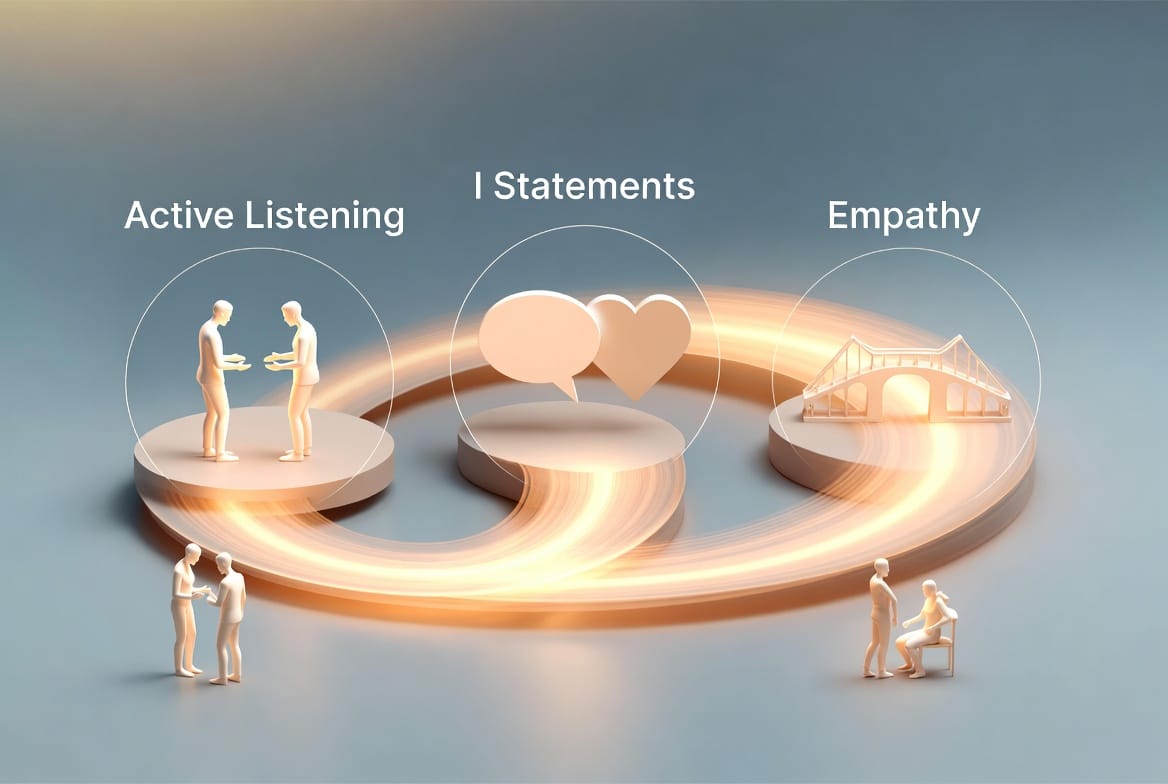
Recovery is not solely about abstinence. Sustainable healing includes the deliberate rebuilding of relationships through new ways of speaking and listening. Three core skills—active listening, “I” statements, and empathy—form the practical toolkit that restores connection. When practiced consistently, these skills reduce defensiveness, increase understanding, and gradually restore the safety required for trust to grow.
Active Listening: Creating Space for the Other Person’s Reality
Active listening is far more than remaining silent while someone else talks. It is a disciplined practice of full presence. The listener sets aside the urge to formulate a reply, defend themselves, or jump to solutions. Instead, they focus entirely on understanding the speaker’s experience.
Key elements of active listening include:
- Maintaining open body language and appropriate eye contact
- Reflecting back what was heard in the listener’s own words (“What I’m hearing is that you felt abandoned when I disappeared for days”)
- Asking clarifying questions without interrogation (“Can you help me understand more about how that impacted you?”)
- Noticing and naming emotions (“It sounds like that left you feeling deeply hurt and scared”)
In recovery settings, active listening produces immediate relational shifts. The person who has felt unheard for years finally experiences validation. Defensiveness drops. Conversations that once escalated into shouting matches become opportunities for mutual insight. Over weeks and months, this consistent practice rewires relational patterns: the recovering individual learns that their loved ones’ feelings matter, and family members learn that honest expression will be met with care rather than dismissal.
“I” Statements: Owning Experience Without Blame
Blame-laden language—“You always lie,” “You never care about anyone but yourself”—triggers immediate defensiveness and shuts down dialogue. “I” statements reverse this dynamic by centering the speaker’s internal experience rather than accusing the other person.
A well-crafted “I” statement follows a simple structure:
- “I feel [emotion]”
- “when [specific behavior or situation]”
- “because [impact or need]”
- and, when appropriate, “I would like [request or preference].”
Examples in recovery contexts include:
- “I feel anxious when plans change suddenly without notice because consistency helps me feel secure. I would appreciate a quick text if timing shifts.”
- “I feel sad when conversations turn into arguments about the past because I want us to build something new together. Can we focus on what we can do differently going forward?”
These statements keep the conversation focused on repair rather than rehashing old injuries. They model accountability and invite collaboration. Over time, both parties begin to use this language more naturally, reducing the frequency and intensity of conflict.
Empathy: Bridging Inner Worlds
Empathy is the capacity to imagine and honor another person’s emotional reality even when it differs from one’s own. It does not require agreement or the surrender of boundaries. It simply acknowledges that the other person’s feelings are real and legitimate.
In recovery, empathy operates in both directions. The individual in recovery practices empathy by recognizing the fear, exhaustion, and grief their loved ones have carried. Family members practice empathy by understanding that addiction is a complex medical and psychological condition, not a moral failure, and that early recovery involves genuine neurological and emotional challenges.
Practical empathy sounds like:
- “I can see how hard it must have been for you to trust me again after everything that happened.”
- “It makes sense that you feel cautious—your feelings are completely valid.”
When empathy becomes a shared habit, emotional distance shrinks. People feel seen rather than judged. This felt sense of being understood is one of the most powerful antidotes to the isolation that addiction creates.
Practical Steps for Rebuilding Trust Through Daily Practice
Knowledge of these skills is only the beginning. Real relational change requires consistent, imperfect practice in everyday moments. The following structured approach helps individuals and families integrate compassionate communication into daily life.
- Start with short, low-stakes conversations. Begin by applying the skills to neutral topics—weekend plans, shared memories, or simple observations—before addressing heavier issues. Success in smaller interactions builds confidence.
- Schedule intentional check-ins. Many recovering individuals and families benefit from a weekly “relationship meeting” of 20–30 minutes. During this protected time, each person practices active listening while the other shares freely, followed by “I” statements about current needs and appreciation.
- Use repair attempts immediately after rupture. Conflict is inevitable. What matters is the speed and quality of repair. A simple phrase such as “I realize my tone was sharp earlier, and I’m sorry—can we try that conversation again?” demonstrates accountability and keeps connection intact.
- Invite feedback without defensiveness. Ask trusted loved ones, “How did that land for you?” or “Is there anything I could have said differently?” Receiving feedback with curiosity rather than justification accelerates growth.
- Celebrate incremental progress. Notice and name small improvements: “I appreciated how you stayed present during our talk yesterday.” Positive reinforcement strengthens new neural pathways and relational habits.
- Seek professional guidance when needed. Some wounds run deep. Structured family sessions or couples counseling within a recovery program provide a safe container for practicing these skills with expert facilitation.
These steps are not rigid rules. They are flexible guidelines that adapt to each family’s unique history and cultural context. The consistent thread is intentionality: choosing connection over reactivity, understanding over winning, and presence over avoidance.
The Long-Term Benefits of Compassionate Communication
When active listening, “I” statements, and empathy become woven into the fabric of daily interaction, the relational landscape transforms. Trust, once shattered, begins to reassemble through hundreds of small, reliable moments. Emotional safety returns. Conversations regain depth and warmth. Family members report feeling closer than they have in years—sometimes closer than before addiction entered the picture, because the relationship now rests on clearer, more honest foundations.
Individuals in recovery often discover that relational healing reinforces their own sobriety. Strong connections provide natural accountability, emotional support, and a sense of purpose that substances once falsely promised. Loved ones, in turn, experience reduced anxiety and a renewed capacity for their own well-being. The entire family system moves from crisis mode into collaborative growth.
Importantly, compassionate communication also models healthy relating for children and other family members. Younger generations witness adults owning their feelings, listening deeply, and repairing ruptures—skills that protect against future relational and substance-related challenges.
Common Challenges and How to Navigate Them
Even with the best intentions, obstacles arise. Early recovery can bring emotional volatility as the brain adjusts. Old communication habits may reappear under stress. Loved ones may test new boundaries or struggle to believe change is lasting.
When frustration surfaces, return to the basics:
- Pause before responding.
- Name the emotion internally (“I notice I’m feeling defensive”).
- Choose one skill to apply in the moment.
- If the conversation becomes too heated, agree on a short break and a specific time to resume.
Progress is rarely linear. Some days will feel like breakthroughs; others will feel like setbacks. What matters is the overall trajectory of increasing honesty, safety, and mutual care. Self-compassion is essential: treat personal missteps with the same kindness offered to others.
Professional support accelerates this process. Structured family programs provide education, facilitated practice, and a community of others walking the same path. Within these settings, individuals learn that relational repair is a shared journey rather than a solo performance.
Sustaining the Practice Beyond Early Recovery
Compassionate communication is not a temporary recovery assignment. It is a lifelong relational skill that continues to deepen over years. As recovery solidifies, the same tools support navigating new life stages—career changes, parenting, aging parents, or evolving partnerships. The capacity to listen actively, speak from personal experience, and offer empathy becomes a quiet source of strength in every domain of life.
Families who commit to this practice often report a surprising gift: the relationship that emerges is more authentic and resilient than the one that existed before addiction. Shared hardship, when processed with skill and care, forges a deeper bond. The very communication that once felt impossible becomes a natural expression of mutual respect and love.
A Clear Path Forward
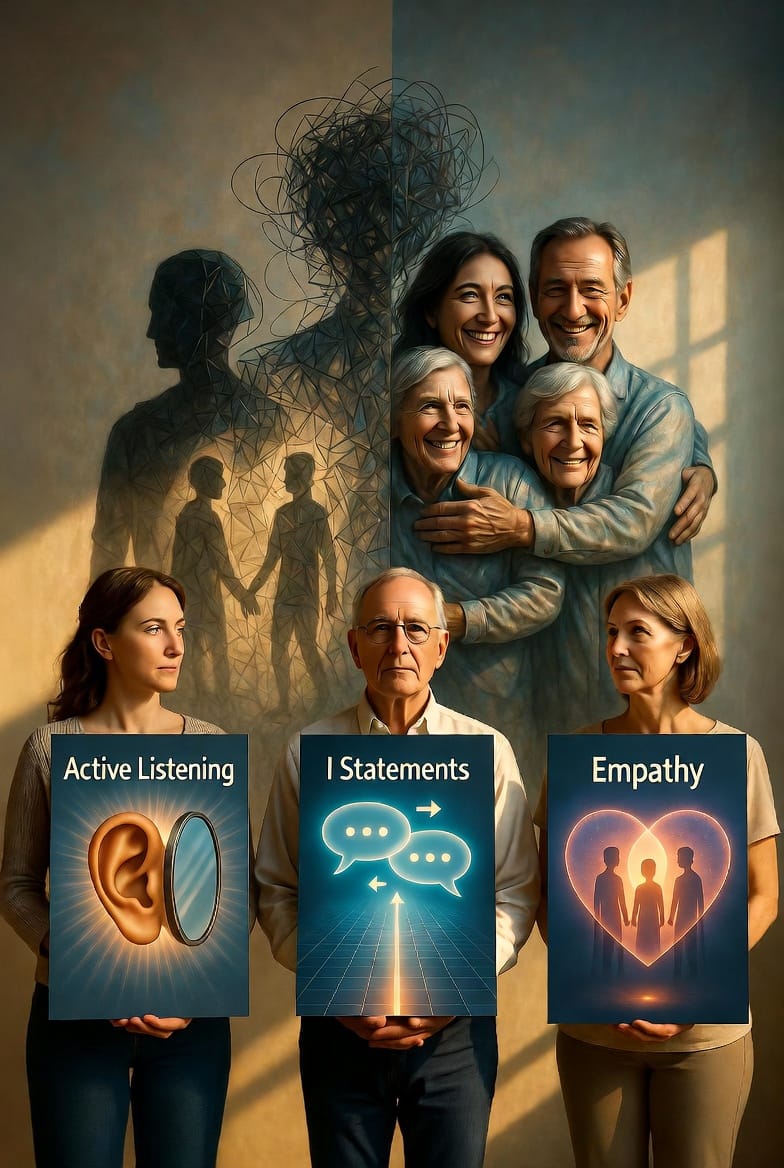
Rebuilding relationships after addiction is one of the most meaningful aspects of recovery. It requires courage, consistency, and the willingness to learn new ways of being with one another. Active listening creates safety. “I” statements foster ownership. Empathy bridges difference. Together, these skills restore the trust and connection that make life in recovery rich and sustainable.
The work is worth every deliberate conversation. Each moment of genuine presence chips away at the isolation addiction created and replaces it with belonging. Families who engage this process discover that healing is not only possible—it is already underway the moment compassionate communication begins.
Learn Compassionate Communication Skills – Call Now