The Cognitive-Behavioral Therapy (CBT) Skills: Changing Thoughts for Recovery

Addiction recovery is not only about stopping a substance or behavior. It is about transforming the internal dialogue that keeps the cycle alive. Cognitive-Behavioral Therapy (CBT) stands as one of the most researched and effective approaches for achieving lasting change. By teaching people how to recognize, challenge, and replace unhelpful thoughts, CBT equips individuals with practical skills that support every stage of recovery. This article explores the core CBT skills that help people shift from automatic negative thinking to deliberate, healthier responses—ultimately changing thoughts to change lives.
Transform Your Recovery with CBT – Call Now
Understanding Cognitive-Behavioral Therapy in the Context of Recovery
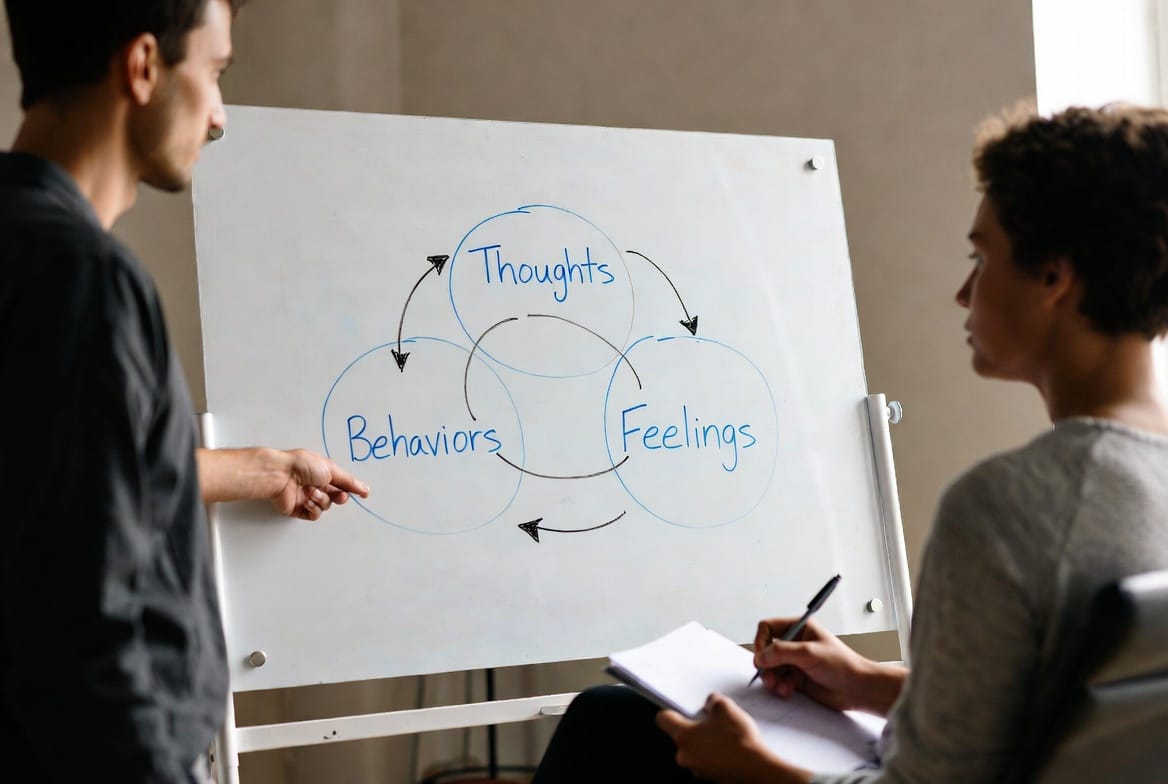
Cognitive-Behavioral Therapy is a structured, goal-oriented form of talk therapy grounded in a simple yet powerful idea: our thoughts, feelings, and behaviors are interconnected. When a person struggles with addiction, distorted thinking often fuels intense emotions and risky actions. CBT helps break that chain by focusing on what can be changed right now—the way we interpret situations and the actions we choose in response.
Unlike approaches that dig exclusively into the distant past, CBT emphasizes present-moment skills. Clients learn to become their own therapists over time. In addiction recovery settings, this means developing tools that work both during formal sessions and in everyday life—when cravings arise, when stress hits, or when old triggers appear. The process is collaborative, practical, and empowering. Clients leave sessions with concrete strategies rather than vague insights alone.
Research consistently shows that CBT reduces relapse rates and improves quality of life for people recovering from substance use and behavioral addictions. Its structured nature makes progress measurable, and its skills-based focus gives people a sense of control that many have felt missing for years.
How CBT Works: The Foundation of Change
At the heart of Cognitive-Behavioral Therapy lies the understanding that thoughts are not facts. They are mental events that can be examined and revised. The therapy typically follows three interconnected steps: identifying negative thought patterns, challenging those patterns, and replacing them with more balanced alternatives through cognitive restructuring. Alongside this mental work, clients build behavioral skills such as coping strategies and refusal skills that translate healthier thinking into real-world action.
Identifying Negative Thought Patterns
The first skill clients develop is awareness. Many people in recovery discover they have lived for years on automatic pilot, reacting to situations with the same unhelpful thoughts without ever questioning them. Common patterns include:
- All-or-nothing thinking (“If I slip once, I’ve failed completely”)
- Catastrophizing (“One craving means I’ll never stay sober”)
- Mind reading (“Everyone knows I’m an addict and judges me”)
- Emotional reasoning (“I feel hopeless, so recovery must be impossible”)
- Should statements (“I should be further along by now”)
Therapists guide clients to notice these patterns in real time. One of the most useful tools is the simple practice of pausing and asking, “What just went through my mind?” Over several sessions, clients begin to map the specific thoughts that reliably precede cravings, isolation, or risky decisions. This awareness alone reduces the power of automatic thinking. What was once invisible becomes visible—and therefore manageable.
Challenging Negative Thoughts
Once a thought is identified, the next skill is to examine the evidence for and against it. This step is not about forced positivity or denial. It is about balanced evaluation. Clients learn to ask:
- What is the factual evidence supporting this thought?
- What is the evidence against it?
- Am I confusing a feeling with a fact?
- How would I advise a friend who had this same thought?
- What is a more realistic way to view this situation?
This process, often practiced through guided questioning in session and then independently, weakens the grip of distorted thinking. A thought that once felt absolute—“I’ll never be able to handle stress without using”—is gradually seen as one possible interpretation among many. The emotional intensity attached to the thought decreases, creating space for new choices.
Cognitive Restructuring: Replacing Unhelpful Thoughts with Healthier Ones
Cognitive restructuring is the active replacement of distorted thoughts with more accurate, helpful alternatives. It is not about pretending everything is fine. It is about generating thoughts that are both realistic and supportive of recovery goals. For example:
- Original thought: “I can’t cope with this craving.”
- Restructured thought: “This craving is uncomfortable, but it will pass. I have tools I can use right now.”
- Original thought: “One mistake means I’m back to square one.”
- Restructured thought: “A slip is information, not a verdict. I can learn from it and continue moving forward.”
Clients practice writing these new thoughts, repeating them, and testing them in daily life. Over time, the healthier thoughts become more automatic. The brain begins to default to balanced interpretations rather than catastrophic ones. This shift is one of the most transformative aspects of CBT in recovery.
Behavioral Skills That Reinforce Cognitive Change
Thought work alone is rarely enough. CBT pairs cognitive restructuring with concrete behavioral skills so that new thinking produces new action. Two of the most valuable skill sets in addiction recovery are coping strategies and refusal skills.
Building Effective Coping Strategies
Coping strategies are planned responses that clients can use when triggers or high-risk situations arise. Rather than relying on willpower in the moment, people prepare a menu of options in advance. Common CBT-based coping strategies include:
- Urge surfing: Observing a craving as a wave that rises, peaks, and falls without acting on it
- Distraction and delay: Engaging in a healthy activity for a set period while the intensity of the urge decreases
- Problem-solving steps: Breaking a stressful situation into smaller, manageable parts
- Relaxation techniques: Progressive muscle relaxation, controlled breathing, or brief mindfulness exercises
- Behavioral activation: Scheduling enjoyable or meaningful activities that counteract isolation and low mood
Clients practice these strategies in session through role-play and then apply them between sessions, reviewing what worked and what needs adjustment. The goal is to create a personalized toolkit that feels realistic and accessible.
Developing Strong Refusal Skills
Social pressure and unexpected offers remain significant risks in recovery. Refusal skills taught in CBT are specific, assertive, and practiced until they feel natural. Key elements include:
- Clear, firm statements without lengthy explanations (“No, thank you. I don’t drink anymore.”)
- Body language that matches the words—steady eye contact, calm tone, confident posture
- Prepared exit strategies if pressure continues
- Alternative suggestions that shift the focus (“Let’s grab coffee instead”)
Role-playing high-risk scenarios in a safe therapeutic setting allows clients to rehearse these skills until they become second nature. Confidence grows with each successful practice, reducing anxiety about real-world encounters.
Practical CBT Techniques Clients Can Use Independently
Beyond the core process, CBT offers several structured tools that clients continue using long after formal therapy ends. Three of the most widely applied are thought records, behavioral experiments, and coping plans.
Thought Records
A thought record is a written worksheet that captures a triggering situation, the automatic thought, the emotion and its intensity, the evidence for and against the thought, and a more balanced alternative thought. Completing even a few of these each week trains the mind to slow down automatic reactions. Over time, many people find they can perform the same process mentally without paper.
Behavioral Experiments
Behavioral experiments test the validity of a belief through real-life action. If a client believes “If I go to the family gathering sober, I will feel completely awkward and everyone will notice,” the experiment might involve attending for a limited time while collecting data on actual feelings and others’ reactions. The results usually reveal that the feared outcome is far less severe than predicted, weakening the original belief.
Coping Plans
A coping plan is a written document prepared in advance for high-risk situations. It lists warning signs, specific coping strategies to use, people to contact for support, and emergency steps if needed. Having a concrete plan reduces the chance of impulsive decisions when stress or craving is high.

The Long-Term Benefits of Mastering CBT Skills
When people consistently apply CBT skills, several positive changes typically emerge. Emotional regulation improves because feelings are no longer driven solely by unchecked thoughts. Self-efficacy rises as individuals experience success in handling difficult situations without returning to old behaviors. Relationships often strengthen because communication becomes clearer and less reactive. Most importantly, the risk of relapse decreases because clients possess reliable tools for navigating the inevitable challenges of recovery.
CBT is not a quick fix. It requires practice, honesty, and patience. Yet the skills are learnable by almost anyone willing to engage. Progress is rarely linear—there will be days when old thoughts feel louder—but each successful application of a skill strengthens the new neural pathways that support recovery.
Integrating CBT into a Broader Recovery Plan
While CBT is powerful on its own, it works especially well when combined with other supports such as mutual-help groups, medical care when needed, family involvement, and healthy lifestyle changes. Many people find that the structure of CBT complements the community and accountability found in peer support. The skills learned in therapy become portable tools that enhance every other aspect of the recovery journey.
Therapists trained in CBT for addiction tailor the approach to each person’s unique thought patterns, triggers, and strengths. Sessions remain collaborative: the client is the expert on their own experience, while the therapist provides structure, feedback, and skill training. Homework between sessions ensures that learning moves from the therapy room into daily life.
Taking the Next Step Toward Lasting Change
Recovery becomes more sustainable when people stop fighting their thoughts and start skillfully reshaping them. Cognitive-Behavioral Therapy offers a clear, evidence-based path for doing exactly that. By learning to identify negative patterns, challenge them with evidence, restructure them into healthier alternatives, and pair those new thoughts with practical behavioral skills, individuals gain genuine freedom of choice.
The process is active, hopeful, and grounded in real capability. Every thought record completed, every coping strategy used, and every refusal skill practiced moves a person further from the grip of addiction and closer to a life defined by intention rather than reaction.
Change your thoughts, change your life. If you or someone you care about is ready to learn these powerful CBT skills in a supportive professional setting, reach out today. Compassionate, experienced clinicians are ready to help you build the thought and behavior skills that support lasting recovery.
Get Expert CBT Support for Recovery – Call Now