The Clothes Moth Damage: Identifying and Repairing Holes
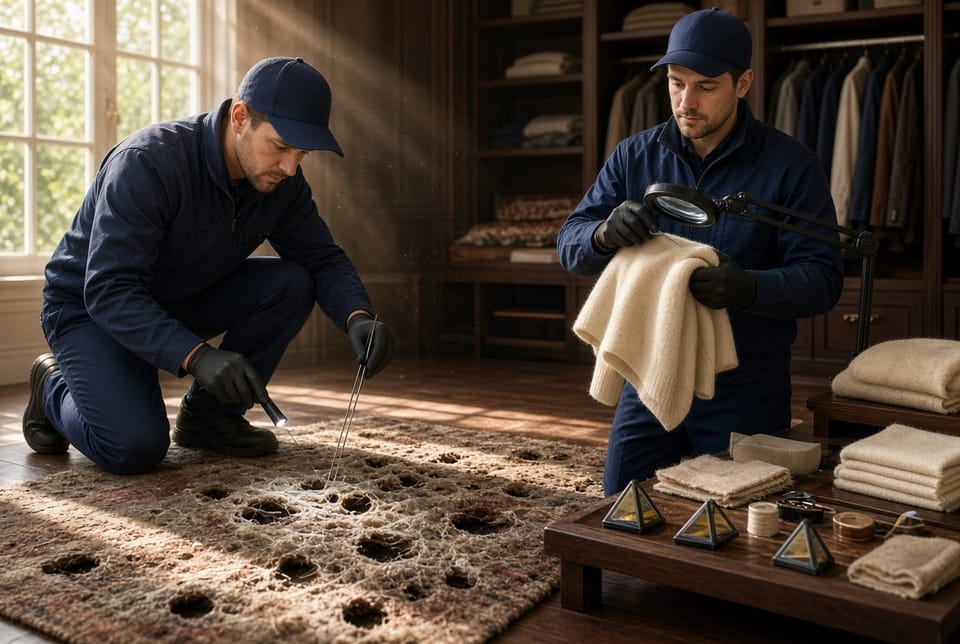
Clothes moths quietly turn treasured wool sweaters, silk scarves, and family rugs into lace. The damage often appears suddenly—small, irregular holes that seem to have no explanation. Yet the cause is almost always the same: hungry larvae feeding on keratin-rich fibers in dark, undisturbed places. The good news is that early recognition plus disciplined prevention and skilled repair can stop the loss and, in many cases, restore the garment or textile to usable condition.
Protect Wool & Heirlooms – Call for Moth Control
This guide walks you through every practical step: how to confirm the culprit, how to halt further feeding, and how to decide between simple home mending and professional textile restoration. Follow the process and you protect both the fabric and your peace of mind.
Why Clothes Moths Target Your Wardrobe
Clothes moths are not the fluttering insects you see around porch lights. The two species most often responsible—Tineola bisselliella (webbing clothes moth) and Tinea pellionella (casemaking clothes moth)—prefer darkness and stillness. Adult moths themselves do not eat fabric; their larvae do. Those larvae require animal-based proteins found in wool, cashmere, silk, fur, feathers, and even blended fabrics that contain a high percentage of those fibers.
Stains from perspiration, food, or body oils make the fibers even more attractive. Closets that stay closed for months, boxes stored in attics, and the underside of furniture become ideal nurseries. Once established, a single unnoticed infestation can produce generation after generation, each wave enlarging the existing holes and creating new ones.
The risk is not merely cosmetic. Irreversible fabric loss occurs when larvae chew through the warp and weft of a tightly woven piece. Valuable items—hand-knit heirlooms, oriental rugs, vintage tailored suits—can lose structural integrity if the damage is ignored.
How to Identify True Moth Damage
Not every hole in a sweater is caused by moths. Distinguishing moth damage from mechanical wear, carpet-beetle feeding, or simple snags saves time and money.
Look first for the classic triad:
- Irregular holes of varying sizes, often clustered in hidden areas such as under collars, along seams, or on the underside of a folded garment. The edges of the holes are usually clean but uneven, never perfectly circular.
- Silken webbing or fine tunnels left by the webbing clothes moth. These appear as delicate, dirty-looking threads clinging to the fabric surface or running between fibers.
- Larvae or cases. Webbing-moth larvae are creamy white with brown heads and may be found inside the webbing. Casemaking larvae carry portable, cigar-shaped cases made from the very fibers they eat.
Adult moths, when seen, are small (about ½ inch), golden or buff-colored, and tend to scuttle rather than fly toward light. Their presence in a closet is a strong supporting clue, but the real evidence is always the larval feeding signs.
A simple inspection routine helps. Empty the closet or storage box onto a clean white sheet in bright light. Shake each item vigorously; any larvae, cases, or frass (tiny pellets that look like coarse sand) will fall onto the sheet. Examine folds, cuffs, and the reverse side of rugs with a flashlight held at a low angle. The low-angle light makes webbing and surface grazing easier to see.
If you find only a few isolated holes and no live insects or webbing, the infestation may already have ended. If you find multiple items affected plus fresh webbing or moving larvae, active feeding is underway and immediate action is required.
Prevention: Stopping the Cycle Before It Starts
Prevention is far easier—and far less expensive—than repair. Clothes moths cannot thrive in clean, frequently disturbed, well-ventilated spaces. Implement these measures consistently and the risk drops dramatically.
- Clean before you store. Wash or dry-clean every wool, silk, or blended garment at the end of the season. Even “unworn” items carry enough skin cells and oils to attract larvae. Vacuum rugs and upholstery thoroughly, paying special attention to edges and the underside.
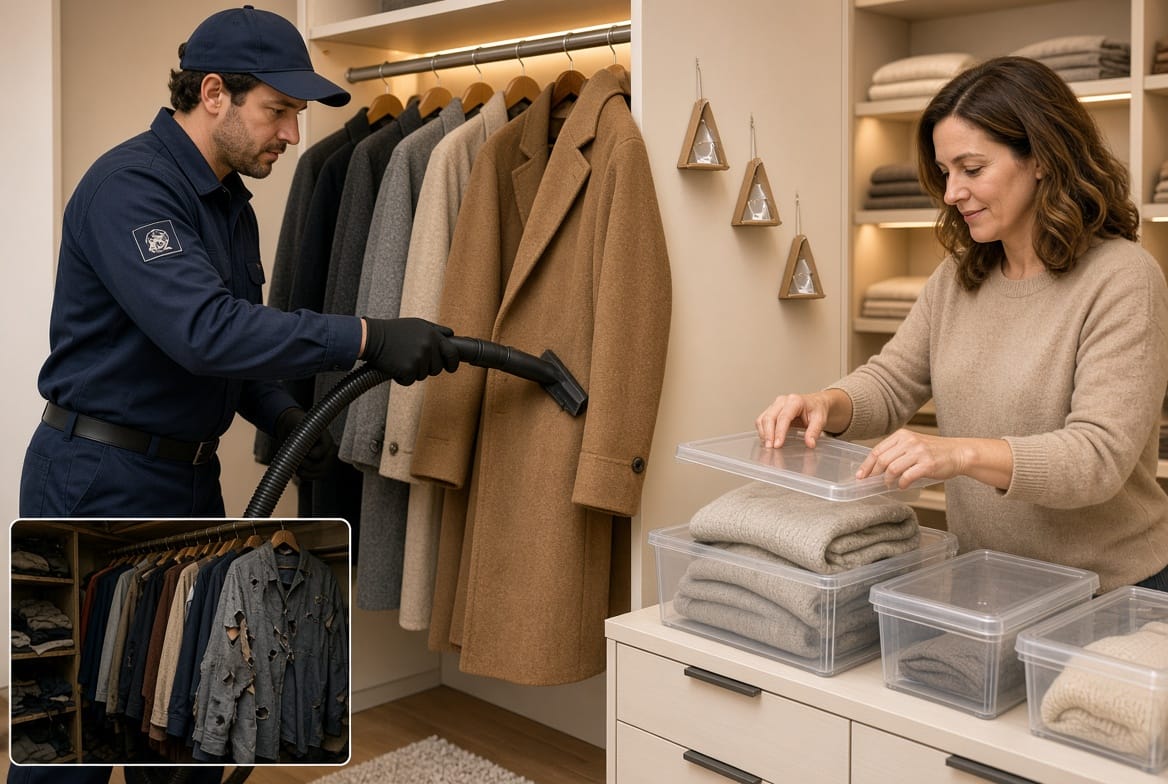
- Store in airtight containers. Plastic bins with tight-fitting lids or vacuum-seal bags deny moths both entry and the humidity they prefer. Cedar chests offer a mild deterrent but are not airtight; use them only as an extra layer inside a sealed container.
- Deploy pheromone traps. These sticky traps lure adult male moths and give an early warning of activity. Place them high in closets and check them monthly. They do not eliminate an existing infestation but they interrupt mating and tell you when further inspection is needed.
- Maintain environmental control. Clothes moths dislike light, movement, and low humidity. Open closet doors regularly, run a dehumidifier in damp basements, and avoid packing items tightly together.
- Rotate and inspect. Bring stored items out at least twice a year, shake them, and look again for the tell-tale signs. Early detection keeps a small problem from becoming a large one.
These steps, performed together, create an environment in which clothes-moth larvae simply cannot complete their life cycle.
Repairing the Holes: From Simple Darning to Professional Restoration
Once the infestation is confirmed and stopped, attention turns to the fabric itself. The choice of repair depends on the size of the holes, the value of the item, and how visible the damage is.
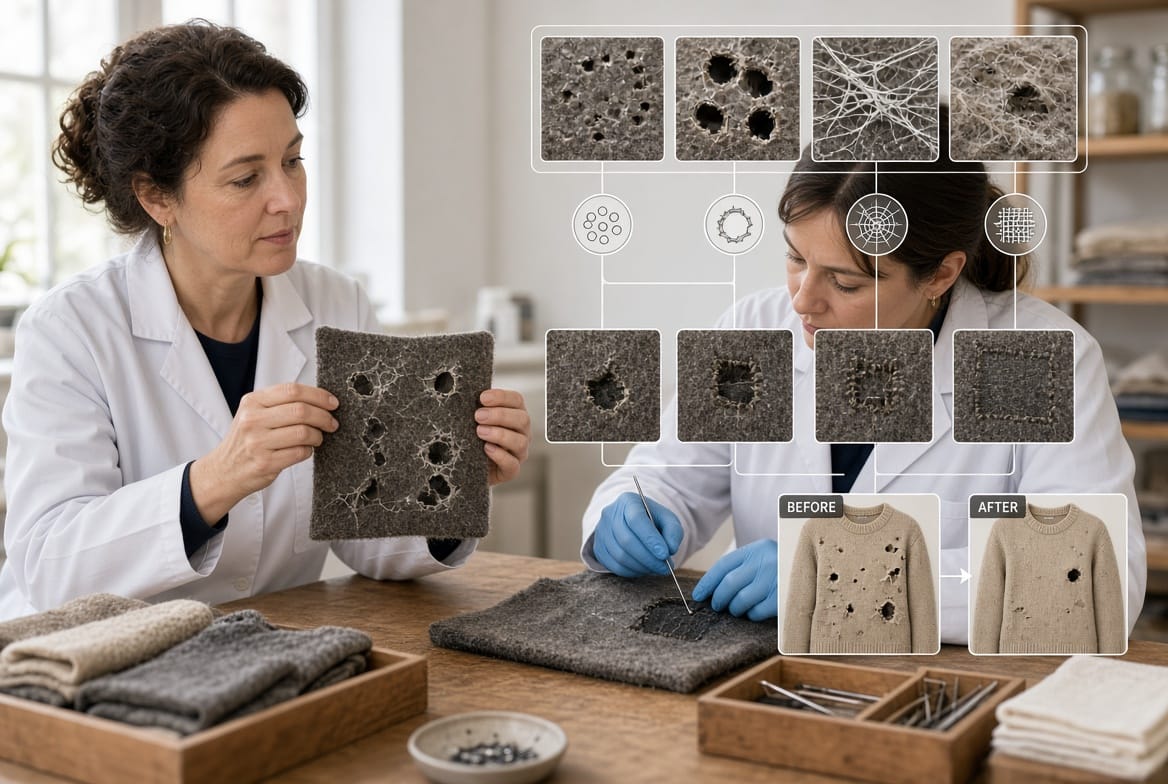
Small, isolated holes in everyday garments can often be handled at home. Traditional darning uses a needle and matching yarn to weave new threads across the gap, recreating the original weave. Work from the reverse side whenever possible so the repair remains discreet. For slightly larger holes, a well-matched fabric patch applied with fine stitching or fusible web can restore both appearance and strength.
Larger or clustered damage, especially on high-value pieces, usually requires professional textile restoration. Conservators use techniques that go far beyond ordinary mending:
- Invisible reweaving that reconstructs the original pattern thread by thread.
- Stabilization of weakened areas with conservation-grade backing fabrics.
- Color-matched dyeing so that repairs blend rather than announce themselves.
- For rugs, careful re-knotting or patching that respects the original design.
The decision point is straightforward. If the item has sentimental or monetary value, or if the holes compromise the structure (a sweater that will stretch further, a rug that will tear underfoot), professional intervention is the safer route. Attempting an amateur repair on a museum-quality textile can reduce its value more than the original holes did.
After any repair, return the item to the prevention routine described above. A beautifully darned sweater stored in an open closet is simply waiting for the next generation of larvae.
When Professional Pest Control Becomes Essential
Home measures work well for light or newly discovered activity. They are insufficient when:
- Multiple rooms or storage areas show signs.
- Live larvae or abundant webbing are present.
- The infestation has reached valuable collections, antique textiles, or large area rugs.
- Previous attempts at cleaning and trapping have failed.
Licensed technicians combine thorough inspection with targeted treatments that reach larvae hidden inside thick pile or folded garments. Heat treatment, controlled freezing of individual items, and precisely applied products that break the life cycle are all part of an integrated approach. The goal is not merely to kill visible moths but to eliminate the hidden population that would otherwise reappear weeks later.
A professional visit also includes a written prevention plan tailored to your closets, climate, and collection. That plan turns a one-time emergency into long-term protection.
Protecting What Matters Most
Clothes-moth damage feels personal because the items affected are often the ones we care about most—grandmother’s shawl, the cashmere coat bought after a promotion, the rug that has been in the family for decades. The holes themselves are only the visible symptom. The real issue is an environment that allowed larvae to feed unnoticed.
By learning the identification signs, applying consistent prevention, and choosing the right repair method, you reclaim control. Most garments and textiles can be saved if action is taken promptly. The combination of careful home habits and timely professional support keeps future generations of moths from ever gaining a foothold.
Repair and prevent moth damage before another season of feeding begins. A single consultation can stop the current infestation, protect the rest of your wardrobe, and give you a clear plan for the years ahead.
End Fabric Damage Fast – Call Pest Control Now