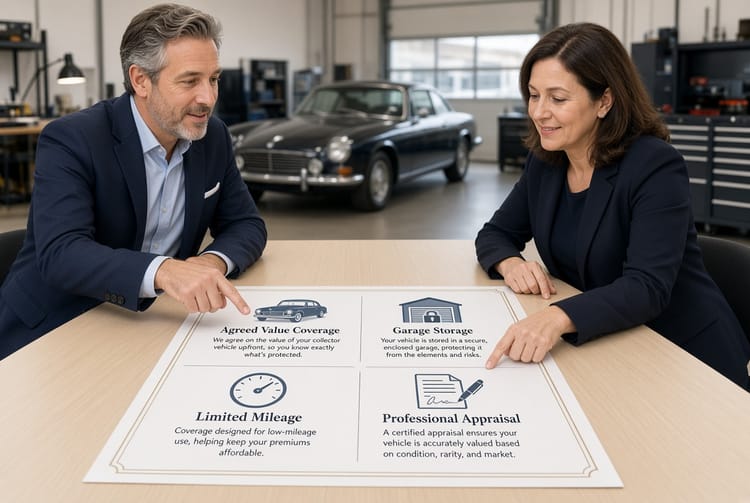
The Classic Car Appraisal: Why Agreed Value Matters.
Owning a classic car is more than a hobby — it’s a passion. These vehicles represent history, craftsmanship, and personal achievement. Yet many enthusiasts unknowingly put their prized possessions at risk with inadequate insurance coverage. Understanding classic car appraisal and the critical importance of agreed value protection can mean the difference between full financial recovery and devastating loss after an accident or theft.
Protect Your Classic Car’s True Worth – Call Now
In this comprehensive guide, we explore how proper valuation works for collector vehicles, why agreed value policies outperform standard coverage, and how regular appraisals safeguard your investment for years to come.
Understanding Classic Car Valuation
Classic and collector cars do not behave like ordinary vehicles in the marketplace. Their value often increases over time rather than depreciating, influenced by rarity, cultural significance, and collector demand.
Classic car appraisal is a specialized process that determines a vehicle’s true market worth based on current conditions and trends. Unlike standard auto valuation that relies on depreciation formulas, classic car appraisals consider nuanced factors that generic tools simply cannot capture.
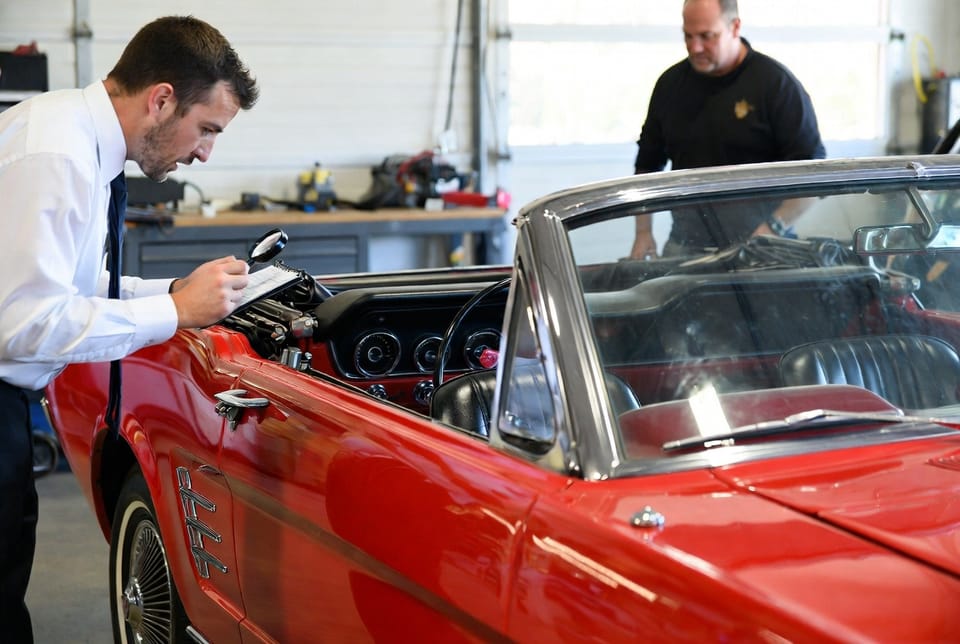
Professional appraisers examine every detail — from panel alignment to interior stitching — to establish an accurate, defensible value. This professional assessment becomes the foundation for proper insurance protection.
The Critical Difference: Actual Cash Value vs. Agreed Value
One of the most important decisions classic car owners face is choosing between actual cash value (ACV) and agreed value coverage.
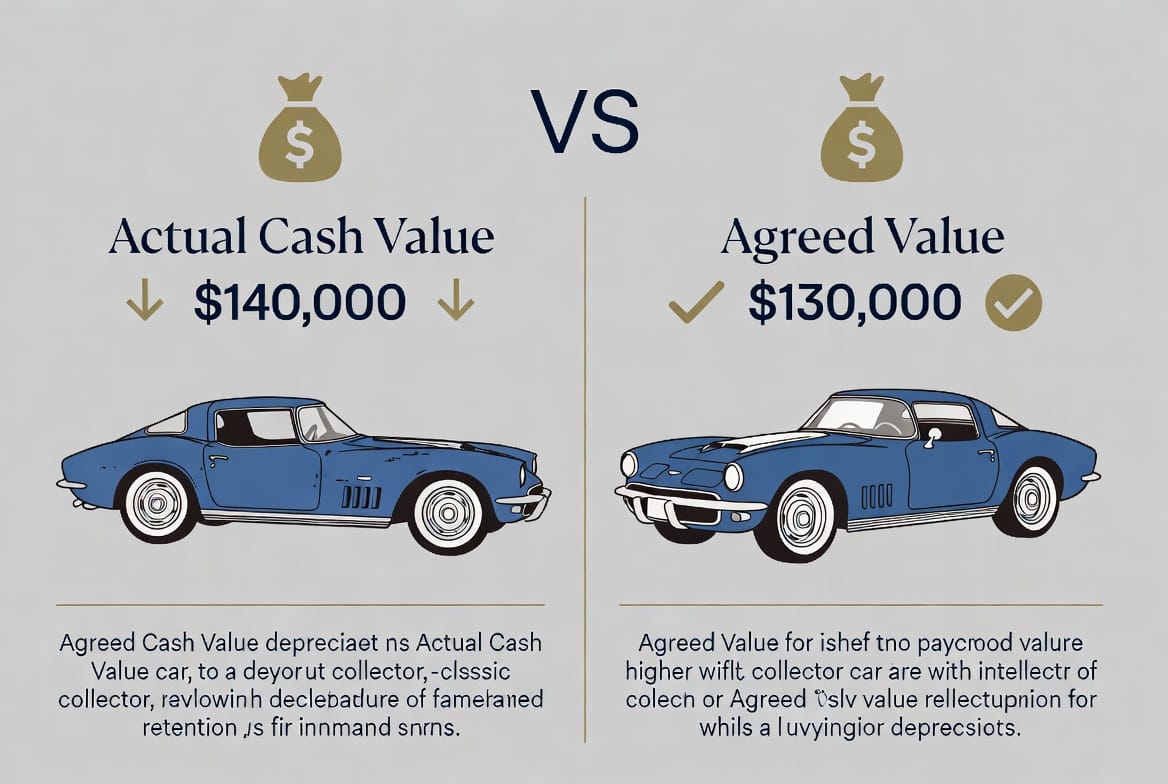
Actual Cash Value (ACV) represents the vehicle’s depreciated worth at the time of a claim. Insurance companies calculate this using age, mileage, and market depreciation formulas. For classic cars, this often results in payouts far below what the vehicle would actually sell for in today’s collector market.
Agreed Value, on the other hand, is a predetermined amount mutually established between you and the insurer, typically backed by a professional appraisal. This amount becomes the payout in the event of a total loss — no depreciation, no surprises, and no lengthy disputes.
Why this distinction matters: A beautifully restored 1965 Mustang might have an ACV payout of $18,000 but an agreed value of $45,000 based on current market conditions and restoration quality. The difference could represent years of investment and passion.
“Protecting a classic car with actual cash value coverage is like insuring a masterpiece painting based on the cost of the canvas alone.”
Why Classic Cars Need Professional Appraisals
Collector vehicles require expert evaluation because their values fluctuate based on market trends, auction results, and specific vehicle attributes. A professional classic car appraisal provides documented proof of value that insurance companies accept and respect.
Regular appraisals are essential because values change. What was accurate three years ago may no longer reflect today’s reality. Market demand shifts, restoration techniques evolve, and certain models gain or lose popularity.
Benefits of professional appraisals include:
- Accurate documentation for insurance purposes
- Peace of mind knowing your coverage matches real value
- Stronger negotiating position if a claim arises
- Potential tax advantages for charitable donations or estate planning
- Enhanced resale value with certified documentation
Key Factors Professional Appraisers Evaluate
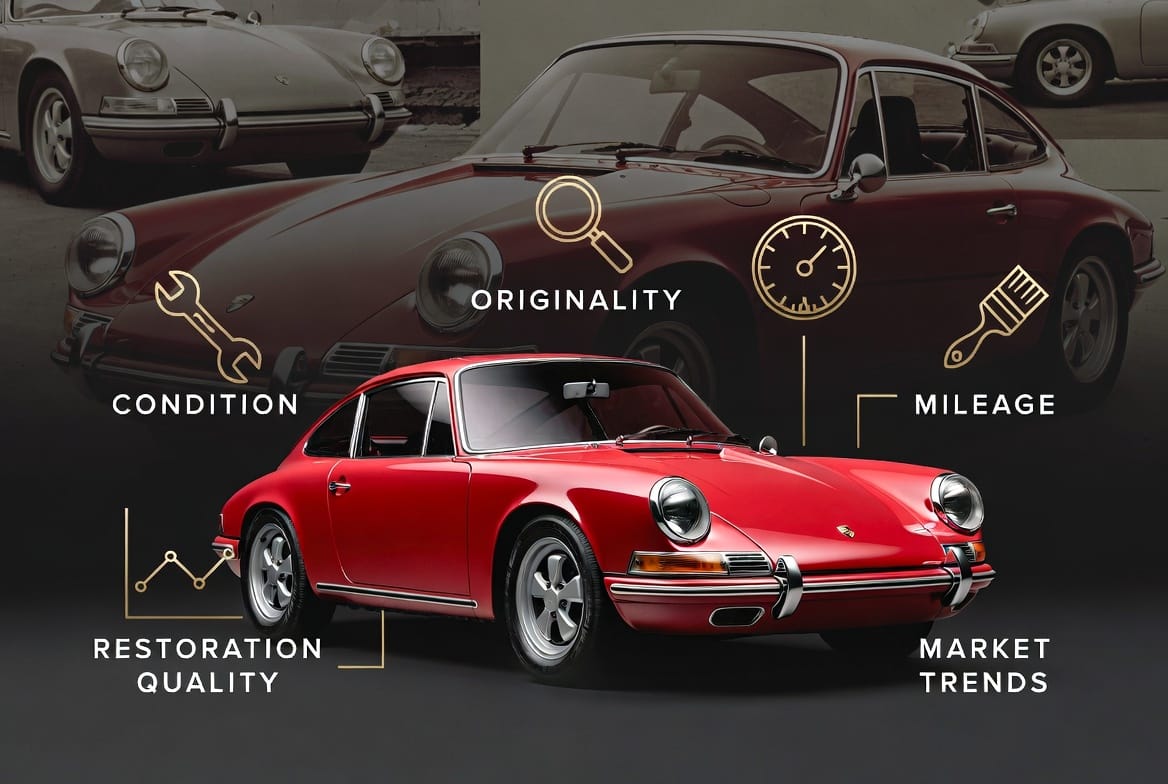
Expert appraisers consider multiple interconnected elements when determining a classic car’s value. Understanding these helps owners maintain and document their vehicles effectively.
- Condition: Overall state ranging from “Concours” (show-quality) to “Project” condition. Even small details like paint depth and chrome quality significantly impact valuation.
- Originality: How many original components remain versus replaced parts. Numbers-matching engines and transmissions often command premium prices.
- Mileage: Lower mileage typically increases value, though well-documented maintenance history can offset higher miles on certain models.
- Restoration Quality: Professional, documented restorations using period-correct materials and techniques add substantial value.
- Market Trends: Current auction results, collector interest, and economic factors that influence demand.
How Often Should You Update Your Classic Car Appraisal?
Industry experts recommend updating appraisals every 2-3 years for most collector vehicles. However, certain situations warrant more frequent assessments:
- Significant restoration work completed
- Major market shifts affecting your specific model
- Moving the vehicle to a new state with different insurance requirements
- Adding valuable authentic accessories or documentation
- Preparing for sale or estate planning
Staying current with appraisals ensures your agreed value coverage remains aligned with the vehicle’s actual market worth. This proactive approach prevents underinsurance while avoiding overpayment for unnecessary coverage.
The Peace of Mind That Comes With Agreed Value Protection
Choosing agreed value coverage for your classic car delivers confidence that standard policies cannot match. In the unfortunate event of a total loss, you receive the full agreed amount — enabling you to replace or restore your vehicle without financial hardship.
This specialized coverage typically includes additional benefits:
- No depreciation deductions
- Flexible usage options for shows and pleasure driving
- Agreed value on parts and accessories
- Worldwide coverage options through select providers
Reputable insurers specializing in collector vehicles understand the unique needs of classic car enthusiasts and work with approved appraisers to streamline the process.
Taking Action to Protect Your Investment
Your classic car represents more than metal and rubber — it embodies memories, craftsmanship, and personal history. Protecting it properly honors that significance while providing genuine financial security.
Know your classic’s true worth. Don’t leave your investment vulnerable to inadequate coverage. Whether you own a single prized vehicle or an entire collection, professional appraisal and agreed value protection offer the comprehensive safeguards your passion deserves.
Our experienced team understands collector vehicles and can guide you toward the right protection at competitive rates.
Your classic car deserves insurance as exceptional as the vehicle itself. Secure the coverage that truly matches its value — because peace of mind is priceless.
Expert Classic Car Insurance Consultation – Call Now