The Cigarette Beetle in Spices: How to Detect and Eliminate

Pantry pests can quietly compromise the quality and safety of everyday kitchen staples, and few are as stealthy or persistent as the cigarette beetle. These tiny insects specialize in dried plant materials, making common household spices an ideal target. When cigarette beetles establish themselves in paprika, chili, or dried herbs, the result is more than an inconvenience—it becomes a genuine risk to food integrity and household hygiene. Understanding exactly how these pests operate, recognizing the earliest warning signs, and applying precise elimination steps allows homeowners to regain control quickly and confidently. This guide delivers authoritative, practical strategies tailored specifically to spice infestations so you can protect your kitchen with professional-level thoroughness.
Eliminate Spice-Destroying Cigarette Beetles Fast – Call Now!
Understanding the Cigarette Beetle and Its Preference for Spices
The cigarette beetle, scientifically known as Lasioderma serricorne, measures only 2 to 3 millimeters in length as an adult. Its oval, reddish-brown body and serrated antennae make it easy to overlook until numbers grow. Unlike many other pantry pests that prefer grains or flour, this species shows a marked attraction to aromatic, dried botanical products. Spices such as paprika, chili powder, cumin, and various dried herbs provide both nutrition and the sheltered environment the beetles require for complete development.
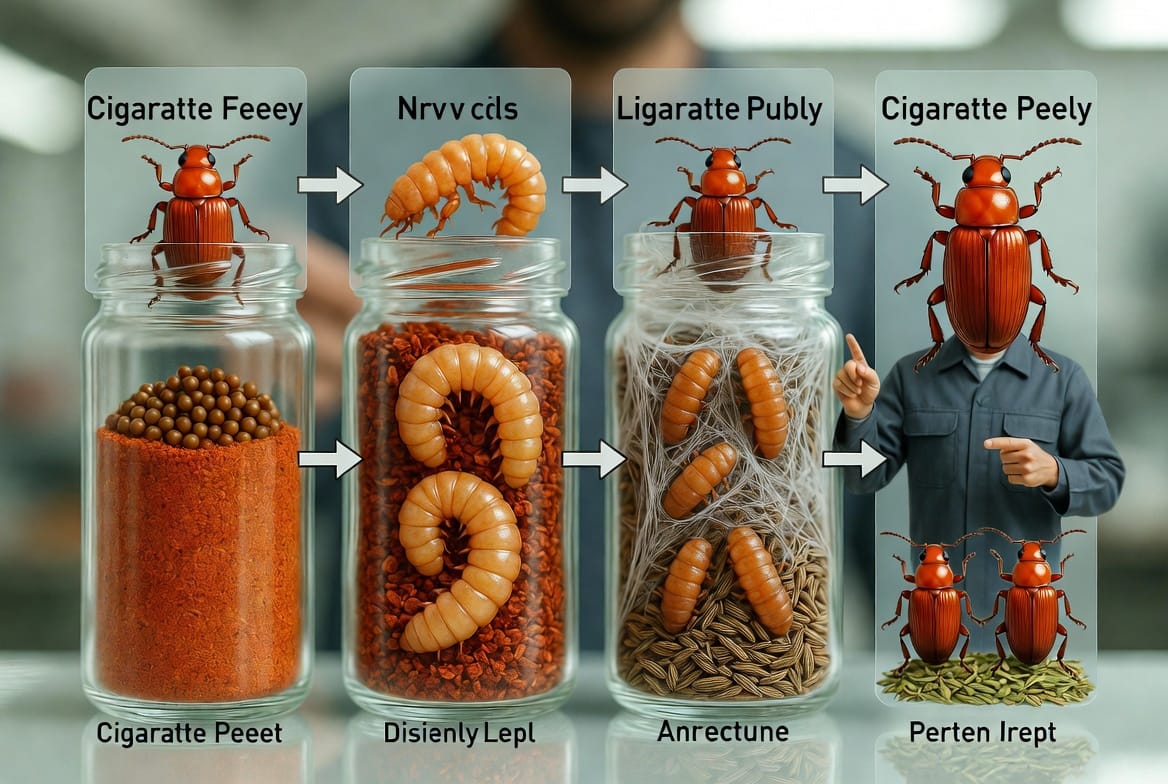
Adults are strong fliers and can enter homes through open windows, grocery packaging, or even on secondhand containers. Once inside a warm pantry, a single female can lay up to 100 eggs directly on or near the spice surface. The resulting larvae tunnel through the product, creating the characteristic small holes that later become visible on packaging. Because spices are often stored for months without daily inspection, an infestation can progress undetected for several generations.
Temperature and humidity play decisive roles. Ideal conditions range from 65°F to 90°F with moderate moisture, conditions commonly found in many residential kitchens. In these settings, the full lifecycle—from egg to adult—can finish in as little as 30 to 45 days, allowing rapid population growth. The beetles’ ability to thrive on low-moisture foods explains why even tightly sealed commercial spice jars sometimes arrive already compromised.
How Cigarette Beetles Specifically Infest Paprika, Chili, and Herbs
Paprika and chili powders are particularly vulnerable because of their fine particle size and high concentration of plant oils that attract the insects. The soft, powdery texture allows larvae to move freely while feeding and constructing protective silken tunnels. Dried herbs such as oregano, basil, thyme, and rosemary offer similar advantages: their leaf structures create micro-spaces where eggs can be deposited and larvae can develop protected from light and disturbance.
Infestation typically begins in one of three ways. First, beetles may already be present in bulk spices purchased from stores or markets. Second, adults flying from nearby infested tobacco products, pet food, or dried floral arrangements can locate spice jars by scent. Third, cross-contamination occurs when an opened container is left on a shelf near other dried goods. Once larvae hatch, they feed continuously, reducing the spice to a mixture of frass (insect waste), shed skins, and webbing. Over time the product develops an unpleasant musty odor and loses both flavor and color intensity.
The risk extends beyond a single jar. Adult beetles readily move between containers, especially when lids are imperfectly sealed or when spice bottles are stored close together. A seemingly minor problem in one chili container can quickly spread to neighboring paprika, cumin, and herb bottles, turning an isolated incident into a widespread pantry pest challenge.
Clear Signs That Cigarette Beetles Have Invaded Your Spices
Early detection depends on knowing precisely what to look for. The most reliable indicators include:
- Small holes punched through paper, plastic, or foil packaging, often clustered near the top or seams of the container
- Live adult beetles crawling on or near spice jars, particularly in warmer evening hours
- Fine, powdery frass mixed with the spice itself, giving the product a dusty appearance beyond normal settling
- Delicate webbing or silk tunnels visible when the spice is gently stirred or poured
- Larvae that appear as tiny, creamy-white, C-shaped grubs when the product is examined closely
- An unexpected musty or slightly bitter odor that differs from the spice’s normal aroma
These signs rarely appear all at once. Often the first clue is a few small holes noticed while reaching for a familiar bottle. Within days, adult beetles may be observed flying short distances across the shelf. Because the insects are nocturnal, inspections conducted with a bright flashlight after dark frequently reveal more activity than daytime checks.
Regular visual scanning of every spice container, combined with a quick shake-and-listen test (live beetles produce faint rustling), provides an effective first-line monitoring system. Any container showing even one of the listed signs should be isolated immediately to prevent further spread.
Step-by-Step Elimination: Discarding, Freezing, and Deep Cleaning
Once cigarette beetles are confirmed, decisive action restores safety and prevents recurrence. The process follows three essential phases.
Phase 1 – Immediate Discard of Infested Products
Any spice jar or packet displaying holes, beetles, webbing, or unusual odor must be sealed inside a sturdy plastic bag and removed from the home. Do not attempt to salvage partially infested material; the risk of residual eggs or larvae is too high. Dispose of the sealed bag in an outdoor trash receptacle far from the kitchen entrance. This single step eliminates the primary breeding source and dramatically reduces the local population.
Phase 2 – Freezing as a Preventive and Curative Measure
All remaining unopened or apparently clean spices should undergo a freezing protocol. Place each container in a freezer set at 0°F or lower for a minimum of four consecutive days. This temperature kills eggs, larvae, pupae, and adults without damaging the flavor compounds of most dried spices. After freezing, allow the jars to return to room temperature inside a sealed bag to avoid condensation. Newly purchased spices benefit from the same treatment before they ever enter the pantry, creating a reliable barrier against future introductions.
Phase 3 – Thorough Shelf and Pantry Cleaning
Empty every shelf completely. Vacuum cracks, corners, and the undersides of shelving with a crevice tool to remove frass, eggs, and hiding adults. Follow vacuuming with a wash using hot, soapy water or a mild vinegar solution; both dissolve residual oils that attract beetles. Pay special attention to the joints where shelves meet walls and to any spilled powder that may have accumulated behind containers. Allow surfaces to dry fully before returning any items. As a final safeguard, line shelves with clean paper or use airtight secondary containers for frequently used spices.
These three actions—discard, freeze, and clean—form a complete non-chemical elimination sequence suitable for virtually every household. When performed systematically, they interrupt the lifecycle at every stage and restore the pantry to a pest-free condition.
Preventing Future Cigarette Beetle Problems in the Spice Cabinet
Long-term protection rests on consistent habits rather than occasional intensive efforts. Store all spices in glass or heavy plastic containers fitted with airtight lids; the original commercial packaging is often insufficient once opened. Rotate stock so older items are used first, and never purchase more than can reasonably be consumed within six to twelve months. Keep the pantry cool and dry; a small dehumidifier or improved ventilation can lower humidity below the level preferred by the beetles.
Inspect every new purchase for packaging integrity before bringing it indoors. A quick visual check for small holes or unusual powder around the seal takes only seconds yet prevents many introductions. Periodically empty and clean the entire spice section even when no signs are present; this routine disrupts any early colonization that might otherwise go unnoticed.
For households that rely heavily on bulk spices or dried herbs, consider dividing large quantities into smaller portions and freezing the excess. This practice both preserves freshness and provides an ongoing lethal temperature barrier.
Recognizing When Professional Pantry Pest Control Becomes Necessary
While the steps outlined above resolve the majority of isolated cigarette beetle cases, certain situations call for expert intervention. Persistent reappearance after thorough cleaning, infestation involving multiple food categories beyond spices, or structural issues that allow continuous entry from outside all indicate the need for specialized service. Professional technicians possess the training and tools to locate hidden reservoirs, apply targeted treatments that remain safe around food-storage areas, and implement monitoring systems that detect future activity at the earliest stage.
A comprehensive professional assessment also evaluates adjacent areas—pet food storage, dried flower arrangements, or tobacco products—that may serve as secondary sources. By addressing the entire environment rather than a single shelf, lasting resolution is achieved and the cycle of repeated home treatments is broken.

Maintaining Confidence in Everyday Kitchen Safety
The presence of cigarette beetles in spices is an unwelcome discovery, yet it is a solvable problem. By recognizing the insects’ preference for paprika, chili, and dried herbs, monitoring for small holes, beetles, and webbing, and applying the discard-freeze-clean sequence, any household can eliminate the threat efficiently. Consistent prevention habits then keep the pantry secure for the long term.
When uncertainty remains or the infestation proves stubborn, professional support ensures complete resolution without guesswork. Spices can hide cigarette beetles.
Detect & Destroy Cigarette Beetles in Spices – Call Today!