The Centipede vs. Millipede: Identifying Beneficial Decomposers and Nuisance Invaders

Homeowners often encounter unexpected multi-legged visitors in basements, garages, or bathrooms. Understanding the centipede vs. millipede difference empowers you to respond confidently instead of reacting with panic. While both creatures share a similar segmented appearance, their roles in nature, behaviors, and potential impact on your home are entirely distinct.
Identify & Control Centipedes or Millipedes – Call Now!
At our professional pest control service, we believe accurate identification is the first step toward effective, environmentally responsible management. Centipedes act as beneficial predators that help control other household pests, yet they can become nuisances indoors. Millipedes, true decomposers, break down organic matter outdoors but occasionally invade in large numbers when conditions favor them.
This comprehensive guide delivers clear, actionable insights so you can distinguish these creatures quickly, implement targeted solutions, and restore comfort to your living space. With the right knowledge and professional support when needed, you can protect your home while respecting the natural balance these organisms provide.
Why Proper Identification Matters for Homeowners
Many people mistakenly treat every many-legged creature the same way, often resorting to unnecessary chemical applications or ineffective DIY methods. Knowing whether you face a centipede or millipede prevents wasted effort and ensures you address the root cause rather than just the symptoms.
Centipedes typically signal underlying moisture or prey issues inside the home. Millipedes more often indicate outdoor organic debris buildup or excessive dampness around the foundation. Misidentification can lead to recurring problems, higher stress levels, and even minor health concerns in sensitive households.
By learning these distinctions, you gain peace of mind and avoid over-treatment that might disrupt beneficial outdoor ecosystems. Our team has helped thousands of homeowners turn confusion into confidence through precise identification and tailored strategies.
Key Physical Differences: Anatomy That Tells the Story
The most reliable way to tell these creatures apart lies in their body structure and leg arrangement.
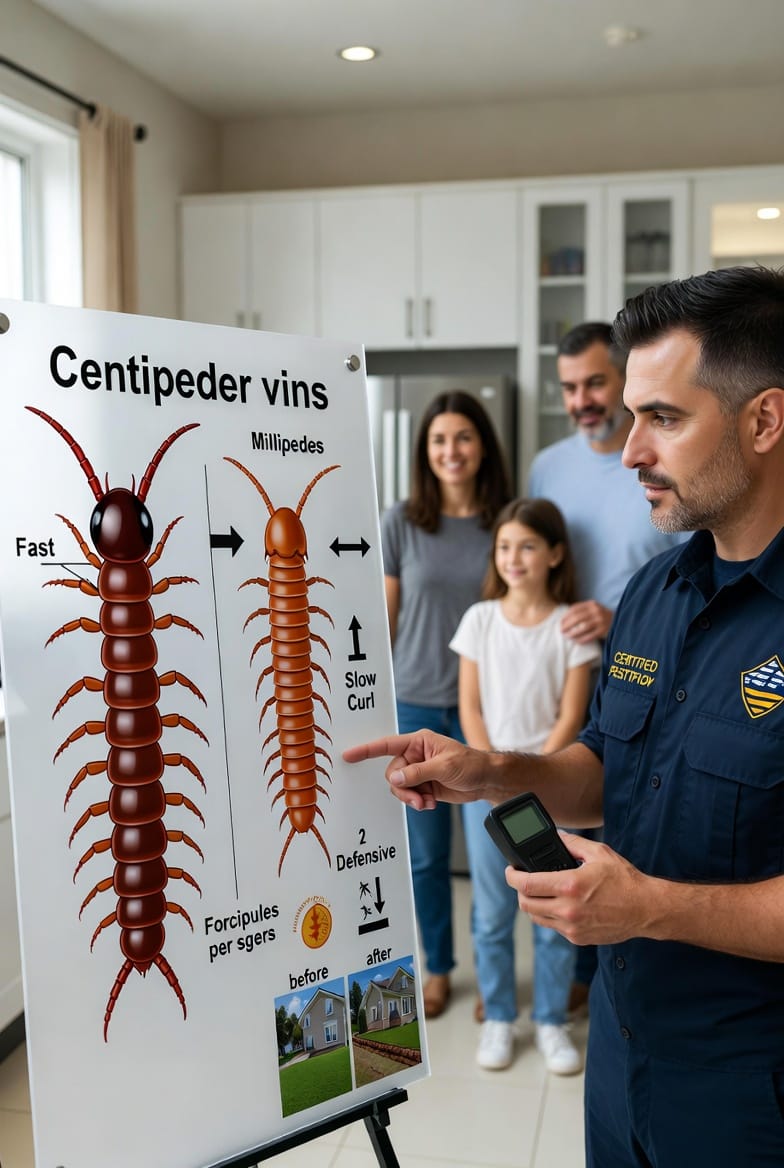
- Centipedes possess exactly one pair of legs per body segment. Their bodies appear flattened and elongated, allowing rapid movement.
- Millipedes feature two pairs of legs per segment, giving them a more cylindrical, robust appearance.
House centipedes (Scutigera coleoptrata), the species most commonly found indoors, display long, delicate legs that create a “hairy” visual effect and enable speeds up to 1.3 feet per second. In contrast, millipedes move slowly and deliberately, often curling into a protective coil when disturbed.
Centipedes also possess prominent forcipules – modified front legs that function like venomous fangs for capturing prey. Millipedes lack these structures and instead rely on chemical secretions for defense.
These anatomical traits directly influence how each creature behaves inside or around your property, making visual identification straightforward once you know what to look for.
Behavioral Traits: Predators Versus Decomposers
Behavior reveals even more about each creature’s purpose. Centipedes are active nocturnal hunters. They seek out and consume insects, spiders, and other small arthropods, making them valuable allies in natural pest suppression. Their speed and agility allow them to patrol dark, damp areas effectively.
Millipedes, by comparison, function as nature’s recyclers. They feed primarily on decaying plant material, fungi, and organic debris, playing a vital role in breaking down matter and returning nutrients to the soil. Their slow, methodical movement reflects this decomposer lifestyle rather than predatory pursuit.
Indoors, centipedes rarely reproduce in large numbers unless abundant prey exists. Millipedes, however, may appear in massive numbers after heavy rain or when mulch and leaf litter become overly moist near the foundation.
Beneficial Roles and Potential Nuisances
Both creatures contribute positively to outdoor ecosystems. Centipedes reduce populations of more problematic household pests without requiring intervention in most garden settings. Millipedes accelerate decomposition, enriching soil health around your property.
Yet when they cross the threshold into living spaces, they become nuisance invaders. Centipedes may deliver a painful (though rarely dangerous) bite if handled, causing localized swelling in sensitive individuals. Millipedes do not bite but can release a dark, staining fluid when threatened and may trigger allergies or respiratory discomfort in large numbers.
The reassuring truth is that neither species poses a significant structural or health threat when properly managed. With prompt identification and targeted action, you can enjoy the benefits they provide outdoors while keeping your indoor environment comfortable and pest-free.
Common Invasion Scenarios Homeowners Encounter
Understanding typical entry patterns helps you stay ahead of potential issues. Centipedes frequently enter through cracks around windows, doors, or utility lines seeking moisture and prey. They thrive in bathrooms, basements, and crawl spaces where humidity levels remain elevated.
Millipedes tend to migrate from garden beds, mulch piles, or wooded areas during periods of excessive moisture. They crawl under siding, through foundation vents, or along door thresholds, often appearing in clusters after heavy rainfall or seasonal changes.
Recognizing these patterns allows for proactive prevention rather than reactive treatment, saving time and reducing unnecessary concern.
Effective Management Strategies for Centipedes
Because centipedes serve as predators, management focuses on removing their food sources and harborage rather than direct elimination.
- Reduce indoor moisture with dehumidifiers and proper ventilation in basements and bathrooms.
- Address underlying insect populations through integrated pest management techniques.
- Seal cracks, gaps around pipes, and weatherstripping around windows and doors.
- Remove clutter and cardboard boxes that provide hiding spots.
These steps naturally discourage centipede activity while improving overall home comfort. When populations persist despite DIY efforts, professional inspection ensures no hidden moisture or prey sources remain.
Tailored Approaches for Millipedes
Millipede management emphasizes outdoor habitat modification since they rarely establish breeding populations indoors.
- Clear leaf litter, mulch, and organic debris at least 12-18 inches away from the foundation.
- Improve drainage around the home to eliminate standing water.
- Seal foundation cracks and install door sweeps to block entry points.
- Apply targeted perimeter treatments only when necessary and always using environmentally responsible products.
By addressing the outdoor conditions that attract millipedes, you prevent future invasions and support healthier yard ecosystems at the same time.

Prevention Tips to Maintain Long-Term Protection
Prevention remains the most effective long-term solution for both species. Regular home maintenance combined with seasonal inspections creates an environment neither creature finds inviting.
Maintain proper grading and gutter systems to direct water away from the foundation. Trim vegetation and keep landscaping materials from contacting exterior walls. Schedule annual professional perimeter inspections to catch small issues before they become larger problems.
These proactive habits deliver lasting peace of mind and reduce the likelihood of future encounters.
When to Call Professional Pest Control Experts
While many situations resolve through simple environmental adjustments, certain signs indicate professional assistance will save time and deliver superior results. Persistent sightings despite moisture reduction, large numbers appearing suddenly, or uncertainty about identification all warrant expert evaluation.
Our certified technicians provide thorough inspections, accurate species confirmation, and customized management plans that respect both your home and the environment. We focus on sustainable solutions that address root causes rather than temporary fixes.
Restoring Comfort with Knowledge and Support
Distinguishing between centipedes and millipedes transforms potential worry into informed action. These creatures play valuable roles in nature, yet they need not compromise your home’s comfort or safety.
By understanding their differences, implementing targeted strategies, and partnering with experienced professionals when necessary, you maintain a clean, secure living environment year-round.
Know your many-legged visitors. We’re here to help you protect what matters most – your home and your peace of mind.
Protect Your Home from Centipedes and Millipedes – Call Today