The Casemaking Clothes Moth: Protecting Rugs and Upholstery
Homeowners who invest in quality rugs, upholstered furniture, and natural-fiber textiles often face a silent threat that can quietly destroy years of careful collecting and daily comfort. The casemaking clothes moth ranks among the most persistent fabric pests, targeting the very materials that bring warmth and elegance into living spaces. Understanding this insect’s unique habits, recognizing early warning signs, and applying proven control measures allow you to safeguard valuable belongings without panic or unnecessary expense. This guide delivers clear, practical knowledge so you can act with confidence and restore peace of mind.
Safeguard Your Fabrics from Silk Case Larvae – Call Now!
Understanding the Casemaking Clothes Moth
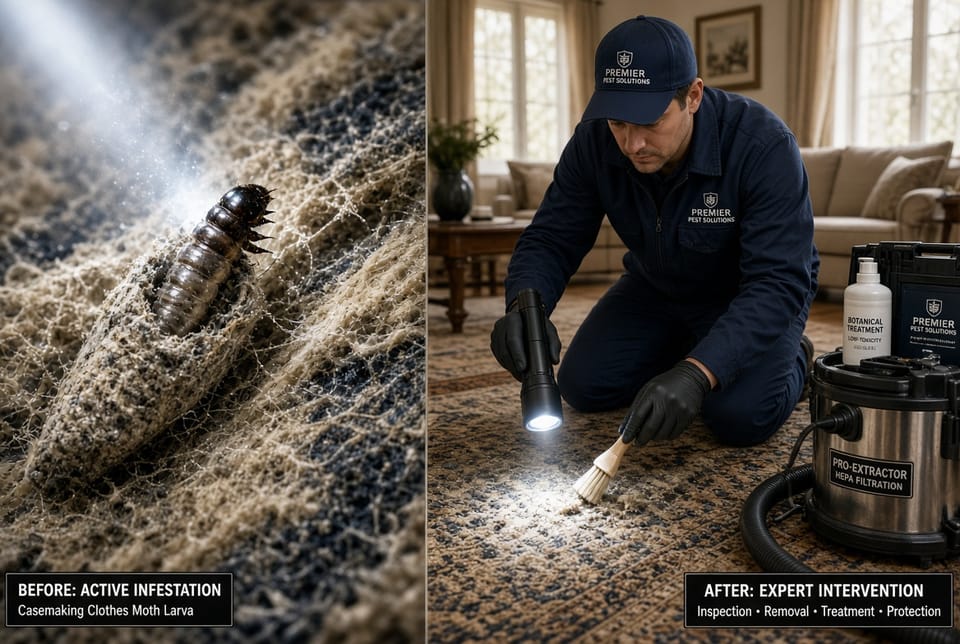
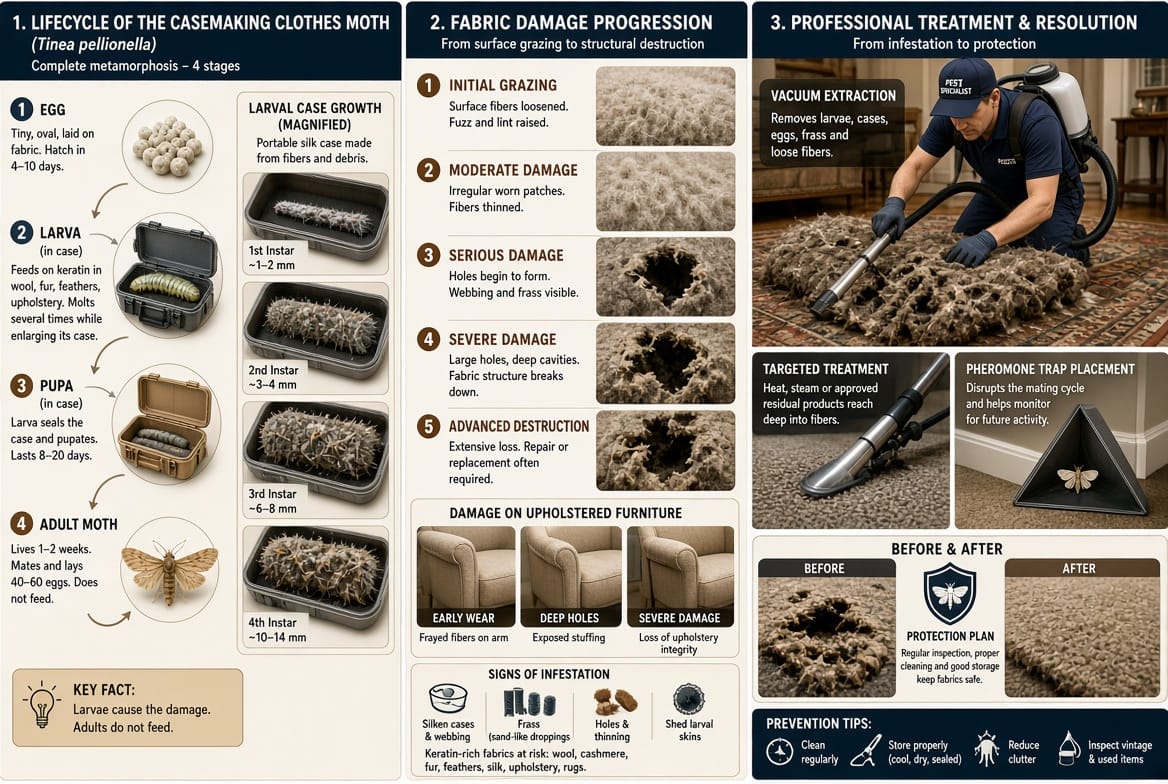
The casemaking clothes moth is a specialized fabric pest whose larvae alone cause damage. Adult moths measure roughly one-quarter to one-half inch and display muted buff or grayish wings. They prefer dark, undisturbed areas and rarely fly toward lights. The true problem begins when females lay eggs on animal-based fibers. Once hatched, the larvae construct portable silk cases that they carry like protective backpacks while feeding.
These silk cases serve multiple purposes. They shield the soft-bodied larva from predators and environmental fluctuations, and they allow the insect to move freely across surfaces while remaining partially concealed. The larva enlarges the case as it grows, incorporating fragments of the very fabric it consumes. Preferring wool, cashmere, mohair, silk, fur, feathers, and other keratin-rich materials, the larva avoids synthetic fibers unless those materials are blended with animal protein or heavily soiled with body oils, food residues, or sweat.
Feeding occurs slowly and steadily. A single larva may take months to reach maturity depending on temperature, humidity, and food quality. During this period it creates irregular holes, surface grazing, and thinning patches that gradually compromise the integrity of rugs and upholstery. Because the larva remains inside its case most of the time, damage often progresses unnoticed until multiple generations have established themselves.
Why Rugs and Upholstery Are Especially Vulnerable
Thick-pile rugs, antique carpets, and densely woven upholstery provide ideal microhabitats. Deep fibers trap moisture, skin cells, and organic debris that attract egg-laying females. Areas under sofas, along baseboards, beneath heavy furniture, and inside rarely moved storage chests offer the darkness and stillness these moths prefer. Once larvae settle into the base of a rug or the underside of a cushion, they can feed for extended periods with little disturbance.
Animal-fiber content remains the primary risk factor. Pure wool rugs, wool-blend carpets, horsehair padding, felt underlays, and natural-fiber upholstery covers rank highest on the vulnerability list. Even items that appear clean can harbor microscopic residues that sustain larval development. Seasonal temperature swings further influence activity; warmer months accelerate growth, while cooler indoor conditions slow but rarely halt it entirely.
Recognizing the Signs of Infestation
Early detection prevents costly restoration. Look for the distinctive silk cases first. These cylindrical or tapered structures range from one-eighth to nearly one-half inch long and often appear as small, fuzzy tubes clinging to fabric surfaces or resting in folds and crevices. Cases may be the same color as the surrounding material because larvae incorporate fiber particles into the silk.
Additional indicators include:
- Irregular holes or bald patches on rugs and upholstery
- Surface grazing that leaves a fuzzy or thinned appearance
- Tiny fecal pellets resembling coarse sand near feeding sites
- Silken webbing or trails along seams and edges
- Live larvae visible when cases are gently opened or disturbed
- Adult moths fluttering weakly in dark corners or emerging from storage areas
Because adults do not feed and live only long enough to mate and lay eggs, the presence of flying moths signals that larvae are already active nearby. Regular inspection of high-risk zones—under furniture legs, along carpet edges, inside closet floors, and beneath seldom-moved items—catches problems before extensive damage occurs.
Effective Control Strategies
Successful management combines thorough cleaning, environmental modification, targeted trapping, and, when necessary, professional intervention. Begin with mechanical removal. Vacuum all susceptible surfaces using a high-suction machine equipped with a HEPA filter. Pay special attention to edges, seams, and undersides. Dispose of the vacuum bag or empty the canister outdoors immediately to prevent reintroduction. Follow vacuuming with careful brushing of rugs and upholstery to dislodge remaining cases and larvae.
Launder or dry-clean washable items according to care labels. For non-washable rugs and large upholstered pieces, professional cleaning services that specialize in natural fibers offer deep extraction methods that remove residual oils and organic matter. After cleaning, ensure complete drying; residual moisture encourages renewed activity.
Pheromone traps provide an excellent monitoring and control tool. These devices release a synthetic scent that mimics the female moth’s mating pheromone, attracting adult males. Place traps in closets, under furniture, and near known problem areas. Check them weekly and replace according to manufacturer instructions. While traps alone rarely eliminate an established infestation, they dramatically reduce breeding populations and alert you to continued activity.
Environmental adjustments further discourage moths. Reduce indoor humidity below 50 percent when possible. Increase air circulation with fans or open windows during favorable weather. Store off-season woolens and textiles in sealed containers or garment bags after thorough cleaning. Cedar products and herbal sachets offer limited repellent value and should never replace cleaning and trapping.
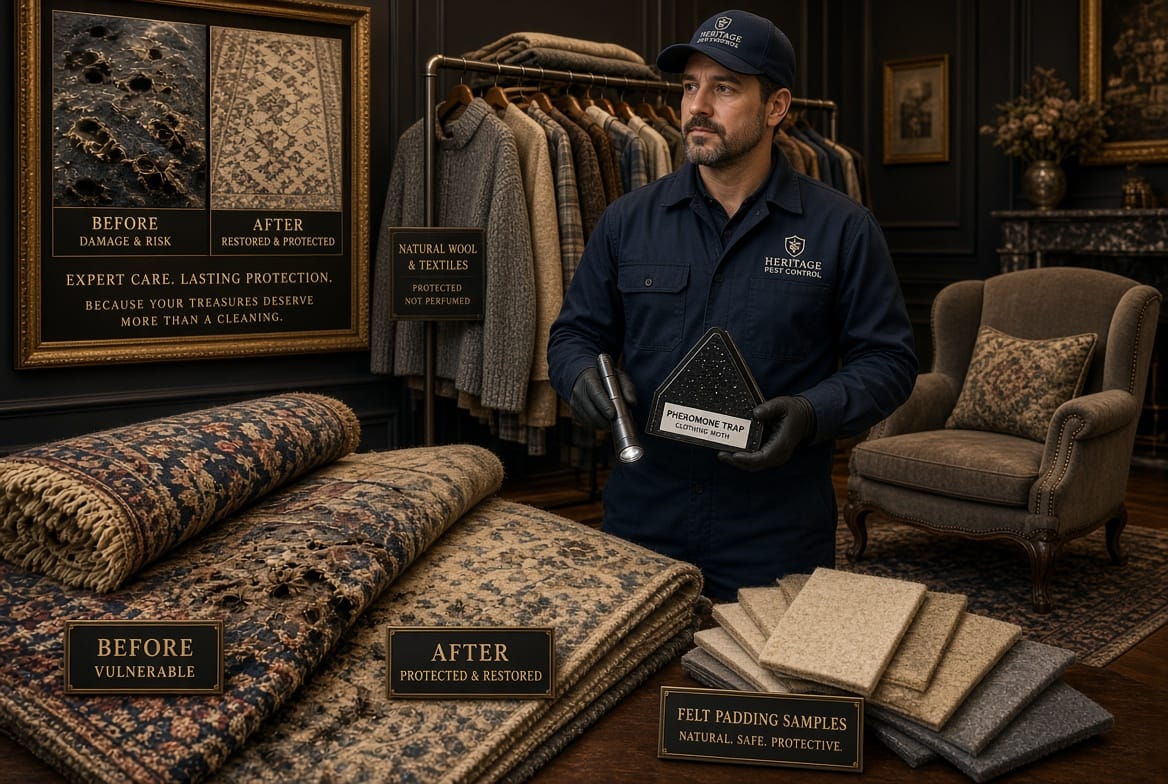
When infestations prove extensive or recur despite diligent efforts, professional pest control becomes the most reliable solution. Trained technicians identify hidden reservoirs, apply targeted treatments safe for occupied homes, and provide ongoing monitoring. Modern approaches emphasize integrated methods that minimize chemical use while maximizing long-term protection.
Prevention Best Practices for Lasting Protection
Prevention remains simpler and less costly than remediation. Establish a routine inspection schedule—monthly for high-value collections and quarterly for everyday furnishings. Rotate rugs periodically so no single area remains undisturbed for months. Vacuum under and behind furniture at least every two weeks. Address spills and pet accidents promptly; residual organic material acts as a powerful attractant.
When purchasing new rugs or upholstery, inquire about fiber content and any pre-treatment for fabric pests. Consider protective underlays or pads that create a barrier against larvae migrating from subfloors. For heirloom pieces, professional appraisal and conservation treatments can include moth-resistant finishes applied by specialists.
Climate control plays a supporting role. Consistent moderate temperatures and low humidity slow larval development. Avoid storing textiles in attics, basements, or garages where temperature and moisture fluctuate widely. Instead, choose climate-stable interior closets or dedicated storage rooms.
The Role of Professional Pest Control Services
While many minor infestations respond well to homeowner efforts, certain situations call for expert assistance. Large rugs that cannot be moved easily, antique upholstery requiring specialized handling, multi-room activity, or infestations involving valuable collections benefit from professional evaluation. Certified technicians possess the training, equipment, and products necessary to locate every breeding site and apply treatments that interrupt the life cycle at multiple stages.
A thorough service visit typically includes detailed inspection, vacuuming of critical zones, placement of monitoring devices, and targeted application of residual products or growth regulators where appropriate. Follow-up visits confirm results and adjust strategies as needed. Many companies also offer preventive maintenance programs that keep homes moth-free year after year.
Choosing a reputable provider ensures treatments remain compatible with family health, pets, and delicate fabrics. Ask about integrated pest management credentials, experience with fabric pests, and guarantees covering future activity. Clear communication about the scope of work and expected outcomes builds trust and delivers measurable peace of mind.
Long-Term Peace of Mind
Protecting rugs and upholstery from the casemaking clothes moth does not require constant worry. Consistent cleaning, vigilant monitoring, strategic use of pheromone traps, and timely professional support form a complete defense. By understanding larval behavior, recognizing the distinctive silk cases and holes they produce, and acting promptly, you preserve both the beauty and the value of your textiles for years to come.
Every home with natural-fiber furnishings can remain moth-free when owners combine everyday habits with informed action. The effort invested today prevents far greater expense and disappointment tomorrow. Your rugs and upholstery represent comfort, style, and often cherished memories; they deserve reliable protection.
Protect Rugs & Upholstery from Moths – Call Now!