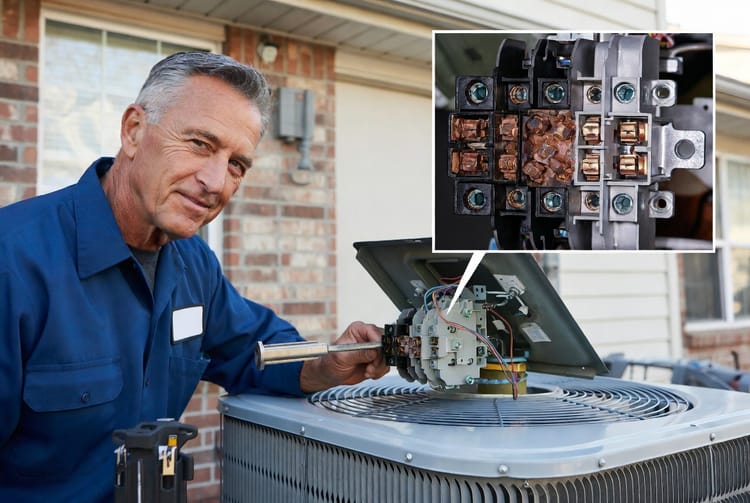
The Blower Motor Spectrum: ECM vs. PSC Motors and Why Variable Speed Matters

In today's homes, the blower motor serves as the vital heart of your HVAC system, quietly working to distribute heated or cooled air for consistent comfort throughout every room. When it comes to choosing the right technology, the difference between ECM motors and PSC motors can transform your experience from basic functionality to exceptional performance.
Switch to an ECM Motor Today – Save Energy & Enjoy Silence
As dedicated HVAC professionals focused on delivering reliable indoor environments, we frequently guide families through evaluating their current blower motor technology. Variable speed capabilities represent a significant advancement that not only reduces energy consumption but also enhances overall air quality and system longevity. Understanding this spectrum empowers you to make informed decisions that benefit your comfort and budget long-term.
The blower motor does far more than simply spin a fan. It ensures conditioned air reaches every corner of your home evenly, maintaining stable temperatures even during extreme weather swings. Older systems relying on limited motor options often struggle with inconsistent airflow, leading to hot or cold spots that leave occupants frustrated. Modern advancements address these challenges directly, offering precise control that adapts instantly to changing demands. This adaptability creates a more stable indoor climate year-round, reducing strain on the entire HVAC setup while promoting better humidity balance during cooling cycles. Homeowners who upgrade report noticeable improvements in daily living, from fewer allergy triggers due to steady filtration to lower monthly expenses that add up over time. The shift toward smarter motor designs reflects how technology continues to evolve to meet real household needs without unnecessary complexity.
The Essential Role of Blower Motors in HVAC Systems
Every heating and cooling system relies on the blower motor to move air across the evaporator or heat exchanger and into your ductwork. Without reliable airflow control, even the most advanced furnace or air conditioner falls short in delivering consistent temperatures. Traditional setups often operate with fixed-speed motors, resulting in noticeable temperature swings and higher operational costs. Modern variable speed blower motors address these challenges by adjusting their output based on real-time needs, providing smoother operation and better dehumidification during cooling seasons.
This core component influences everything from energy use to indoor air quality. When functioning optimally, it supports efficient filtration that captures dust and allergens more effectively. In contrast, inconsistent speeds can allow moisture buildup or uneven distribution, creating environments where comfort suffers. Professional technicians emphasize that proper motor selection forms the foundation for a high-performing system, ensuring your investment in heating and cooling delivers lasting value. By understanding how these motors integrate with thermostats and control boards, homeowners gain confidence in maintaining peak performance through routine service.
Traditional PSC Motors: The Standard of Yesterday
Permanent Split Capacitor (PSC) motors have been a reliable workhorse in HVAC applications for decades. These AC induction motors operate using a capacitor to create the necessary phase shift for starting and running torque. Typically, PSC motors function at a single speed or offer limited multi-speed settings through tap changes during installation. While dependable, they run at full power whenever activated, consuming more electricity than necessary for maintaining comfort.
Homeowners with older systems often notice higher utility bills and louder operation from these motors. The lack of precise airflow modulation can result in hot or cold spots, reduced humidity control, and increased wear on other system components. Think of a PSC motor like riding a bicycle stuck in one gear — it works, but it never optimizes effort for varying terrain. In mild conditions, it still pushes at maximum capacity, wasting energy and creating unnecessary noise that echoes through ducts. Over time, this constant full-throttle approach shortens component life and raises repair frequency. Families frequently describe drafts or stuffy rooms as direct results of this rigid performance, especially in multi-story homes where airflow balance proves challenging. Professional evaluations often reveal that PSC motors contribute to premature strain on fans and bearings because they lack the intelligence to scale down during low-demand periods.
Despite these limitations, PSC motors remain common in budget installations due to their straightforward design and initial affordability. However, their fixed nature means they cannot adapt to seasonal variations or zoning needs, leading to inefficient cycles that cycle on and off frequently. This start-stop behavior not only spikes energy draw but also disrupts quiet enjoyment of living spaces. In heating mode, sudden blasts of hot air can feel uncomfortable, while cooling suffers from inadequate moisture removal. Technicians regularly encounter systems where replacing a failing PSC motor opens the door to far superior alternatives, delivering immediate relief and long-term savings. Understanding these characteristics helps clarify why many experts now view PSC motors as yesterday's solution in an era demanding smarter, more responsive technology.
The Advancement of Electronically Commutated Motors (ECM)
Electronically Commutated Motors, or ECM motors, represent the evolution in blower technology. These brushless DC motors incorporate sophisticated electronics that allow for precise speed control and constant torque or airflow delivery. Unlike their predecessors, ECM motors can ramp up or down seamlessly, matching the exact demands of your thermostat. This variable speed operation leads to substantial energy savings — often 50-75% less electricity usage compared to PSC equivalents under typical conditions.
The technology ensures quieter performance because the motor avoids abrupt starts and stops, creating a more peaceful home environment. Better airflow control also means improved filtration and balanced temperatures across multiple zones. Imagine an automatic transmission that smoothly adjusts to every road condition without driver intervention — that is the ECM motor in action. Its internal microprocessor constantly monitors system needs and fine-tunes RPMs accordingly, resulting in steady, efficient circulation that feels invisible yet profoundly effective. Homeowners upgrading to ECM motors frequently comment on the absence of humming or vibration that once accompanied older units. The compact design often fits existing cabinets with minimal modification, making transitions straightforward for qualified service teams.
ECM motors excel in maintaining constant airflow even as filters load or ducts vary in resistance, preventing the performance drops common with PSC motors. This consistency translates to superior dehumidification in humid climates and even heat distribution during winter. The electronics also reduce electrical stress, extending motor life significantly beyond traditional counterparts. Professional installations include programming the motor to communicate seamlessly with modern thermostats and control boards, unlocking full potential right from day one. Rest assured, choosing ECM motors means investing in technology proven to elevate everyday comfort without added complexity for users.
Key Differences: ECM vs PSC Motors Head to Head
When comparing ECM vs PSC motors, several critical factors stand out for homeowners considering upgrades:
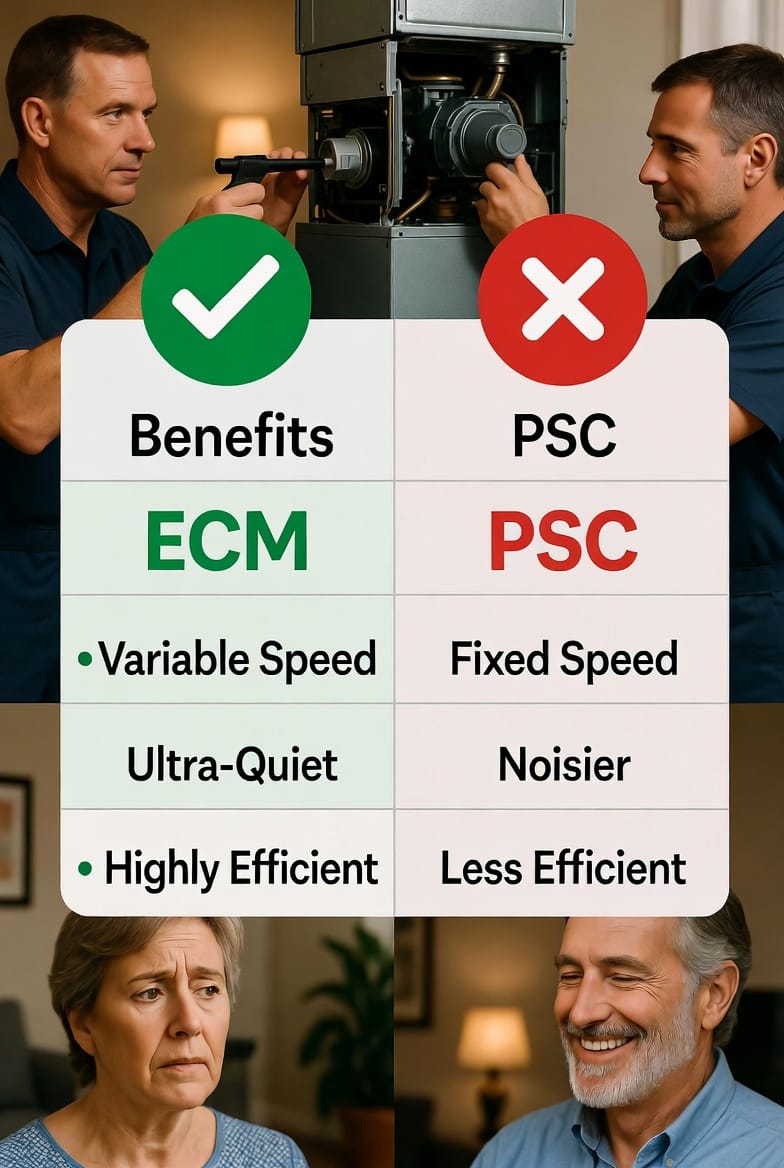
- Speed Control: ECM offers true variable speed adjustment; PSC limited to fixed speeds.
- Energy Efficiency: ECM technology minimizes power draw significantly.
- Noise Levels: ECM operates at lower decibels for whisper-quiet comfort.
- System Longevity: Reduced stress on components with ECM leads to fewer repairs.
These distinctions highlight why variable speed blower motors have become the preferred choice among professionals seeking optimal results.
Energy Efficiency Comparison: Why ECM Motors Save Energy
ECM motors consume significantly less power across operating ranges because they adjust dynamically rather than running full-out constantly. At lower speeds required for most daily conditions, energy use drops dramatically compared to a PSC motor locked into high-output mode. Homeowners typically see monthly reductions that accumulate into meaningful annual savings, freeing budget for other priorities. The precise modulation eliminates wasteful cycling, allowing systems to run longer at efficient levels for better overall performance.
Technicians often demonstrate these savings during consultations using real-time monitoring, showing how variable speed technology aligns perfectly with thermostat demands. In heating seasons, gentle continuous flow prevents temperature overshoots that waste energy. Cooling benefits from extended run times that extract more humidity without over-cooling rooms. This intelligent operation reduces peak load on your electrical system, contributing to lower demand charges in some regions. Families upgrading report comfort improvements alongside bill relief, reinforcing that efficiency and satisfaction go hand in hand. The reassuring reality is that ECM motors deliver these benefits without sacrificing power when needed — they simply scale intelligently.
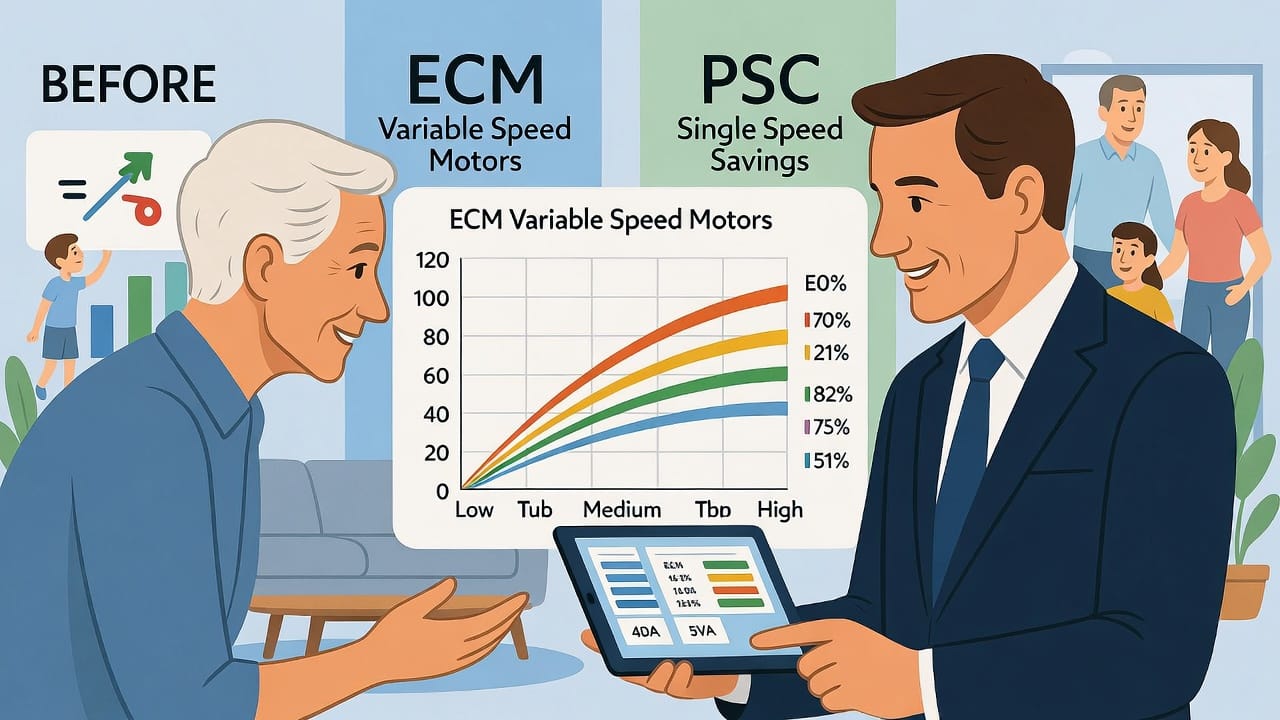
Variable Speed Magic: Better Airflow and Comfort
The ability to operate at varying speeds isn't just a luxury — it is a game-changer for indoor comfort. During mild days, the system runs longer at lower speeds, removing more moisture from the air and preventing that clammy feeling in summer. In winter, gentle circulation maintains even warmth without blasts of hot air. This leads to lower utility bills, better humidity management, and enhanced air quality as filters work more effectively with steady airflow.
Zoned homes particularly benefit, as ECM motors can direct precise volumes where needed without over-pressurizing ducts. Homeowners describe rooms feeling uniformly pleasant rather than layered with temperature gradients. The steady flow also minimizes dust movement, supporting cleaner living spaces for families with sensitivities. Professional service ensures calibration matches your home's unique layout, delivering tailored results that fixed-speed options simply cannot achieve.
Quieter Operation and Other Advantages
ECM motors run with remarkable smoothness, producing far less noise than traditional counterparts. Homeowners enjoy peaceful evenings without background hums disrupting sleep or conversations. Additional benefits include reduced vibration that protects ductwork and components over years of service. The advanced design also supports better overall system reliability, meaning fewer unexpected breakdowns.
Making the Upgrade: What Homeowners Should Know
Professional assessment ensures the right ECM motor matches your system perfectly. Installation by qualified technicians guarantees optimal performance and warranty protection. Many discover that the upgrade pays for itself through combined savings and enhanced comfort within a few seasons. Evaluating your current setup provides clarity on whether switching delivers the greatest value for your household.
Final Thoughts on Choosing the Best Blower Motor
Selecting between ECM motors and PSC motors ultimately comes down to prioritizing long-term efficiency, quiet comfort, and reliable airflow. The variable speed advantage consistently proves superior for modern homes seeking balanced performance without excess energy waste. Homeowners who make the switch often express satisfaction with the noticeable improvements in daily living and reduced operating costs. With expert guidance, the transition becomes seamless, delivering results that last for years.
Maximize Efficiency & Comfort – Call for Variable Speed ECM