The Black Carpet Beetle: Destructive Larvae of a Common Beetle
Black carpet beetle larvae are among the most destructive fabric pests homeowners encounter. While adult beetles appear harmless, their larvae stage causes significant damage to natural fibers and household items. Understanding these pests empowers you to protect your belongings effectively and maintain a pest-free home.
Stop Carpet Beetle Damage Today – Call Now!
In this comprehensive guide, we explore the biology, identification, damage patterns, and proven control strategies for black carpet beetle larvae. With the right knowledge and proactive steps, you can safeguard your fabrics, carpets, and cherished possessions.
Understanding the Black Carpet Beetle
The black carpet beetle (Attagenus unicolor) belongs to the family Dermestidae. These small beetles are widespread across many regions and often enter homes through open windows, doors, or infested items.
Adult black carpet beetles measure about 1/8 to 3/16 inches long. They are oval-shaped, shiny black, and sometimes show subtle white or yellowish markings. Adults primarily feed on pollen and nectar outdoors, making them less of a direct threat indoors.
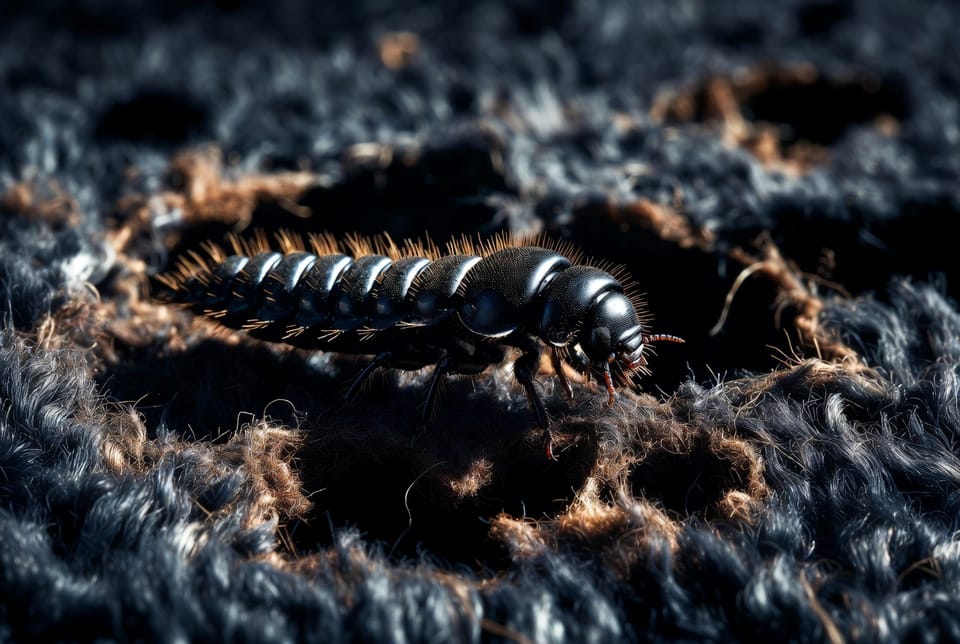
The real concern lies with the larvae. These immature stages are the primary destroyers of fabrics. They are elongated, carrot-shaped, and covered in dense, dark brown to black bristles that give them a fuzzy or hairy appearance. This "woolly" texture helps them move through fibers while they feed voraciously.
Key risk: Larvae can survive for months or even years under favorable conditions, continuously damaging items before maturing into adults.
Life Cycle and the Destructive Larval Stage
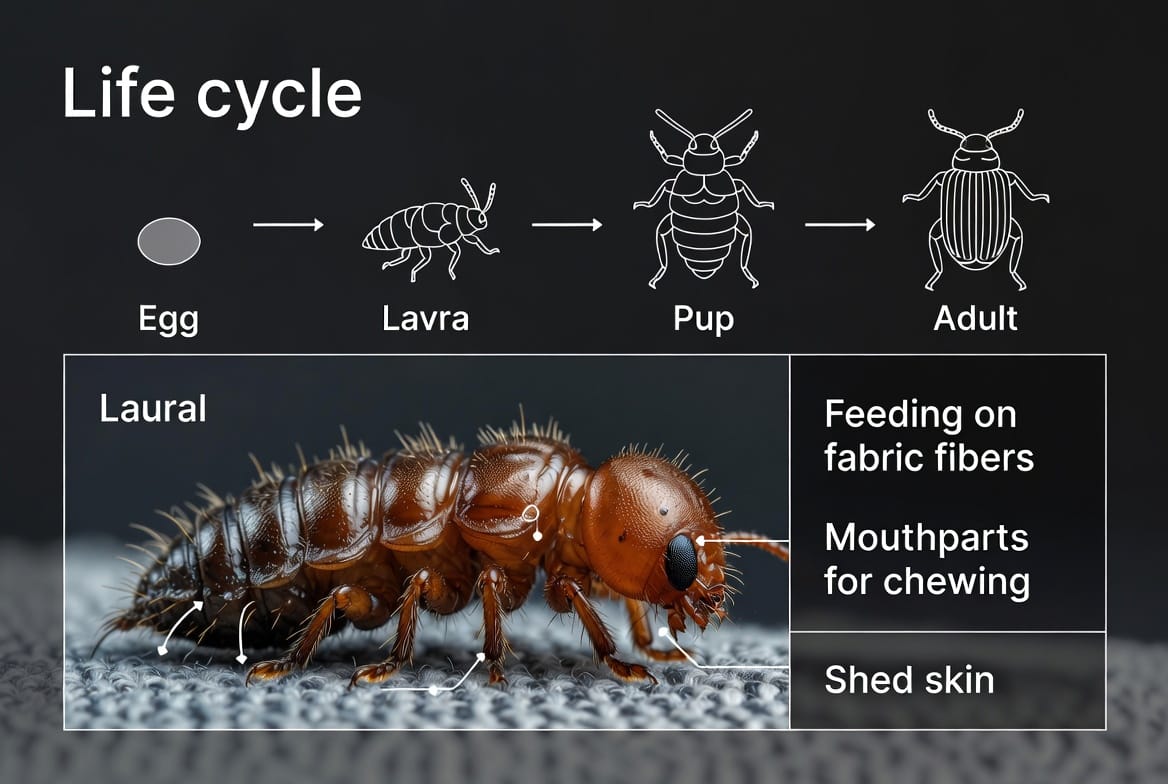
The life cycle of the black carpet beetle includes egg, larva, pupa, and adult stages. Females lay dozens of eggs in hidden cracks, crevices, or directly on suitable food sources.
Larvae hatch and immediately begin feeding. This stage lasts the longest – often several months – and is when most damage occurs. The larvae are highly mobile and seek out dark, undisturbed areas.
During feeding, they molt several times, leaving behind shed skins that serve as clear evidence of infestation. These cast skins are often the first sign homeowners notice.
Unlike many other pests, the larvae cause far more structural damage than the adults. They possess strong chewing mouthparts designed to break down tough proteins found in animal-based materials.
Identifying Signs of Black Carpet Beetle Infestation
Early detection is crucial for effective fabric pest control. Look for these telltale indicators:
- Irregular holes in fabrics, especially in hidden areas like rug backs, clothing seams, or furniture upholstery.
- Shed larval skins – brittle, hollow, bristly casings resembling tiny worms.
- Fine, powdery frass (insect waste) accumulating near infested items.
- Live larvae in dark corners, closets, drawers, or under furniture.
- Adult beetles near windows, lights, or on windowsills during spring and summer.
Bold warning: Damage often appears suddenly because larvae feed quietly for extended periods before becoming noticeable. Wool, silk, feathers, fur, and leather are particularly vulnerable.
The Extensive Damage Caused by Larvae
Black carpet beetle larvae target keratin-rich materials. They can ruin:
- Wool carpets and rugs
- Silk garments and draperies
- Fur coats and accessories
- Feather pillows and down comforters
- Taxidermy specimens and museum artifacts
- Leather goods and woolen blankets
Holes are typically irregular and scattered, distinguishing them from the neat patterns made by clothes moths. Severe infestations can lead to costly replacements and emotional distress when family heirlooms or valuable antiques are affected.
Reassuring note: With prompt action, most infestations can be controlled before widespread destruction occurs. Professional intervention ensures complete resolution.
Effective Control Methods for Black Carpet Beetle Larvae
Successful management combines thorough cleaning, targeted treatments, and prevention. Here’s a proven step-by-step approach:
1. Thorough Vacuuming and Cleaning
- Vacuum all affected areas daily for several weeks, focusing on edges, crevices, and under furniture.
- Empty the vacuum bag or canister outdoors immediately to prevent re-infestation.
- Wash all removable fabrics in hot water (at least 120°F) and dry on high heat.
- Steam clean carpets and upholstery where appropriate.
2. Decluttering and Inspection
Remove unnecessary items that could harbor larvae. Inspect stored clothing, linens, and collectibles carefully.
3. Insecticide Application
- Use residual insecticides labeled for carpet beetles, applying to cracks, baseboards, and infested areas.
- Insect growth regulators (IGRs) can disrupt the life cycle and prevent larvae from maturing.
- Always follow label instructions for safety and effectiveness.
Important: Combine methods for best results. Cleaning alone may not eliminate hidden larvae, while insecticides work better in prepared environments.
Prevention Strategies to Keep Beetles Away
Prevention is more effective and less costly than treatment. Implement these habits:
- Regular deep cleaning – vacuum weekly and clean closets seasonally.
- Proper storage – use airtight containers for woolens, furs, and delicates.
- Monitor entry points – seal cracks around windows and doors.
- Reduce attractants – limit indoor plants and promptly remove dead insects.
- Routine inspections of rarely used areas like attics, basements, and storage rooms.
Pro tip: Cedar blocks or lavender sachets offer mild natural repellency, but they do not replace thorough cleaning and monitoring.
When to Call Professional Pest Control
DIY efforts work for minor issues, but severe or recurring infestations require expert help. Professionals bring:
- Advanced detection tools
- Targeted treatment options
- Knowledge of beetle biology for complete elimination
- Guarantees and follow-up services
Trained technicians can identify hidden sources and apply industry-grade solutions safely.

Long-Term Protection and Peace of Mind
Black carpet beetle larvae pose a serious threat to fabric-based possessions, but they are manageable with knowledge and consistent action. By recognizing signs early, implementing strong cleaning routines, and knowing when to seek professional assistance, you can effectively protect your home.
Remember that prevention and early intervention are your strongest defenses. Regular maintenance not only controls carpet beetles but improves overall indoor air quality and home hygiene.
Carpet beetle larvae destroy fabrics. Don’t wait until valuable items are ruined. For reliable, expert fabric pest control. Our experienced team provides fast, effective solutions tailored to your specific situation, giving you lasting peace of mind.
Take action now to safeguard your home and belongings from these destructive pests.
Professional Carpet Beetle Treatment – Call Today