The Backflow Preventer: Protecting Your Drinking Water from Contamination
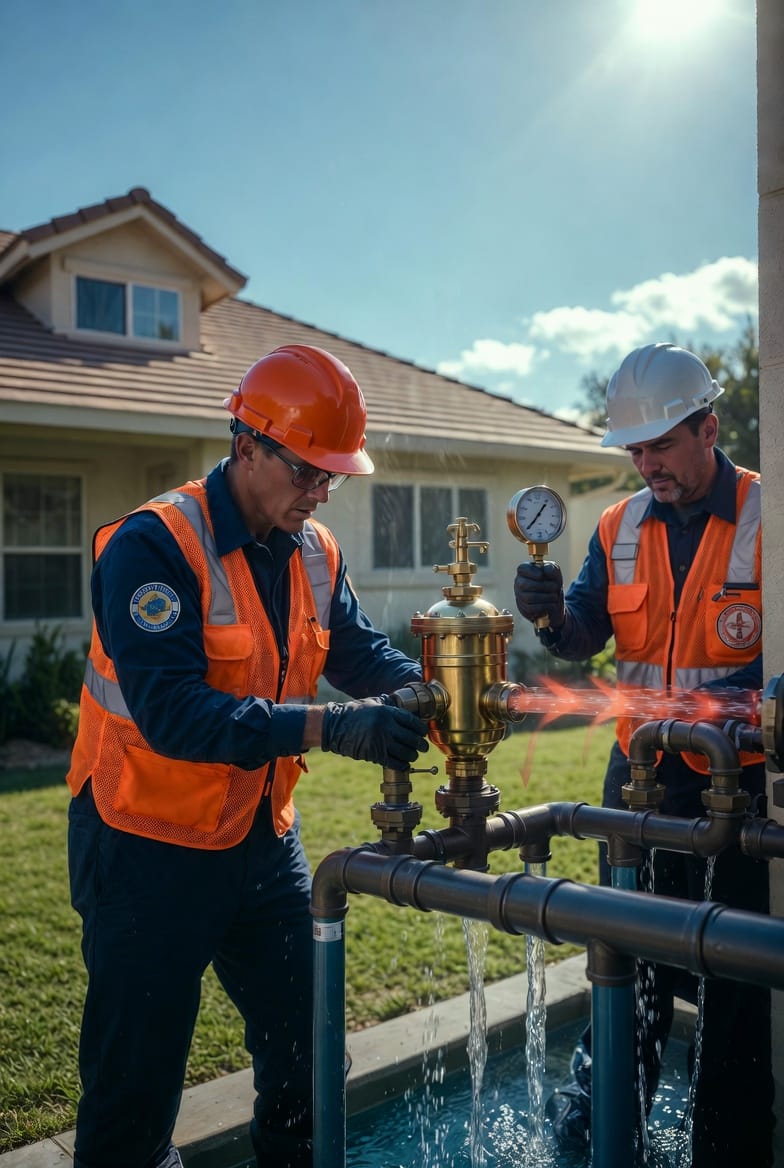
In today’s world, access to clean, safe drinking water is something we often take for granted. Yet behind the scenes, hidden dangers like backflow can quietly compromise the very water we rely on for cooking, bathing, and hydration. At our professional plumbing service, we believe every homeowner and business deserves complete peace of mind when it comes to water safety. That’s why the backflow preventer stands as one of the most critical yet often overlooked components in any modern plumbing system.
Secure Your Water Supply – Schedule Service Today
This comprehensive guide explores everything you need to know about backflow prevention—from the science behind it to real-world applications and maintenance best practices. Whether you manage a residential property with an irrigation system or operate a busy commercial kitchen, understanding how these devices protect your potable water supply is essential. We’ll walk you through the risks, the solutions, and why proactive installation and testing matter more than ever. By the end, you’ll feel confident in your ability to protect what matters most: your family’s health and your property’s water quality.
What Is Backflow and Why Should You Care?
Backflow occurs when water flows in the opposite direction than intended—reversing from a contaminated source back into your clean drinking water supply. This reversal typically happens due to two main pressure-related events: backsiphonage (a sudden drop in supply pressure that creates a vacuum, pulling in surrounding liquids) or backpressure (when downstream pressure exceeds the supply line, pushing contaminants upstream).
Imagine a garden hose submerged in a bucket of fertilizer solution during a low-pressure event. Without protection, that chemical-laden water could siphon directly into your home’s main water lines. The consequences? Serious health hazards including exposure to bacteria, pesticides, industrial chemicals, or even sewage. These risks are not hypothetical—they represent everyday threats in homes and businesses across the country.
Key risks associated with untreated backflow include:
- Cross-contamination of potable water with non-potable sources
- Bacterial growth and illness outbreaks
- Chemical exposure from fertilizers, cleaners, or industrial runoff
- Costly property damage and emergency repairs
- Regulatory violations leading to fines or shutdowns
The good news? A properly installed backflow preventer acts as your first and most reliable line of defense. These devices ensure water moves in one direction only—toward your faucets and fixtures—while blocking any potential reverse flow. As plumbing experts with decades of hands-on experience, we’ve seen firsthand how these simple yet sophisticated tools prevent disasters and deliver lasting peace of mind.
How Backflow Preventers Work: Simple Science, Powerful Protection
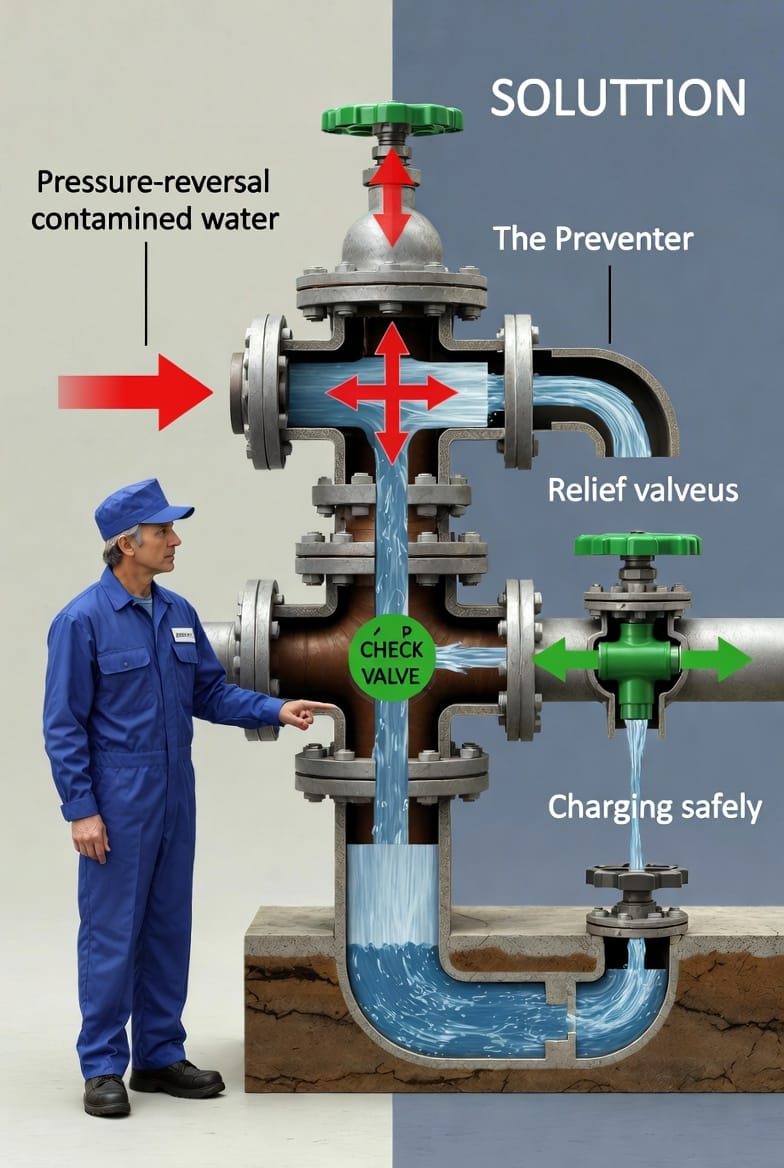
At their core, backflow preventers are engineered one-way valves designed to maintain the integrity of your potable water system. They use a combination of mechanical components—primarily check valves, relief valves, and air gaps—to detect and stop pressure reversals instantly.
When normal forward pressure exists, the device remains open, allowing clean water to flow freely. The moment a reversal is detected (whether from backsiphonage or backpressure), the internal mechanisms close automatically. In higher-hazard applications, a reduced pressure zone (RPZ) assembly even includes a relief valve that discharges any potentially contaminated water to the outside, ensuring zero chance of mixing.
Think of it like a highly specialized security gate for your plumbing. It never sleeps, never tires, and stands ready 24/7 to protect your family. Different models suit different needs: double-check valve assemblies for lower-risk setups and RPZ units for high-hazard environments where failure simply isn’t an option.
What sets quality backflow preventers apart is their durable brass construction, precision-engineered internals, and compliance with strict industry standards. Installed correctly by licensed professionals, these devices operate silently for years while delivering unmatched protection.
Where Backflow Preventers Are Required: Critical Locations You Need to Know
Backflow prevention isn’t optional in many settings—it’s required by plumbing codes and health regulations to safeguard public water supplies. Understanding where these devices must be installed helps you stay compliant and protected.
Common locations that demand backflow preventers include:
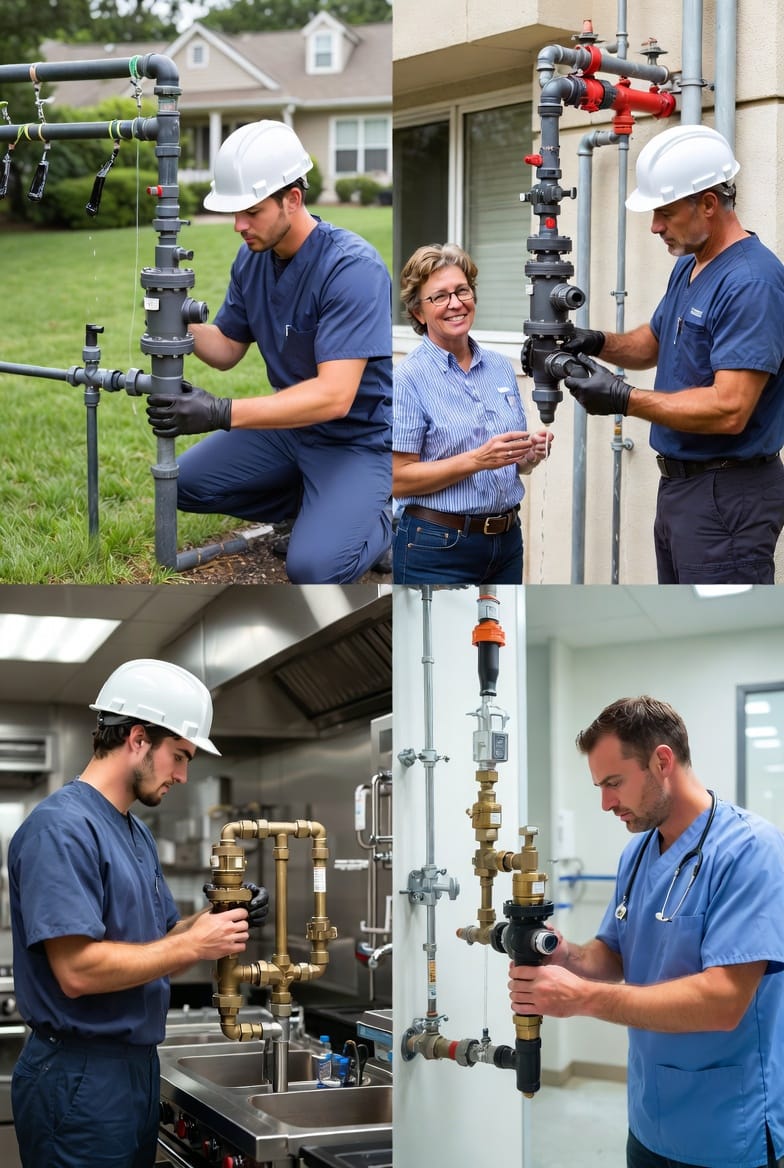
- Irrigation systems – Lawn sprinklers and drip lines frequently connect to fertilizers and pesticides, creating high contamination risk during pressure drops.
- Fire sprinkler systems – Stagnant water inside pipes can harbor bacteria; preventers stop this from entering the main supply.
- Commercial kitchens – Dishwashers, hoses, and sinks often handle grease, cleaners, and food waste that could backflow into drinking lines.
- Medical and dental facilities – Sterilization equipment and patient-care areas require the highest level of protection to prevent pathogen transmission.
- Boilers and HVAC systems – Chemicals used for treatment must never reach potable water.
- Swimming pools and spas – Treatment chemicals pose direct threats during maintenance or low-pressure events.
Whether you’re a homeowner with a backyard sprinkler system or a facility manager overseeing a large commercial property, proper placement ensures compliance and eliminates hidden vulnerabilities. Our team routinely evaluates properties and recommends tailored backflow preventer solutions that match each unique risk profile.
Testing Requirements: Annual Assurance for Ongoing Safety
Installation is only the beginning. Backflow preventers must be tested annually by certified professionals to confirm they’re functioning at peak performance. This isn’t bureaucracy—it’s a critical safeguard that catches wear, debris buildup, or minor malfunctions before they become major problems.
During a professional test, technicians simulate both backsiphonage and backpressure conditions while measuring valve performance and relief operation. Results are documented and submitted to local authorities when required. Skipping this step could leave your water vulnerable and expose you to liability.
We recommend scheduling your backflow testing during routine plumbing maintenance. It’s quick, non-disruptive, and provides written proof of protection—something insurers and regulators increasingly demand.
The Broader Benefits of Investing in Backflow Prevention
Beyond basic safety, a well-maintained backflow preventer delivers numerous advantages:
- Health protection for your family, employees, and customers
- Code compliance that avoids fines and forced shutdowns
- Property value preservation through modern, code-ready plumbing
- Insurance advantages with documented risk reduction
- Long-term cost savings by preventing emergency contamination events
Homeowners often tell us the greatest benefit is simply knowing their water is safe—no second-guessing when kids fill their water bottles or when guests pour a glass from the tap.
Common Myths About Backflow Prevention—Busted
Many property owners assume “it won’t happen to me” or that their existing plumbing is sufficient. In reality, backflow incidents occur more frequently than most realize, often without immediate visible signs. Another myth? That testing is expensive or unnecessary. Professional annual testing actually costs far less than a single contamination cleanup.
We also hear concerns about aesthetics or performance impact. Modern backflow preventers are compact, reliable, and designed to operate without affecting water pressure or flow under normal conditions.
Choosing the Right Professional for Installation and Service
Selecting an experienced, licensed plumbing team makes all the difference. Look for technicians who specialize in backflow prevention, carry current certifications, and stand behind their work with clear warranties. At our service, every installation follows manufacturer guidelines and local code requirements, ensuring your system delivers maximum protection from day one.
Protect Your Family’s Drinking Water Today
Your family’s health and your property’s water quality deserve the best defense available. A professionally installed and regularly tested backflow preventer provides that defense—quietly, reliably, and effectively.
Don’t wait for a pressure event to reveal hidden vulnerabilities. Protect your family’s drinking water now. Ask about backflow testing and installation services at (844) 578-2593. Our expert team is ready to evaluate your system, answer every question, and deliver the peace of mind you and your loved ones deserve.
Safeguard Your Family’s Water – Call for Expert Help