The Aluminum Feeder Wire: Proper Terminations for Large Appliances
Aluminum feeder wire remains a reliable and cost-effective choice for powering large household appliances and subpanels. When installed correctly, it delivers safe, consistent performance for years. However, aluminum wiring requires specific techniques that differ from copper to prevent oxidation, overheating, and potential hazards.
Protect Your Home from Aluminum Wiring Risks – Call Now!
At our electrical service, we prioritize safety for large loads such as electric ranges, dryers, ovens, and subpanel feeds. Proper terminations protect your home, extend equipment life, and give you peace of mind.
Why Aluminum Feeder Wire Is Commonly Used
Modern homes frequently use aluminum conductor for feeder wires carrying 60–200 amps or more. Aluminum offers several advantages:
- Lower cost compared to equivalent copper conductors
- Lighter weight, making installation easier in long runs
- Excellent conductivity-to-weight ratio for main service entrances and appliance circuits
You will typically find aluminum feeder wire serving:
- Electric ranges and cooktops
- Clothes dryers
- Whole-house subpanels
- EV chargers and large HVAC equipment
Key fact: Aluminum expands and contracts more than copper with temperature changes. Without proper terminations, this movement loosens connections over time, creating resistance and heat buildup.
Proper handling turns aluminum into a safe, dependable solution.
Understanding the Unique Properties of Aluminum Wire
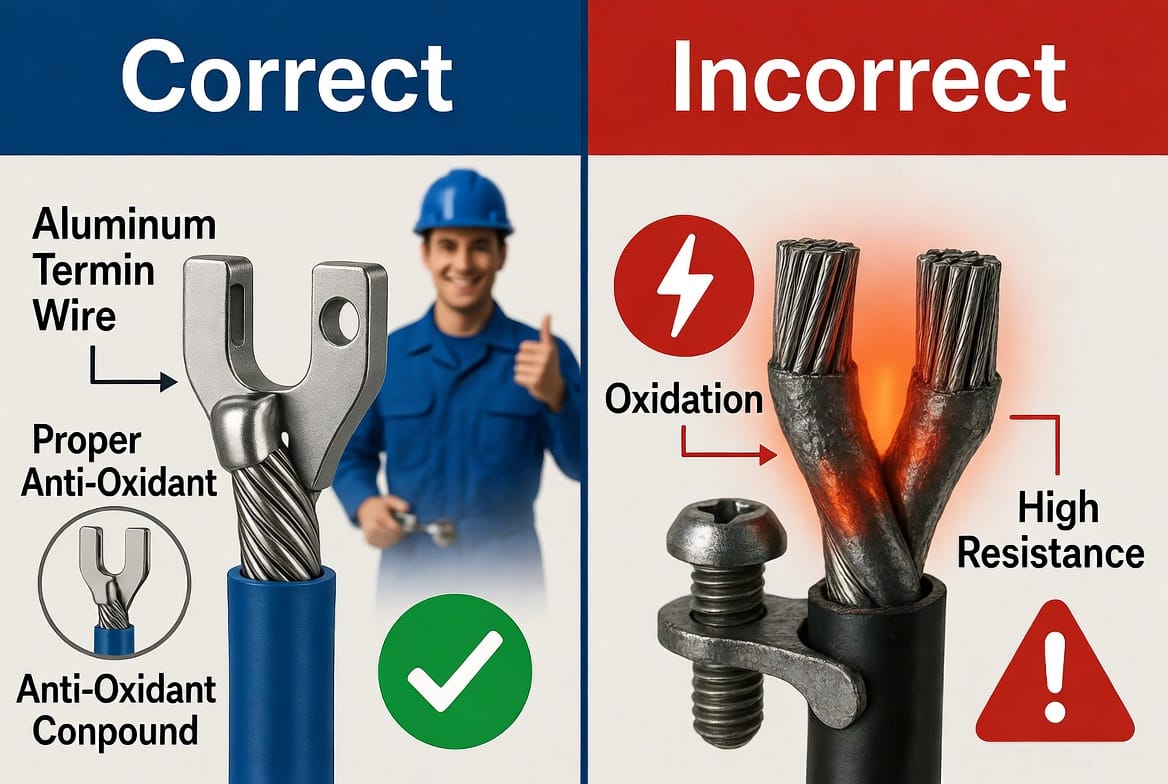
Aluminum naturally forms an oxide layer when exposed to air. This layer acts as an insulator and increases electrical resistance if not managed.
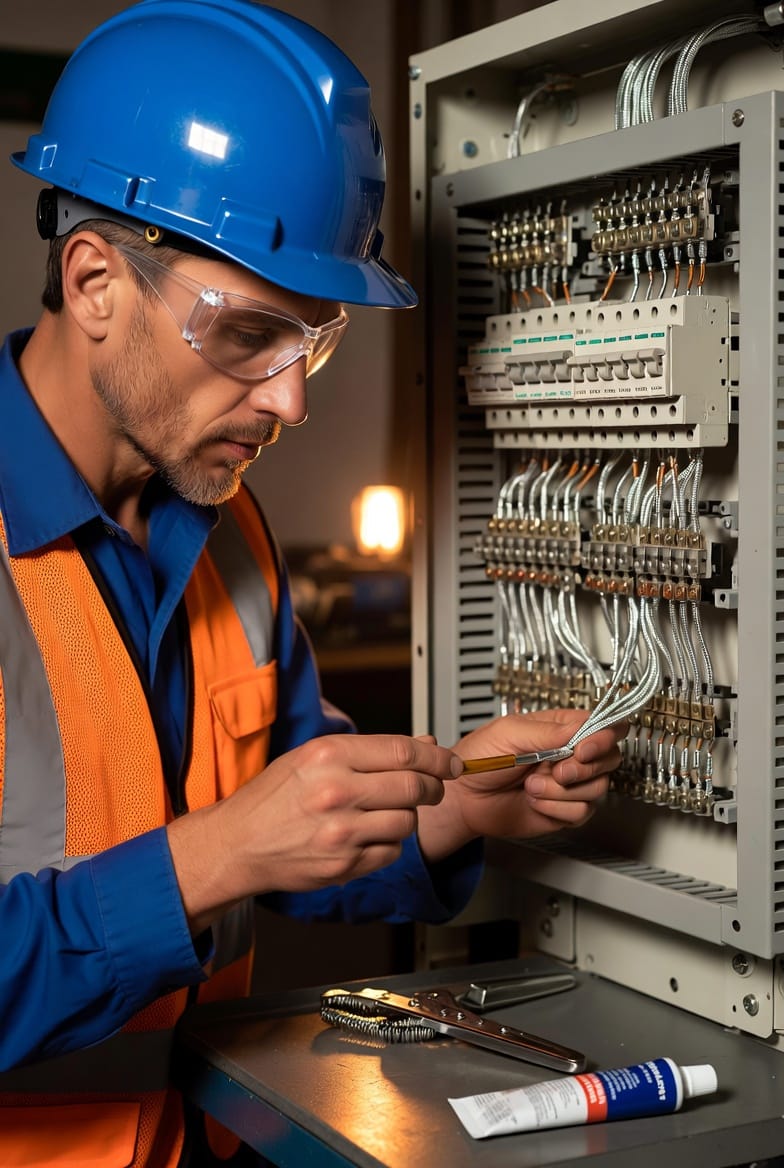
Special anti-oxidant compound is therefore essential. This paste:
- Prevents oxygen from reaching the conductor
- Inhibits galvanic corrosion between aluminum and copper or steel lugs
- Maintains low-resistance contact for the life of the connection
Torque specifications are equally critical. Manufacturers provide exact inch-pound values for each lug and breaker type. Under-torquing leaves connections loose; over-torquing damages the soft aluminum strands. Both scenarios lead to dangerous heat.
Professional electricians use calibrated torque drivers and follow label instructions on every panel and appliance.
Step-by-Step Proper Termination Process
Safety begins with the right procedure. Here is the professional approach we follow for every aluminum feeder wire job:
- Turn off power at the main breaker and verify with a voltage tester.
- Cut and strip carefully — remove only the necessary insulation without nicking the conductor.
- Apply anti-oxidant compound generously to the bare aluminum strands immediately after stripping.
- Insert wire fully into the lug or terminal.
- Torque to specification using a calibrated tool — never guess.
- Double-check tightness after 24–48 hours as aluminum settles.
- Inspect for proper alignment and no exposed strands.
Following these steps dramatically reduces risks associated with aluminum connections.
Risks of Improper Aluminum Terminations
Poorly terminated aluminum wire can create serious issues, especially under the continuous high loads of large appliances.
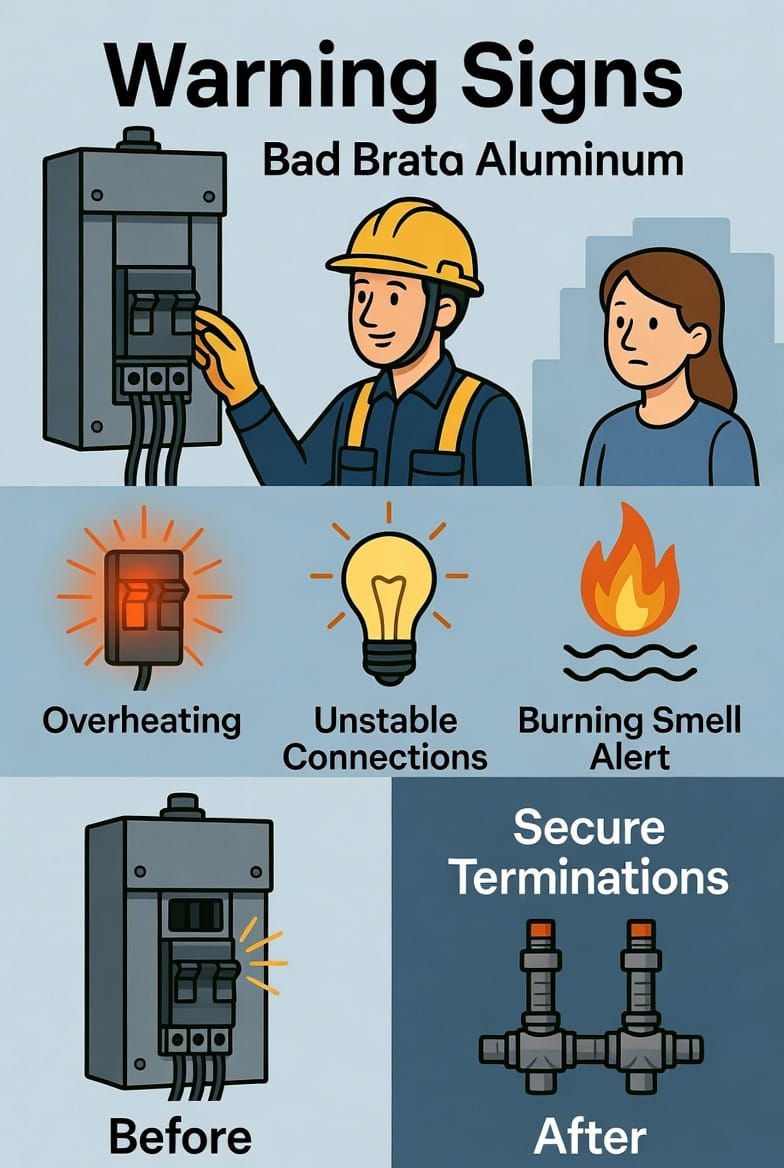
Common warning signs include:
- Warm or hot breakers in the panel
- Flickering lights when the range or dryer runs
- Burning smell near outlets or panels
- Intermittent appliance operation or sudden shutdowns
- Discolored insulation around connections
These symptoms indicate increased resistance and heat — precursors to arcing or fire. Early attention prevents costly damage and keeps your family safe.
Best Practices for Long-Term Safety
Regular professional inspections provide the best protection. We recommend checking aluminum-fed circuits every 3–5 years or whenever you notice performance changes.
Additional best practices:
- Use only AL-rated lugs, breakers, and outlets
- Never mix aluminum and copper without approved connectors
- Choose torque-rated breakers designed for aluminum
- Schedule preventive maintenance during appliance upgrades
Aluminum wiring installed to today’s standards performs reliably. The key lies in proper initial termination and periodic verification.
Tools and Materials Professionals Use
Quality matters. Certified electricians rely on:
- Calibrated torque screwdrivers and wrenches
- UL-listed anti-oxidant compounds (e.g., Noalox or equivalent)
- Proper stripping tools that avoid conductor damage
- Infrared thermometers for non-contact heat detection
- High-resolution inspection cameras for tight spaces
These tools ensure every connection meets or exceeds manufacturer and National Electrical Code requirements.
When to Call a Licensed Electrician
DIY work on aluminum feeder circuits is not recommended. The combination of high amperage, special compounds, and precise torque values makes professional service the safest choice.
Contact a qualified electrician if you:
- Recently moved into a home with aluminum wiring
- Plan to install a new range, dryer, or subpanel
- Notice any of the warning signs listed above
- Want peace of mind before adding large electrical loads
Our team specializes in safe aluminum wire terminations for large appliances and complete feeder upgrades. We bring decades of experience, proper tools, and a commitment to code-compliant work.
The Bottom Line: Safety Through Expertise
Aluminum feeder wire delivers excellent value when terminated correctly. By using anti-oxidant compound, following torque specifications, and performing regular checks, homeowners enjoy safe, efficient power for their largest appliances.
Aluminum connections require special care. Don’t leave safety to chance.
We ensure every termination is secure, compliant, and built to last.
Your home and family deserve reliable electrical service. Let us handle the technical details while you enjoy worry-free operation of your appliances.
Safe Aluminum Feeder Wire Fixes – Call Our Experts Now!