Modernizing Your Home's Electrical System: Safety, Capacity, and Smart Home Readiness
In an era where homes are becoming smarter and more energy-intensive, the backbone of any residence—its electrical system—often gets overlooked until problems arise. If your home was built before the 1980s, chances are its wiring, panels, and protective devices are outdated, posing serious risks to safety, efficiency, and future-proofing.
Modernizing your home's electrical system isn't just about convenience; it's a critical step to:
- Prevent fires
- Handle increased power demands from appliances and electric vehicles
- Integrate smart technologies seamlessly
This guide explores the necessities of updating old wiring (like knob-and-tube or aluminum), incorporating advanced protections such as AFCIs and GFCIs, upgrading electrical panels for contemporary loads, and pre-wiring for EV chargers and smart systems. By prioritizing safety and adhering to codes, homeowners can avoid costly emergencies and enhance their property's value.
Stop Electrical Hazards Today – Call Us
The Dangers of Outdated Wiring
Outdated electrical systems are a ticking time bomb in many older homes. According to industry reports, electrical malfunctions account for thousands of house fires annually in the U.S., with aging infrastructure being a primary culprit.
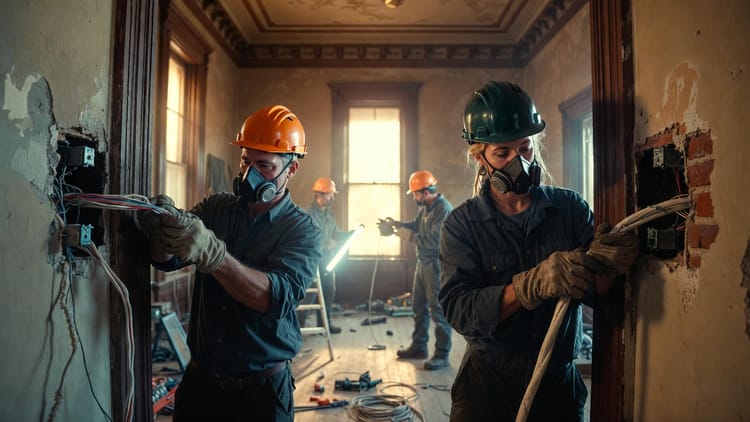
- Knob-and-tube wiring (common in homes built before the 1950s)
Consists of insulated copper wires supported by ceramic knobs and tubes, lacking a grounding wire.
Over decades, the rubber insulation cracks, exposing wires to moisture, pests, or physical damage → increasing the risk of shorts and arcs.
These homes often can't support modern appliances without overloading, leading to frequent tripped fuses or even insulation ignition. - Aluminum wiring (prevalent in the 1960s and 1970s due to copper shortages)
Aluminum expands and contracts more than copper with temperature changes, causing connections to loosen over time.
This results in overheating, arcing, and fires at outlets, switches, or panels.
Many insurance companies view aluminum wiring as a red flag → potentially raising premiums or denying coverage.
Upgrading to modern copper wiring is essential. Copper is more durable, conductive, and compatible with today's devices. Its stability reduces resistance, minimizing energy loss and heat buildup.Visual contrast:
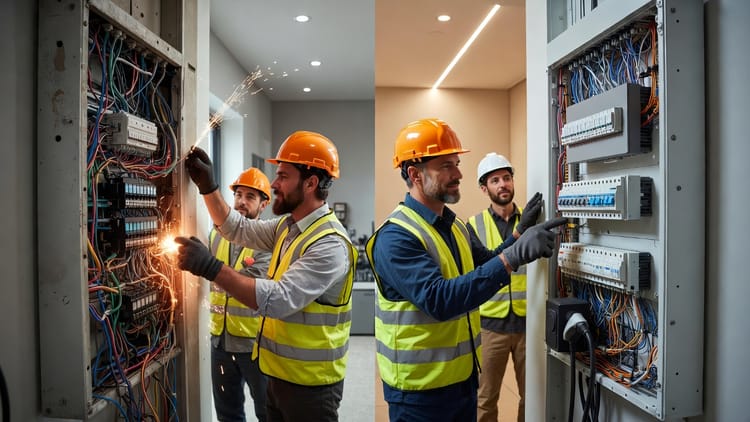
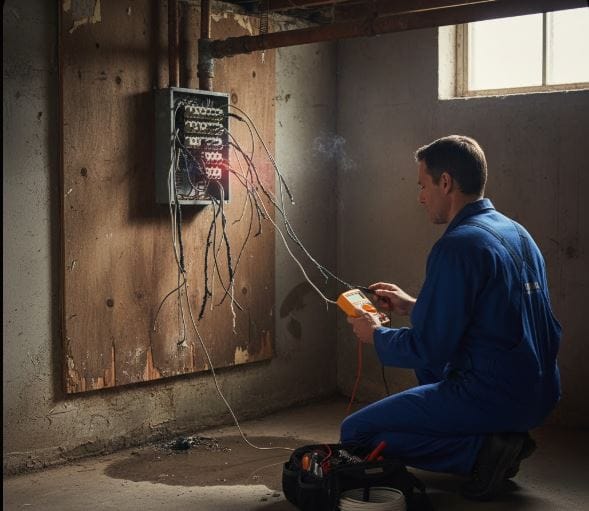
Outdated knob-and-tube often looks frayed and primitive, aluminum shows corrosion or loose terminations, while modern copper installations feature neat, sheathed cables that meet current safety and capacity standards.Rewiring isn't cheap—expect costs from $8,000 to $15,000 for a typical home—but the investment pays off in reduced fire risks and improved functionality.
Critically: Partial fixes (like pigtailing aluminum to copper) are band-aids; full replacement is the gold standard for long-term reliability.
Essential Safety Upgrades: AFCIs and GFCIs
Beyond wiring, enhancing protection with Arc Fault Circuit Interrupters (AFCIs) and Ground Fault Circuit Interrupters (GFCIs) is non-negotiable.
- AFCIs detect dangerous arcing faults (sparks from damaged wires or loose connections) that standard breakers miss → tripping the circuit to prevent fires.
Required in bedrooms since 1999 and expanded to most living areas in recent codes. - GFCIs monitor for ground faults, shutting off power in milliseconds if current leaks (e.g., in wet areas like bathrooms or kitchens).
Protects against electrocution, especially around water sources.
Without these, homes remain vulnerable: a frayed cord in a bedroom could arc unnoticed, or a faulty appliance near a sink might deliver a lethal shock.
Upgrading Electrical Panels
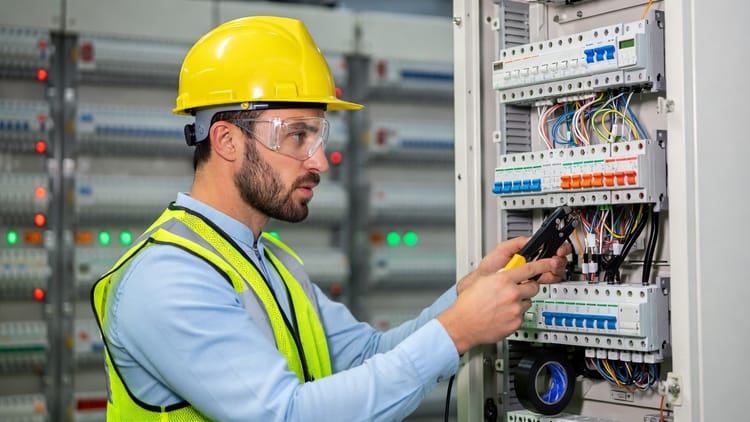
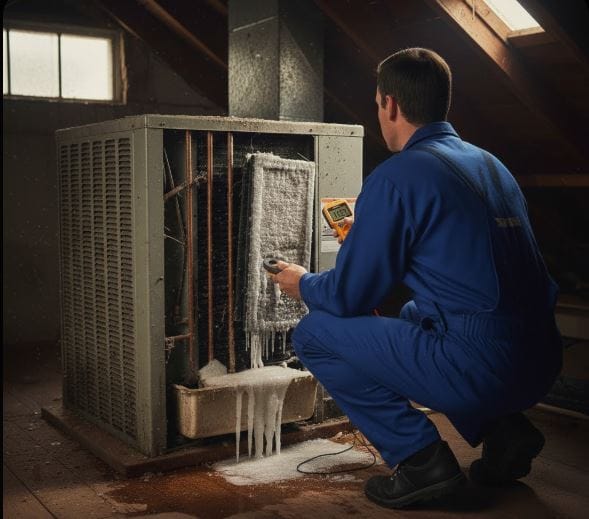
Older panels (often rated at 60 amps) were sufficient for basic lighting and radios but falter under modern loads from air conditioners, home offices, or kitchen gadgets.Modern homes typically need 200-amp service to accommodate simultaneous usage without dimming lights or overheating wires.
Warning signs of an inadequate panel:
- Frequent breaker trips
- Buzzing sounds
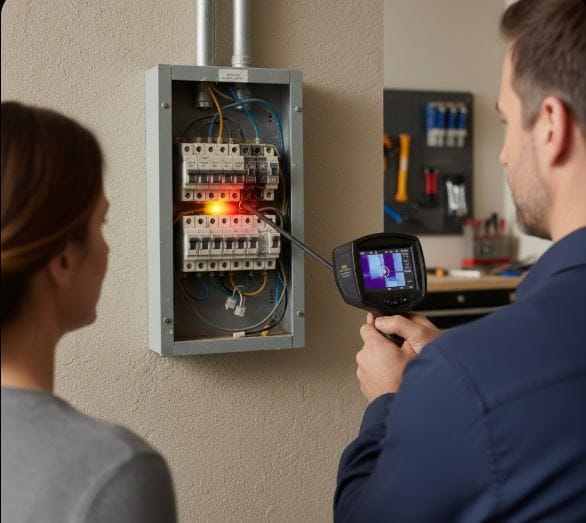
- Warm/hot panels
These are indicators of overload that could lead to failures or fires. Switching to a contemporary circuit breaker panel is highly recommended.
Future-Proofing: EV Chargers and Smart Home Systems
Pre-wiring for electric vehicle (EV) chargers and smart home systems positions your home for the future.
- EVs require dedicated 240-volt circuits (often 40–50 amps) to charge efficiently overnight. Installing conduit and wiring during upgrades avoids future wall-tearing.
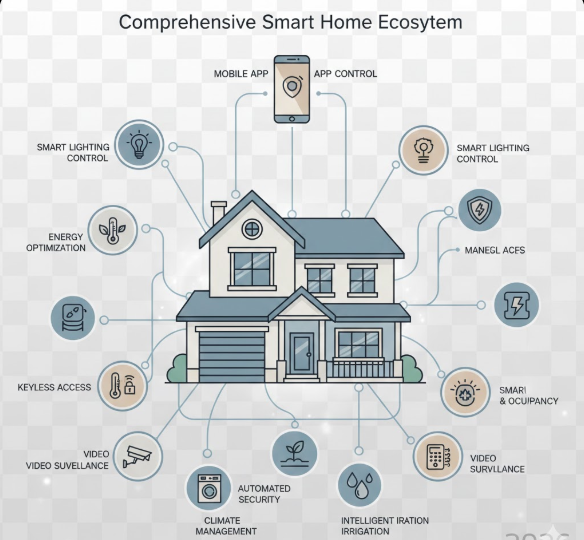
- Smart homes thrive on robust low-voltage wiring (Ethernet or fiber) for IoT devices like thermostats, lights, security cameras, voice assistants, and automated blinds → preventing Wi-Fi dead zones.
These preparations aren't luxuries. With EV adoption surging and smart devices ubiquitous, unprepared homes lag in efficiency and market appeal. Proactive wiring saves thousands compared to later retrofits.
Also ensure compatibility with renewable energy like solar panels, which demand inverter-ready panels.
Safety and Code Compliance
Throughout these upgrades, safety and code compliance are paramount.
The National Electrical Code (NEC), developed by the NFPA, sets the standards for safe installations and is updated every three years. Local jurisdictions adopt versions of the NEC—always consult authorities to avoid violations, fines, or unsafe conditions.Professional inspections ensure work meets current guidelines, protecting lives and property.Important Warning: Electrical work is not a DIY project. Mishandling can result in severe injury, fires, or code violations. Always hire qualified professionals.
Common Electrical Upgrade Projects (Summary Table)
Upgrade Project | Description | Estimated Cost | Benefits |
|---|---|---|---|
Rewiring (Knob-and-Tube to Copper) | Replace outdated wiring with modern grounded copper | $8,000–$15,000 | Reduces fire risk, improves efficiency |
Panel Upgrade (60-Amp to 200-Amp) | Install larger breaker panel | $1,500–$4,000 | Handles modern loads, adds circuits |
AFCI/GFCI Installation | Add protective devices in key areas | $200–$500 per unit | Prevents arcs and shocks |
EV Charger Pre-Wiring | Dedicated circuit and conduit | $1,000–$2,500 | Future-proofs for electric vehicles |
Smart Home Wiring | Low-voltage cabling for IoT | $2,000–$5,000 | Enables seamless smart integration |
Call Now – Electrical Problems Fixed Fast
Warning: Electrical work is not a DIY project. Mishandling can result in severe injury, fires, or code violations. Ensure your home's safety and capacity.