Flat Roof Systems: A Comparative Guide to EPDM, TPO, and Modified Bitumen for Commercial and Residential Use
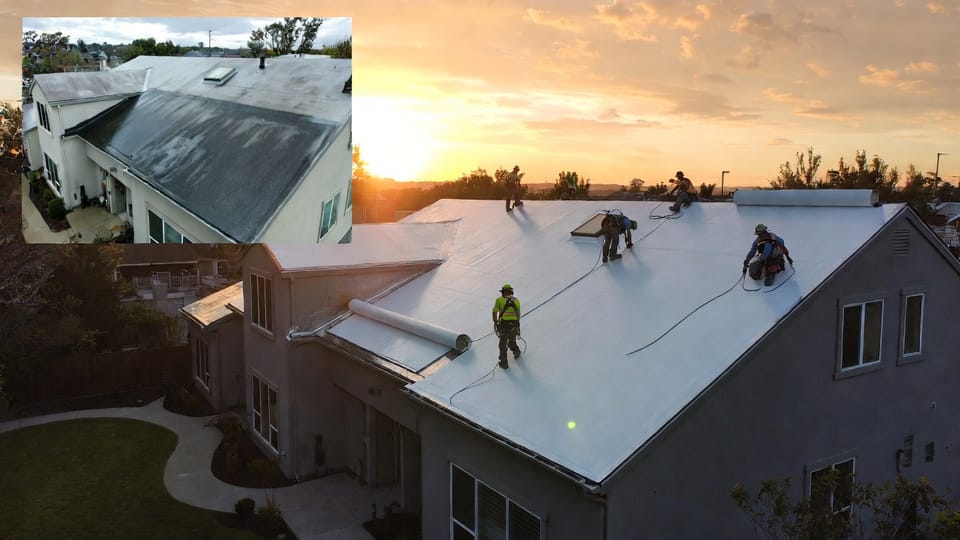
Low-slope roofing, often called flat roofing, remains one of the most practical and aesthetically versatile solutions for both commercial buildings and modern residential projects. From sleek urban office expansions to contemporary home additions, these systems handle minimal pitch—typically under 3:12—while managing water drainage efficiently when designed correctly. Choosing the right flat roof system is critical because poor selection or installation can lead to premature leaks, high energy costs, and costly repairs.
Upgrade Your Low-Slope Roof – Free Professional Recommendation
Rest assured, with the proper material and expert craftsmanship, a low-slope roof delivers decades of reliable protection, energy efficiency, and peace of mind. This comprehensive guide examines the three dominant systems—EPDM rubber, TPO thermoplastic, and modified bitumen (torch-down)—focusing exclusively on their performance in low-slope applications for commercial and residential use. You will discover their unique material properties, proven installation methods, ideal project fits, and direct comparisons to help you make an informed decision.
Understanding Low-Slope Roofing Challenges and Opportunities
Low-slope roofs excel in modern architecture because they allow expansive open interiors, easier integration with rooftop equipment, and clean minimalist lines. Yet they face specific demands: prolonged water contact, UV exposure, thermal cycling, and occasional foot traffic.
EPDM, TPO, and modified bitumen each address these challenges differently, offering distinct advantages in durability, reflectivity, and cost-effectiveness. When installed by certified professionals, these systems routinely exceed manufacturer warranties and protect valuable investments for 20 to 50 years.
EPDM Roofing: The Proven Rubber Performer for Low-Slope Reliability
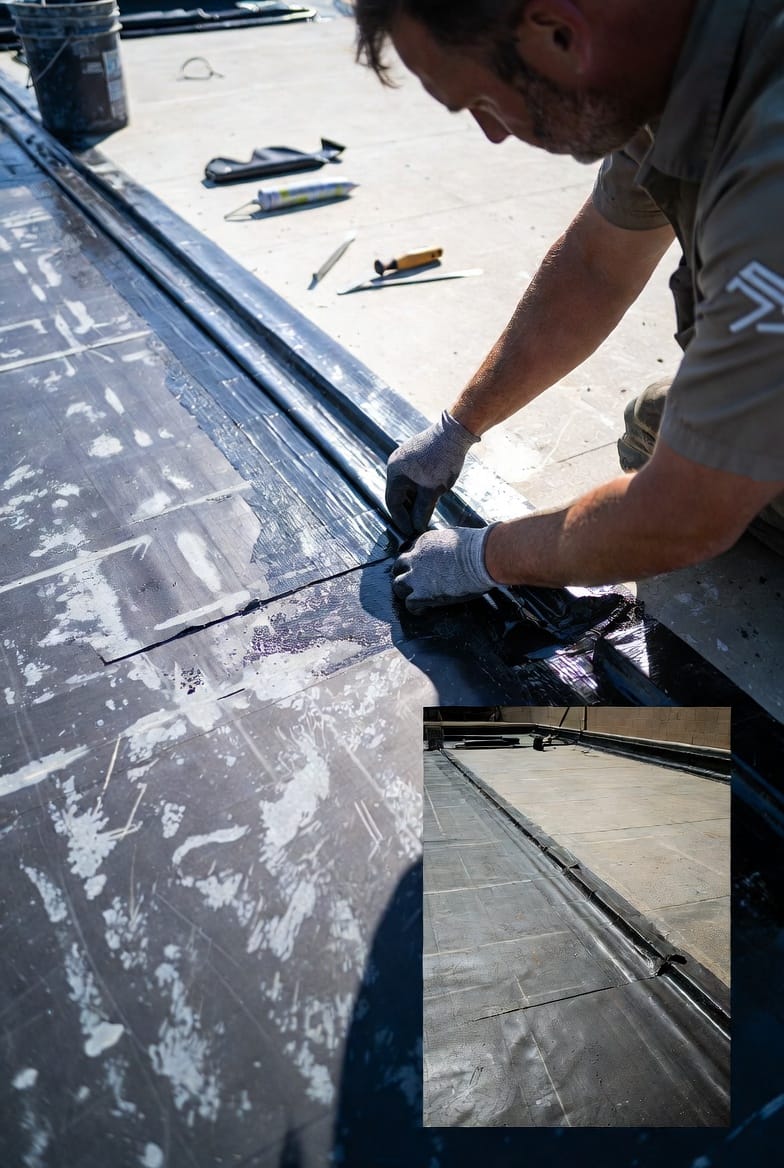
EPDM (Ethylene Propylene Diene Monomer) is a synthetic rubber membrane that has protected low-slope roofs since the 1960s. Available in black or white, it delivers unmatched flexibility and weather resistance.
Material Properties
- Thickness options: 45 mil, 60 mil, or 90 mil for added puncture resistance
- Temperature tolerance: remains flexible from -40°F to 250°F
- Superior resistance to ozone, UV rays, and ponding water
- Excellent elongation (over 300%) preventing cracks during building movement
Installation Methods
Professionals choose from three proven approaches:
- Fully adhered: Membrane glued directly to the substrate using specialized contact adhesive
- Mechanically fastened: Secured with plates and screws, then covered with cover strips
- Ballasted: Loose-laid and held by river-washed gravel or pavers
Each method ensures watertight performance when seams are properly taped with manufacturer-approved primers and tapes.
Ideal Applications
EPDM shines on large commercial warehouses, multi-family residential buildings, and home additions where flexibility and long-term reliability matter most. Its black version absorbs heat for snow melt; white versions reduce cooling loads.
Key Advantages
- Exceptional lifespan of 30–50 years with proper maintenance
- Lowest lifecycle cost in many scenarios
- Easy field repairs using compatible patches and tape
- Proven performance in extreme climates
Considerations
While highly durable, dark EPDM can increase cooling costs in hot climates unless a white coating is applied. Professional installation eliminates seam-failure risks that plague DIY attempts.
TPO Roofing: Modern Thermoplastic Excellence with Energy-Saving Benefits
TPO (Thermoplastic Polyolefin) represents the fastest-growing low-slope roofing choice, especially for energy-conscious owners. Its bright white surface reflects up to 80% of solar radiation, earning cool-roof certifications.
Material Properties
- Single-ply membrane, typically 45–80 mil thick
- Heat-weldable seams create molecular bonds stronger than the membrane itself
- Built-in UV stabilizers and fire retardants
- Excellent resistance to oils, chemicals, and animal fats
Installation Methods
Most installations use mechanical fastening for speed and security on large spans, followed by hot-air welding of all seams and flashings. Fully adhered and ballasted options exist for specific substrates.
Ideal Applications
TPO performs exceptionally on commercial office buildings, retail centers, schools, and residential additions where energy efficiency and white aesthetics are priorities. Its reflective surface can reduce air-conditioning costs by 10–20% in warm climates.
Key Advantages
- Superior reflectivity and energy savings
- Strong, monolithic seams via heat welding
- Lightweight and fast to install
- Warranties up to 30 years
Considerations
TPO requires skilled heat-welding—improper technique can compromise seam integrity. Certified crews ensure every linear foot meets manufacturer standards.
Modified Bitumen Roofing: Torch-Down Durability with Traditional Strength
Modified bitumen, often called torch-down or APP/SBS modified, combines asphalt with polymers for enhanced performance. It delivers multi-ply redundancy favored in demanding environments.
Material Properties
- SBS (styrene-butadiene-styrene) for superior flexibility
- APP (atactic polypropylene) for excellent UV resistance
- Granule-surfaced or smooth options, typically two or three plies
- Self-healing properties around minor penetrations
Installation Methods
- Torch-down: Propane torch melts the underside while rolling into place
- Cold adhesive or self-adhered sheets for safer, flame-free application
- Multiple layers create redundant waterproofing
Ideal Applications
Modified bitumen suits high-traffic commercial roofs, hospital additions, and residential projects needing robust, walkable surfaces. Its granule finish provides excellent hail and impact resistance.
Key Advantages
- Multiple plies offer built-in redundancy
- Traditional asphalt feel with modern polymer performance
- Strong resistance to punctures and abrasion
- 20–30 year track record in harsh conditions
Considerations
Torch applications demand strict safety protocols and experienced crews to prevent fire hazards. Cold-adhesive alternatives eliminate open-flame concerns while maintaining performance.
Comprehensive Comparison: EPDM vs TPO vs Modified Bitumen
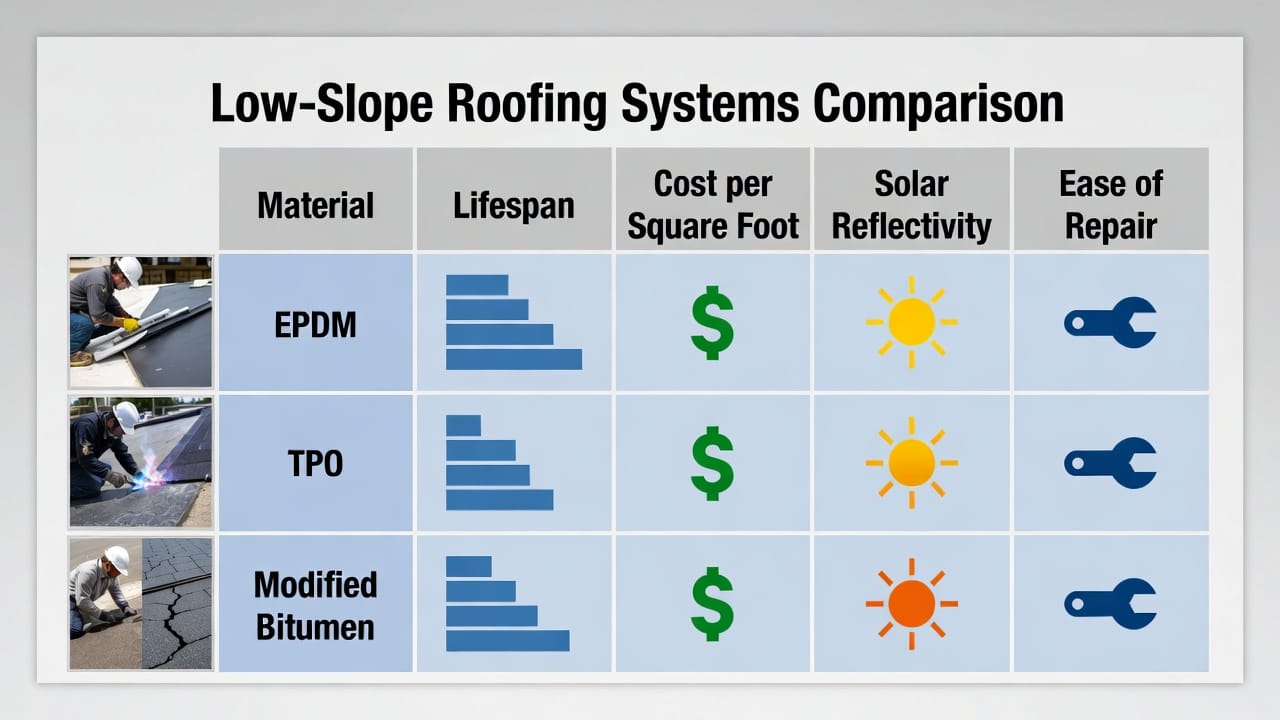
When evaluating flat roof systems, consider these performance metrics:
- Lifespan: EPDM leads with 30–50 years; TPO offers 20–35 years; modified bitumen provides 20–30 years.
- Initial Cost: TPO often lowest, followed by EPDM, then modified bitumen for multi-ply systems.
- Reflectivity & Energy Efficiency: TPO excels; white EPDM performs well; modified bitumen benefits from reflective coatings.
- Repair Ease: All three are field-repairable, but TPO heat-weld patches and EPDM tape systems are quickest.
Each system delivers outstanding leak prevention and structural protection when matched to your building’s specific needs, climate, and budget.
Factors to Consider When Selecting Your Low-Slope Roof
Building Usage – Commercial structures with HVAC equipment favor mechanically fastened systems for wind uplift resistance. Residential additions often prioritize aesthetics and quiet performance.
Climate and Location – Northern regions benefit from EPDM’s cold flexibility; southern climates gain from TPO’s reflectivity.
Budget and Warranty – Full-system warranties range 10–30 years. Investing in premium thickness and professional installation minimizes long-term expenses.
Environmental Impact – White reflective surfaces reduce urban heat islands. Many systems now incorporate recycled content.
Aesthetic Goals – White TPO and coated EPDM deliver clean modern looks; granule modified bitumen offers textured appeal.
Professional Installation and Ongoing Maintenance
The best material still requires expert installation. Certified crews follow rigorous protocols: proper substrate preparation, precise flashing details, and quality control at every seam.
Routine maintenance—twice-yearly inspections, debris removal, and prompt repair of minor damage—extends service life dramatically. Early intervention prevents small issues from becoming major expenses.
Choose the Right System for Your Flat or Low-Slope Roof
Whether you manage a commercial property or planning a residential addition, the ideal low-slope roofing system exists for your unique situation. EPDM offers timeless reliability, TPO delivers energy savings and speed, and modified bitumen provides multi-layer redundancy.
Rest assured that any of these proven systems, when professionally installed, will safeguard your building for decades while enhancing its value and performance.
Choose the right system for your flat or low-slope roof.
Energy-Efficient Flat Roofing Starts Here – Call for Expert Guidance