The Window Spacer Technology: Warm-Edge Spacers vs. Traditional Aluminum
In today’s homes, energy-efficient windows are no longer a luxury—they are a smart investment that delivers year-round comfort and lower utility bills. Yet one critical component remains largely overlooked by homeowners: the window spacer. This small but essential part sits between the glass panes in every insulated glass unit and directly influences how well your windows control temperature, prevent condensation, and maintain long-term performance.
Upgrade to Warm-Edge Windows Today – Call Now!
At first glance, the spacer may seem minor. In reality, it determines whether your windows become a source of heat loss or a barrier against it. Traditional aluminum spacers have dominated the market for decades, but warm-edge spacers represent a significant advancement in window spacer technology. This article explores the science, performance differences, and practical benefits of choosing warm-edge solutions over older aluminum designs. You will discover why this upgrade matters for your home’s comfort, efficiency, and value—and how it quietly solves problems you may have lived with for years.
What Exactly Is a Window Spacer and Why Does It Matter?
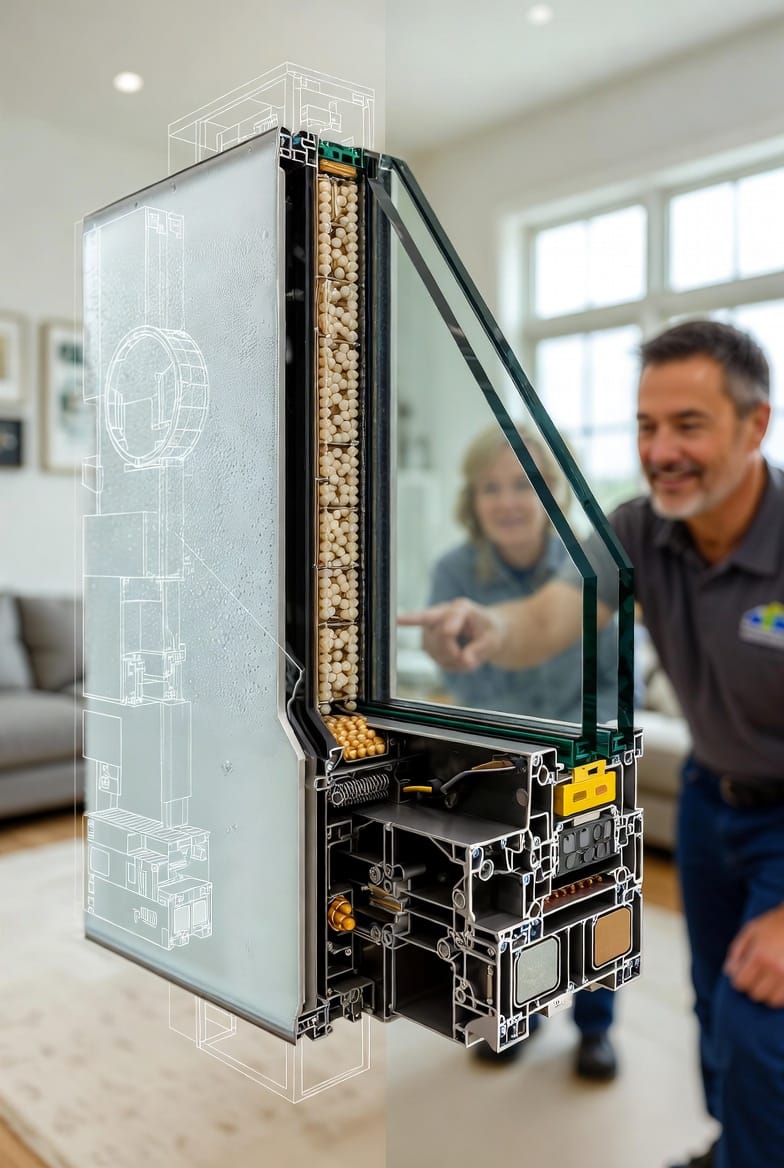
Window spacers are the rigid or flexible bars that hold the multiple panes of glass apart in a sealed unit. They create the insulating gap typically filled with argon or krypton gas and house a desiccant material that absorbs any residual moisture. Without a properly engineered spacer, the entire insulated glass unit would fail—gas would leak, moisture would enter, and the panes could fog internally.
More importantly, spacers sit at the edge of glass, the area responsible for up to 60 percent of total window heat transfer in many older installations. The material chosen for the spacer dramatically affects thermal performance. A highly conductive spacer pulls heat out of your home in winter and lets it in during summer, creating cold or hot edges that make rooms feel drafty even when the thermostat is set correctly.
Warm-edge spacers use low-conductivity materials such as stainless steel, foam, or specialized polymers. These materials break the thermal bridge that aluminum creates, keeping the edge of the glass closer in temperature to the center of the pane. The result is measurable improvement in overall window efficiency.
The Hidden Drawbacks of Traditional Aluminum Spacers
For many years, aluminum spacers were the default choice. They are strong, inexpensive, and easy to manufacture. However, aluminum conducts heat extremely well—roughly 1,000 times more than some modern spacer materials. This creates a pronounced cold-edge effect in winter.
Homeowners often notice the consequences without realizing the cause:
- Persistent condensation on the inside of windows during cold weather
- Higher heating and cooling costs
- Uneven room temperatures
- Increased risk of mold growth near window sills
- Reduced lifespan of the sealed glass unit due to stress from temperature fluctuations
These issues are not minor inconveniences. Over time, they translate into thousands of dollars in extra energy expenses and potential repair costs. Aluminum spacers simply cannot keep pace with today’s demands for high-performance homes, especially when paired with low-E coatings and gas fills that are otherwise excellent at minimizing heat transfer at the center of the glass.
How Warm-Edge Spacers Deliver Superior Thermal Performance
Warm-edge spacers solve the cold-edge problem at its source. By using materials with far lower thermal conductivity, they minimize heat flow at the perimeter of the glass. Independent testing consistently shows that windows equipped with warm-edge technology achieve better whole-window U-factors and SHGC ratings than identical units with aluminum spacers.
The technology works through three key mechanisms:
- Reduced conduction – Less heat travels through the spacer itself
- Improved seal integrity – Flexible warm-edge designs accommodate glass expansion and contraction better, preventing seal failure
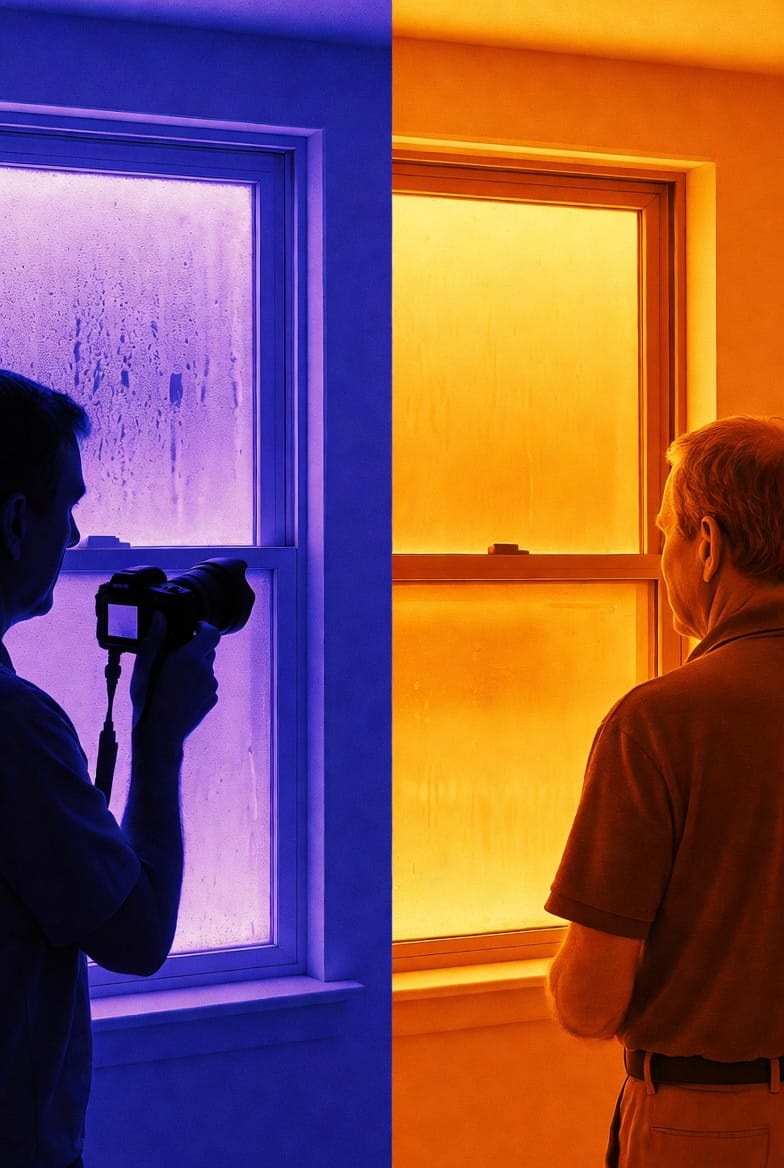
- Lower condensation risk – Edge temperatures stay closer to room temperature, eliminating the surface where moisture condenses
When you upgrade to warm-edge spacers, you experience windows that feel noticeably warmer to the touch in winter and cooler in summer. Rooms stay more consistent in temperature, and that foggy glass you once wiped away each morning becomes a thing of the past.
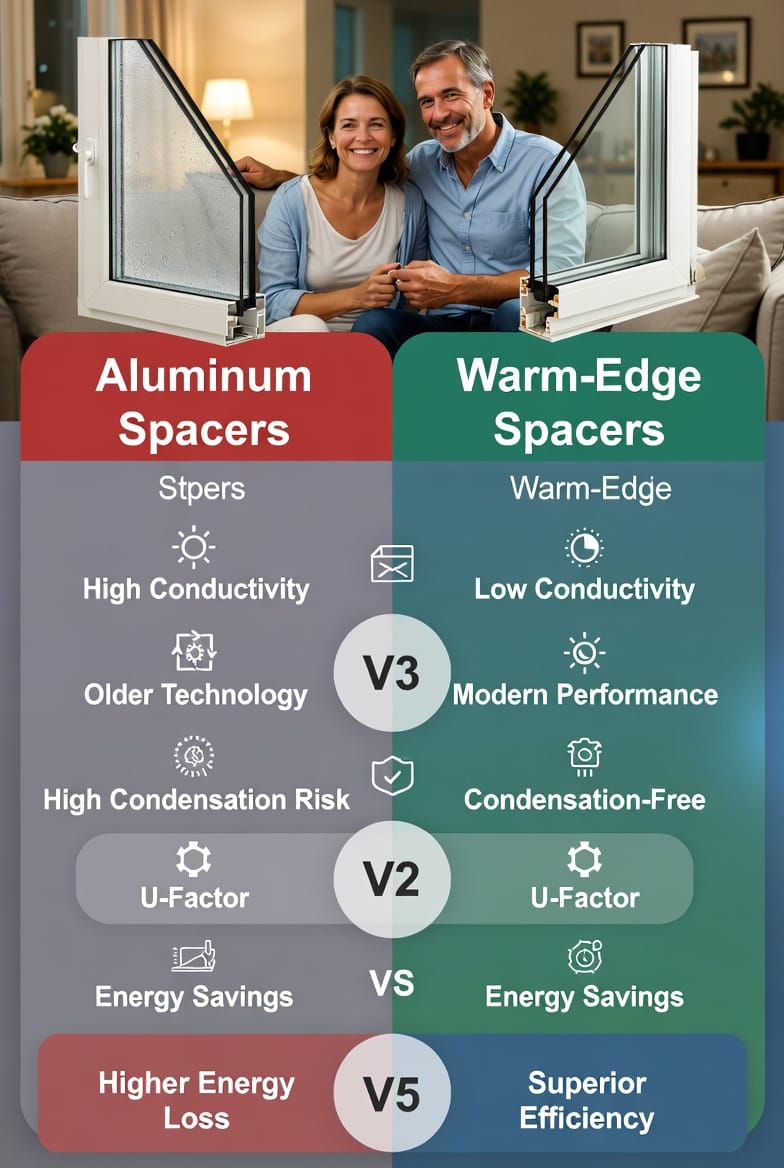
Side-by-Side: Warm-Edge Spacers vs. Traditional Aluminum
Choosing the right spacer technology becomes clear when you compare the two options directly:
- Thermal Conductivity: Aluminum is highly conductive; warm-edge materials are engineered to be up to 95 percent less conductive.
- Condensation Resistance: Aluminum promotes edge condensation; warm-edge technology virtually eliminates it under normal conditions.
- Energy Efficiency: Aluminum drags down overall window performance; warm-edge improves U-factor and helps windows qualify for higher efficiency ratings and incentives.
- Durability: Rigid aluminum can stress seals over time; flexible warm-edge designs flex with temperature changes, extending unit life.
- Home Comfort: Aluminum creates noticeable cold spots; warm-edge delivers uniform temperature across the entire pane.
- Long-Term Savings: Aluminum increases energy bills; warm-edge reduces them year after year.
These differences are not theoretical. They translate into real, measurable improvements in daily living.
Real-World Benefits Homeowners Notice Immediately
Once warm-edge spacers are installed, families report several consistent improvements. Heating bills drop because less heat escapes through the edges. Air-conditioning costs decrease in summer for the same reason. Rooms feel more comfortable without hot or cold zones near windows. Furniture and flooring near windows last longer because they are no longer exposed to repeated condensation and temperature swings.
All of these benefits add up to a healthier, more comfortable indoor environment. Reduced condensation means less chance of mold or mildew forming on sills or walls. Clear glass improves natural light and views without the constant distraction of fogging. And because the sealed units last longer, you avoid the inconvenience and expense of premature window failure.
Making the Smart Choice for Your Home
When shopping for replacement windows, ask specifically about warm-edge spacer technology. Not every manufacturer offers it, and some still rely on aluminum to cut costs. A reputable installer will gladly explain the difference and show you the performance ratings for both options.
Warm-edge spacers represent the current standard in high-performance window design. They work seamlessly with the latest low-E coatings and gas fills to deliver the most efficient windows available today. The slight additional investment pays for itself quickly through energy savings and increased home comfort.
You deserve windows that work as hard as you do to keep your family comfortable and your energy bills under control. Better spacers mean better windows—it really is that straightforward.
Ready to experience the difference warm-edge technology can make? Our team of certified window professionals is here to answer your questions and provide a no-obligation assessment of your current windows.
Experience Better Windows with Warm-Edge Technology – Call Now