The Window Condensation: Interior vs. Exterior vs. Between Panes
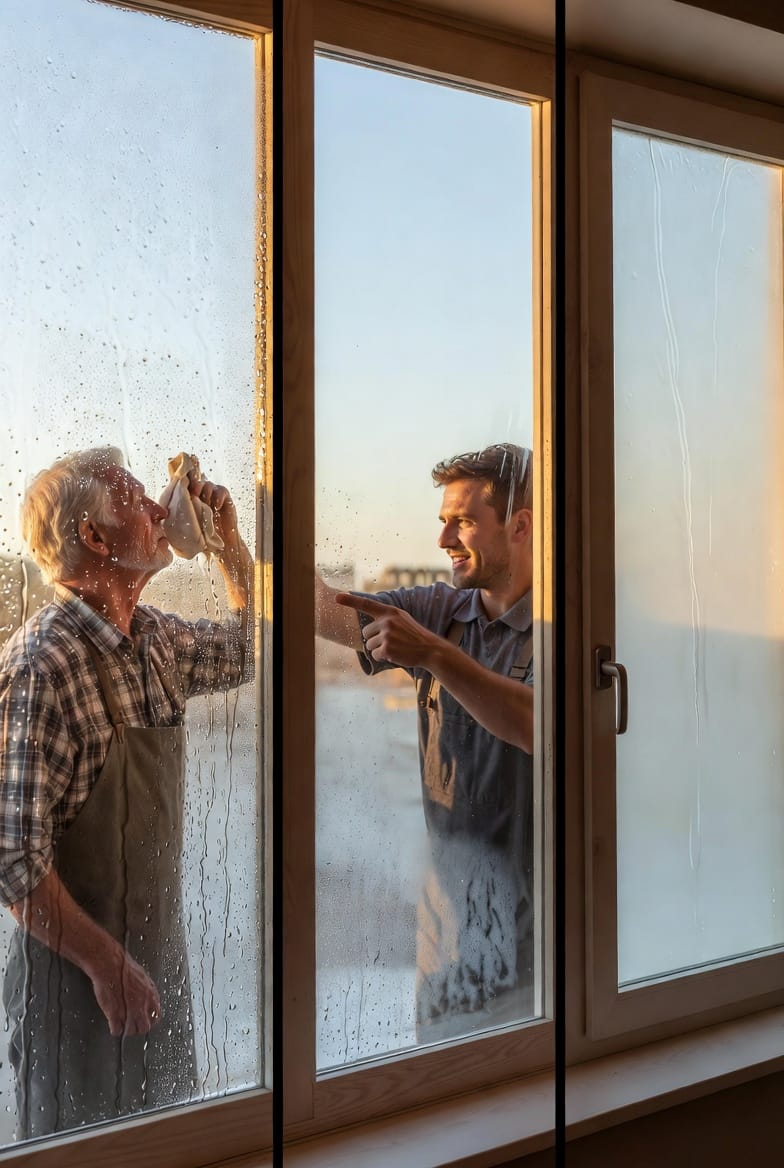
Window condensation can be confusing and concerning for homeowners. One morning you wake up to foggy glass, and suddenly questions arise: Is this normal? Is my window failing? Or is something else happening inside my home?
Fix Interior, Exterior & Between-Pane Condensation – Call Today
Understanding the three distinct types of window condensation empowers you to diagnose the issue accurately and take the right action. At Domain House, we’ve helped thousands of homeowners decode what their windows are communicating through these moisture patterns.
This comprehensive guide breaks down interior condensation, exterior condensation, and condensation between panes. You’ll learn exactly what each type means, why it occurs, and the most effective responses. By the end, you’ll feel confident assessing your own windows and knowing when professional help is the smartest next step.
Why Window Condensation Matters
Moisture on windows is more than an annoyance. Left unaddressed, certain types can lead to mold growth, wood rot, damaged drywall, and reduced energy efficiency. Yet not all condensation signals a problem. Some types actually confirm your windows are performing exceptionally well.
The key lies in location of the moisture. Is it on the room-side surface? The outdoor surface? Or trapped invisibly between the glass panes? Each location tells a completely different story about your home’s comfort, efficiency, and maintenance needs.
Homeowners who learn to read these signs save money and protect their property value. They avoid unnecessary window replacements while addressing genuine issues promptly.
Understanding the Three Types of Window Condensation
Windows are complex systems designed to balance light, views, insulation, and weather protection. When condensation appears, it reveals how well that system is working with your home’s interior environment.
Let’s examine each type in detail.
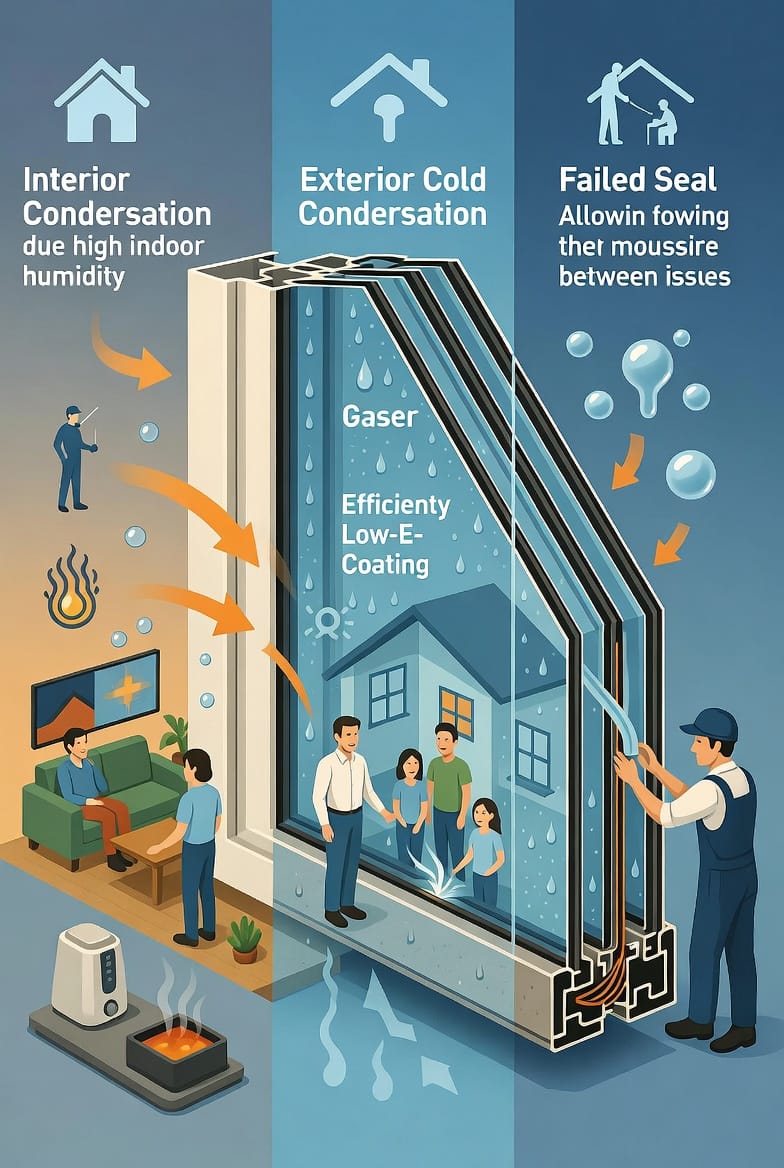
1. Interior Condensation: The Humidity Story
Interior condensation forms on the inside surface of the window glass facing your living space. You’ll notice it most often on cold mornings as water droplets, fog, or even streaming rivulets.
What it means: High indoor humidity levels meeting cold window surfaces. Your windows are cooler than the surrounding air, causing moisture in the air to condense on the glass.
Common causes include:
- Everyday activities – Cooking, showering, drying clothes indoors, and breathing all add moisture to the air.
- Poor ventilation – Homes with tight modern construction trap humidity if exhaust fans aren’t used properly.
- Humidifiers running too high – Especially during winter months.
- Drying firewood inside or having many houseplants.
- Recent renovations or new carpeting that release moisture.
Is it a window problem? Usually not. In most cases, interior condensation indicates your windows are doing their job by creating a thermal barrier. However, excessive amounts can signal that indoor humidity needs better control.
Signs it’s becoming an issue:
- Persistent fog that lasts throughout the day
- Water pooling on windowsills
- Musty odors or visible mold near windows
- Peeling paint or wallpaper around frames
Recommended response: Focus on humidity management rather than replacing windows. Simple lifestyle adjustments and mechanical solutions often resolve it completely.
Practical steps to reduce interior condensation:
- Use exhaust fans in kitchens and bathrooms during and after moisture-producing activities
- Run a whole-house dehumidifier or portable units in problem areas
- Ensure proper attic and crawl space ventilation
- Keep indoor relative humidity between 30-50% during winter
- Avoid drying clothes indoors without ventilation
- Consider upgrading to windows with better low-E coatings and warmer frame materials if humidity control alone isn’t enough
Many homeowners see dramatic improvement within days of implementing these changes. Your windows may simply need support from better indoor air management.
2. Exterior Condensation: The Efficiency Indicator
Exterior condensation appears on the outside surface of the window glass. It often looks like dew or light fog on the outer pane, especially during cool, humid mornings or evenings.
What it means: Your windows are highly efficient at keeping cold air outside. The outer glass remains cold enough to cause atmospheric moisture to condense on it, while the interior stays warm and comfortable.
This is actually good news. It confirms that your energy-efficient windows with advanced low-E coatings and insulated frames are performing as designed. The temperature difference between inside and outside is being effectively managed.
When does exterior condensation occur?
- Early morning hours when outdoor temperatures drop
- High humidity days with clear skies
- Spring and fall transition seasons
- Homes with newer, high-performance windows
Is it a problem? Almost never. Exterior condensation is a sign of quality windows working properly. It rarely leads to damage because the moisture is on the exterior where it can evaporate naturally as the sun warms the glass.
How to respond: In most cases, do nothing. Celebrate that your investment in efficient windows is paying off through lower energy bills and greater comfort.
However, if exterior condensation is extremely heavy and persistent, combined with other comfort issues, a professional inspection can confirm everything is optimal.
Benefits you’re enjoying with exterior condensation present:
- Lower heating costs due to better insulation
- Reduced drafts and cold spots near windows
- Quieter home interior from superior sound dampening
- Enhanced overall energy performance rating
Homeowners often worry unnecessarily about this type. Understanding it as a positive indicator brings peace of mind.
3. Condensation Between Panes: The Seal Failure Signal
Condensation between panes is the most serious of the three types. Moisture appears trapped inside the sealed space of a double-pane or triple-pane window, creating persistent fog that you can’t wipe away from either side.
What it means: The hermetic seal around the insulated glass unit (IGU) has failed. This allows moist air to enter the space between the panes, where it condenses on the inner glass surfaces.
Common causes of seal failure:
- Age and natural wear – Most high-quality IGUs last 15-25 years
- Extreme temperature swings stressing the seals
- Manufacturing defects (rare but possible)
- Physical damage from impact or improper installation
- Poor quality original units in older homes
Why this type is concerning:
- It significantly reduces the thermal performance of the window
- Fogged glass obstructs views and natural light
- Failed seals can eventually lead to permanent clouding or etching of the glass
- Energy bills may rise as insulation value drops
Visual identification tips:
- Fog that never clears regardless of weather
- Moisture patterns that look like they’re “inside” the glass
- Possible discoloration or haze that worsens over time
- No moisture on either the interior or exterior surfaces
Appropriate response: Unlike the other two types, between-pane condensation usually requires professional intervention. The damaged insulated glass unit typically needs replacement.
Modern replacement units often feature improved technology, offering better performance than the original windows. In many cases, only the glass portion needs updating while keeping the existing frames, which saves significant cost and reduces waste.
When to act quickly:
- If visibility is heavily impaired
- When energy costs have noticeably increased
- If you notice accompanying frame damage or air leaks
- Before the issue spreads to multiple windows
Choosing the Right Response for Your Situation
Accurate diagnosis leads to smart, cost-effective solutions. Here’s a quick decision guide:
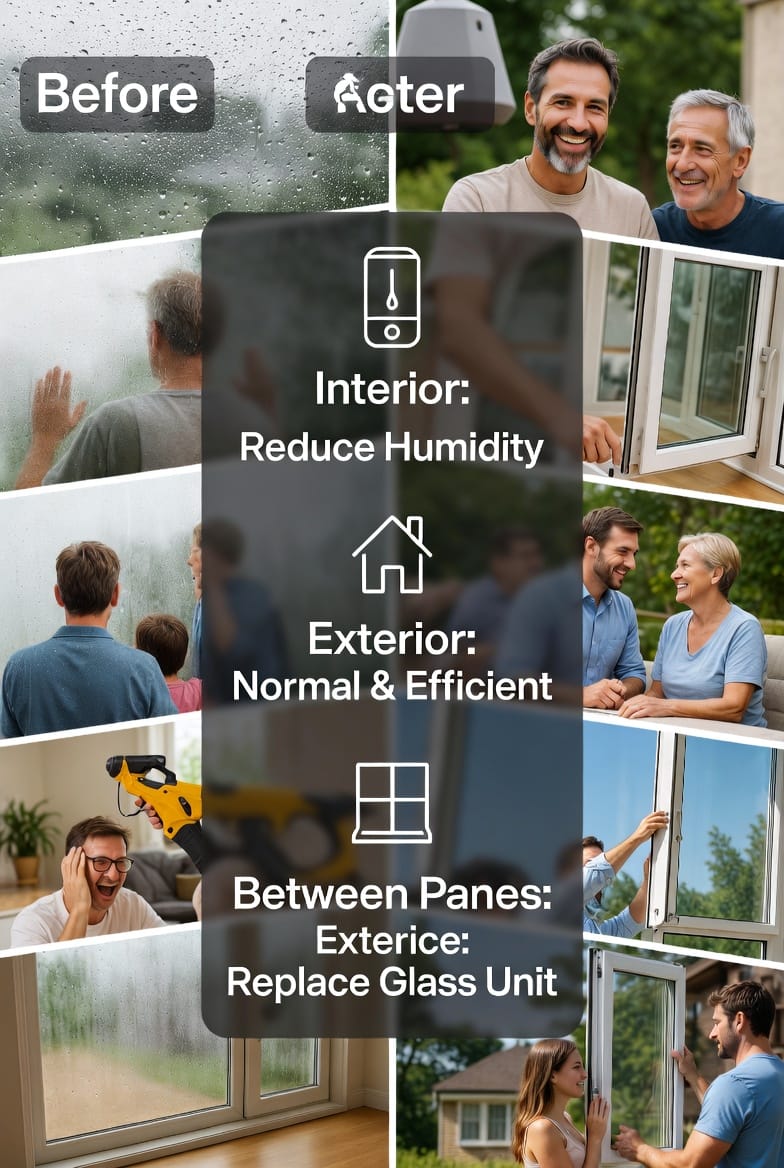
- Interior condensation → Control humidity first. Monitor results for 1-2 weeks. Only consider window upgrades if moisture issues persist despite proper ventilation and dehumidification.
- Exterior condensation → Enjoy the benefits. Your windows are likely high-performance. Maintain them with regular cleaning and occasional professional inspection.
- Between panes condensation → Schedule glass replacement. Delaying can lead to permanent damage and higher long-term costs.
Many homes experience a combination of types depending on the window location and orientation. South-facing windows may behave differently than north-facing ones due to sun exposure.
Professional assessment brings clarity. A trained technician can evaluate your specific windows, measure humidity levels, check seals, and recommend tailored solutions that match your home’s needs and budget.
Additional Factors That Influence Condensation
Several home-specific elements affect how condensation develops:
- Climate zone – Colder regions naturally see more winter condensation
- Window orientation – North-facing windows stay colder longer
- Heating system type – Forced air versus radiant heat changes humidity patterns
- Home age and insulation levels – Older homes may have different air sealing characteristics
- Occupancy patterns – Families with children or frequent cooking create more moisture
Understanding your unique situation helps explain why one window might show condensation while others remain clear.
Pro tip: Keep a simple journal noting when and where condensation appears. This data proves invaluable during a professional consultation.
Long-Term Prevention Strategies
Protecting your windows and home involves ongoing care:
- Schedule annual window inspections as part of home maintenance
- Clean windows with proper techniques to avoid damaging seals or coatings
- Maintain consistent indoor humidity year-round
- Ensure roof, gutters, and grading direct water away from the foundation
- Upgrade outdated components proactively before full failure occurs
Investing in prevention almost always costs less than emergency repairs.
When to Call the Professionals
While some condensation issues resolve with simple adjustments, others benefit greatly from expert eyes. Consider reaching out when:
- You’re unsure which type of condensation you’re seeing
- Multiple windows show concerning patterns
- Energy bills have risen unexpectedly
- You want to maximize the lifespan and performance of your current windows
- You’re planning home improvements and want windows evaluated
Our team specializes in precise diagnosis and effective, non-disruptive solutions. We focus on restoring clarity, comfort, and efficiency to your home.
Decode what your windows are telling you. Don’t let uncertainty about window condensation affect your peace of mind or your property’s condition.
Experienced technicians will visit your home, thoroughly assess each window, explain findings in clear terms, and provide honest recommendations tailored to your situation. Many issues can be resolved affordably, often with simple adjustments or targeted glass replacements rather than full window overhauls.
Your windows protect your home, provide beautiful views, and contribute significantly to daily comfort. Understanding their language through condensation patterns helps you care for them properly and enjoy them for years to come.
Take the first step toward clearer windows and a more comfortable home. The team at Domain House is ready to help you interpret the signs and implement the right solutions with confidence.
Get Professional Window Condensation Diagnosis – Call Now