The Whole-House Surge Protector: Your First Line of Defense Against Lightning and Grid Spikes
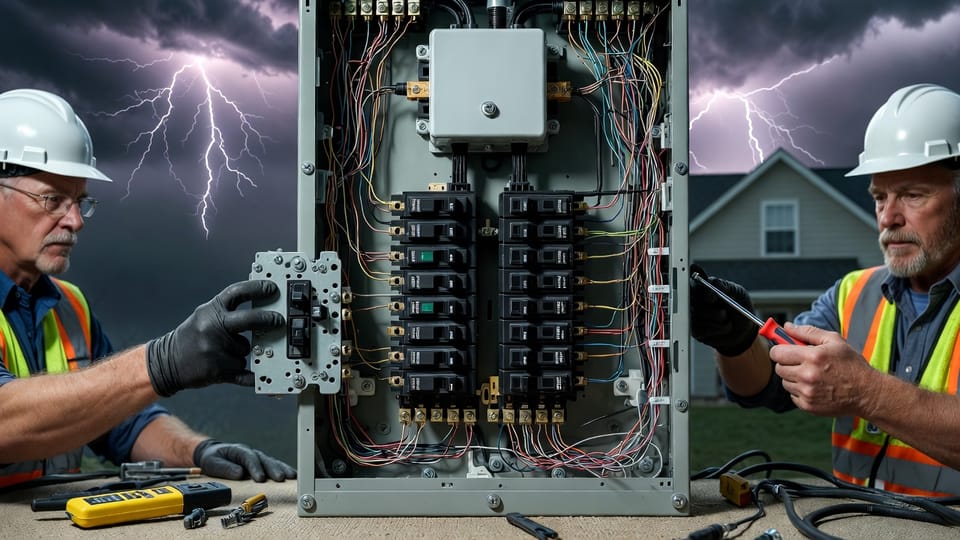
In today's technology-driven world, our homes are filled with sensitive electronics and appliances that power our daily lives. From smart TVs and refrigerators to home office setups and security systems, these devices are vulnerable to unexpected power surges caused by lightning strikes, utility grid fluctuations, or even nearby transformer malfunctions. As a homeowner, protecting your investment is crucial, and that's where a whole-house surge protector comes in as your essential first line of defense. Installed directly into your electrical panel, this device acts as a robust barrier, ensuring that harmful voltage spikes are neutralized before they can wreak havoc inside your home.
Stop Lightning Damage Before It Starts – Call Now
This article explores why a panel-mounted surge protector is not just an add-on but essential infrastructure for modern households. We'll delve into how it differs from basic power strips, its mechanism for clamping massive surges, and the comprehensive protection it offers. By the end, you'll understand why relying solely on point-of-use protectors is insufficient and how our professional installation services can provide peace of mind. With over a decade of experience in electrical safety, we're here to reassure you that safeguarding your home is straightforward and effective.
Understanding Power Surges: The Hidden Threat
Power surges are sudden, brief increases in electrical voltage that can occur without warning. They stem from various sources, including lightning strikes, which can send thousands of volts through power lines, or grid spikes from utility issues like faulty transformers or switching operations. Even internal factors, such as large appliances cycling on and off, can cause minor surges, but the real dangers come from external events.
Imagine a summer thunderstorm rolling in – a single lightning bolt can generate up to 1 billion volts, traveling through utility lines and into your home. Without proper protection, this energy can fry circuit boards, damage motors in appliances, and lead to costly repairs or replacements. According to industry reports, surges cause billions in damages annually, affecting everything from HVAC systems to gaming consoles.
But here's the reassuring part: These risks are manageable. A whole-house surge protector is designed to handle these threats at the source, providing a proactive shield that keeps your entire electrical system safe. Unlike temporary fixes, it's a permanent solution that integrates seamlessly with your home's infrastructure.
What Sets Whole-House Surge Protectors Apart from Power Strips?
Many homeowners mistakenly believe that plugging devices into surge-protected power strips is enough. While these strips offer some defense, they are limited in scope and capacity. Let's break down the key differences to highlight why a panel-mounted protector is superior:
- Installation Location: Power strips are point-of-use devices plugged into outlets, protecting only the items connected to them. In contrast, a whole-house surge protector is installed at your main electrical panel, safeguarding every circuit and outlet in your home from incoming surges.
- Surge Handling Capacity: Typical power strips can handle surges up to 1,000-2,000 joules, which is adequate for minor fluctuations but inadequate for massive events like lightning. Whole-house models, however, boast ratings of 40,000 to over 100,000 amps, clamping voltages as high as 600 volts down to safe levels (typically 330-400 volts) before they enter your wiring.
- Response Time and Durability: Power strips may degrade over time with repeated small surges, often without indicators. Whole-house protectors feature metal oxide varistors (MOVs) that respond in nanoseconds, shunting excess energy to ground, and many include LED indicators or audible alarms for status monitoring.
- Comprehensive Coverage: Strips leave hardwired appliances like ovens, water heaters, and lighting fixtures unprotected. A panel-mounted device covers everything, from your garage door opener to your rooftop solar inverter.
In essence, power strips are like band-aids – useful for spot treatment but not for systemic protection. A whole-house surge protector, professionally installed, elevates your home's electrical resilience to infrastructure level, much like a foundation supports a building.
How Whole-House Surge Protectors Work: Clamping the Danger
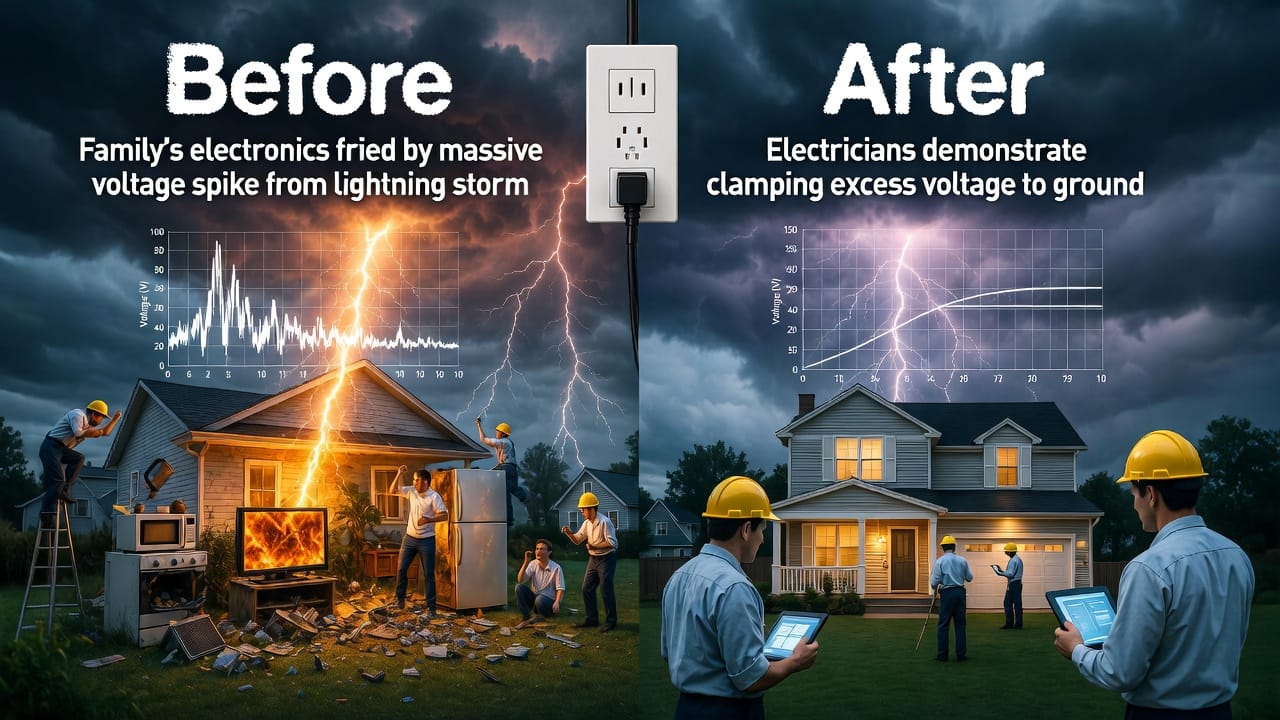
At its core, a whole-house surge protector functions as a vigilant gatekeeper for your electrical system. When a surge occurs – whether from a direct lightning hit or a utility grid anomaly – the device detects the abnormal voltage spike and activates instantly.
Here's a step-by-step explanation of the process:
- Detection Phase: The protector monitors incoming power from the utility line. Normal household voltage in the U.S. is 120/240 volts. Anything exceeding this threshold triggers the response.
- Clamping Mechanism: Using components like MOVs or gas discharge tubes, the device "clamps" the voltage. For instance, during a lightning-induced spike of 6,000 volts, it redirects the excess energy to the grounding wire, allowing only safe voltage to proceed.
- Shunting to Ground: The surplus electricity is safely dissipated into the earth via your home's grounding system, preventing it from reaching outlets and appliances.
- Reset and Recovery: Most high-quality models are self-resetting, handling multiple surges without failure. Some even include sacrificial modules that can be replaced if overwhelmed.
This clamping action is critical because surges can last mere microseconds but cause irreversible damage. By intervening at the panel, the protector ensures that threats from lightning or transformer issues are neutralized before they infiltrate your home's wiring. It's a sophisticated yet reliable technology, backed by standards from organizations like UL (Underwriters Laboratories), guaranteeing performance and safety.
The Benefits of Installing Whole-House Protection
Investing in a whole-house surge protector yields numerous advantages, making it a smart choice for any homeowner. Here's why it's worth considering:
- Total Home Safeguard: Protects all plugged-in and hardwired devices, reducing the risk of fire, data loss, or equipment failure. This is especially vital for homes with smart tech, where a single surge could disrupt interconnected systems.
- Cost Savings Over Time: While initial installation costs range from $300-$1,000 (including labor), it prevents expensive repairs. For example, replacing a surged HVAC unit can cost $5,000+, far outweighing the protector's price.
- Increased Property Value: Modern buyers prioritize energy-efficient and safe homes. A certified surge protection system can enhance your home's appeal, similar to updated wiring or insulation.
- Peace of Mind During Storms: Knowing your home is fortified against lightning and grid spikes allows you to weather severe conditions without worry. Many models come with warranties covering connected equipment up to $50,000 or more.
- Environmental and Efficiency Gains: By preserving appliance longevity, it reduces electronic waste and energy consumption from inefficient, damaged units.
Authoritative studies from the Electrical Safety Foundation International (ESFI) underscore these benefits, noting that surge protection can extend device lifespans by 30-50%. Our team has installed thousands of these systems, consistently receiving feedback on their reliability.
Common Risks and Misconceptions
Without adequate protection, your home remains exposed to several dangers. Lightning strikes alone account for over 20% of surge-related claims, per insurance data, while grid issues from aging infrastructure add to the tally. Misconceptions abound, such as assuming utility companies handle all surges – they don't; their responsibility ends at the meter.
Another risk: Over-reliance on insurance. While policies may cover surge damage, deductibles and rate hikes can sting. Proactive measures like whole-house protectors minimize claims altogether.
Additionally, DIY installations pose hazards. Improper grounding or incompatible devices can void warranties or cause failures. That's why professional service is key – ensuring compliance with local codes and optimal performance.
Layered Protection: The Ultimate Strategy
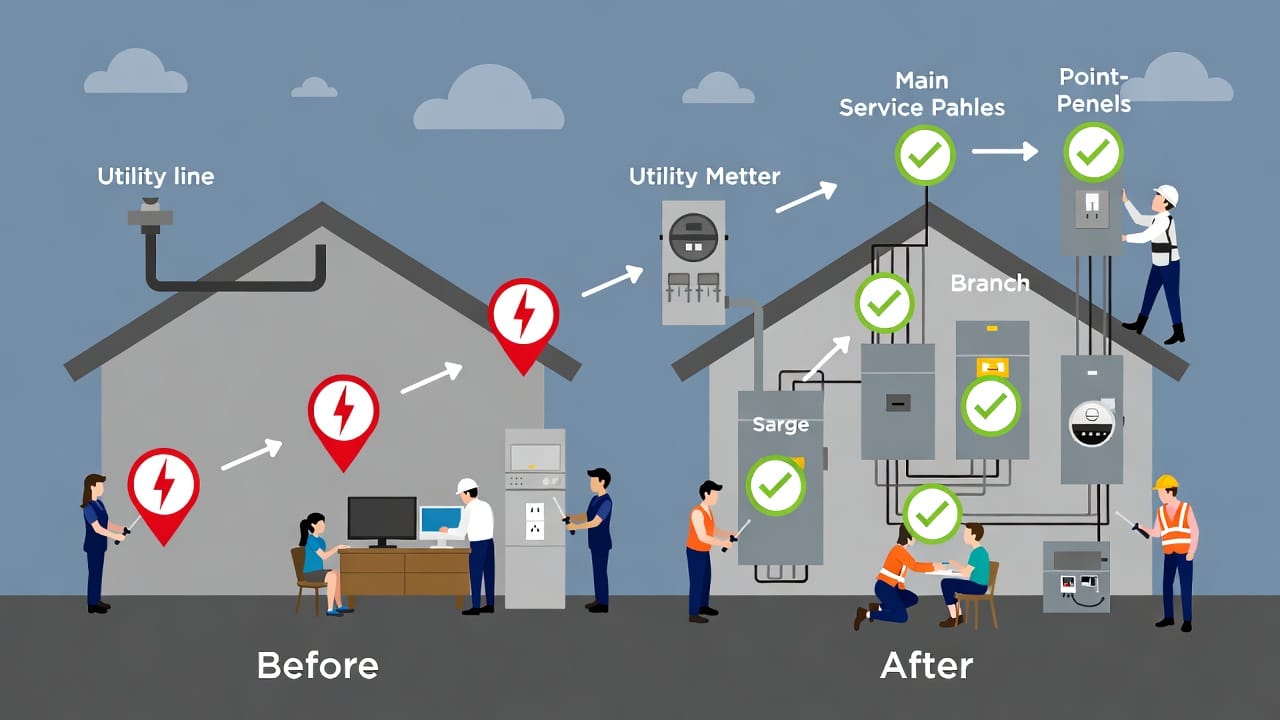
For maximum defense, adopt a layered approach to surge protection. This combines whole-house systems with supplementary measures:
- Primary Layer: Utility Line Entry: The whole-house protector at the panel catches major incoming surges.
- Secondary Layer: Individual Circuits: Branch circuit protectors for high-value areas like home theaters.
- Tertiary Layer: Point-of-Use: Power strips for sensitive gadgets, enhancing overall resilience.
This multi-tiered setup ensures no vulnerability is overlooked, creating a fortified electrical ecosystem.
Why Professional Installation Matters
Attempting to install a surge protector yourself can lead to errors, such as inadequate grounding, which compromises effectiveness. Our certified electricians handle everything – from assessing your panel's compatibility to testing the system post-installation. We use top-tier brands like Eaton or Siemens, ensuring UL-listed quality.
In regions prone to thunderstorms or unstable grids, this isn't optional; it's imperative. We've helped countless families avoid disasters, and our track record speaks volumes.
Final Warning: Don't Settle for Partial Protection
Don't rely on power strips alone – they can't handle the scale of threats from lightning or major grid spikes. For true security, integrate a whole-house surge protector as your home's foundational defense.
Ready to fortify your home?
Secure Your Entire Home Electrical System – Call for Expert Installation