The Washing Machine Drain Pump: Symptoms of Failure and Replacement
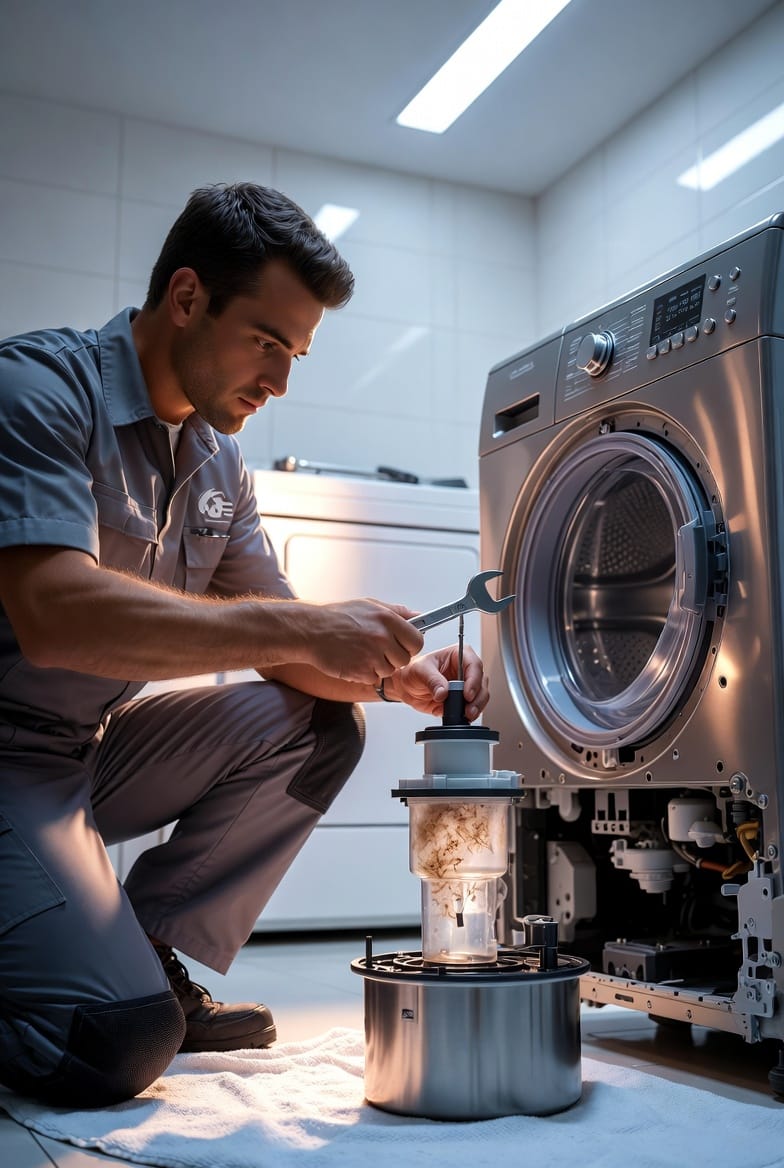
When your washing machine suddenly leaves a tub full of soapy water after the cycle ends, the culprit is often the drain pump. This small but essential component is responsible for expelling every drop of water from the drum so your laundry comes out clean and ready to dry. Ignoring the early warning signs can lead to standing water, unpleasant odors, and even costly water damage to your floors.
Fix Your Washing Machine Drain Pump Today – Call Now!
At our appliance repair service, we’ve seen thousands of drain pump failures, and the good news is that timely diagnosis and washing machine drain pump replacement can restore your appliance to peak performance in just one visit. In this comprehensive guide, we’ll walk you through exactly how the drain pump works, the most common symptoms of failure, and the smart repair considerations that protect both your machine and your budget.
You don’t have to live with soggy clothes or mysterious error codes. Understanding the drain pump empowers you to act quickly—and when you’re ready, our certified technicians are just a call away.
How the Washing Machine Drain Pump Works
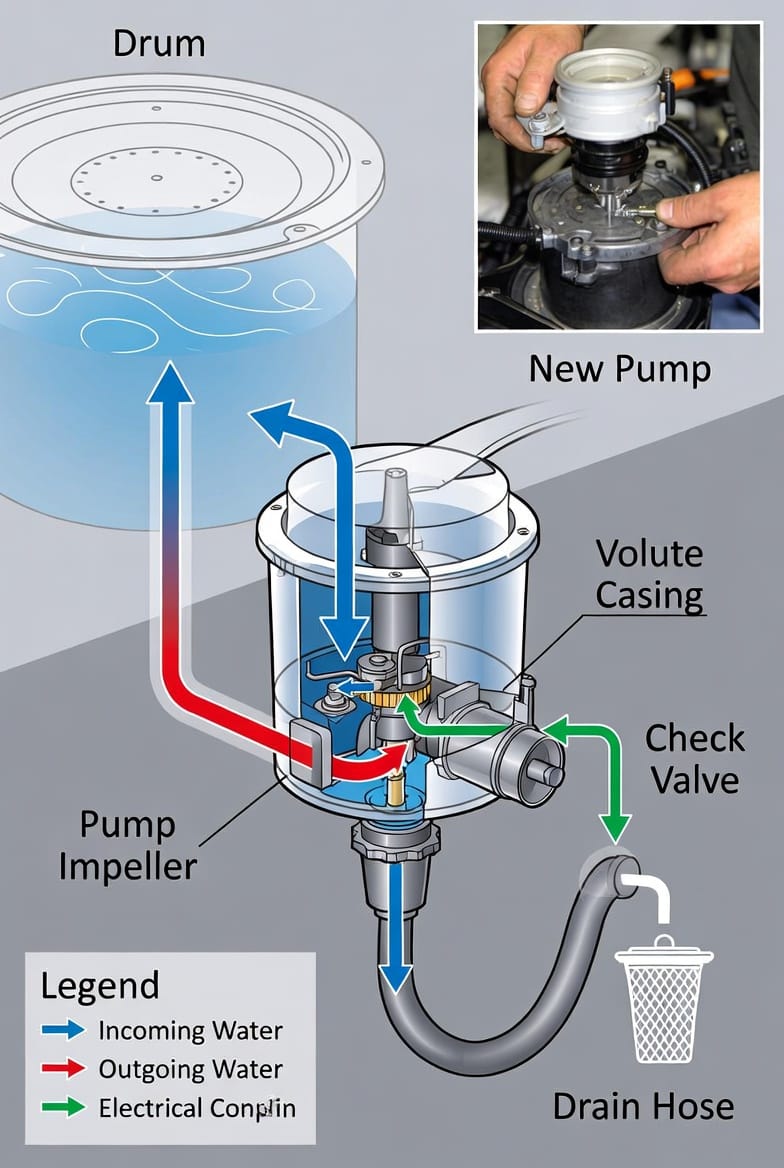
The washing machine drain pump is a compact electric motor-and-impeller assembly usually located at the very bottom of the appliance, behind a small access panel or under the front kickplate. Its job is straightforward yet critical: it moves water from the wash drum through the drain hose and out to your home’s plumbing system.
During the wash and rinse cycles, water enters the drum. Once the cycle advances to drain and spin, the control board sends power to the drain pump. The impeller spins rapidly, creating centrifugal force that pushes water outward and upward through the hose. A check valve prevents dirty water from flowing back into the machine. The entire process typically takes less than two minutes, leaving the drum nearly dry and ready for the high-speed spin.
Key components inside the pump include the motor windings, impeller blades, volute housing, and rubber seals. Over time, these parts endure constant exposure to detergent residue, lint, coins, and fabric fibers. When everything functions correctly, you hear only a quiet hum as water rushes away. When it doesn’t, the symptoms of failure become impossible to ignore.
Proper operation of the drain pump keeps your entire laundry routine efficient and prevents mold, mildew, and structural issues caused by trapped moisture. That’s why professional technicians always inspect this component first when drainage problems appear.
Common Symptoms of Drain Pump Failure
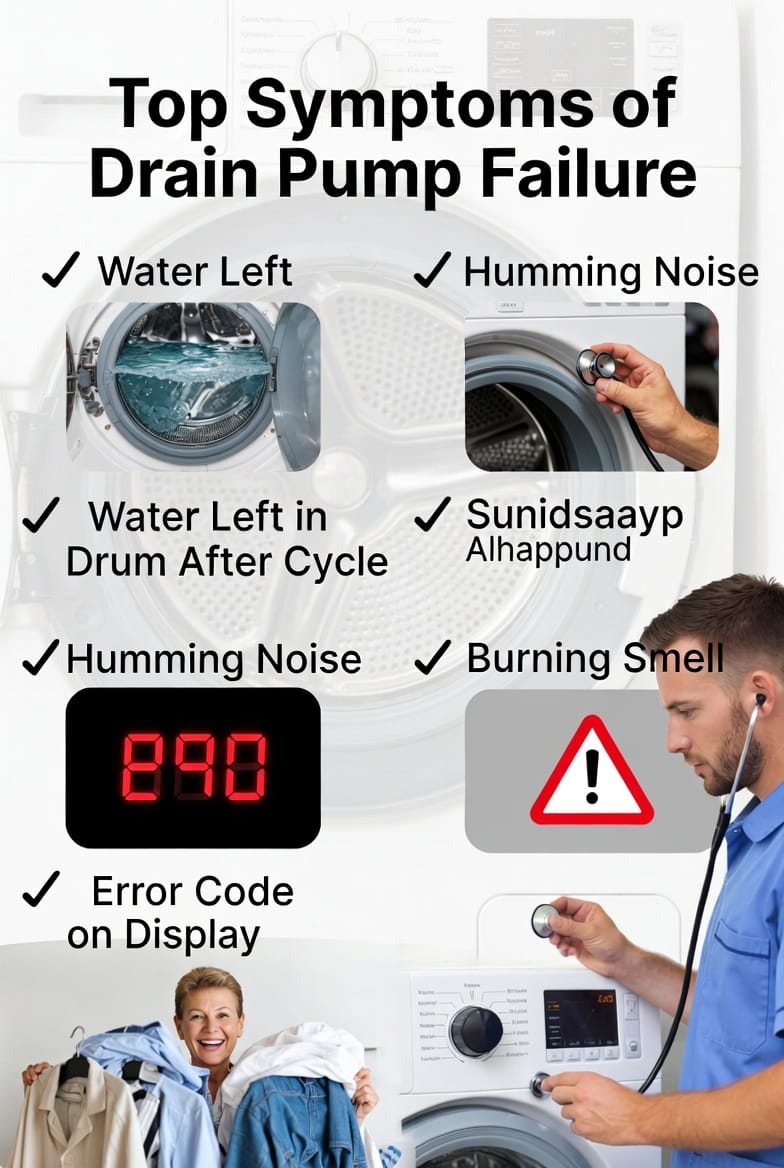
Recognizing symptoms of washing machine drain pump failure early can save you hundreds in secondary repairs. Here are the most frequent indicators our technicians encounter:
- Water left standing in the drum – The most obvious sign. Even after the cycle ends, several inches of water remain, leaving clothes soaking wet and the machine unable to spin properly.
- Humming noise during the drain cycle – The motor is trying to run, but a clogged impeller or seized bearing prevents proper operation. The hum is often followed by an error code or cycle pause.
- Error codes on the display – Common codes include OE (LG), E5 or F5 (Whirlpool), E20/E21 (Electrolux), and 5C/5E (Samsung). These alerts specifically point to drainage issues.
- Burning smell or unusual odors – Overheating motor windings or a failing pump can produce a distinct burnt-plastic scent, signaling immediate attention is required.
- Incomplete cycles or frequent pauses – The machine stops mid-cycle or refuses to advance past the rinse phase because the control board detects no drainage.
- Slow draining or gurgling sounds – Partial blockages cause sluggish performance and air bubbles in the hose.
- Visible leaks beneath the machine – Cracked pump housing or worn seals allow water to escape during operation.
Any one of these symptoms warrants prompt inspection. Delaying can allow lint and debris to migrate deeper into the system, leading to pump motor burnout or even damage to the main control board.
Diagnosing the Problem Safely
While some homeowners attempt a quick visual check, accurate diagnosis requires proper tools and safety knowledge. Always unplug the machine and shut off the water supply before any inspection. Our technicians use a multimeter to test pump continuity, inspect the impeller for debris, and check the drain hose for kinks or clogs.
A professional diagnosis distinguishes between a simple lint blockage (easily cleared) and a true pump motor failure that demands full replacement. Attempting repairs without experience can void warranties or create electrical hazards.
Repair vs. Replacement Considerations
Most washing machine drain pumps are not economically repairable. The motor and impeller are sealed units, so technicians recommend replacement rather than rebuilding. A quality OEM or compatible pump typically costs far less than a new washer, and installation takes an experienced tech less than an hour.
Key considerations include:
- Age of the appliance – Machines over eight years old often benefit from full pump replacement as preventive maintenance.
- Brand-specific parts – LG, Samsung, Whirlpool, and GE each use slightly different pump designs; using the correct model ensures long-term reliability.
- Warranty protection – Professional installation preserves any remaining manufacturer coverage.
- Total cost – Replacement is usually more economical than repeated service calls for recurring drainage issues.
We always provide transparent upfront pricing so you can make an informed decision without surprises.
Why Professional Replacement Is the Smart Choice
Our certified technicians arrive equipped with the exact pump for your model, perform a complete system flush, and test all cycles before leaving. This thorough approach eliminates the risk of improper installation that DIYers sometimes face. You’ll also receive practical advice on future maintenance to extend the life of your newly repaired washer.
Preventive Maintenance to Keep Your Drain Pump Healthy
Simple habits can dramatically reduce the chance of future drain pump failure:
- Run an empty hot-water cycle with vinegar monthly to dissolve detergent buildup.
- Check pockets before loading clothes to prevent coins, keys, or lint from entering the pump.
- Clean the lint filter (if your model has one) after every load.
- Avoid overloading the drum, which forces the pump to work harder.
- Schedule annual professional tune-ups to catch small issues before they become expensive repairs.
These steps keep your washing machine drain pump operating quietly and efficiently for years.
Don’t Let Standing Water Ruin Laundry Day
A failing drain pump doesn’t have to disrupt your routine or damage your home. With prompt professional attention, you can restore reliable performance and enjoy fresh, properly cleaned laundry every time.
Don’t let standing water ruin laundry day. Our team is ready to solve the problem quickly, cleanly, and affordably—right in your home.
Your washing machine deserves expert care, and so do you. Contact us now for fast, reliable service you can trust.
Restore Perfect Drainage – Call for Pump Diagnosis & Repair