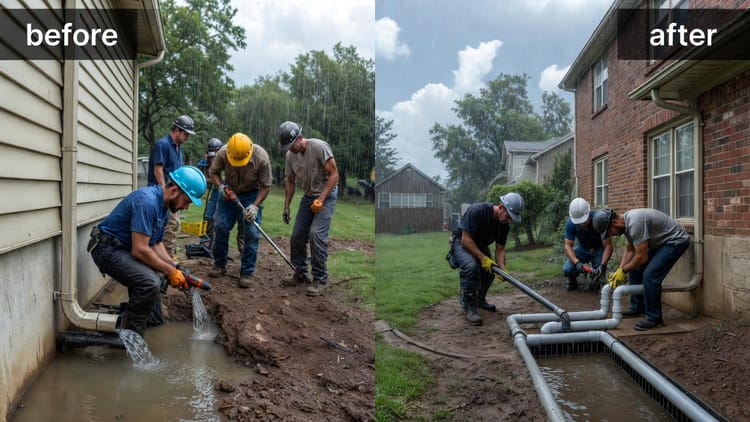
The Underground Downspout: Routing Water Away Through Buried Pipes to Pop-Up Emitters and Dry Wells
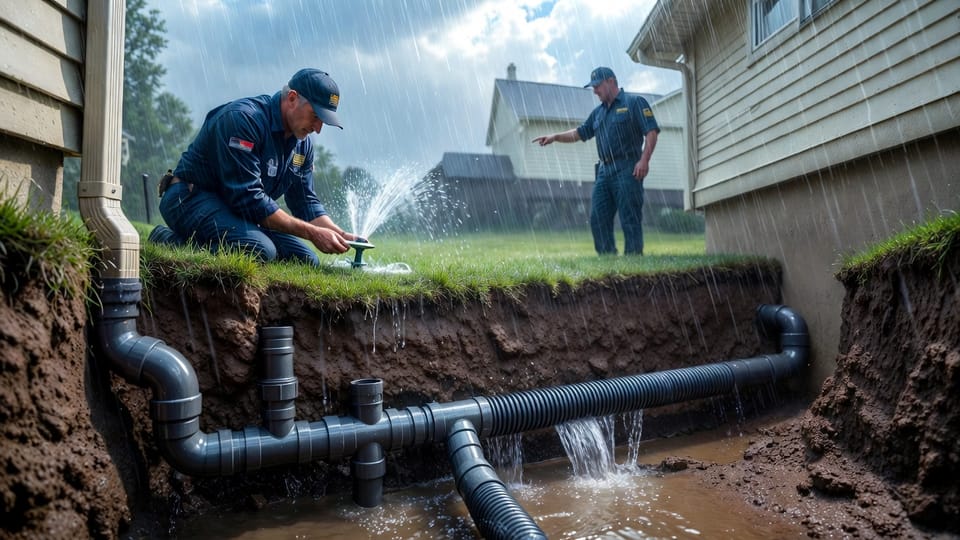
When gutters do their job and channel rainwater off your roof, the work is only half complete. The real challenge begins at the bottom of the downspout. Without proper post-gutter water management, that collected water often pools against your foundation, saturates the soil, and creates expensive – and preventable – problems.
Bury Your Downspouts Today – Expert Design Consultation
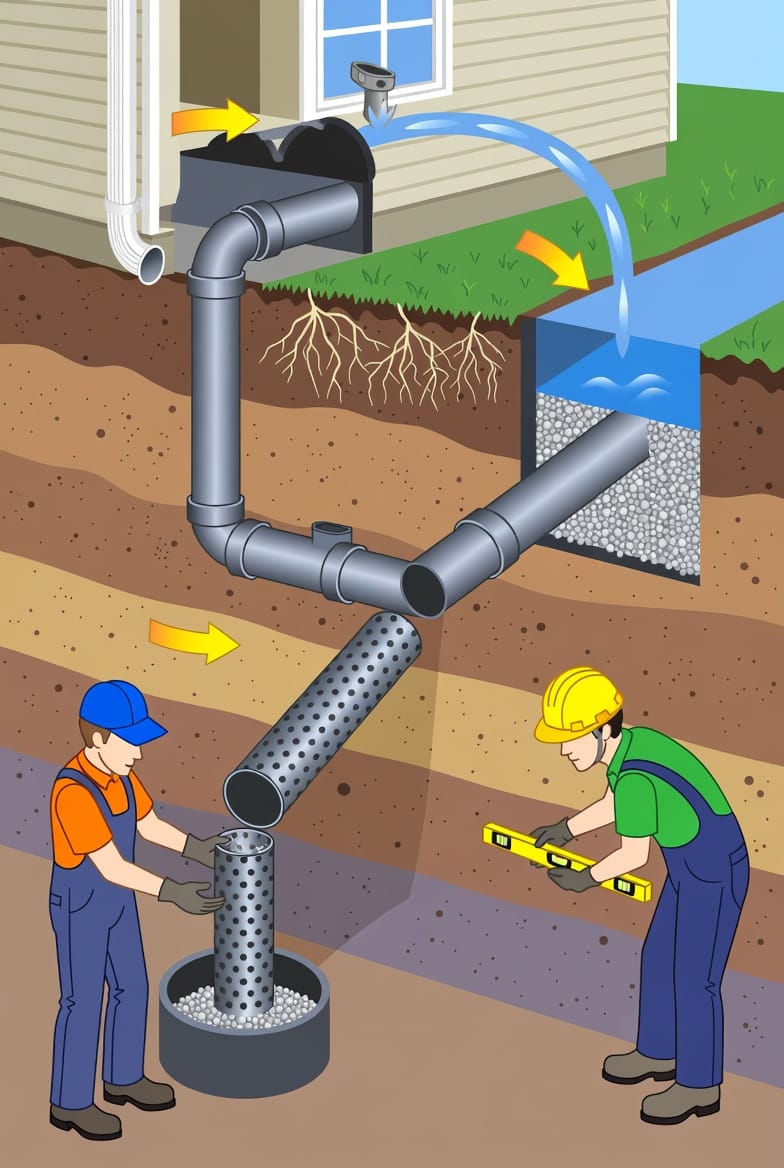
An underground downspout extension solves this by quietly and efficiently moving water far from your home’s structure. Instead of splashing onto the surface or running along a simple extension that still stays too close, buried pipes carry every drop to safe termination points: either pop-up emitters that release water at lawn level only during heavy flow, or dry wells that allow gradual infiltration into the soil.
This professional approach not only protects your foundation but also maintains the clean appearance of your landscape. No more ugly above-ground pipes snaking across the lawn. No more eroded mulch beds or soggy low spots. Just reliable, invisible drainage that works every time it rains.
Why surface-level solutions fall short
Standard downspout extensions may move water a few feet away, yet they still leave it near the foundation during heavy storms. Water finds its way back through soil, hydrostatic pressure builds, and before long you face cracked foundations, wet basements, and landscape washouts. An underground downspout system eliminates these risks by directing flow at a consistent slope, deep enough to stay protected from freezing and surface damage.
Choosing solid pipe – the foundation of success
Never use corrugated pipe for underground downspout extensions. Its ribbed interior traps debris, slows flow, and collapses under soil weight over time. Instead, insist on solid, smooth-walled PVC or HDPE pipe (typically 4-inch diameter). The smooth interior ensures fast, clog-free movement of water, while the rigid construction maintains perfect slope year after year.
Critical slope requirement
Every underground drainage run must maintain a minimum ¼-inch drop per foot of pipe length. This precise grade keeps water moving steadily without pooling inside the pipe or backing up into the downspout. Professional installers use laser levels and grading tools to guarantee this slope from start to finish – a detail most DIY attempts overlook, leading to costly failures.
Planning Your Underground System
Success starts long before the first shovel hits the ground. A qualified drainage specialist begins with a site evaluation that considers:
- Soil type and percolation rate
- Distance needed to move water away from the foundation (minimum 10–20 feet recommended)
- Local building codes and permit requirements
- Existing utilities and irrigation lines
- Natural low spots or areas where infiltration is most effective
Always check local codes first. Some municipalities restrict dry wells or require specific setbacks. Professionals handle these details so you never have to worry about future compliance issues.
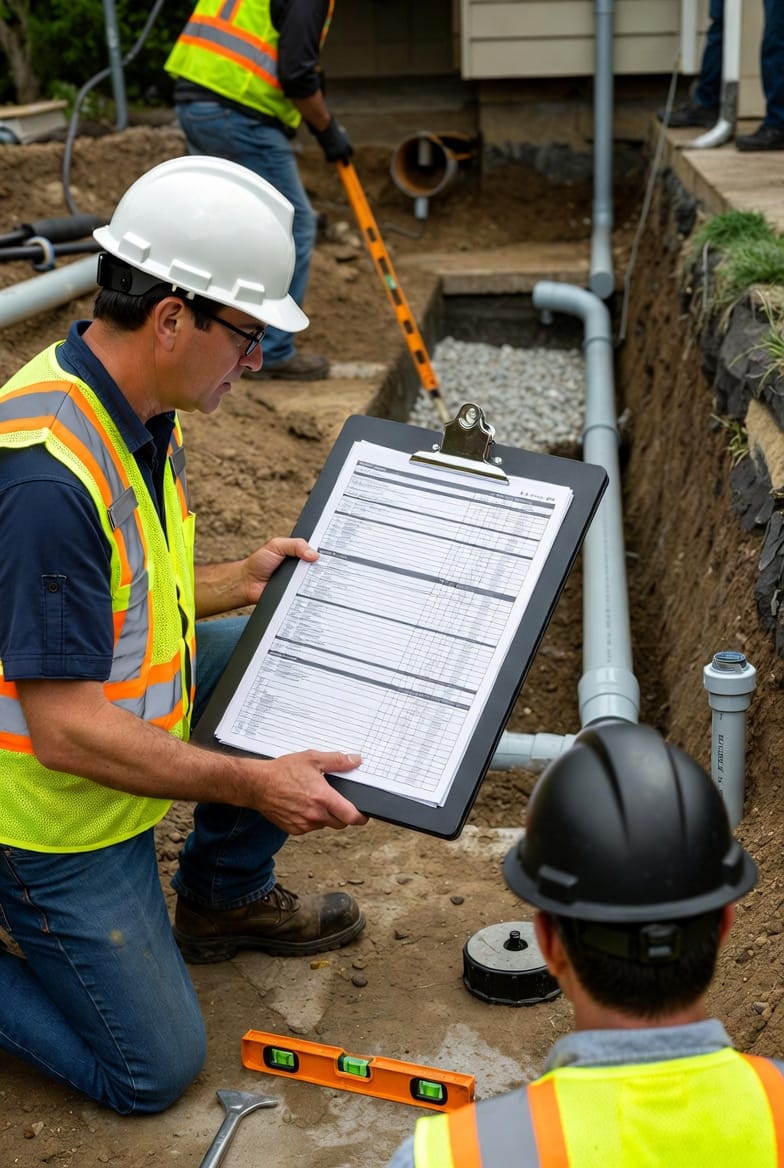
Step-by-Step Professional Installation
- Downspout connection – Secure transition from the vertical downspout to the underground pipe using a proper adapter and waterproof sealant.
- Trench excavation – Dig a 6- to 8-inch wide trench at the exact depth needed to maintain ¼-inch per foot slope while keeping the pipe below frost line where required.
- Bedding material – Lay 2 inches of compacted gravel for stable support and improved drainage around the pipe.
- Pipe laying – Connect sections of solid PVC with solvent-welded or gasketed joints, ensuring each joint is perfectly sealed.
- Cleanout installation – Place accessible cleanout ports every 50 feet and at direction changes for easy future maintenance.
- Backfilling – Carefully layer soil and compact in lifts to prevent future settling.
- Surface restoration – Top with sod or seed so the lawn looks untouched within weeks.
The entire process is designed to be minimally invasive, with most yards restored the same day.
Termination Options That Work
Pop-Up Emitters – The Discreet Choice
A pop-up emitter sits flush with the lawn when dry. During rain, internal pressure lifts the cap and releases water in a controlled arc, then the cap drops back down automatically. These are ideal for yards with good surface drainage and are virtually invisible once installed. Homeowners love the clean look and the assurance that water is released far from the foundation only when necessary.
Dry Wells – Maximum Infiltration
For properties where surface release is not preferred or soil conditions allow, a dry well provides the ultimate solution. A large perforated chamber or lined pit filled with clean gravel acts as a temporary reservoir, allowing water to percolate slowly into surrounding soil. Sized correctly according to roof area and soil tests, a dry well handles even the heaviest downpours without ever surfacing water.
Both options can be combined in a single system – for example, routing most downspouts to pop-up emitters while directing one or two problem areas to a dry well.
Maintenance That Keeps Everything Flowing
Underground systems are remarkably low-maintenance when built correctly, but smart homeowners follow a simple annual routine:
- Flush the system with a garden hose each spring
- Inspect cleanouts for any debris buildup
- Check pop-up emitters for smooth operation
- Ensure the lawn above the pipe remains level and free of depressions
With proper design, these systems often run trouble-free for decades.
Common Mistakes That Cost Homeowners Thousands
- Using corrugated pipe instead of solid
- Installing without adequate slope
- Placing termination points too close to the house
- Skipping cleanouts
- Failing to obtain necessary permits
Each of these errors leads to the very foundation and landscape damage the system was meant to prevent. Professional installation eliminates every one of these risks.
Real-World Results Homeowners Experience
After installing a complete underground downspout system with pop-up emitters and a strategically placed dry well, homeowners consistently report:
- Completely dry basements even during record rainfall
- Elimination of soggy lawn areas and mosquito breeding grounds
- Protected foundation integrity with no new cracks
- Enhanced curb appeal thanks to invisible drainage
- Increased property value through proactive water management
One recent project involved a home that had suffered repeated foundation seepage for eight years. After routing all four downspouts underground to pop-up emitters placed 25 feet from the structure, the owners reported zero water intrusion through two full seasons of storms – a result they describe as “life-changing.”
The Peace of Mind Only Professionals Deliver
Water management is not a weekend DIY project when the health of your home’s foundation is at stake. The combination of proper engineering, high-quality solid pipe, precise slope, and thoughtfully chosen termination points creates a system that works silently and reliably for decades.
You don’t have to live with water worries every time the forecast calls for rain. An expertly designed underground downspout system moves water away from your foundation permanently, protecting the single largest investment most families ever make.
Move water away, not just down.
Design your custom underground drainage system today with the professionals who have protected thousands of homes across the region.
Upgrade to Underground Drainage – Call for Professional Help