The Trenchless Revolution: Replacing Sewer Lines Without Destroying Your Landscaping
Imagine waking up to a sewer line backup—that dreaded gurgle in your drains, foul odors wafting through your home, or worse, wastewater pooling in your yard. For homeowners, this scenario often conjures images of chaotic excavations: heavy machinery tearing up your meticulously maintained lawn, flower beds uprooted, and driveways cracked open. But what if there was a way to fix these issues without turning your property into a construction zone? Enter the trenchless revolution, a game-changing advancement in plumbing technology that allows for sewer line replacement with minimal disruption.
Protect Your Landscaping with Trenchless Sewer Fix
As plumbing experts with years of experience, we can assure you that trenchless methods are not just a trend; they're a proven solution that's transforming how we handle damaged sewer laterals. In this comprehensive guide, we'll dive into the core technologies—pipe bursting and cured-in-place pipe (CIPP) lining—explaining how they work, their superior advantages over traditional excavation in terms of cost and disruption, and when they're the ideal choice for your home. By the end, you'll feel empowered to make an informed decision that protects both your wallet and your landscaping.
What is Trenchless Technology?
Trenchless technology refers to innovative repair and replacement methods that minimize or eliminate the need for extensive digging. Unlike conventional approaches that require trenching across your yard to access buried pipes, trenchless techniques use small access points—often just two pits at either end of the line—to perform the work underground. This approach has gained popularity since the late 20th century, driven by advancements in materials science and engineering.
Why does this matter? Traditional sewer line repairs can disrupt your daily life for weeks, costing you time, money, and peace of mind. Trenchless options, on the other hand, typically complete the job in a day or two, leaving your property virtually untouched. Let's explore the two primary methods: pipe bursting and CIPP lining.
How Pipe Bursting Works
Pipe bursting is a robust trenchless sewer replacement technique ideal for completely replacing old, deteriorated pipes with new ones. Here's a step-by-step breakdown of the process, designed to reassure you of its efficiency and safety:
- Initial Inspection: Technicians start with a camera inspection to assess the damage. This non-invasive step uses a flexible rod with a high-definition camera to snake through the pipe, identifying cracks, collapses, or root intrusions without any digging.
- Access Point Creation: Small pits (usually 4x4 feet) are dug at the pipe's entry and exit points—often at the home's foundation and the street connection. These are the only surface disturbances you'll see.
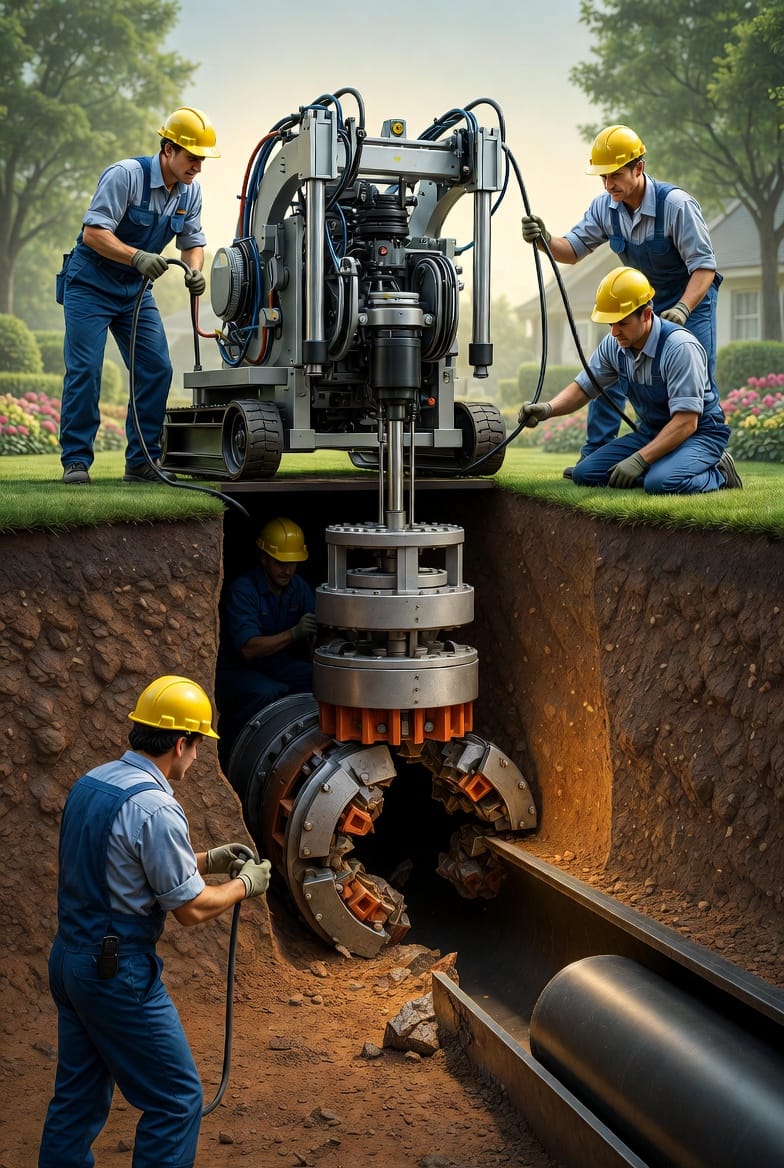
- Bursting Head Insertion: A specialized bursting head, attached to a new high-density polyethylene (HDPE) pipe, is inserted into the old line. This cone-shaped tool is pulled through the existing pipe using hydraulic machinery.
- Fracturing and Replacement: As the head advances, it shatters the old pipe (typically made of clay, cast iron, or concrete) into fragments, which are displaced into the surrounding soil. Simultaneously, the new pipe is pulled into place behind it, creating a seamless replacement.
- Final Connections and Testing: Once in position, connections are made, and the system is tested for leaks and flow. The access pits are then backfilled and restored.
This method is particularly effective for pipes ranging from 2 to 6 inches in diameter, common in residential sewer laterals. The new HDPE pipe is durable, resistant to corrosion and roots, and can last 50-100 years.
One of the standout benefits of pipe bursting is its speed—most jobs are done in 4-8 hours. Homeowners often report minimal noise and vibration, comparable to a distant lawnmower. Rest assured, experienced plumbers ensure the process is safe for your home's foundation and nearby utilities.
Advantages of Pipe Bursting Over Traditional Excavation
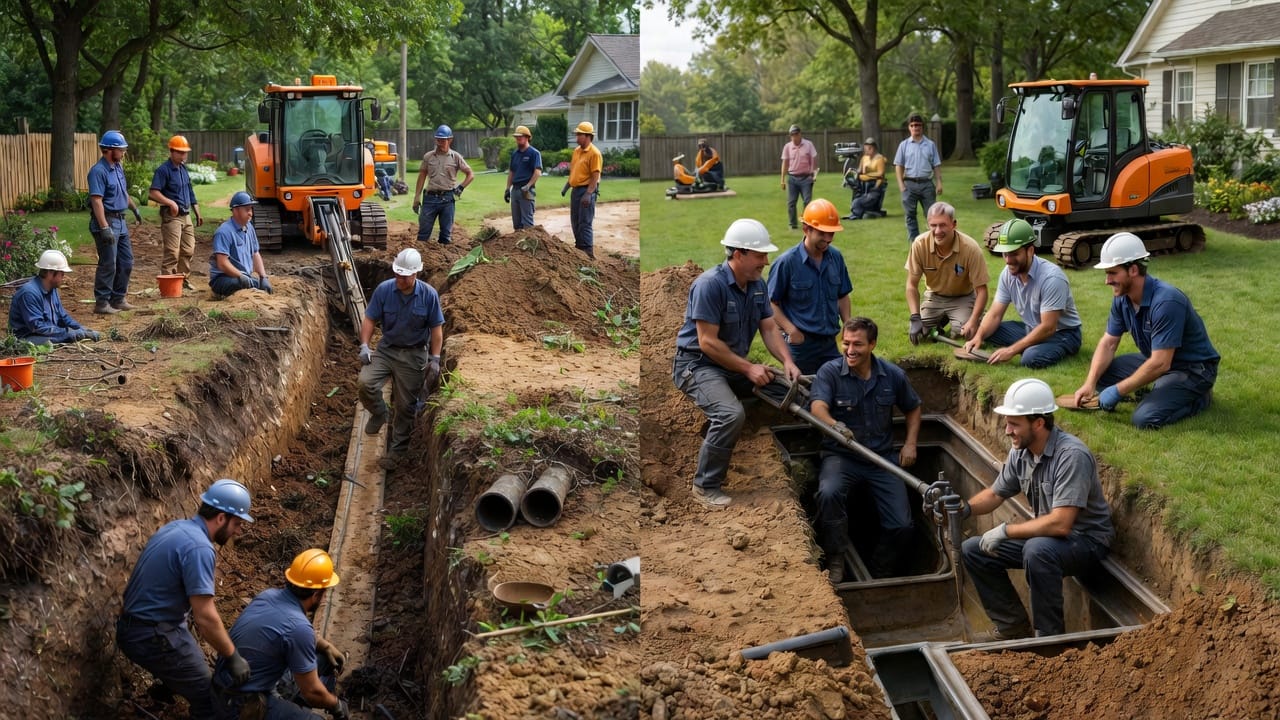
When comparing pipe bursting to traditional methods, the differences are stark. Traditional excavation involves digging a long trench along the pipe's path, exposing it for removal and replacement. This can span your entire yard, leading to significant landscaping damage and restoration costs.
Here's why pipe bursting shines:
- Cost Savings: While initial quotes might seem similar (around $5,000-$15,000 for a 50-100 foot lateral, depending on location), trenchless avoids add-ons like sod replacement, tree removal, or patio repairs, which can add $2,000-$10,000 to traditional bills.
- Minimal Disruption: No more living in a construction site. Your family can stay home, pets remain unstressed, and daily routines continue uninterrupted.
- Environmental Benefits: Less soil disturbance means reduced erosion and preserved ecosystems in your yard. Plus, the process uses fewer resources overall.
- Long-Term Reliability: The new pipe's jointless design reduces future leak risks, offering peace of mind for decades.
In essence, pipe bursting isn't just a repair—it's an investment in your property's value and your sanity.
Understanding Cured-in-Place Pipe (CIPP) Lining
If full replacement isn't necessary, CIPP lining offers a sophisticated trenchless repair alternative. This method rehabilitates existing pipes by creating a new liner inside them, effectively sealing cracks and restoring functionality without removal.
The process unfolds as follows:
- Preparation and Inspection: Similar to pipe bursting, a camera scopes the pipe to confirm suitability—no major collapses or offsets allowed.
- Liner Insertion: A flexible, resin-saturated felt tube (the liner) is inverted or pulled into the old pipe through an access point.
- Curing the Liner: Hot water, steam, or UV light is used to cure the resin, hardening it into a rigid, pipe-within-a-pipe structure. This bonds seamlessly to the host pipe.
- Service Restoration: Lateral connections are reopened using robotic cutters, and the system is inspected and tested.
CIPP is versatile for pipes 2-8 inches in diameter and excels in scenarios with minor to moderate damage like cracks, corrosion, or small root intrusions. The epoxy resin creates a smooth, corrosion-resistant surface that improves flow and prevents future issues.
Projects often wrap up in 3-6 hours, with the liner curing in as little as 1-2 hours. It's a clean process, producing no debris or odors in your home.
Why Choose CIPP Lining?
CIPP lining edges out traditional excavation in several key areas, making it a go-to for budget-conscious homeowners:
- Affordability: Costs range from $80-$250 per foot, often totaling $4,000-$10,000 for a standard lateral—up to 50% less than digging when factoring in restoration.
- Zero Disruption to Landscaping: With only one or two small holes, your yard stays intact. No need to replant or resod.
- Quick Turnaround: Back to normal use the same day, ideal for busy households.
- Durability and Warranty: Liners come with 50-year lifespans and manufacturer warranties, ensuring long-term protection.
Many clients tell us CIPP feels like magic—problems vanish without a trace of mess.
When Are Trenchless Methods Suitable?
Not every damaged sewer lateral calls for trenchless solutions, but they're suitable in most cases. Here's how to know:
- Pipe Bursting is best when the old pipe is severely damaged, collapsed, or undersized. It's ideal for straight runs without sharp bends and when you want a brand-new pipe.
- CIPP Lining suits pipes with internal issues like cracks, leaks, or corrosion, but the structure must be intact enough to hold the liner. It's perfect for offset joints or minor misalignments.
Both methods work well for clay, PVC, cast iron, or orangeburg pipes. However, if your line has multiple 90-degree bends, extreme sagging, or is under structures like pools, traditional methods might be needed—though rare with modern tools.
Factors like soil type, pipe depth, and local regulations also play a role. A professional inspection is key; our team uses state-of-the-art diagnostics to recommend the right fit.
Rest assured, trenchless is safe for most homes, with low risk of utility damage thanks to precise locating equipment.
Comparing the Options: A Side-by-Side Look
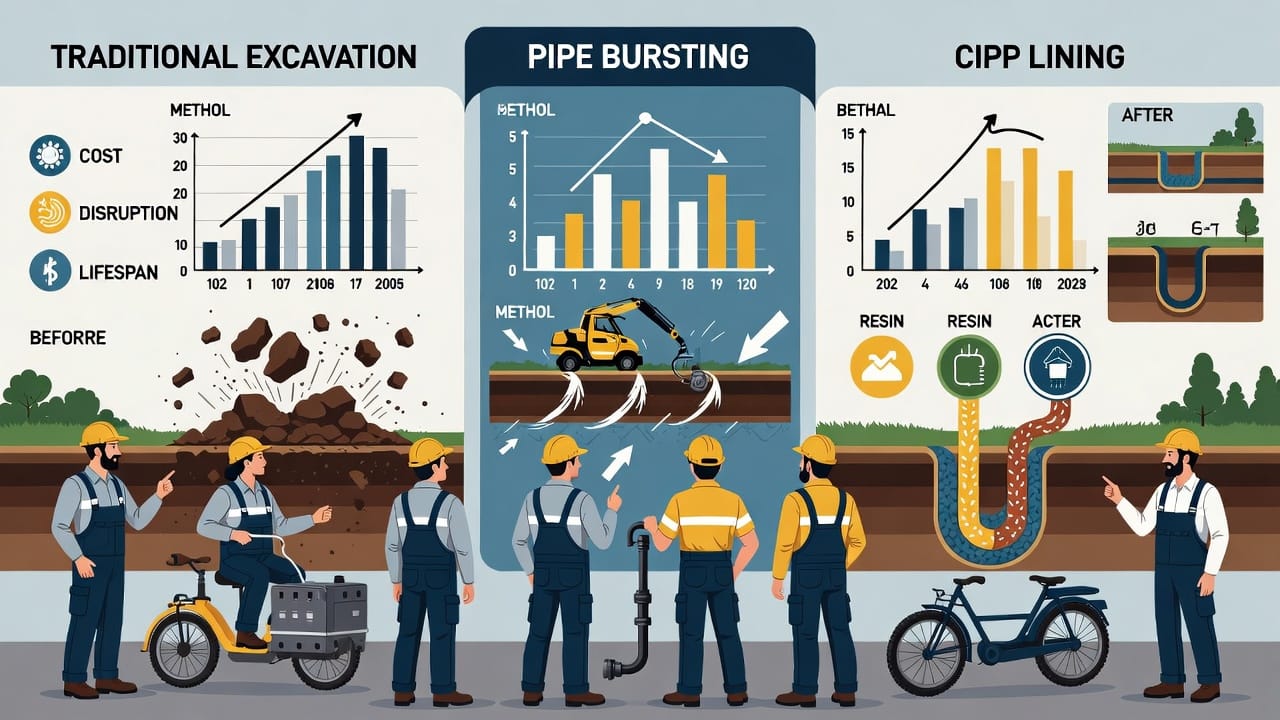
To make your decision easier, consider this comparison of traditional excavation, pipe bursting, and CIPP lining:
This overview highlights why trenchless dominates for modern homes.
The Future of Sewer Repairs
As technology evolves, trenchless methods continue to improve, with innovations like robotic precision and eco-friendly resins. Homeowners increasingly opt for these to avoid the headaches of old-school digs. If you're facing sewer issues, don't let fear of disruption hold you back—trenchless is here to stay.
In conclusion, whether through pipe bursting or CIPP lining, you can address damaged sewer laterals efficiently and affordably. These techniques not only save your landscaping but also enhance your home's plumbing resilience.
Modern Sewer Repair, Zero Landscape Damage – Call Now