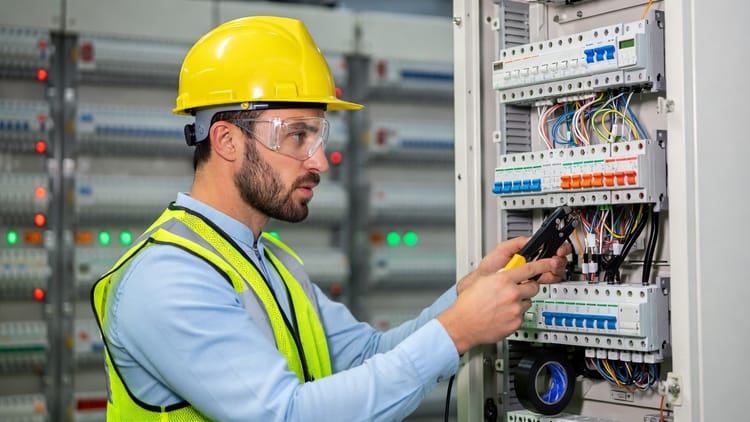
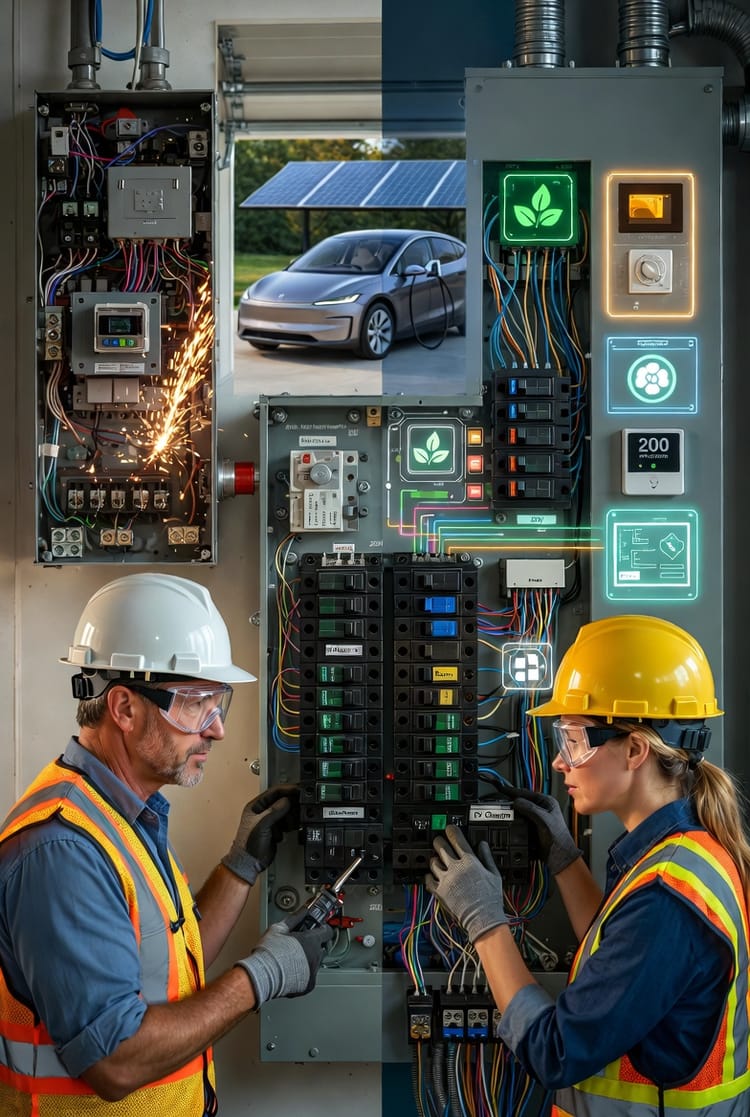
The Transfer Switch: The Critical Link Between Your Generator and Your Home's Electrical Panel
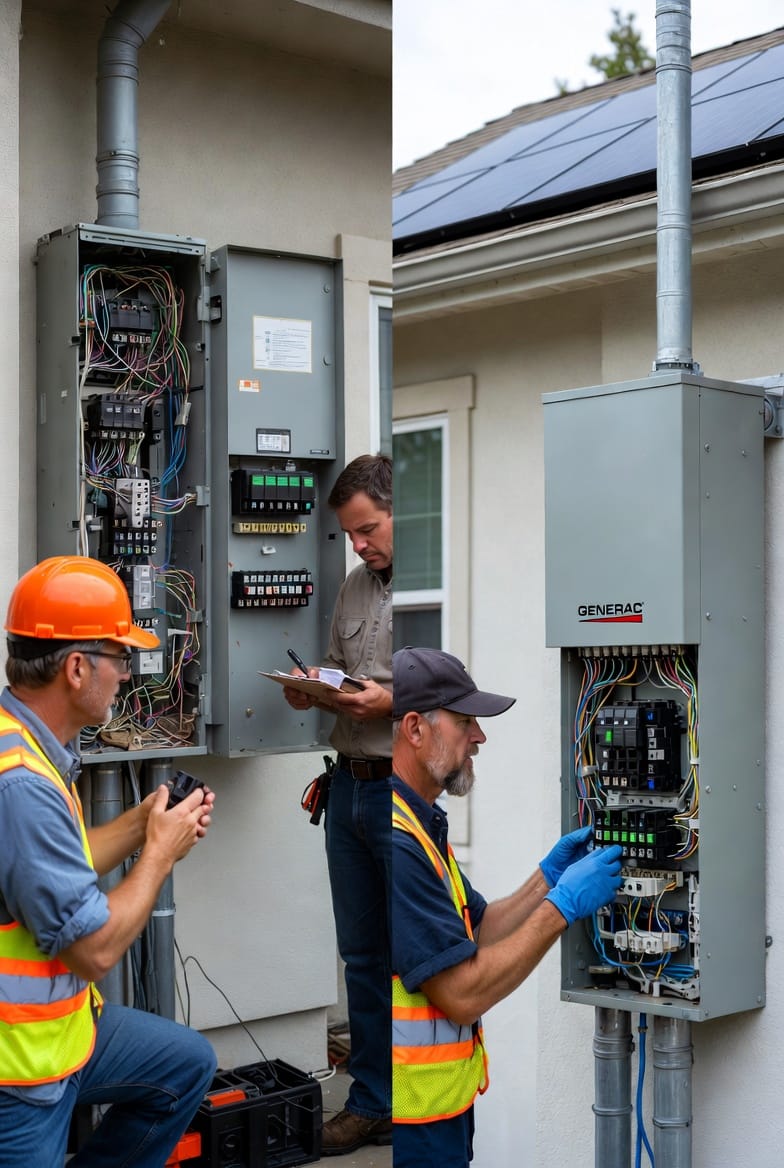
In an era where renewable energy sources like solar panels and wind turbines are becoming integral to home power systems, ensuring safe and efficient integration is paramount. A transfer switch serves as the vital bridge, allowing homeowners to incorporate backup generators—whether powered by traditional fuels or renewable alternatives—without compromising safety or grid stability. This device not only facilitates seamless power transitions during outages but also aligns with sustainable energy practices by enabling hybrid systems that maximize renewable output while providing reliable backups.
Protect Your Home & Utility Workers – Call Now for Safe Transfer Switch Installation
As extreme weather events increase due to climate change, more households are turning to generators supplemented by renewables. But without a proper transfer switch, this setup can lead to hazardous situations. In this comprehensive guide, we'll explore the essential role of transfer switches, their types (manual and automatic), how they prevent deadly back-feeding to the grid, and why they're mandatory for legal, safe installations. Rest assured, with the right knowledge and professional help, you can achieve a resilient, eco-friendly power system for your home.
Understanding the Basics of Transfer Switches
A transfer switch is an electrical device that safely connects a backup generator to your home's electrical panel. It acts as a gatekeeper, ensuring that power from your generator doesn't mix dangerously with utility power. This is especially crucial in renewable integration, where systems might include solar inverters that feed excess energy back to the grid.
Why is it essential? Without it, attempting to power your home during an outage could result in severe risks. Transfer switches isolate your home's circuits from the grid, allowing selected appliances to run on generator power while preventing any unintended flow back to utility lines.
- Safe Power Isolation: Prevents simultaneous connection to both grid and generator power.
- Circuit Selection: Lets you prioritize essential loads, such as refrigerators or medical equipment, optimizing energy use.
- Compliance with Codes: Meets National Electrical Code (NEC) requirements for permanent generator setups.
In renewable setups, transfer switches enable smooth switching between solar-generated power, battery storage, and generator backups, promoting energy efficiency and reducing reliance on fossil fuels.
The Dangers of Back-Feeding and How Transfer Switches Prevent It
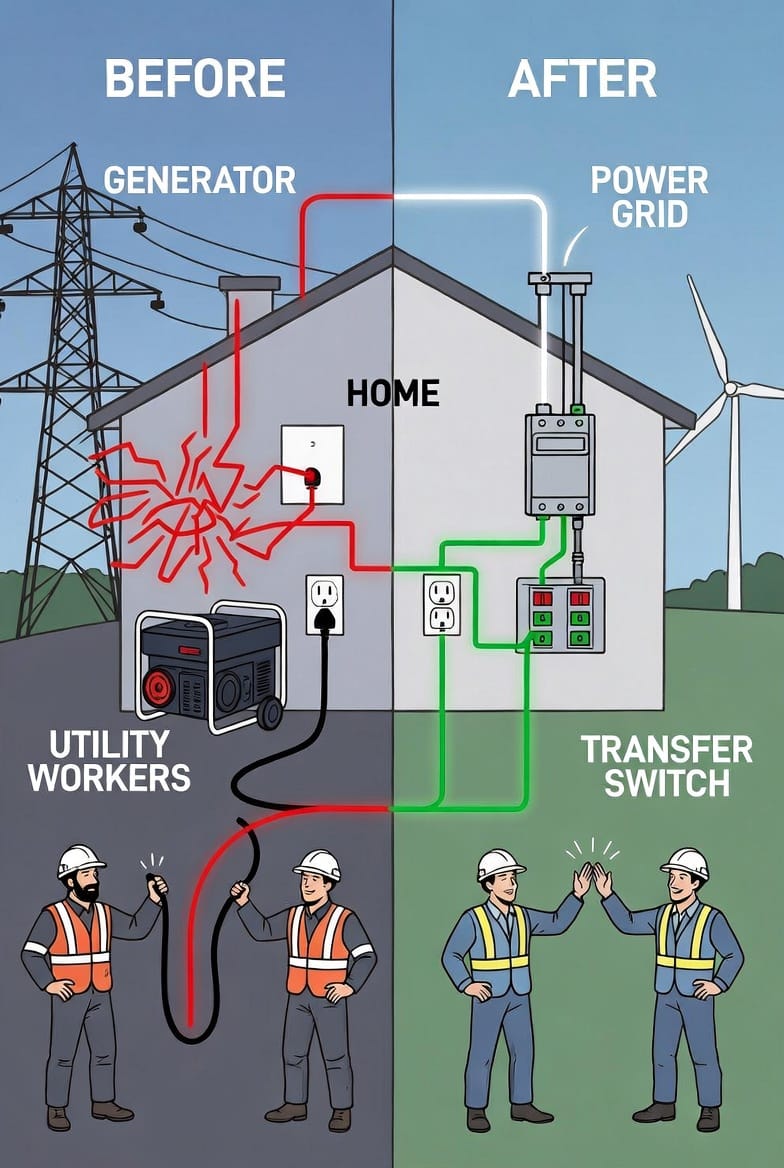
One of the most critical functions of a transfer switch is to eliminate back-feeding—a scenario where generator power flows back into the utility grid. This isn't just inefficient; it's potentially lethal.
Imagine a storm knocks out power in your neighborhood. Utility workers arrive to repair downed lines, assuming the grid is de-energized. If your generator is improperly connected and sends power backward, it could electrocute those workers. According to the Electrical Safety Foundation International (ESFI), back-feeding incidents contribute to numerous injuries and fatalities annually among line workers.
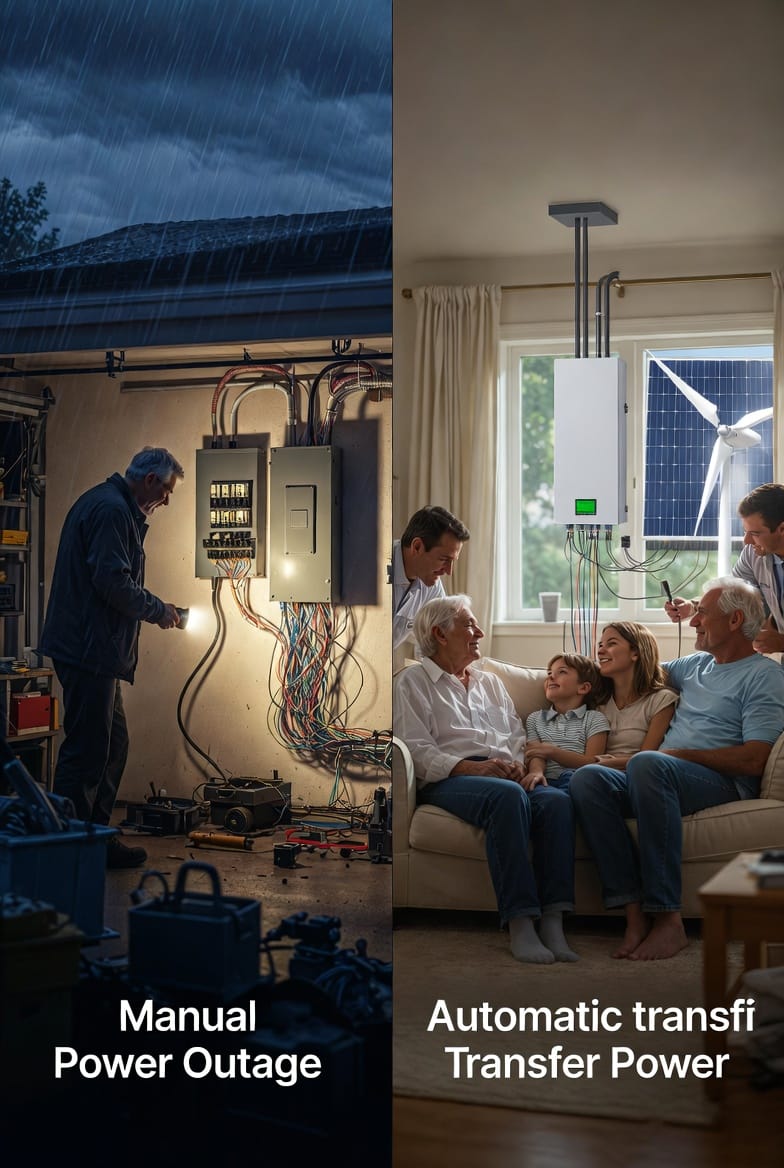
Transfer switches mitigate this by mechanically or electronically ensuring that only one power source is active at a time. In automatic models, sensors detect grid failure and switch seamlessly, while manual ones require user intervention but offer the same protection.
Key Risks of Skipping a Transfer Switch:
- Electrocution Hazards: Endangers utility personnel and even neighbors.
- Equipment Damage: Can overload circuits, frying appliances or the generator itself.
- Legal Repercussions: Violates building codes, potentially voiding insurance and leading to fines.
By integrating a transfer switch, you're not only safeguarding lives but also enhancing your renewable system's reliability. For instance, in a solar-plus-generator hybrid, the switch ensures that excess solar power doesn't conflict with generator output during transitions.
Types of Transfer Switches: Manual vs. Automatic
Choosing between manual and automatic transfer switches depends on your needs, budget, and the scale of your renewable integration.
Manual Transfer Switches
These are cost-effective options ideal for smaller setups or occasional use. You manually flip switches to transfer power, which requires being present during outages.
- Advantages: Lower upfront costs (typically $200–$500), simple installation, and reliability without complex electronics.
- Drawbacks: Less convenient; you must start the generator and switch circuits yourself.
- Best For: Homes with partial renewable systems, like rooftop solar, where backups are infrequent.
In a renewable context, manual switches allow selective powering of circuits tied to energy storage, ensuring you don't waste generator fuel on non-essentials.
Automatic Transfer Switches (ATS)
For ultimate convenience, ATS models detect power loss and activate the generator automatically, restoring power in seconds.
- Advantages: Hands-free operation, whole-house coverage, and integration with smart home systems for monitoring renewable inputs.
- Drawbacks: Higher cost ($500–$2,000+), requires professional installation.
- Best For: Comprehensive renewable setups with battery banks and generators, providing uninterrupted power for critical loads like EV chargers.
Automatic switches shine in hybrid renewable systems, where they can prioritize solar or wind power before engaging the generator, minimizing emissions.
Comparison Insights:
- Cost: Manual is budget-friendly; automatic offers long-term savings through efficiency.
- Convenience: Automatic excels in user experience, especially for elderly or busy households.
- Scalability: Both support renewables, but ATS integrates better with advanced microgrids.
Selecting the right type ensures your system is both safe and optimized for sustainability.
Installation Requirements for Safe, Legal Generator Integration
Installing a generator without a transfer switch isn't just risky—it's often illegal. The NEC mandates transfer switches for permanent installations to prevent hazards and ensure code compliance.
Steps for Proper Installation:
- Assessment: Evaluate your home's electrical load and renewable components.
- Selection: Choose a switch rated for your generator's output (e.g., 30-amp for smaller units).
- Professional Wiring: Connect to the main panel, often requiring permits.
- Testing: Verify isolation and automatic failover if applicable.
For renewable integration, consider switches compatible with inverters, allowing bidirectional flow control. This setup supports net metering while protecting against islanding—where your system operates independently without grid synchronization.
Hiring licensed electricians guarantees adherence to local codes, avoiding costly rework. In many jurisdictions, improper installs can lead to utility disconnections or denied claims.
Benefits of Transfer Switches in Renewable Energy Systems
Beyond safety, transfer switches enhance the overall performance of renewable-integrated homes.
- Energy Efficiency: By selecting circuits, you conserve generator fuel and extend battery life in solar setups.
- Reliability During Outages: Ensures critical systems like water pumps or HVAC remain operational.
- Cost Savings: Prevents damage and reduces downtime, lowering repair bills.
- Environmental Impact: Facilitates greater renewable reliance, cutting carbon footprints.
Case in point: A family in California integrated a solar array with a natural gas generator via an ATS. During wildfires, the system switched flawlessly, powering essentials from batteries first, then the generator—saving energy and emissions.
Common Mistakes to Avoid
Many homeowners underestimate the complexities of generator integration, leading to avoidable errors.
- DIY Attempts: Without expertise, wiring mishaps can cause fires or shocks.
- Overloading Circuits: Exceeding switch capacity damages equipment.
- Ignoring Renewables: Failing to account for solar inputs can create inefficiencies.
Always consult professionals to tailor the system to your needs.
Future-Proofing Your Home with Advanced Transfer Switches
As renewables evolve, transfer switches are adapting. Smart models now include app controls, AI optimization for load balancing, and seamless integration with electric vehicles.
Investing in these technologies positions your home for a sustainable future, where power is resilient, green, and intelligent.
Warning: The Perils of Improper Connections
Never plug a generator directly into a wall outlet. This creates a direct path for back-feeding, endangering lives and property. Always use a transfer switch for safe operation.
In conclusion, the transfer switch isn't just a component—it's the cornerstone of safe, effective power management in modern homes. By preventing hazards, enabling circuit control, and supporting renewable integration, it empowers you to face outages with confidence. Embrace this critical link today for a brighter, more sustainable tomorrow.
Seamless Renewable + Generator Integration – Call for Professional Installation