The Thatch Layer Dilemma: When Dethatching is Necessary and When It Harms Your Lawn
Maintaining a vibrant, healthy lawn is a goal for many homeowners, but hidden challenges like the thatch layer can undermine your efforts. As a lawn care expert with years of experience, I assure you that understanding thatch management is key to achieving that lush green carpet without unnecessary stress or damage. In this comprehensive guide, we'll explore what thatch truly is, how to identify when it's becoming excessive, and the critical differences between beneficial practices like core aeration and more aggressive methods such as power raking or dethatching. By the end, you'll feel empowered to make informed decisions, knowing that proper thatch control can enhance your lawn's resilience rather than harm it.
Stop Thatch Damage Before It’s Too Late – Call Now
Thatch is a natural part of any lawn's ecosystem, but like many things in nature, balance is essential. Excessive buildup can lead to issues like poor water absorption and increased pest vulnerability, yet overzealous removal can strip away protective layers and stress your grass. Rest assured, with the right approach, you can navigate this dilemma effectively. We'll break it down step by step, using practical tips and evidence-based insights to help you optimize your lawn care routine.
Understanding Thatch: The Basics
At its core, thatch is the layer of organic material that accumulates between the soil surface and the green grass blades. This isn't just dead debris—it's a mix of living and dead plant parts, including roots, stems, and leaves that haven't fully decomposed. In a healthy lawn, microorganisms in the soil break down this material naturally, recycling nutrients back into the ecosystem.
Why does thatch form? Several factors contribute:
- Grass Type: Cool-season grasses like Kentucky bluegrass or fescue tend to produce more thatch than warm-season varieties such as Bermuda or Zoysia.
- Soil Conditions: Compacted or acidic soils slow decomposition, allowing buildup.
- Maintenance Habits: Over-fertilizing with nitrogen encourages rapid growth, while infrequent mowing leaves longer clippings that decompose slowly.
- Environmental Factors: Shaded areas or regions with high humidity can exacerbate the issue by reducing microbial activity.
A thin layer of thatch—up to about 1/2 inch—is actually beneficial. It acts as a natural mulch, conserving moisture, moderating soil temperature, and cushioning foot traffic. Think of it as your lawn's built-in protective blanket. However, when it exceeds that threshold, problems arise. Excessive thatch creates a barrier that prevents water, nutrients, and oxygen from reaching the roots, leading to shallow root systems and a weakened lawn.
Identifying Excessive Thatch: Signs and Measurement
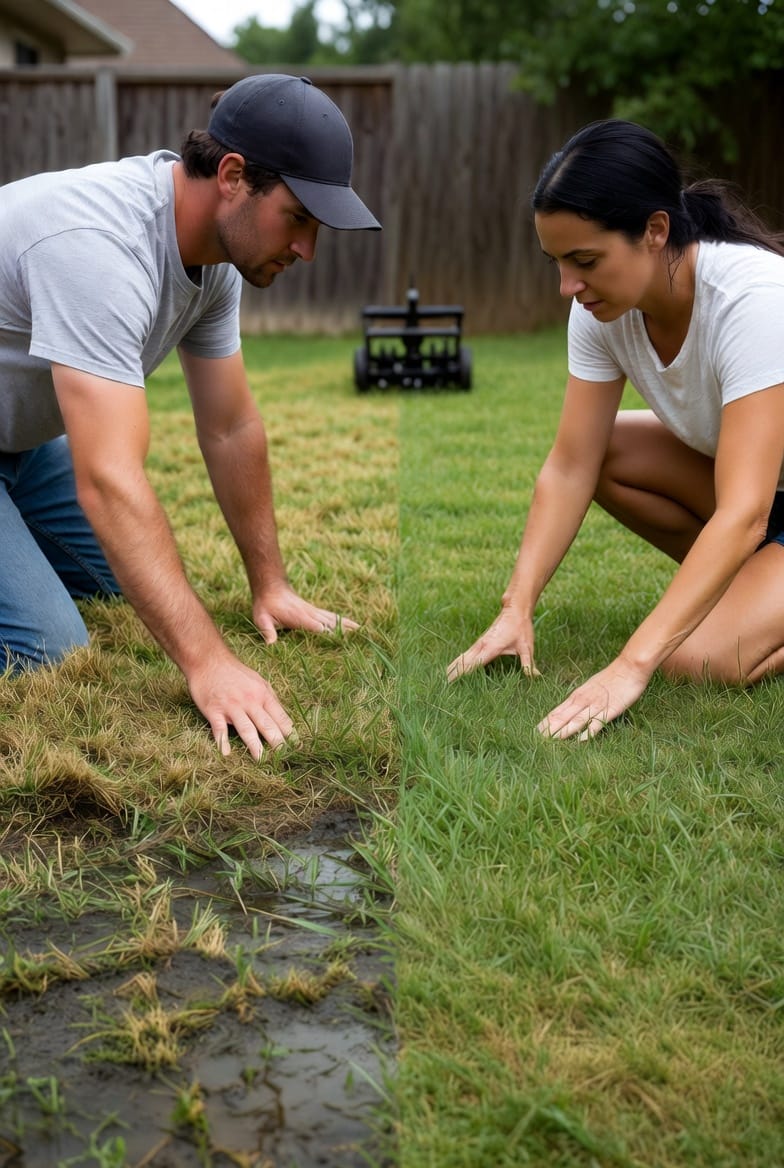
How do you know if your lawn has crossed into the thatch dilemma zone? The good news is that detection is straightforward and doesn't require fancy equipment. Start with a visual and tactile inspection. A healthy lawn feels firm underfoot, but one with too much thatch will feel spongy, like walking on a mattress.
To measure precisely:
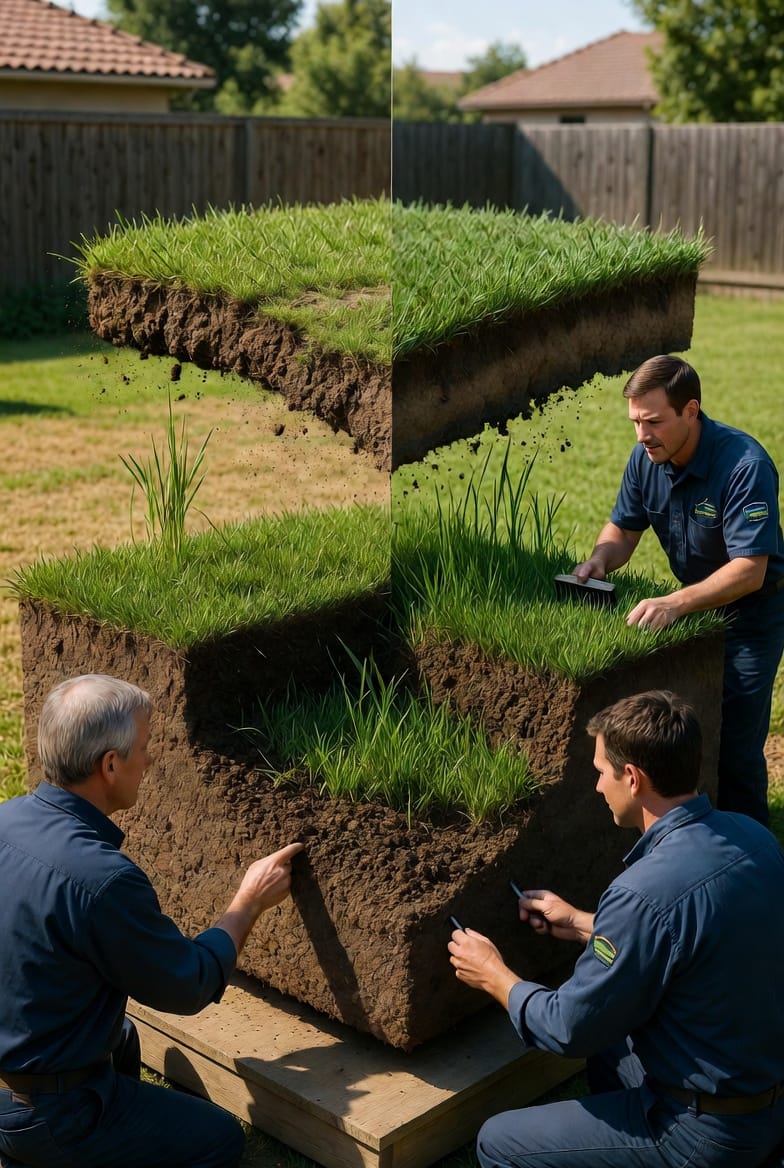
- Dig up a small section of turf (about 3 inches deep) using a shovel or garden trowel.
- Examine the cross-section: The thatch layer appears as a dense, fibrous mat between the green blades and the dark soil.
- Use a ruler—if it's thicker than 1/2 inch, it's time to consider intervention.
Common signs of excessive thatch include:
- Poor Drainage: Water pools on the surface after rain or watering.
- Dull Appearance: Grass looks thin or patchy despite regular care.
- Increased Pests and Diseases: Thatch harbors insects like chinch bugs and fungal issues like brown patch.
- Scalping During Mowing: The mower sinks into the spongy layer, cutting unevenly.
Don't panic if you spot these—many lawns recover beautifully with targeted thatch management. Regular monitoring, ideally in spring or fall, can prevent escalation.
The Role of Core Aeration in Thatch Management
When addressing thatch, not all methods are created equal. Core aeration stands out as a gentle, highly effective technique that promotes long-term lawn health without the risks associated with more invasive options.
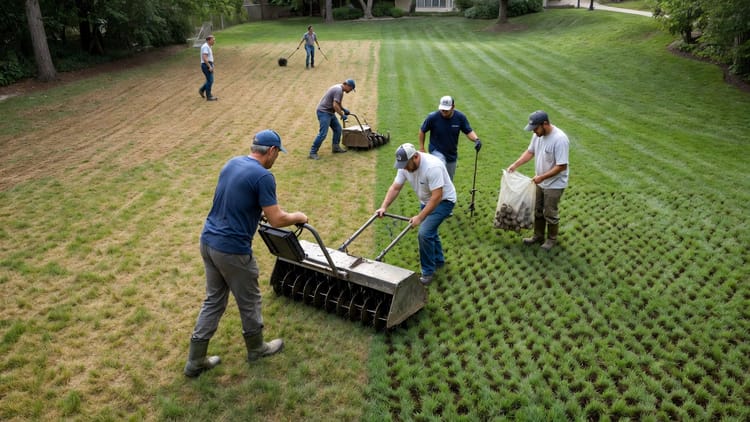
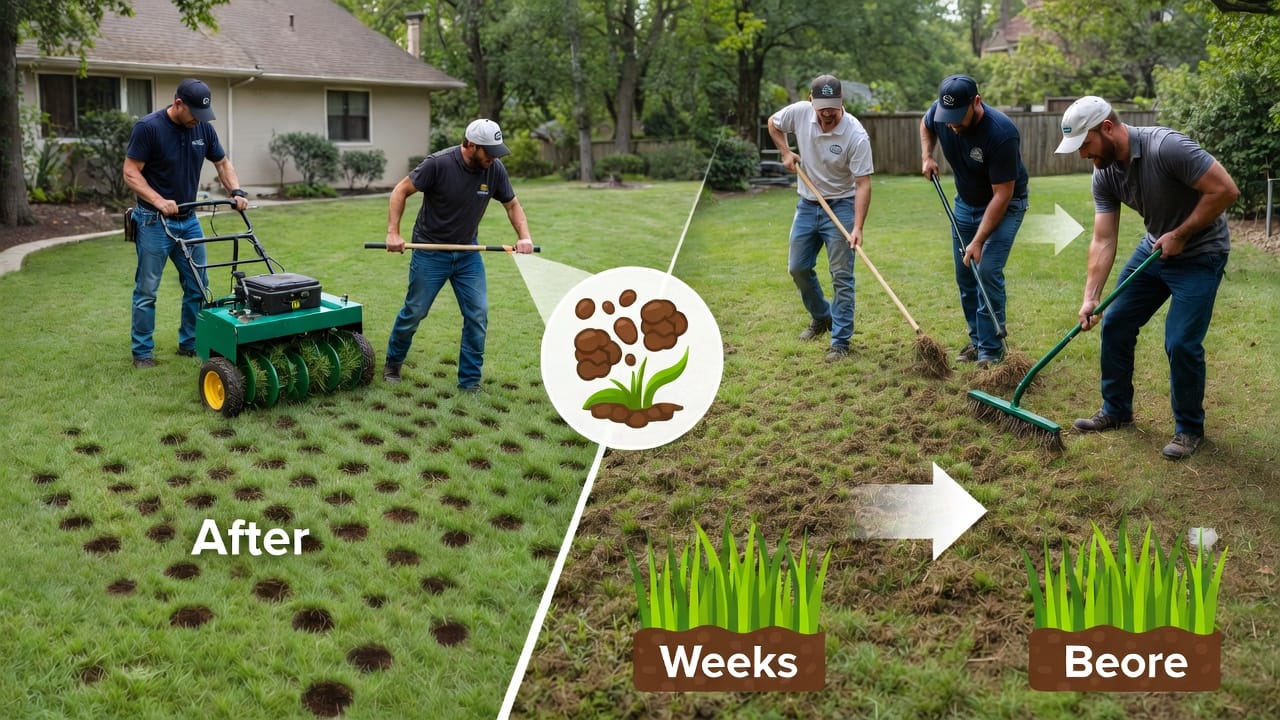
Core aeration involves using a machine to remove small plugs of soil and thatch from the lawn, creating holes that allow air, water, and nutrients to penetrate deeply. This process:
- Enhances soil microbial activity, accelerating natural thatch decomposition.
- Relieves soil compaction, which often underlies thatch buildup.
- Improves root development, leading to denser, more resilient turf.
Unlike aggressive removal, core aeration doesn't tear up the lawn surface. The extracted plugs break down on the surface, adding organic matter back into the soil. It's recommended annually for high-traffic lawns or those with clay-heavy soil. Best performed in growing seasons (spring for cool-season grasses, late spring for warm-season), it leaves your lawn looking temporarily dotted but recovers quickly—often within weeks.
Studies from turfgrass research institutions, such as those at the University of Georgia, show that regular core aeration can reduce thatch by up to 25% over time without stressing the grass. It's a proactive step that keeps your lawn thriving, reassuring you that prevention is far better than cure.
Dethatching and Power Raking: When to Use and When to Avoid
On the other hand, dethatching—often done via power raking—is a more intensive approach. A power rake uses vertical tines to slice through the thatch and pull it up, effectively "combing" the lawn. While effective for severe cases, it's not a routine task.
When is dethatching necessary?
- If measurements confirm thatch over 1 inch thick.
- When aeration alone isn't sufficient, such as in neglected lawns.
- In preparation for overseeding, to ensure seed-to-soil contact.
However, dethatching can harm your lawn if overdone or timed poorly. Risks include:
- Root Damage: Aggressive raking can tear healthy roots, weakening the grass.
- Stress Induction: Performed during hot, dry periods, it exposes soil to evaporation and invites weeds.
- Disease Spread: Open wounds from raking can introduce pathogens.
- Erosion: In sloped yards, it may lead to soil loss.
Experts recommend dethatching only every 2-3 years at most, and always followed by fertilization and watering to aid recovery. If your lawn is moderately thatchy (around 3/4 inch), stick to core aeration—it's less disruptive and equally effective for management.
Best Practices for Thatch Prevention and Control
Preventing the thatch layer dilemma starts with smart, everyday habits. By fostering a balanced environment, you can minimize buildup and avoid the need for aggressive interventions.
Key strategies include:
- Mowing Properly: Cut no more than one-third of the blade height at a time, and leave clippings on the lawn—they decompose quickly and add nutrients.
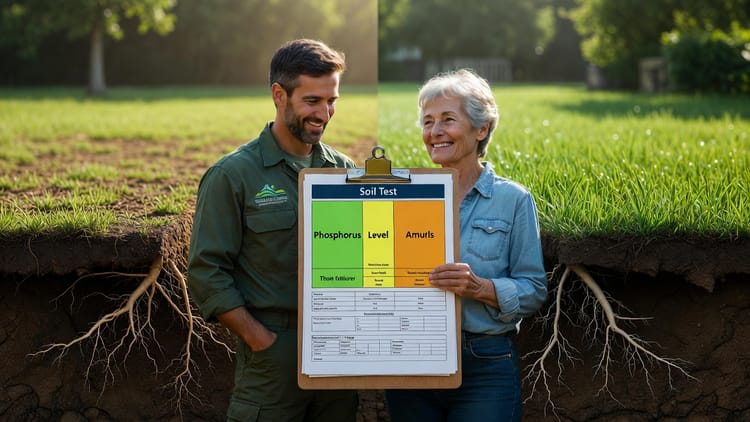
- Fertilizing Wisely: Use slow-release fertilizers to avoid growth spurts; test soil pH annually and aim for 6.0-7.0 to boost decomposition.
- Watering Deeply but Infrequently: Encourage deep roots by watering 1 inch weekly, rather than shallow daily sessions.
- Promoting Biodiversity: Overseed with thatch-resistant varieties and introduce earthworms or beneficial microbes via compost topdressing.
- Seasonal Timing: Address thatch in early spring or fall when grass is actively growing for faster recovery.
For DIY enthusiasts, renting an aerator is accessible, but always scalp the lawn lightly beforehand and overseed afterward. If dethatching is needed, water the lawn a day prior to soften the thatch, and rake debris promptly to prevent smothering.
Remember, every lawn is unique—factors like climate (e.g., humid vs. arid regions) and usage (play areas vs. ornamental) influence thatch dynamics. Tracking changes over seasons builds your expertise, ensuring your lawn remains a source of pride.
The Long-Term Benefits of Proper Thatch Management
Investing in thoughtful thatch control yields rewards beyond aesthetics. A well-managed lawn:
- Boosts Curb Appeal: Increases property value by up to 15%, per real estate studies.
- Enhances Environmental Health: Reduces runoff and supports pollinators.
- Saves Time and Money: Fewer pest treatments and repairs mean more enjoyment.
- Promotes Sustainability: Natural decomposition cuts chemical dependency.
Transitioning from reactive fixes to preventive care transforms the thatch dilemma into an opportunity for growth. Many clients I've advised report denser turf and fewer issues after adopting these practices.
When to Seek Professional Help
While DIY methods work for mild cases, complex situations benefit from expert input. Professionals use specialized tools and soil tests to diagnose accurately, avoiding common pitfalls like over-dethatching.
Signs it's time for pros:
- Persistent problems despite your efforts.
- Large lawns or steep terrains.
- Uncertainty about grass type or soil composition.
They can tailor a plan, perhaps combining core aeration with organic amendments, for optimal results.
Conclusion: Empower Your Lawn Care Journey
Navigating the thatch layer dilemma doesn't have to be overwhelming. By recognizing when dethatching is necessary—only for excessive buildup—and prioritizing gentler options like core aeration, you safeguard your lawn's health. Embrace these strategies with confidence, knowing they lead to a resilient, beautiful yard.
Restore Your Lawn’s Health – Call Now for Assessment