The Structural Drying Equipment: Air Movers, Dehumidifiers, and Their Strategic Placement
When water damage strikes your home or business, time is critical. Within hours, hidden moisture can compromise structural integrity, promote mold growth, and create costly secondary damage. Fortunately, professional restoration teams rely on advanced structural drying equipment — specifically air movers and dehumidifiers — to restore properties quickly and completely.
Protect Your Home from Hidden Water Damage – Call Today
The secret lies not just in the machines themselves, but in their strategic placement. Experienced technicians assess room layout, affected materials, and precise moisture readings to position equipment for maximum efficiency. This data-driven approach ensures rapid evaporation, controlled humidity reduction, and complete drying without guesswork.
In this authoritative guide, we explain how these tools work together, why placement strategy matters, and how it protects your property. Rest assured: with the right equipment and expert deployment, your space returns to its pre-damage condition safely and efficiently.
The Critical Role of Proper Structural Drying After Water Damage
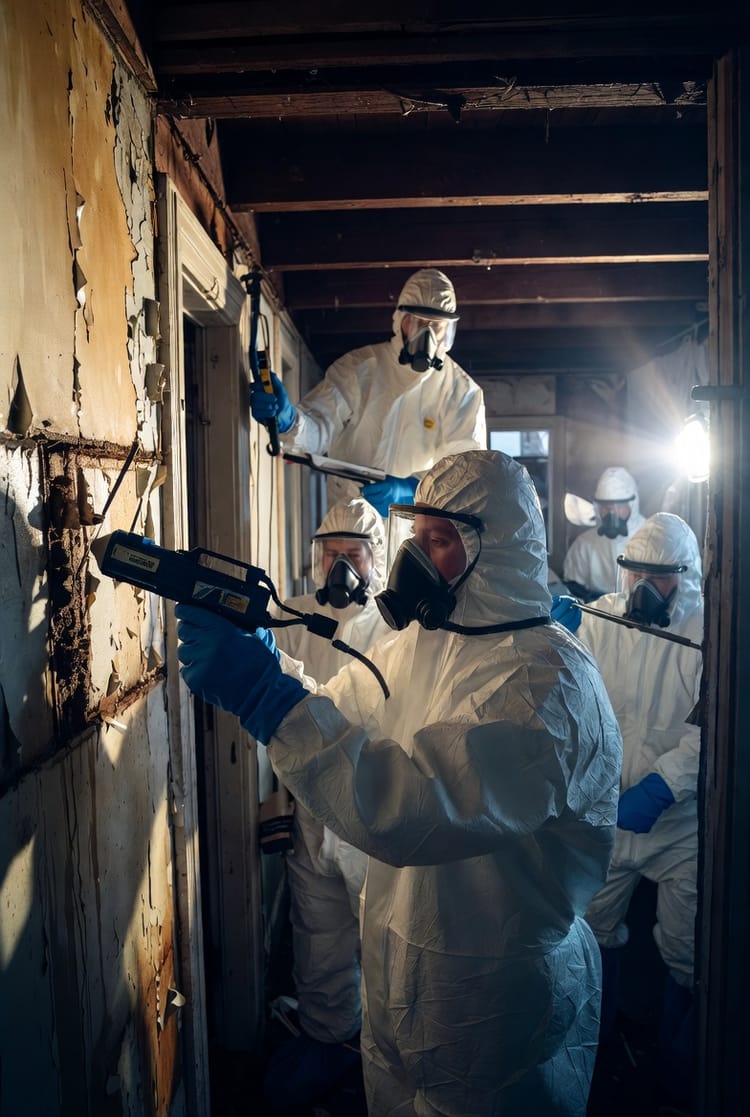
Water intrusions — whether from burst pipes, floods, or storms — saturate drywall, flooring, insulation, and framing. Improper or delayed drying risks structural weakening, warping, and microbial contamination that can affect indoor air quality for years.
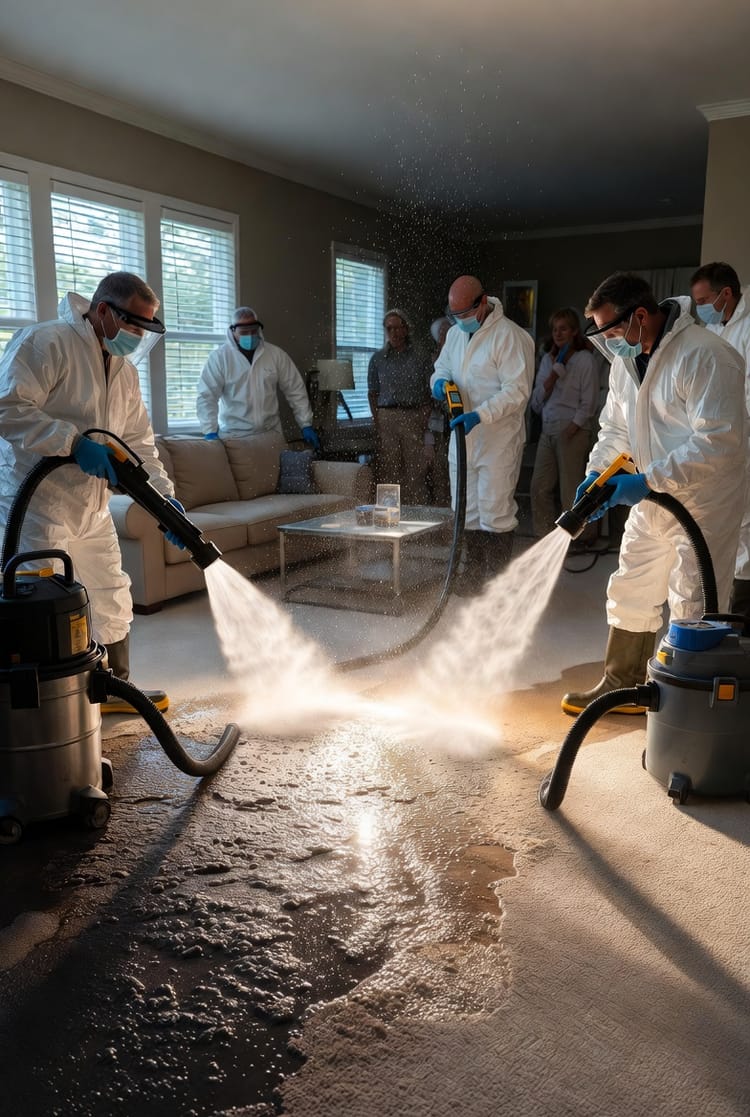
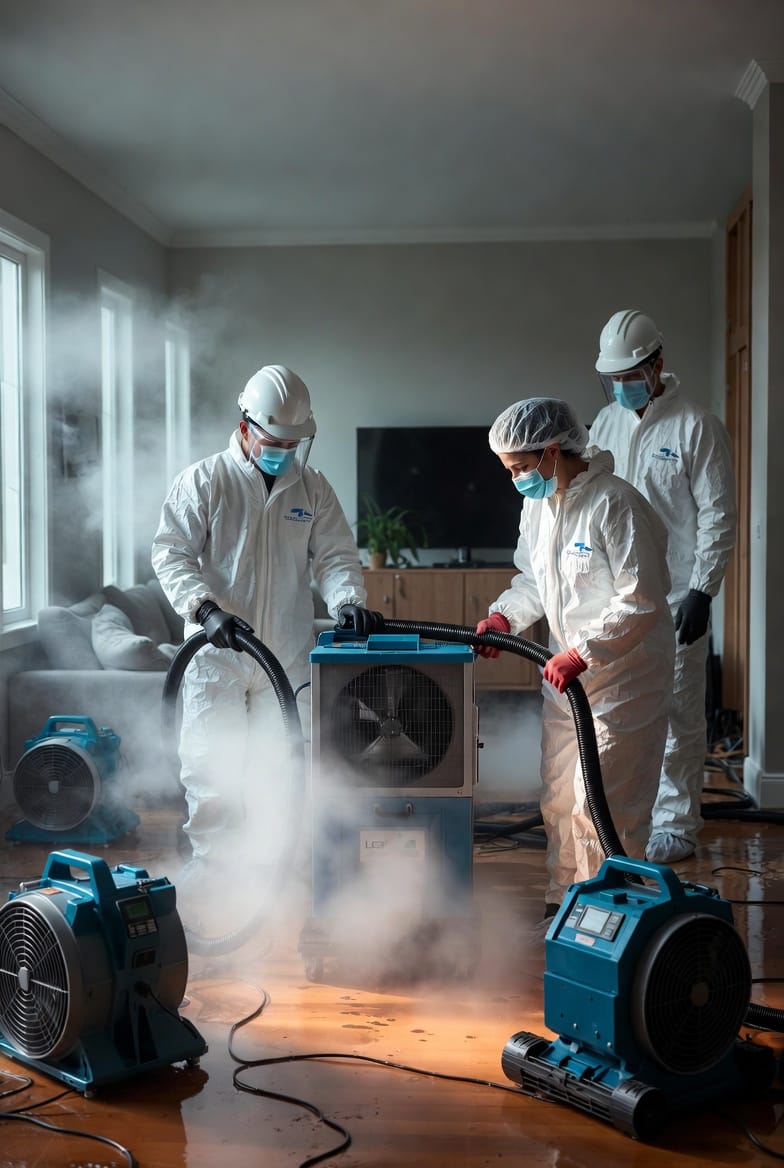
Professional structural drying reverses this by creating an optimized drying environment. Air movers accelerate surface evaporation by constantly moving air across wet materials. Dehumidifiers then capture the released moisture vapor, lowering relative humidity so the cycle can continue safely.
This systematic process typically restores properties in days rather than weeks, minimizing disruption and preserving value. Homeowners and property managers can breathe easier knowing certified teams follow proven protocols backed by industry standards.
Key advantages of expert structural drying include:
- Prevention of mold within the critical 24-48 hour window
- Preservation of wood framing, drywall, and flooring integrity
- Significant reduction in overall restoration costs
- Faster return to safe, healthy living or working conditions
- Documentation for insurance claims through moisture mapping
The Science Behind Effective Drying: Evaporation and Moisture Extraction
Understanding the physics empowers confidence in the process. Evaporation occurs when warm, moving air contacts wet surfaces and carries away water molecules as vapor. Air movers create this airflow, breaking the boundary layer of stagnant humid air that naturally forms over damp materials.
Once vapor enters the air, dehumidifiers remove it by cooling the air below its dew point or using desiccant technology, collecting water in tanks or draining it away. This lowers the room’s relative humidity, allowing more evaporation to occur.
Technicians monitor progress with moisture meters, hygrometers, and psychrometric charts. Readings guide adjustments until all materials reach normal moisture content — typically 6-9% for wood and under 15% for drywall. The result? Thorough, uniform drying without over-drying or damaging sensitive surfaces.
Understanding Air Movers: Powerful Tools for Creating Evaporation
Air movers are the workhorses of any drying job. These compact, high-performance fans deliver targeted airflow measured in cubic feet per minute (CFM). Proper selection and placement dramatically speed evaporation rates.
Two primary types serve distinct purposes:
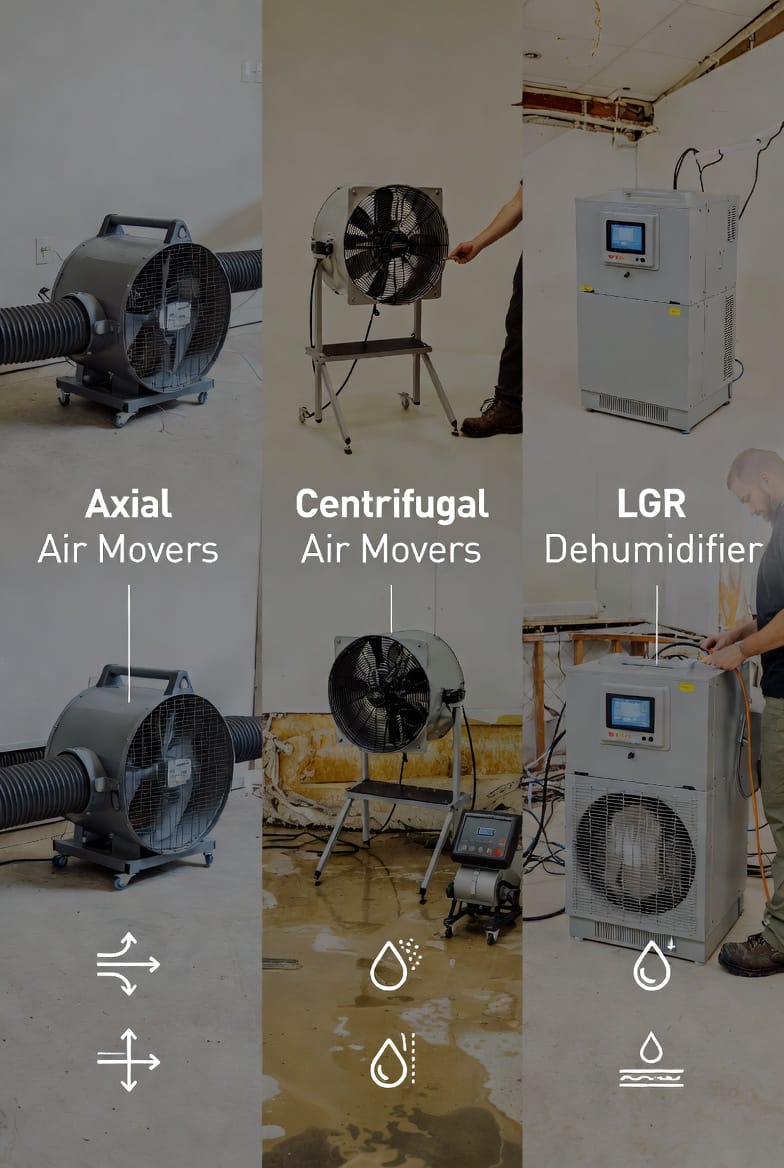
- Axial air movers deliver high-volume airflow (often 2,000–3,000+ CFM) ideal for open spaces and broad surface drying.
- Centrifugal air movers produce higher static pressure and directed airflow, perfect for forcing air into tight areas like under cabinets or behind baseboards.
Technicians choose models based on the job’s demands, always prioritizing energy efficiency and quiet operation for occupied properties.
The Power of Dehumidifiers: Removing Moisture from the Air
While air movers move moisture into the air, dehumidifiers extract it. Low-grain refrigerant (LGR) units stand out for their ability to pull moisture even in cooler, drier conditions — often removing 100+ pints per day.
These commercial-grade machines feature robust compressors, advanced filtration, and automatic defrost cycles. Placed centrally, they process the entire room’s air volume repeatedly, maintaining optimal humidity levels below 40% for rapid drying.
Strategic Placement: The Key to Efficient Drying
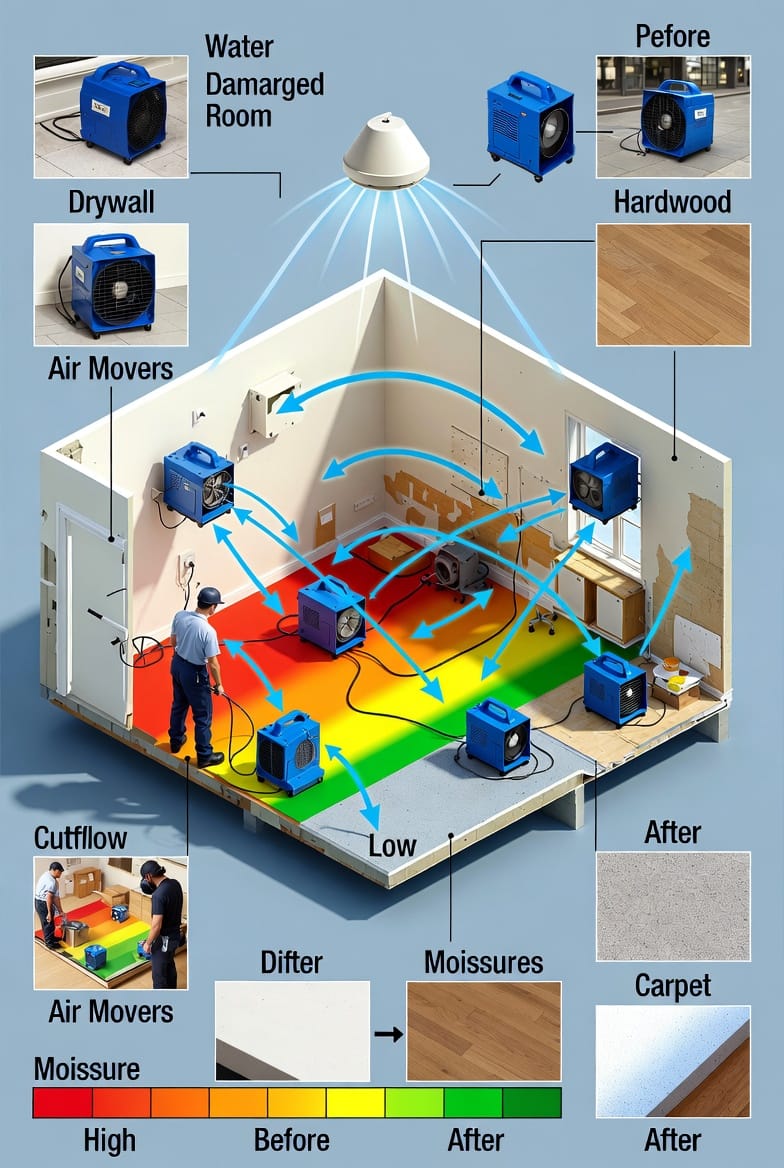
Here is where science meets art. Technicians never place equipment randomly. Instead, they follow a meticulous strategy based on three core factors: room layout, material types, and moisture readings.
Room layout considerations include size, shape, and airflow barriers. In rectangular living rooms, air movers are positioned along the longest walls, angled inward to create a circular airflow pattern that prevents dead zones.
Material types dictate intensity. Porous drywall requires air movers aimed upward at 45-degree angles to drive air behind the surface. Hardwood floors benefit from units placed low, directing flow across the entire plane. Carpet and pad demand under-floor circulation where possible.
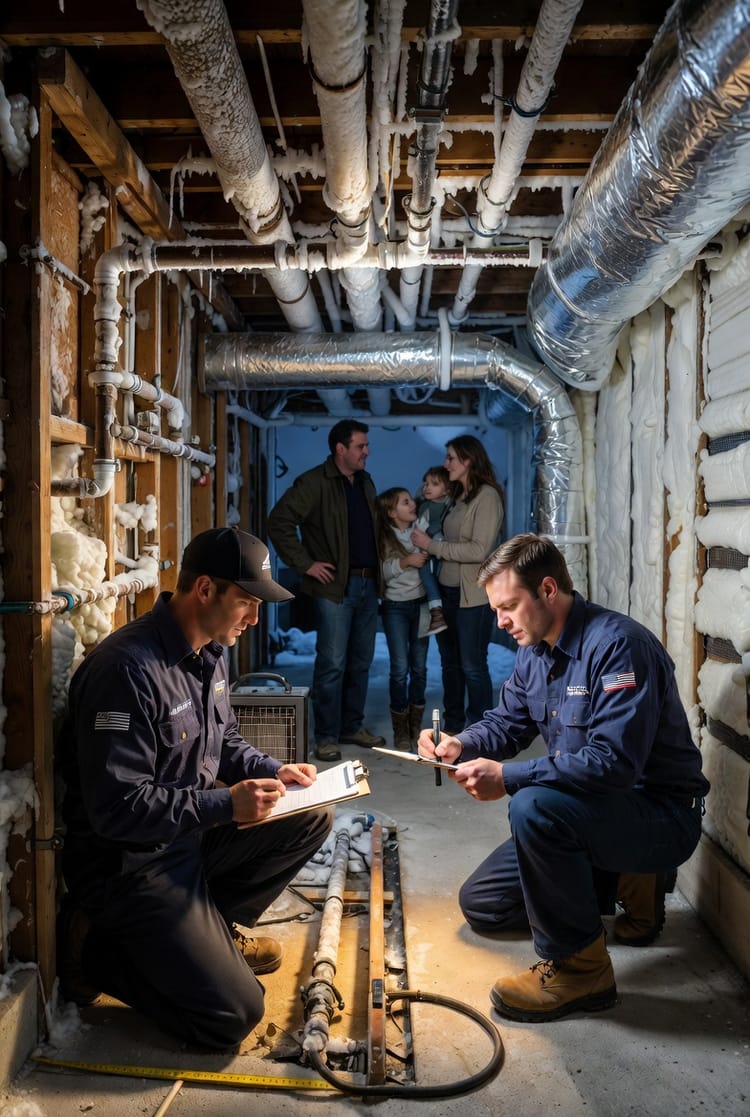
Moisture readings provide the data backbone. Using penetrating and non-penetrating meters, technicians create a moisture map — identifying saturated zones (above 20% in wood, for example) versus drying areas. Equipment is repositioned daily as readings improve.
Best practices for strategic placement include:
- Angle air movers at 45 degrees toward walls and baseboards for maximum surface contact
- Space units 8–12 feet apart in a “daisy chain” pattern to maintain continuous airflow
- Position dehumidifiers centrally to pull humid air from all directions
- Use containment barriers in large or multi-room jobs to focus drying efforts
- Elevate equipment slightly off wet floors to prevent motor damage and improve circulation
This methodical approach ensures every cubic inch of affected space receives consistent treatment.
Factors Influencing Equipment Placement: Room Layout, Materials, and Moisture Readings
Room layout directly impacts airflow dynamics. L-shaped kitchens require additional units at the corner junction to eliminate stagnant pockets. Basements with low ceilings demand low-profile centrifugal models that maintain pressure without obstruction.
Building materials add another layer. Non-porous tile needs less aggressive airflow than absorbent carpet padding, which may require negative-pressure setups to draw moisture upward. Wood framing demands careful monitoring to avoid over-drying that could cause cracking.
Real-time moisture readings turn strategy into precision. Initial readings establish a baseline; subsequent checks every 12–24 hours confirm progress. If readings stall in one corner, technicians simply reposition an air mover — a simple adjustment that prevents weeks of hidden damage.
Common Challenges and How Professionals Overcome Them
Even ideal setups face obstacles like high humidity seasons or complex floor plans. Teams counter this with supplemental equipment, containment, and constant monitoring.
Reassuringly, certified technicians train extensively in psychrometrics — the science of air and moisture — ensuring every decision maximizes results while protecting your belongings.
Understanding the Equipment Types Used in Structural Drying
Professionals select from specialized categories for every scenario:
- Axial air movers excel in high-volume, low-pressure applications across large open areas.
- Centrifugal air movers deliver focused, high-pressure airflow into confined spaces.
- LGR dehumidifiers remove low-grain moisture efficiently even when conditions become drier.
Combining these creates a synergistic drying system greater than the sum of its parts.
Monitoring Progress and Ensuring Complete Restoration
Drying is never “set it and forget it.” Daily moisture mapping, temperature, and humidity logs document every stage. Once all readings return to normal, technicians perform a final inspection and clearance testing.
This rigorous process guarantees no hidden moisture remains, providing complete peace of mind.
The Long-Term Benefits of Professional Equipment Strategy
Investing in expert structural drying protects health, property value, and family safety. Rapid, thorough drying prevents costly mold remediation later and shortens insurance claim timelines.
Homeowners and businesses alike benefit from reduced downtime and restored confidence in their space.
When to Call the Professionals for Systematic Drying
Water damage rarely waits for convenient timing. Whether from a sudden flood or slow leak, prompt action with the right structural drying equipment makes all the difference.
Fast & Effective Water Damage Restoration – Call Now!