The Spider Spectrum: Identifying Venomous vs. Beneficial Spiders and Managing Populations Humanely
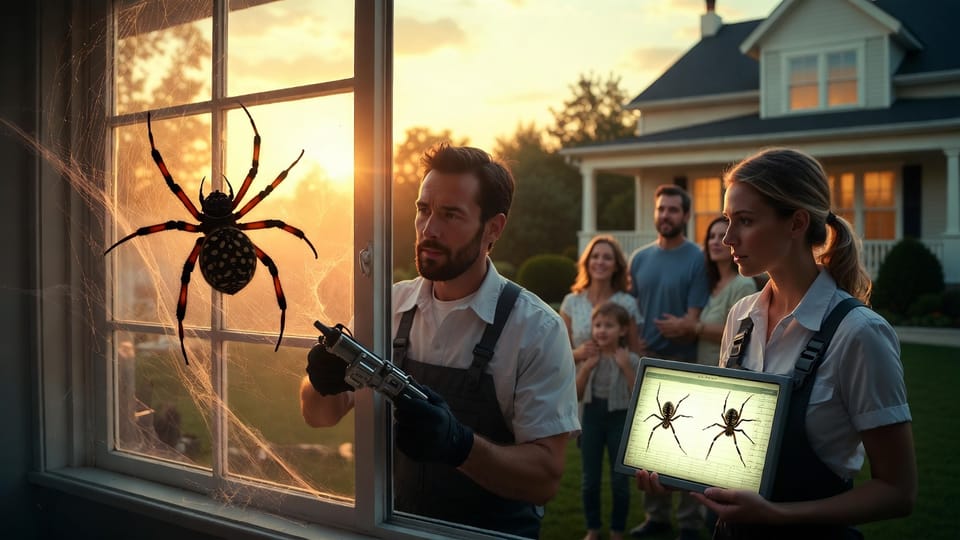
Spiders have lived alongside humans for millions of years, yet they remain one of the most feared—and frequently misunderstood—creatures in our homes. The truth is, most spiders you encounter are silent allies in the battle against insects. Only a tiny fraction pose any real medical risk.
Spider in Your Home? Get Expert Identification Today
We believe knowledge is the ultimate pest control tool. When you can confidently tell a venomous spider from a beneficial one, you make smarter, calmer decisions that protect both your family and the delicate balance of your home ecosystem.
This definitive guide walks you through the spider spectrum—from the rare dangerous species to the common house spiders that actually help keep your home healthier. You’ll learn precise identification markers, humane removal techniques, and proven exclusion strategies that stop problems before they start.
Understanding Arachnids: Nature’s Original Pest Control Engineers
Spiders belong to the class Arachnida, sharing the spotlight with scorpions, ticks, and mites. Unlike insects, they have eight legs, no antennae, and two body segments.
What makes them extraordinary is their role as apex micro-predators. A single spider can consume hundreds of insects per year—flies, mosquitoes, cockroaches, even bed bugs. In ecological terms, they are the unpaid security team of your home.
Yet fear often overrides facts. The average person kills 10–20 harmless spiders annually out of instinct. When we replace fear with understanding, we create homes that are both safer and more balanced.
Venomous Spiders to Watch For: The Two Species That Deserve Respect
In the United States, only two spider species are considered medically significant to humans: the black widow and the brown recluse. Both are shy, reclusive, and rarely aggressive unless threatened or trapped against skin.
Black Widow (Latrodectus species)
- Key identifier: Glossy black body with a vivid red hourglass (or two red dots) on the underside of the abdomen.
- Size: Females ½–¾ inch long; males much smaller.
- Habitat: Dark, undisturbed areas—woodpiles, under outdoor furniture, inside sheds, rarely high-traffic indoor spaces.
- Venom: Neurotoxic. A bite feels like a pinprick, followed by intense muscle cramps, nausea, and sweating. Fatalities are extremely rare with modern medical care.
- Behavior: They build irregular, tangled webs close to the ground. If you see a perfectly round orb web, it is not a black widow.
Brown Recluse (Loxosceles reclusa)
- Key identifier: Light brown to tan with a distinct dark violin-shaped mark on the cephalothorax (the front body section). Six eyes arranged in pairs (most spiders have eight).
- Size: ¼–½ inch.
- Habitat: Closets, attics, basements, behind furniture—anywhere cardboard or clutter provides cover.
- Venom: Necrotic. Bites may cause a painless blister that later ulcerates. Again, severe systemic reactions are uncommon.
- Behavior: Extremely reclusive. They hunt at night and prefer to flee rather than bite.
Important reality check: Even in states where these spiders exist, verified bites are surprisingly rare. Most “spider bites” reported to doctors are actually bacterial skin infections.
Common House Spiders: The Beneficial Majority You Should Welcome
The vast majority of spiders you find indoors fall into the beneficial or low-concern categories. Here are the species homeowners encounter most often:
- Cellar spiders (aka daddy long-legs spiders) – Extremely long, thin legs; build messy cobwebs in corners. They eat flies, mosquitoes, and even other spiders.
- Jumping spiders – Fuzzy, curious, excellent vision. They pounce on pests like tiny lions.
- Wolf spiders – Large, fast, ground-dwelling hunters. Mothers carry spiderlings on their backs—nature’s ultimate parenting.
- Orb-weavers – The architects behind those beautiful wheel-shaped webs in gardens and window corners. They capture night-flying insects.
- House spiders (Parasteatoda tepidariorum) – The classic “cobweb” spiders. Harmless and hardworking.
These species are your first line of defense against more problematic insects. When you eliminate them unnecessarily, you often invite worse pest issues.
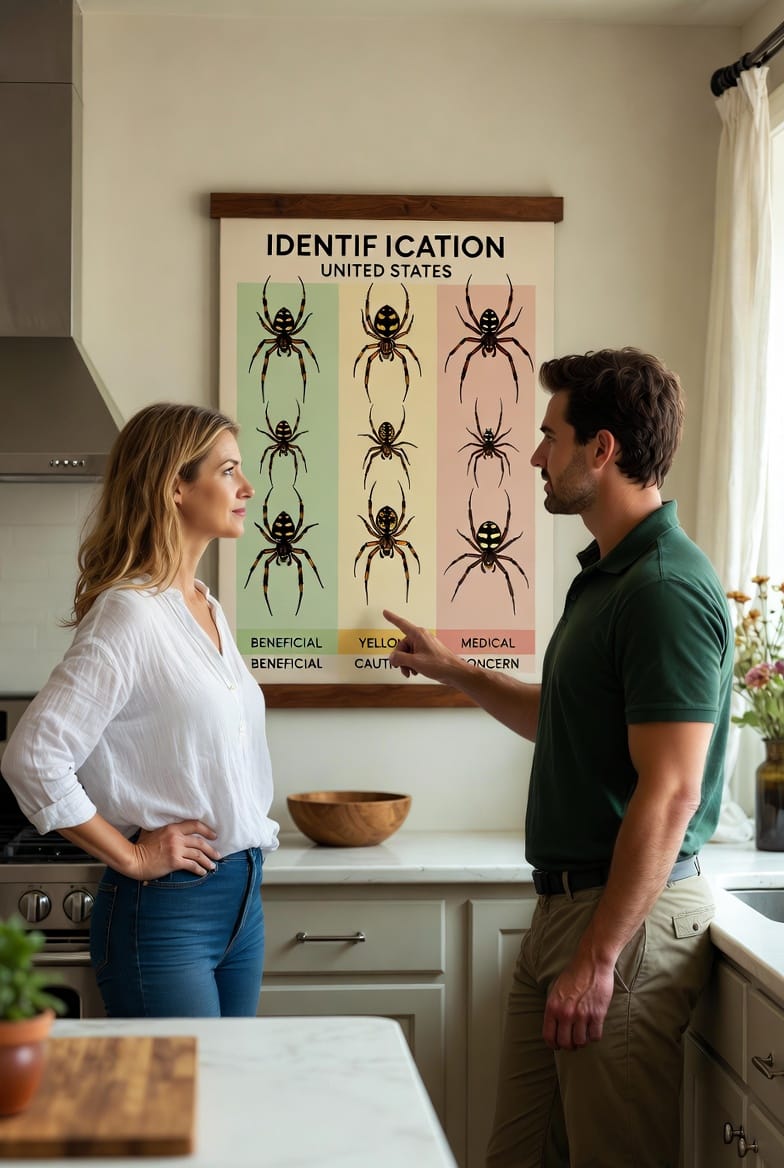
The Spider Spectrum: A Simple Danger-Level System
Think of spiders like traffic lights:
Print this chart, laminate it, and keep it in your utility drawer. Knowledge removes panic.
Humane Spider Management: No Kill, Just Relocate
We never default to extermination when relocation is possible. Here’s our proven humane protocol:
- Catch and release – Use a clear cup and cardboard to trap the spider, then release it at least 50 feet from your home (preferably in a wooded area).
- Vacuum with care – For quick indoor removal, use a shop-vac with a long attachment. Empty the canister outside immediately.
- Sticky traps – Place in low-traffic areas as monitoring tools, not primary control. Check daily and release non-target spiders.
- Natural repellents – Peppermint oil, citrus peels, and diatomaceous earth create scent barriers spiders dislike.
- Targeted glue boards – Used sparingly around known harborage areas for venomous species only.
Never use broad-spectrum sprays indoors. They kill beneficial spiders and create resistant insect populations.
Prevention: Building a Spider-Resistant Home
The best spider control is exclusion—making your home unattractive to both spiders and their prey.
- Seal entry points – Use silicone caulk on cracks wider than 1/16 inch. Install door sweeps and weatherstripping.
- Reduce outdoor lighting – Switch to yellow “bug lights” or motion-activated fixtures. Spiders follow their food.
- Declutter – Spiders love cardboard boxes and stacked firewood. Store items in sealed plastic bins.
- Maintain landscaping – Trim bushes away from the foundation. Remove leaf litter and wood piles.
- Regular web removal – Knock down webs weekly with a broom. Spiders quickly learn a location is not suitable.
- Moisture control – Fix leaks and use dehumidifiers in basements—spiders (and their insect prey) love humidity.
When to Call the Professionals
You should contact a licensed pest control provider when:
- You find a confirmed black widow or brown recluse inside living areas
- You or a family member has been bitten and symptoms appear
- You see dozens of spiders of any kind in a short period (possible infestation of prey insects)
- You simply want peace of mind without the guesswork
Our technicians arrive with the right tools, the right knowledge, and the right attitude—humane, thorough, and guaranteed.
Conclusion: Knowledge Is the Best Repellent
Spiders are not your enemy. Most are quiet guardians that keep your home naturally balanced. The few that deserve caution can be managed safely and humanely when you know what to look for.
Know the difference between friend and foe.
When you’re ready for expert identification, safe removal, and long-term prevention, our team is just one call away.
Your home should feel safe—not scary. Let us help you live comfortably alongside the eight-legged neighbors that belong there, and gently guide away the ones that don’t.
Don’t Guess – Get Professional Spider Management Now