The Solar Site Survey: What Technicians Measure and Assess Before Giving You a Final Quote
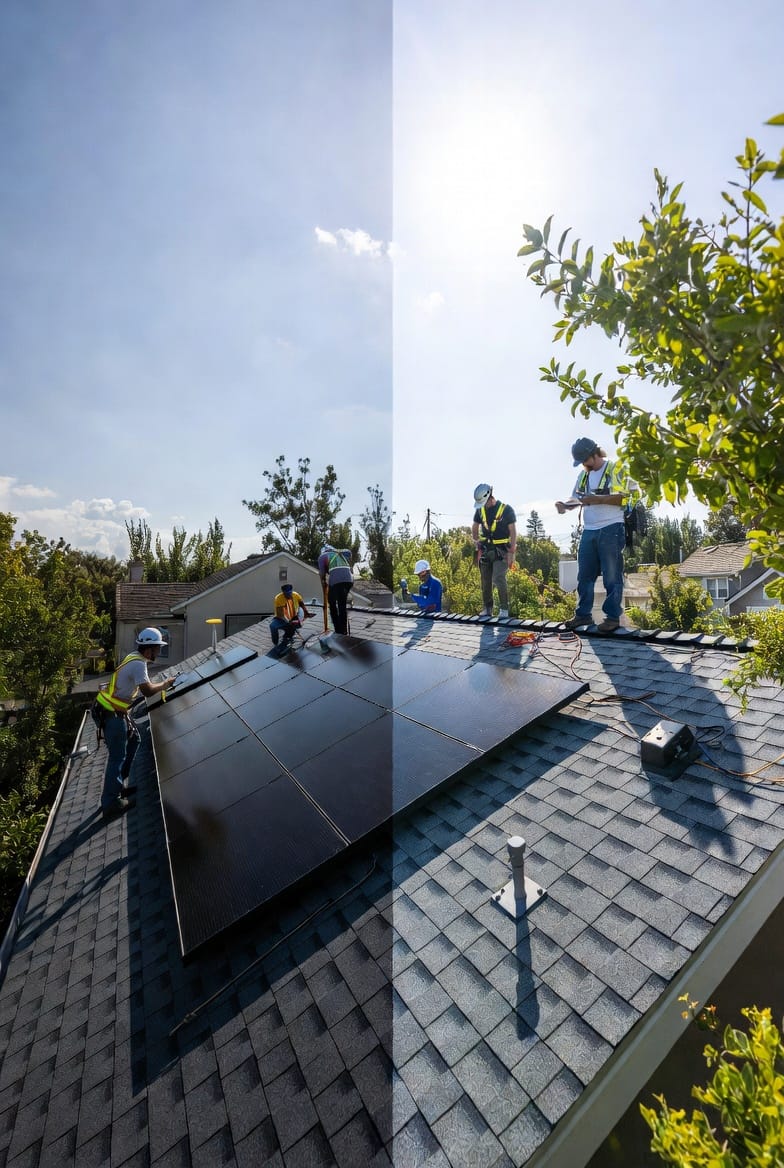
Switching to solar energy is an exciting step toward sustainability and cost savings, but it's not as simple as picking panels and plugging them in. Before any reputable solar provider hands you a final quote, they insist on a site survey—a thorough, on-site evaluation that ensures your home is ready for a seamless installation. This process demystifies the unknowns, turning potential hurdles into tailored solutions. Rest assured, this isn't just a formality; it's the foundation of a reliable, high-performing solar system designed specifically for your property.
Discover Your Home’s True Solar Potential – Call Today
In this article, we'll break down exactly what technicians check during a solar site survey. From roof condition to electrical panel capacity, every detail informs the final design and proposal. By understanding this step, you'll feel confident that your investment is backed by expert assessment, not guesswork. Let's dive in.
Why a Site Survey Matters: Beyond the Basics
A solar site survey goes far beyond a quick glance at your address via satellite imagery. While online tools can provide preliminary estimates, nothing replaces boots-on-the-ground inspection. Technicians arrive equipped with tools like inclinometers, shading analyzers, and electrical testers to gather precise data.
This evaluation protects you from surprises. For instance, it identifies if your roof needs reinforcements or if shading from trees could reduce efficiency. The result? A customized proposal that maximizes energy production and minimizes long-term costs. Think of it as a health check-up for your home's solar potential—proactive, detailed, and essential for success.
- Accuracy in Design: Measurements ensure panels fit perfectly, optimizing layout for maximum sunlight capture.
- Cost Transparency: Early detection of issues like wiring upgrades prevents hidden fees later.
- Safety and Compliance: Assessments confirm everything meets local building codes and utility standards.
With this reassurance, you're not just buying solar panels; you're investing in a system engineered for your unique setup.
Assessing Roof Condition and Material: The Foundation of Your Solar Setup
The roof is the star of the show in most residential solar installations, so technicians start here. They meticulously inspect its condition, age, and material to determine if it's suitable or needs preparation.
First, they evaluate structural integrity. Is there any sagging, water damage, or weak spots? A roof nearing the end of its lifespan—say, over 20 years old—might require replacement before panels go up, as solar systems can last 25-30 years. Materials matter too: Asphalt shingles are straightforward, but metal or tile roofs demand specialized mounting hardware to avoid leaks.
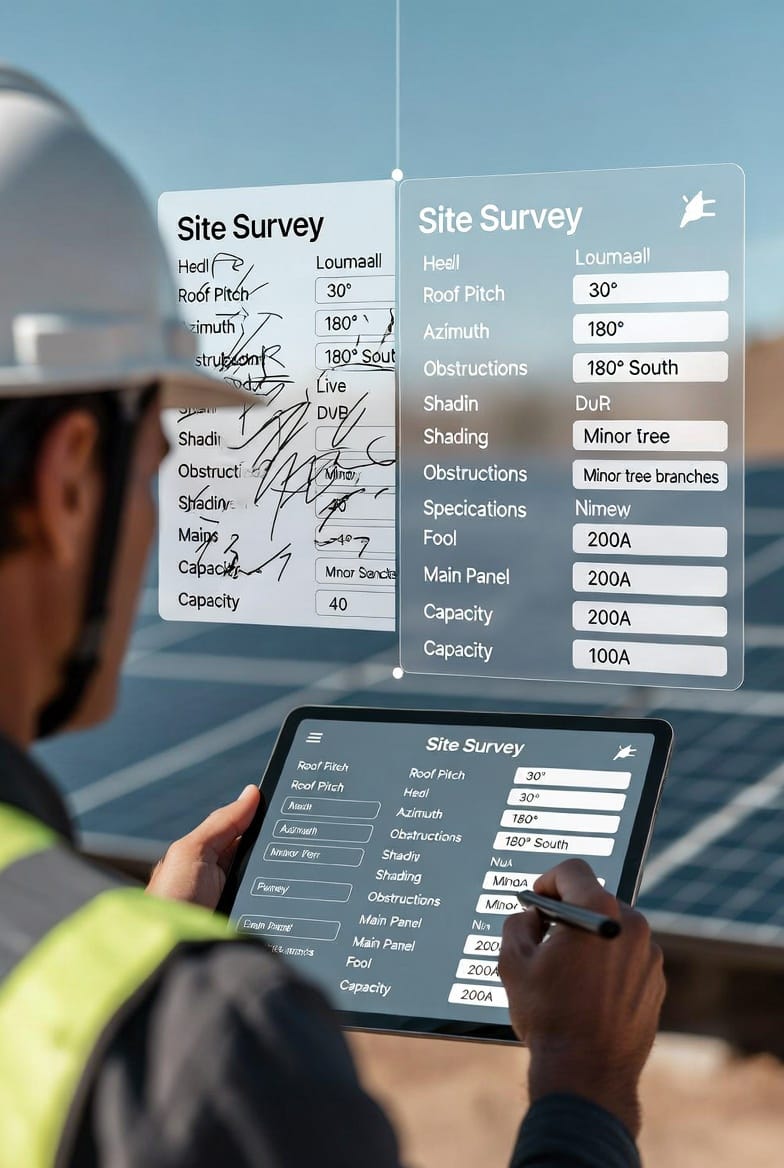
Technicians also measure roof pitch (the angle) and azimuth (direction facing). An ideal south-facing roof at 30-45 degrees captures optimal sunlight, but east-west orientations can work with adjustments. If issues arise, solutions like ground-mounted arrays might be proposed.
- Key Checks:
- Visual inspection for cracks, moss, or granule loss on shingles.
- Load-bearing capacity to support panel weight (typically 3-5 lbs per square foot).
- Flashing and penetration points to prevent water intrusion.
Rest easy knowing that most roofs pass with flying colors, and any fixes are outlined clearly in your quote.
Evaluating Shading and Azimuth: Maximizing Sunlight Exposure
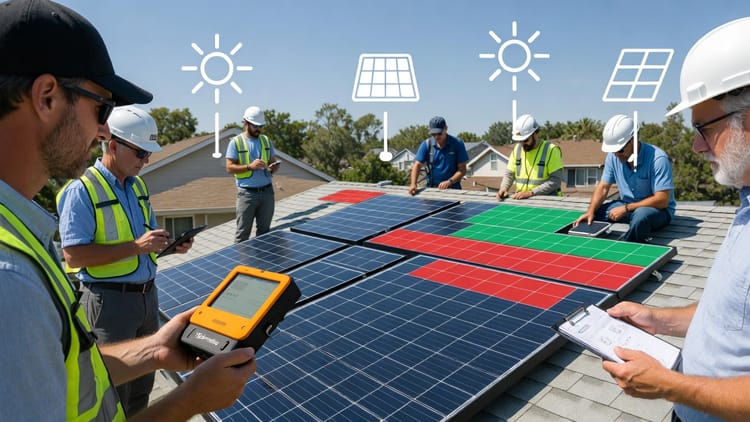
Shading is one of the biggest enemies of solar efficiency—even partial obstruction can slash output by 20-50%. During the survey, technicians use specialized tools like SunEye devices to map shading patterns throughout the day and year.
They assess azimuth first: Your roof's compass direction. South-facing is gold standard in the Northern Hemisphere for peak production, but technicians calculate alternatives if needed. Then comes shading analysis—trees, chimneys, neighboring buildings, or even vent pipes are noted. They'll simulate annual solar access, factoring in seasonal changes like leaf growth.
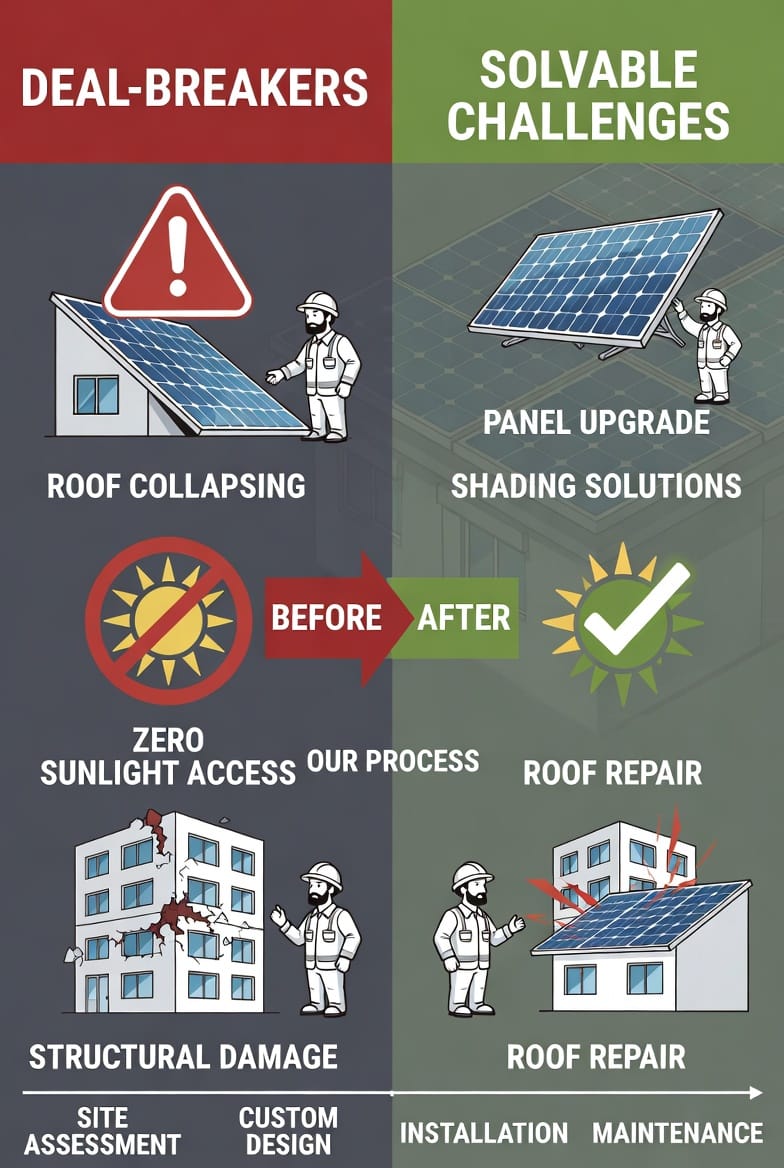
If shading is severe, it's not always a deal-breaker. Trimming branches or using microinverters (which optimize individual panels) can mitigate losses. The goal? Ensure at least 4-6 hours of direct sunlight daily for viability.
- Potential Risks and Solutions:
- High Shading: Could reduce ROI; solved by tree removal or elevated mounting.
- Variable Azimuth: East-west roofs produce more evenly; adjusted in design software.
- Obstructions: Detailed mapping allows precise panel placement to dodge shadows.
This step empowers you with data-driven decisions, guaranteeing your system performs as promised.
Checking Electrical Service Panel Capacity: Powering Your Solar Future
Your home's electrical system must handle the influx of solar power, so technicians scrutinize the service panel (breaker box). They check its amperage rating—most homes have 100-200 amps, but solar often requires at least 200A for safe integration.
Overloaded panels are common in older homes, leading to recommendations for upgrades. They also inspect busbar ratings and available breaker slots for the solar inverter connection. If space is tight, a subpanel might be suggested.
This assessment ensures compliance with National Electrical Code (NEC) rules, like the 120% rule for backfeeding solar energy. Rest assured, upgrades are straightforward and often qualify for incentives.
- Critical Measurements:
- Main breaker size and total capacity.
- Grounding and bonding for safety.
- Potential for smart monitoring integration.
By addressing this early, your transition to solar is smooth and grid-compatible.
Mapping Conduit Pathways: Efficient Wiring Routes
Wiring connects panels to inverters and the grid, so technicians map conduit pathways—the routes for electrical lines. They look for the shortest, safest paths, often through attics, walls, or exterior conduits.
Challenges like thick insulation or awkward layouts are noted. In multi-story homes, vertical runs might need drilling, but pros minimize disruption. Materials (PVC vs. metal conduit) are chosen based on local codes and exposure.
This planning prevents delays and ensures aesthetic integration—no unsightly wires dangling.
- Key Considerations:
- Distance from array to inverter (shorter reduces efficiency loss).
- Fire-rated pathways in attics.
- Future-proofing for battery additions.
It's all about efficiency and longevity.
Inspecting Attic Access for Wiring: Hidden but Crucial
Attics often house inverter placements or wiring runs, so access is key. Technicians check entry points, space availability, and ventilation—solar equipment generates heat, needing airflow.
They inspect for pests, insulation conflicts, or structural barriers. If access is poor, alternatives like garage mounting are explored.
This unglamorous check ensures safe, code-compliant wiring without major renovations.
- Assessment Points:
- Hatch size and ladder accessibility.
- Clearance for equipment (at least 3 feet around inverters).
- Pest-proofing to protect cables.
Most homes have adequate attics; tweaks are minor.
How It All Feeds into the Final Design and Proposal
Every measurement from the site survey plugs into sophisticated software like Aurora or HelioScope. This generates a 3D model of your system, predicting annual output, savings, and payback period.
The proposal details costs, incentives (like the federal ITC), and timelines. If challenges arise, options are presented—e.g., upgrading your panel adds $2,000 but boosts capacity.
This transparency builds trust: You're getting a quote based on facts, not assumptions.
Common Myths Debunked: Setting the Record Straight
Myth: Site surveys are optional. Reality: Skipping them risks poor performance.
Myth: They're expensive. Most are free with reputable installers.
Myth: Bad survey = no solar. Often, it's just adjustments.
Knowledge empowers you to ask informed questions.
Preparing for Your Site Survey: Tips for Homeowners
Schedule during daylight for accurate shading reads. Clear access to roof, panel, and attic. Note your energy bills for usage insights.
This prep speeds things up.
The Bigger Picture: Solar's Long-Term Benefits
Beyond the survey, solar slashes bills by 50-70%, boosts home value, and cuts carbon footprints. With warranties up to 25 years, it's a smart, eco-friendly choice.
Ready to Go Solar? Take the Next Step
Don't settle for address-based estimates—insist on a thorough physical inspection for accuracy.
Ready for Solar? Get Your Thorough Site Check Today