The Snow Shed Factor: How Roof-Mounted Solar Panels Perform in Winter and What to Expect
Homeowners in northern climates often pause before investing in solar. “What happens when the snow hits?” is one of the most common questions we hear from families across Minnesota, Wisconsin, Michigan, New York, and New England. The concern is understandable: heavy snowfall, freezing temperatures, and short days seem like a perfect storm against rooftop energy production.
Unlock Winter Energy Gains with Albedo Boost – Call Now
Yet the reality is far more reassuring. Modern roof-mounted solar panels are engineered with the Snow Shed Factor built in. They not only survive winter — they often perform better than many people expect, thanks to smart mounting practices, advanced glass technology, and the powerful albedo effect created by surrounding snow itself.
This in-depth guide explains exactly how your solar system behaves when the flakes start flying, what production numbers you can realistically anticipate, and the safest ways to handle any accumulation without risking damage or voiding your warranty. By the end, you’ll see why solar is not just viable in snow country — it’s an outstanding long-term investment that works reliably year-round.
Engineered for Snow: How Roof-Mounted Solar Panels Are Installed in Northern Climates
Professional installers never simply lay panels flat against shingles. Every quality roof-mounted solar array begins with a precision-engineered racking system specifically chosen for high snow-load zones.
These racking systems elevate the panels 4 to 6 inches above the roof surface, creating essential clearance underneath. That gap allows air to circulate, prevents ice damming, and gives gravity a head start when snow begins to move.
Panels are also mounted at an optimal tilt angle — typically 30 to 40 degrees in northern latitudes — which matches or exceeds the roof pitch in many cases. The steeper angle dramatically improves natural snow shedding. Combined with the ultra-smooth, low-friction tempered glass (often with hydrophobic coatings), snow rarely sticks for long once the sun appears or temperatures rise even a few degrees above freezing.
Key design features that enable reliable winter performance include:
- Elevated racking with snow-load certified rails rated for 50–100+ pounds per square foot
- Microinverters or optimized string inverters that continue maximum power point tracking even when partial shading or snow occurs
- Tempered glass with anti-reflective and self-cleaning properties
- Structural engineering that accounts for your exact location’s historical snow loads
These features ensure your system is not just surviving winter — it is optimized for it.
The Snow Shed Factor: Why Snow Slides Off Faster Than You Think
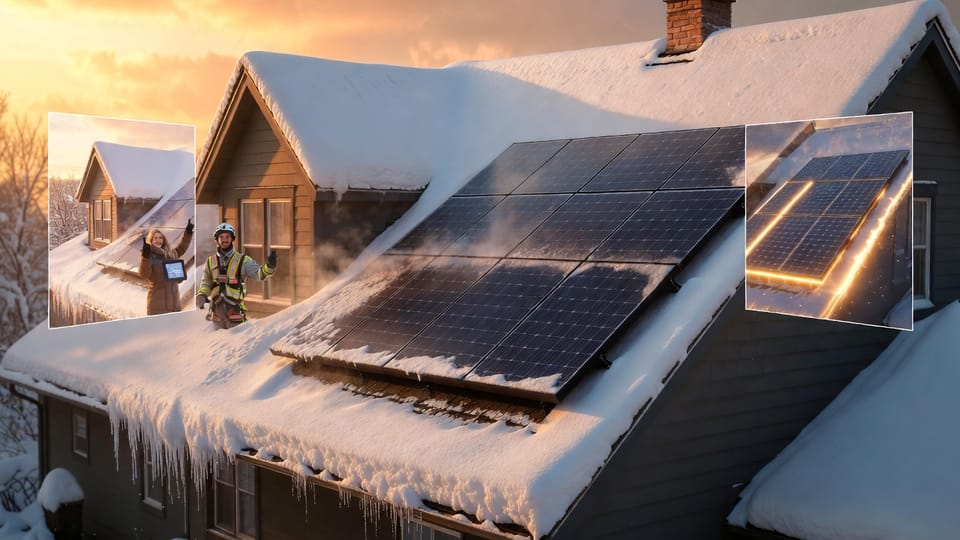
Solar panel glass is far slicker than asphalt shingles or metal roofing. When a thin layer of snow at the panel surface melts from absorbed sunlight (panels still convert 15–22 % of available light even on cold days), the entire sheet above loses its grip and slides off in one dramatic motion.
Homeowners frequently report watching 6–12 inches of accumulated snow release within minutes of the first direct sunlight. This self-cleaning action is so reliable that most systems experience only brief periods of reduced output during major storms — often just hours, not days or weeks.
The result? Your roof-mounted solar panels return to full production faster than traditional roofing materials can even begin to shed their load.
Harnessing the Albedo Effect – Nature’s Free Winter Performance Booster
Here is where winter actually becomes an advantage. Albedo refers to the reflectivity of surfaces. Fresh snow reflects 80–90 % of incoming sunlight, compared with only 10–20 % from dark roofs or bare ground in summer.
That reflected light bounces upward and strikes the underside and front surfaces of your elevated panels from multiple angles. The effect is especially pronounced on clear, cold days when the sun is low in the sky — exactly the conditions common in northern winters.
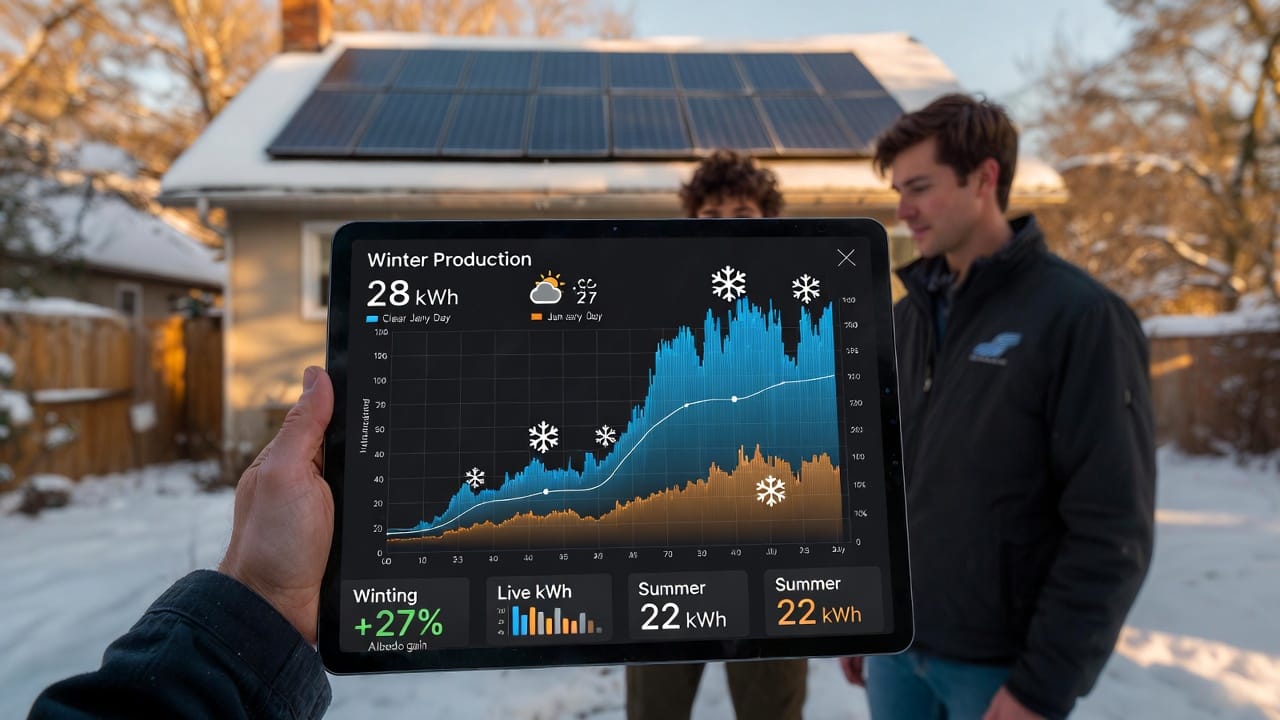
Independent performance data consistently shows albedo-enhanced days can deliver 10–30 % more energy production than the same panels would generate on an equivalent sunny summer day with no reflective surface. The extra light compensates for shorter daylight hours and lower sun angle, often resulting in surprisingly strong mid-winter output.
Homeowners in snow-belt states regularly see monthly production curves that dip in December and January but rebound sharply in February and March as days lengthen and snow cover remains. The net effect is far more balanced annual generation than most people anticipate.
What Realistic Winter Performance Looks Like
A properly sized and installed 8 kW system in a northern climate typically delivers:
- December–February average: 55–75 % of peak summer monthly output
- Clear sunny winter days with albedo: frequently 85–110 % of a typical summer day’s production
- Annual total: still meets or exceeds the projected 20–25 year financial model because snow months are balanced by strong shoulder seasons
These numbers assume standard high-efficiency monocrystalline or bifacial panels, south-facing orientation, and minimal shading. Your local installer will run a precise winter performance estimate using your roof pitch, historical weather data, and system design — removing all guesswork.
Safely Managing Snow Accumulation Without Risking Damage or Warranty Voidance
While the Snow Shed Factor handles most situations automatically, occasional heavy or wet snow events may leave temporary buildup. Knowing how to respond safely is critical.
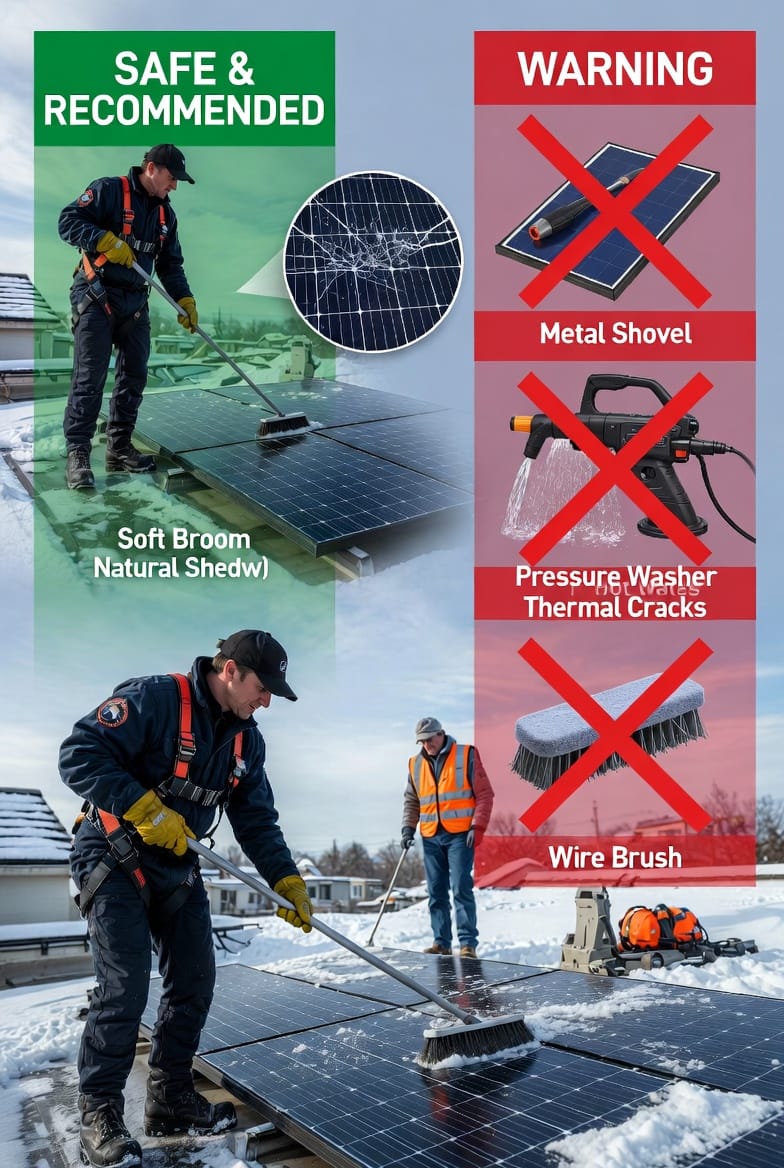
Critical actions to avoid (these will void most warranties and risk permanent damage):
- Climbing onto the roof yourself during or right after a storm
- Using metal shovels, scrapers, or any rigid tools
- Spraying hot or even warm water (thermal shock can crack tempered glass instantly)
- Using chemicals, salt, or abrasive pads
- Walking or standing directly on the panels
Safe, warranty-friendly alternatives include:
- Allowing natural melting and sliding — often the best choice
- Using a long-handled, soft-bristle roof rake or broom from the ground
- Scheduling a professional snow removal service trained and insured for solar arrays
- Installing optional snow guards or heated micro-cables only if recommended by your installer for extreme locations
When in doubt, call your installation company. Certified technicians have the proper equipment, insurance, and knowledge to clear snow safely without compromising your 25-year warranty.
Professional Maintenance Programs That Deliver Peace of Mind
The smartest homeowners pair their solar investment with an annual maintenance plan. These programs include:
- Pre-winter inspections of racking, wiring, and seals
- Post-storm visual checks via drone or safe ground assessment
- Performance monitoring to spot any unexpected dips immediately
- Priority scheduling for safe snow management when needed
Such proactive care ensures your system continues delivering maximum value decade after decade, even in the harshest northern winters.
Debunking the Top Solar-in-Snow Myths
Myth 1: “Solar panels stop working when covered in snow.”
Reality: Coverage is temporary, and the self-shedding design plus albedo reflection keep overall seasonal output strong.
Myth 2: “Snow will damage the panels.”
Reality: Panels are tested to withstand hail, high winds, and heavy snow loads far beyond typical northern conditions.
Myth 3: “Solar is only for sunny southern states.”
Reality: Some of the highest-performing solar markets in the country are in snowy northern regions precisely because of strong policy support and excellent winter albedo performance.
Solar Works Year-Round — Even in Snow Country
The Snow Shed Factor is not marketing hype — it is proven engineering and physics at work. Roof-mounted solar panels, when professionally installed, clear themselves efficiently, benefit from snow’s reflective power, and continue generating clean, cost-saving electricity throughout the coldest months.
Your home can produce meaningful power on bright winter days when your heating system is working hardest. That is true energy independence.
Ready to see exactly how much a solar system would produce on your roof — including realistic winter estimates tailored to your location?
Contact our solar experts today for a free winter performance analysis.
Let us show you how the Snow Shed Factor can turn even the deepest snow into an advantage for your family and your future.
Protect Your Investment from Heavy Snow – Call for Expert Advice