The Rodent Riddle: Understanding Norway vs. Roof Rats and Tailoring Your Defense Strategy
Rodents are more than just unwelcome guests; they pose significant health risks and structural threats to homes and ecosystems. In this comprehensive guide, we'll unravel the differences between two common culprits: the Norway rat and the roof rat. By understanding their distinct behaviors, habitats, and control methods, you can implement a targeted defense strategy that protects your property effectively and ecologically. Rest assured, with the right knowledge, managing these pests becomes a solvable puzzle rather than an overwhelming challenge.
Norway or Roof Rat? Get Species-Specific Help – Call Now
Identifying the Invaders: Physical and Behavioral Traits
To tackle any rodent issue, the first step is accurate identification. Norway rats (Rattus norvegicus), also known as brown rats, are robust creatures with stocky bodies, blunt noses, and short ears. They typically measure 7-9 inches in body length, with tails shorter than their bodies. In contrast, roof rats (Rattus rattus), or black rats, are sleeker, with pointed noses, large ears, and longer tails that exceed their body length of 6-8 inches.
These physical differences aren't just cosmetic—they reflect adaptations to their environments. Norway rats are ground-dwellers, excelling in burrowing, while roof rats are agile climbers, preferring elevated spaces. Recognizing these traits early can prevent minor infestations from escalating into major problems.
- Size and Build: Norway rats appear heavier and more muscular, ideal for digging.
- Nose and Ears: Blunt nose and small ears for Norway; pointed nose and prominent ears for roof.
- Tail Characteristics: Shorter, scaly tail for Norway; longer, smoother tail for roof.
Ecologically, both species are invasive in many regions, disrupting native wildlife by competing for resources. However, their impacts vary: Norway rats often contaminate soil and water near burrows, while roof rats can spread diseases through aerial pathways like trees touching homes.
Habitat Preferences: Ground vs. Aerial Domains
Understanding where these rats thrive is crucial for effective pest management. Norway rats favor moist, low-lying areas, burrowing into foundations, sewers, and soil. Their nests are often underground, close to food sources like garbage or pet food. This burrowing habit can undermine building structures, leading to costly repairs.
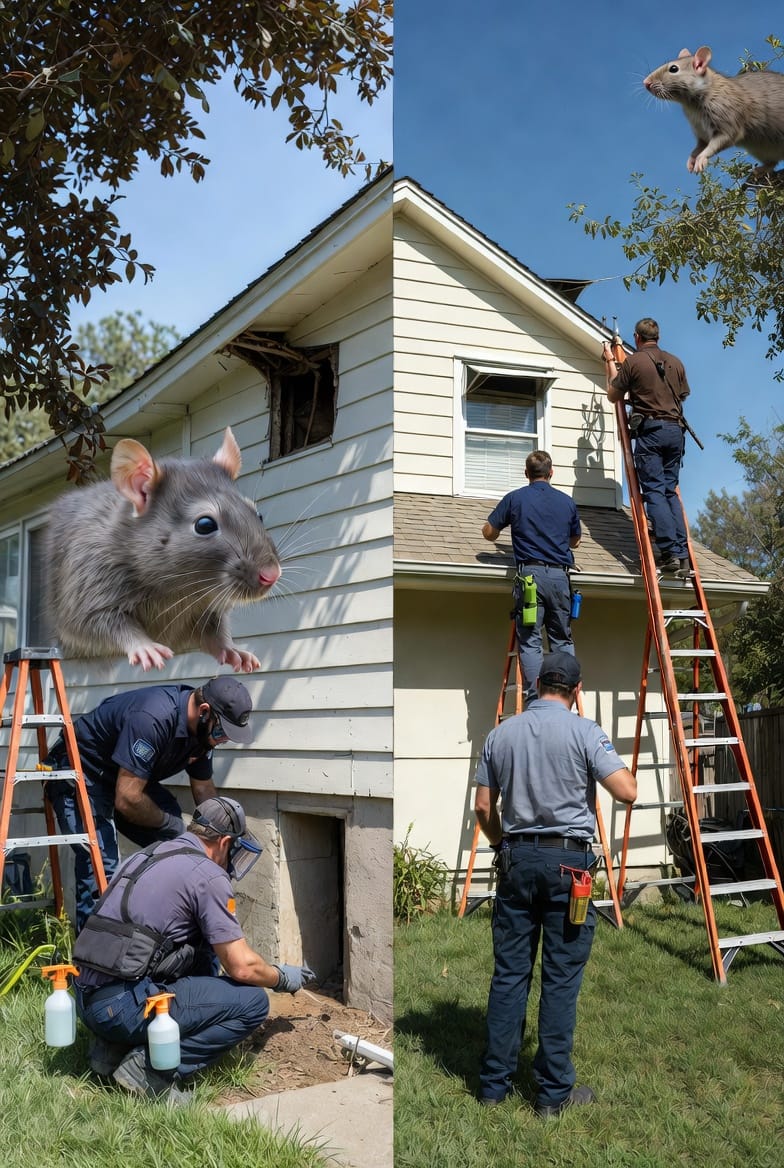
Roof rats, on the other hand, are arboreal experts. They nest in attics, roofs, trees, and vines, using their climbing prowess to access homes via overhanging branches or utility lines. This aerial lifestyle means they rarely burrow, focusing instead on high-up hideouts that offer protection from predators.
These preferences demand tailored approaches:
- For Norway rats, inspections should prioritize ground-level vulnerabilities.
- For roof rats, focus on upper structures and potential entry points from above.
In natural ecosystems, Norway rats contribute to soil aeration through burrowing but become problematic in urban settings. Roof rats aid in seed dispersal but can devastate crops and bird populations when invasive.
Inspection Focus: Tailored Techniques for Each Species
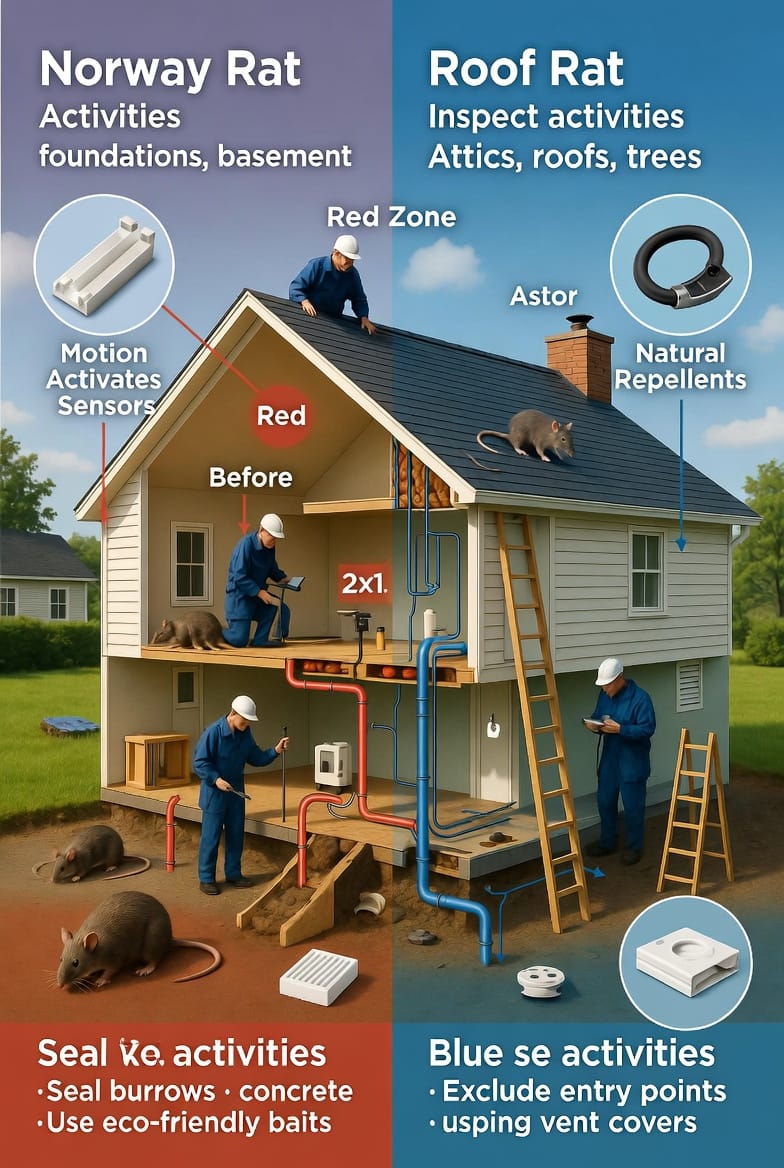
A one-size-fits-all inspection won't cut it when dealing with these rodents. For Norway rats, start at the foundation. Look for burrow entrances—holes about 2-4 inches wide near walls, under decks, or in gardens. Signs include greasy rub marks on surfaces, droppings (capsule-shaped, 3/4 inch), and gnaw marks on wood or wires.
Roof rat inspections require a vertical mindset. Check attics, eaves, and rooflines for entry points like gaps in vents or holes where pipes enter. Their droppings are spindle-shaped (1/2 inch), and you'll often find nests in insulation or stored boxes. Overhanging vegetation is a red flag, as it provides bridges to your home.
Key differences in focus:
- Ground-Level Scans: Essential for Norway rats; use flashlights to probe soil and cracks.
- Aerial Surveys: Critical for roof rats; employ ladders or drones for safe access.
- Common Signs: Both leave urine trails detectable with UV light, but locations differ.
Ecologically sound inspections minimize disruption. Use non-invasive tools like cameras to confirm species without harming wildlife, ensuring your strategy aligns with sustainable practices.
Exclusion Tactics: Sealing the Deal Species-Specifically
Exclusion is the cornerstone of long-term rodent control, preventing entry rather than just reacting to infestations. For Norway rats, reinforce foundations with hardware cloth buried 12-18 inches deep around perimeters. Seal cracks with steel wool and caulk, and install door sweeps to block ground access.
Roof rats require elevated defenses. Trim trees at least 6 feet from roofs, screen vents with 1/4-inch mesh, and cap chimneys. Secure utility lines with guards to deter climbing.
Bullet-proof your strategy:
- Materials for Norway Rats: Concrete patches, metal flashing for burrows.
- Materials for Roof Rats: Wire mesh, PVC sleeves for pipes.
- Common Best Practices: Maintain cleanliness to remove attractants like food scraps.
These tactics not only protect your home but also preserve local biodiversity by reducing rodent overpopulation.
Baiting and Trapping: Strategic Placement Matters
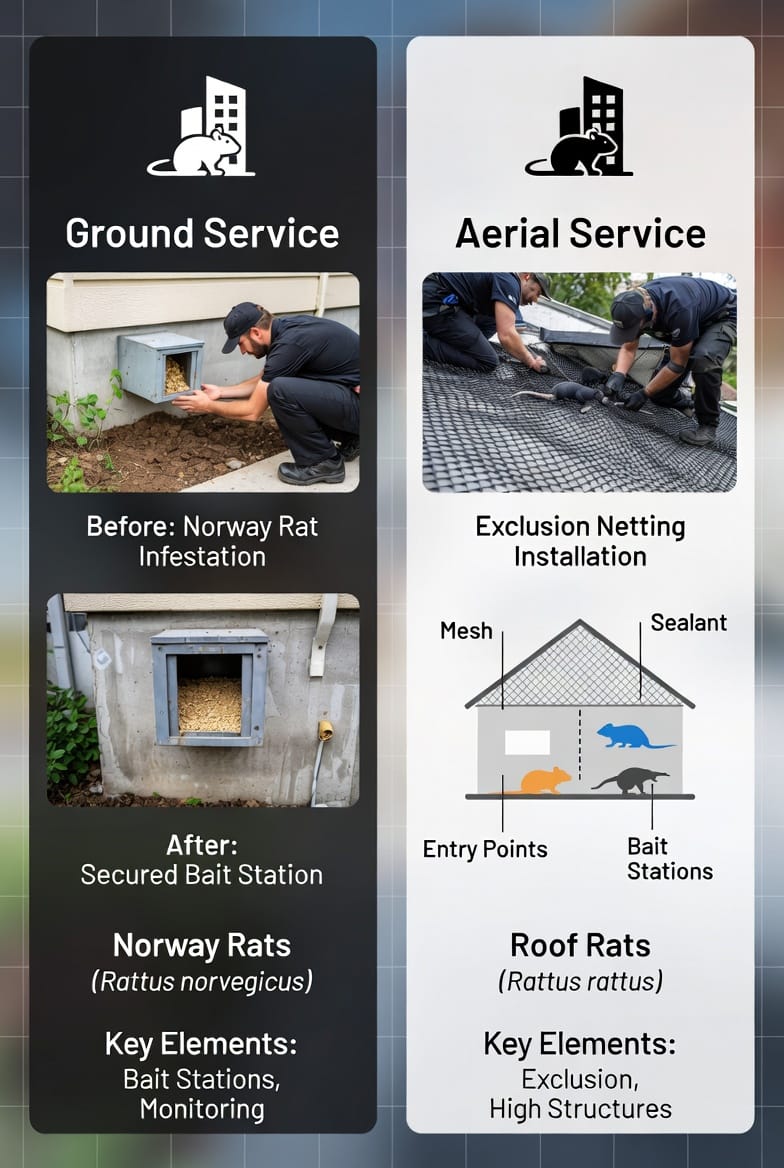
Once identified, deploy baits and traps where they're most effective. Norway rats respond well to ground-based bait stations near burrows, using anticoagulants or snap traps baited with peanut butter.
Roof rats prefer elevated traps—place them in attics or on ledges with fruits or nuts as bait. Always use tamper-resistant stations to protect non-target species.
Consider ecological alternatives like natural predators (owls for roof rats) or repellents (peppermint oil), promoting a balanced environment.
Health and Ecological Impacts: Why Action is Essential
Both rats carry diseases like leptospirosis (Norway) and plague (roof), transmitted via droppings or fleas. They also damage wiring, increasing fire risks, and contaminate food.
Ecologically, uncontrolled populations disrupt food chains. Norway rats prey on ground-nesting birds, while roof rats compete with squirrels. Tailored control restores balance without broad-spectrum poisons that harm wildlife.
Building a Comprehensive Defense Plan
Integrate identification, inspection, exclusion, and baiting into a holistic plan. Monitor regularly with trail cameras, and consult professionals for severe cases.
Reassuringly, most infestations are manageable with prompt, species-specific action. You're not alone—expert help is a call away.
Conclusion: Master the Riddle for a Rodent-Free Future
By distinguishing Norway rats from roof rats and adapting your tactics, you turn the rodent riddle into a victory. Their burrowing versus climbing habits dictate everything from inspections to exclusions, ensuring efficient, eco-friendly control.
Protect Your Home from Burrowing & Climbing Rats – Call Now