The Right Tool for the Job: When to Choose a Roll-Off Dumpster vs. a Front-Load Commercial Bin
In the world of waste management, selecting the correct container isn’t just a logistical decision — it’s the difference between a smooth, cost-effective project and a frustrating, expensive headache. Whether you’re a homeowner tackling a major remodel, a contractor managing a commercial build, or a business owner keeping daily operations running cleanly, the choice between a roll-off dumpster and a front-load commercial bin can make or break your timeline and budget.
607) 477-0388
Stop Guessing – Call for the Correct Waste Solution Now
At our core, we believe the right tool for the job delivers peace of mind. This comprehensive guide breaks down every critical difference, scenario, and consideration so you can choose with total confidence. By the end, you’ll know exactly which service aligns perfectly with your needs — and why calling the experts at (607) 477-0388 is the smartest next step.
Understanding the Two Waste Solutions
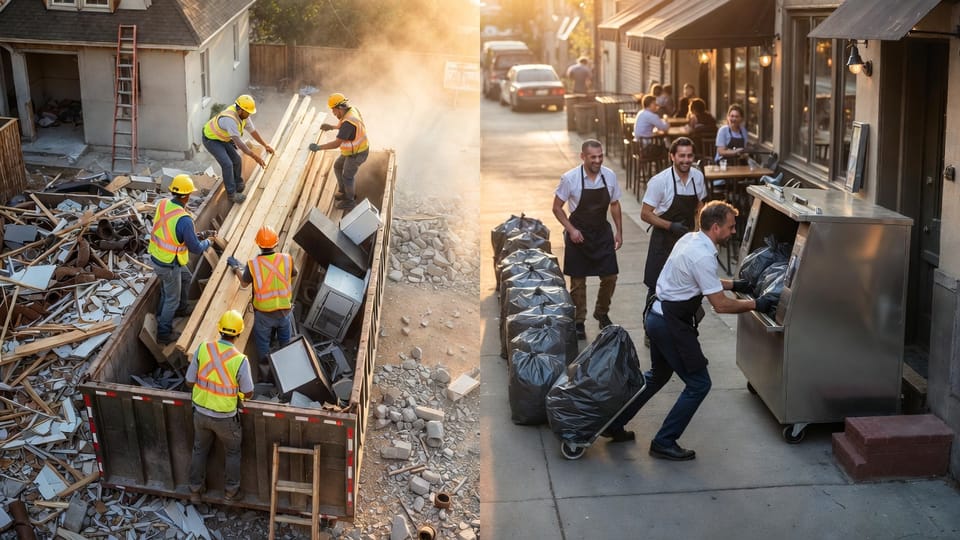
Roll-off dumpsters and front-load commercial bins may both hold trash, but they serve entirely different purposes. Think of them as specialized tools in a professional’s toolkit.
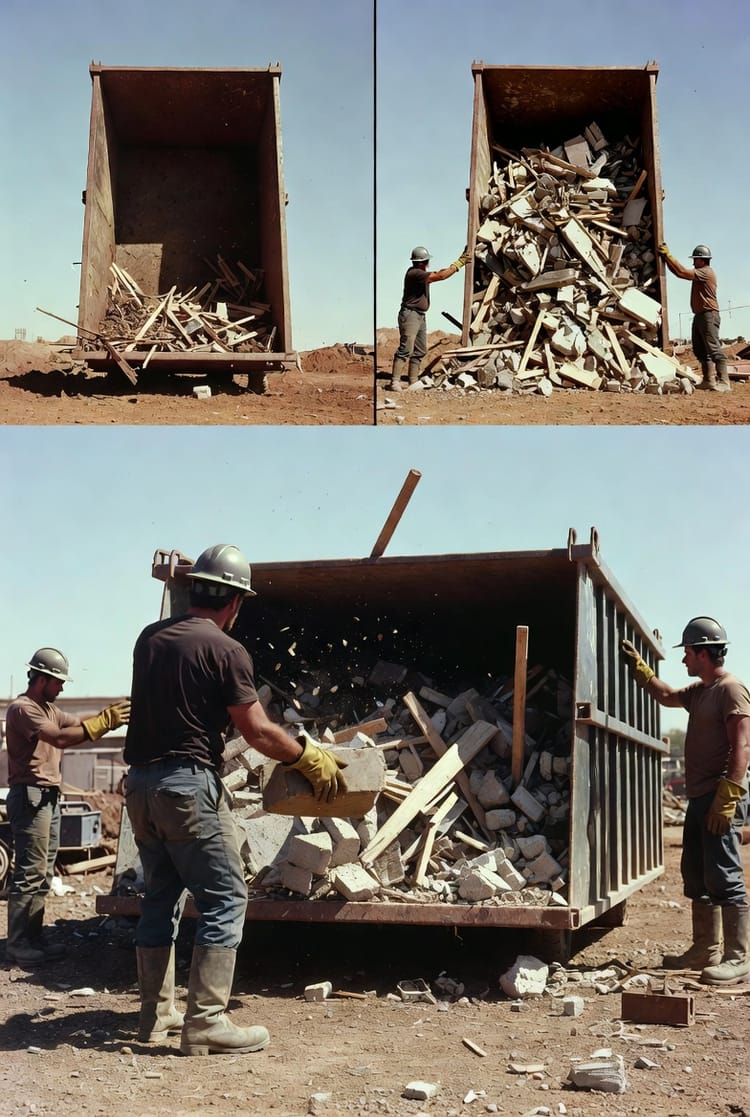
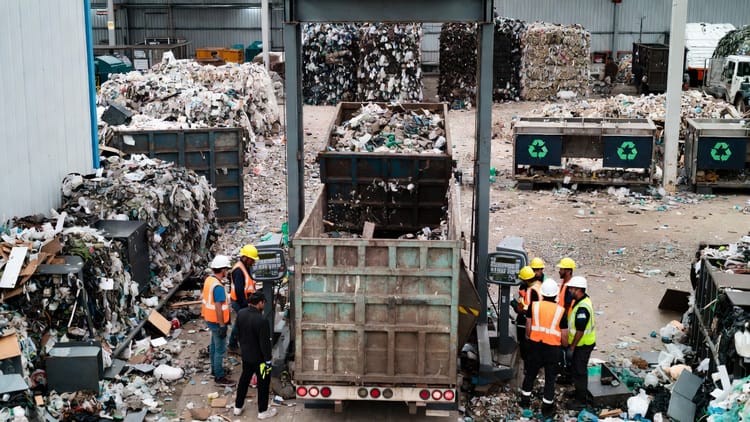
Roll-off dumpsters are the heavy-duty workhorses designed for large-scale, temporary projects. These open-top containers arrive on a specialized truck, roll off onto your property, and stay for days or weeks while you fill them with bulky, heavy debris. When the job is done, the same truck returns to haul the loaded container away.
Front-load commercial bins, by contrast, are the reliable daily partners for ongoing waste generation. These fully enclosed, wheeled containers sit permanently (or semi-permanently) at businesses. A dedicated collection truck with front-loading arms empties them on a fixed schedule — weekly, bi-weekly, or even daily — keeping your premises consistently clean and compliant.
The distinction is simple yet powerful: one is built for intense, short-term volume, the other for steady, predictable flow.
Roll-Off Dumpsters: Built for Big, One-Time Challenges
When your project generates massive amounts of bulky, irregular debris, nothing beats a roll-off dumpster.
Ideal Use Cases
- Home renovations and additions — tearing out kitchens, bathrooms, or entire floors
- Construction and demolition — new builds, roofing jobs, concrete work
- Major cleanouts — estate sales, hoarding situations, garage or basement purges
- Landscaping and yard work — tree removal, soil excavation, storm cleanup
- Special events — festivals, weddings, or large community projects
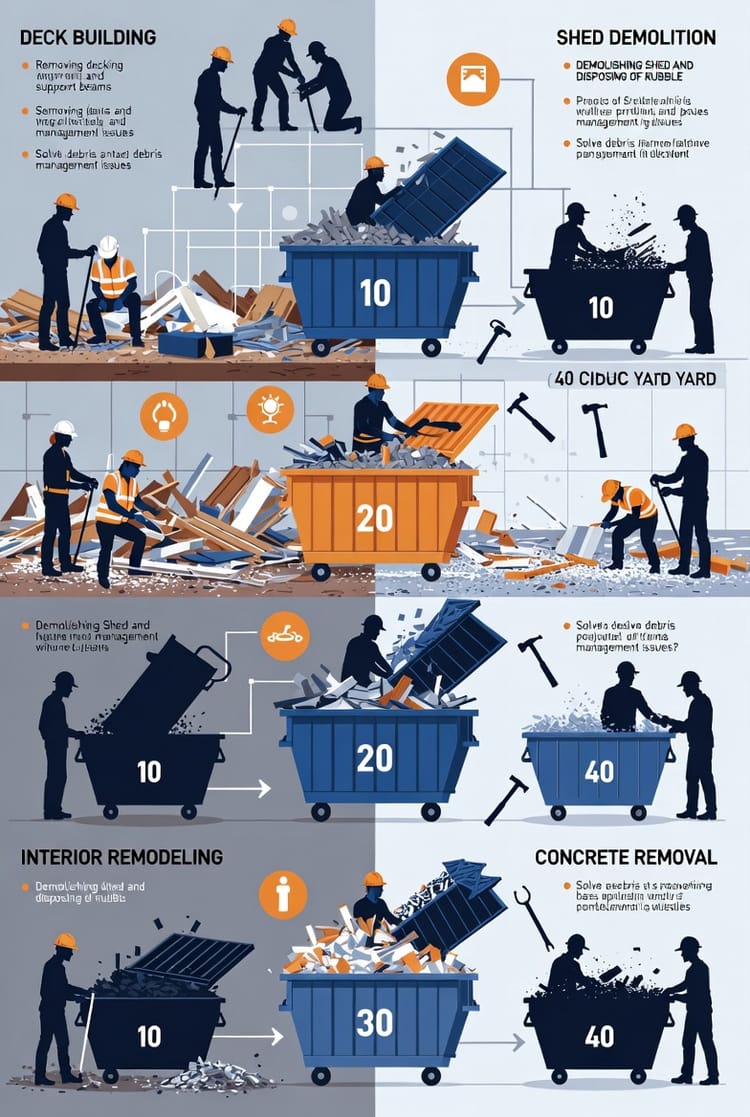
These containers come in sizes ranging from 10 to 40 cubic yards, giving you the exact capacity needed. The open top makes loading effortless — simply toss in old drywall, shingles, furniture, or appliances without wrestling with lids.
Key advantages include:
- Unlimited weight capacity within legal limits (most hold 2–10 tons)
- Flexible rental periods — keep it 7 days, 30 days, or longer
- No daily service fees — pay once for the duration
- Complete control — load on your schedule, not someone else’s
One recent client, a general contractor in Vestal, NY, needed to gut a 1920s Victorian home. The 40-yard roll-off handled 18 tons of plaster, lathe, and fixtures in just 12 days — a job that would have required 40+ trips with smaller containers.
Front-Load Commercial Bins: The Backbone of Daily Operations
For businesses that generate consistent waste day after day, front-load commercial bins are the gold standard of efficiency.
Perfect For
- Restaurants and food service — daily food scraps, packaging, and grease
- Retail stores and shopping centers — cardboard, plastic, and customer waste
- Office buildings and medical facilities — paper, confidential documents, and general trash
- Apartment complexes and property managers — tenant-generated refuse
- Manufacturing and light industrial — production byproducts and packaging
These bins range from 2 to 8 cubic yards and feature sturdy lids, wheels, and reinforced frames built for frequent handling. The front-load collection system is fast, quiet, and minimizes disruption to your customers or staff.
Standout benefits:
- Scheduled reliability — never worry about overflowing bins again
- Lower long-term costs — predictable monthly billing
- Professional appearance — enclosed design keeps sites looking sharp
- Compliance support — meets health department and municipal regulations
A popular local pizzeria in Johnson City switched to a 4-yard front-load bin with twice-weekly service. The result? Zero late-night dumpster runs, happier employees, and a 28% reduction in waste-related complaints from neighbors.
Side-by-Side Comparison: Roll-Off vs. Front-Load
Understanding the technical differences helps you avoid costly mismatches. Here’s a clear breakdown:
Pro tip: If your project spans more than 30 days or involves ongoing construction phases, many clients combine both services — a roll-off for the heavy lifting and a front-load for daily staff waste.
When to Choose a Roll-Off Dumpster (And Why You’ll Be Glad You Did)
The moment you realize your project will generate more than a pickup truck can handle, it’s time to order a roll-off.
Clear indicators:
- You’re removing structural materials (concrete, brick, wood framing)
- The debris is irregular and won’t fit neatly in bags
- You need space to work without constant hauling trips
- Your timeline is aggressive — 1–6 weeks

Cost-saving reality: A single 30-yard roll-off often costs less than 15–20 bagster or junk removal trips. Plus, you control the pace instead of waiting on someone else’s schedule.
Common sizes and what fits:
- 10-yard: Small bathroom remodels, deck removals
- 20-yard: Kitchen gut jobs, garage cleanouts
- 30-yard: Full home renovations, light commercial demo
- 40-yard: Major construction, whole-house cleanouts
When a Front-Load Commercial Bin Is the Clear Winner
If your business produces consistent daily or weekly waste, committing to a front-load bin delivers immediate relief and long-term savings.
Tell-tale signs:
- Your trash volume is predictable week after week
- You need to maintain a professional, odor-free environment
- Health codes or lease agreements require regular service
- You want to eliminate the hassle of calling for pickups
Real-world efficiency gains:
- Restaurants reduce pest issues by 90% with proper containment
- Retail locations cut labor hours spent managing waste
- Property managers report higher tenant satisfaction scores
Many businesses start with a trial period to confirm the right size and frequency before locking in a full contract.
Cost Considerations: Getting Maximum Value
Roll-off pricing is straightforward: base rental fee + tonnage disposal charge. Expect to pay more per cubic yard for shorter rentals, but the total cost often beats alternatives for big jobs.
Front-load pricing works on a subscription model. The monthly fee covers the container, all scheduled pickups, and disposal. Overages are rare when you choose the right size upfront.
Money-saving strategies:
- Order the correct size the first time (we help you calculate)
- Schedule roll-off delivery on a Monday to maximize weekend loading
- Bundle services if you need both temporary and ongoing solutions
- Take advantage of volume discounts on multi-month commercial contracts
Environmental Responsibility and Proper Disposal
Today’s leading waste companies go far beyond simply hauling trash. Responsible providers:
- Recycle up to 70% of construction debris (metal, concrete, wood)
- Divert organic waste from landfills through composting partnerships
- Follow strict environmental regulations for hazardous materials
- Track every load to ensure proper handling
When you choose the right container type, you naturally reduce unnecessary trips, fuel consumption, and carbon emissions.
Common Mistakes to Avoid
- Underestimating volume — always size up if you’re unsure
- Mixing waste types — keep clean fill, recyclables, and general debris separate when possible
- Blocking access — ensure 12+ feet of clearance and solid ground
- Waiting too long — order early to avoid project delays
- Choosing based on price alone — the cheapest option often becomes the most expensive
Making the Final Decision With Confidence
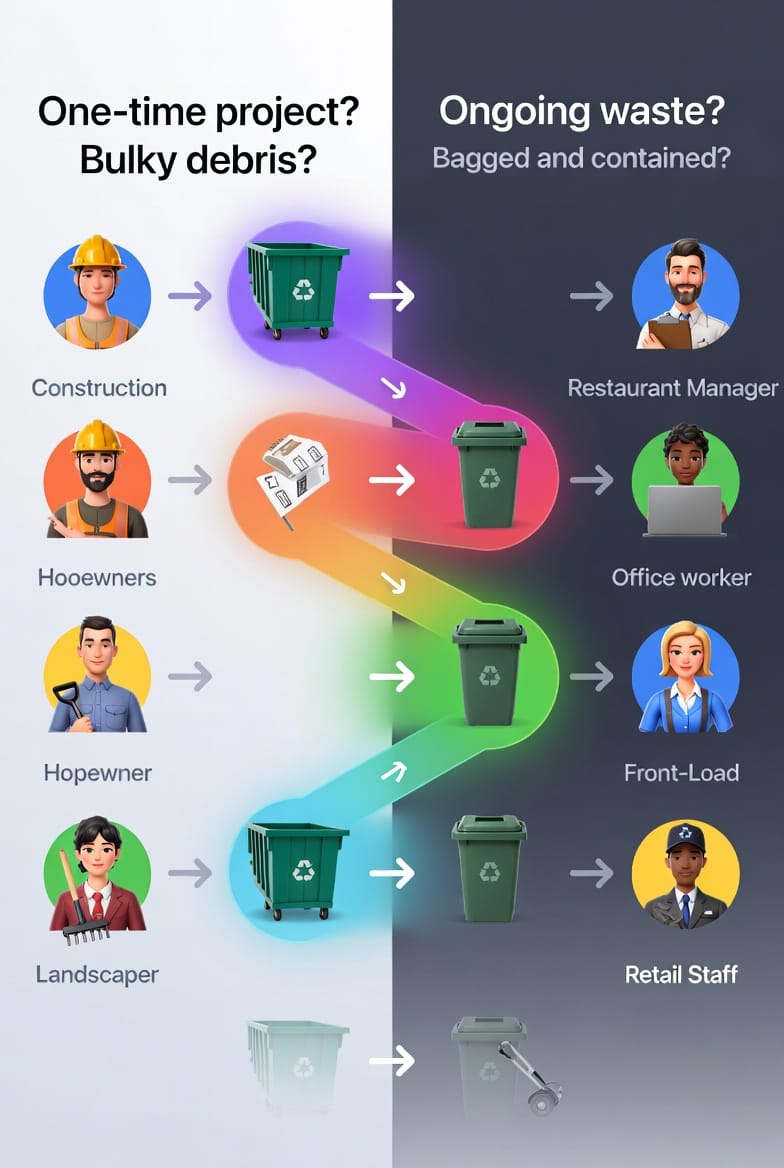
Still unsure? Ask yourself these three questions:
- Is this a one-time or recurring need?
- Will the waste be loose and bulky or bagged and contained?
- Do I need flexibility or predictable scheduling?
If you answered “one-time” and “bulky,” go roll-off.
If you answered “recurring” and “bagged,” choose front-load.
The right choice saves time, money, and stress — every single time.
Ready to Get the Right Tool for Your Job?
Don’t leave your waste management to chance. Our experienced team has helped thousands of homeowners, contractors, and business owners across the Southern Tier find the perfect solution for their exact situation.
Choose correctly. Work efficiently. Rest easy.
Save Time & Money with the Right Container – Call Now