The Renovation Waste Audit: Estimating Debris Volume for Accurate Dumpster Sizing
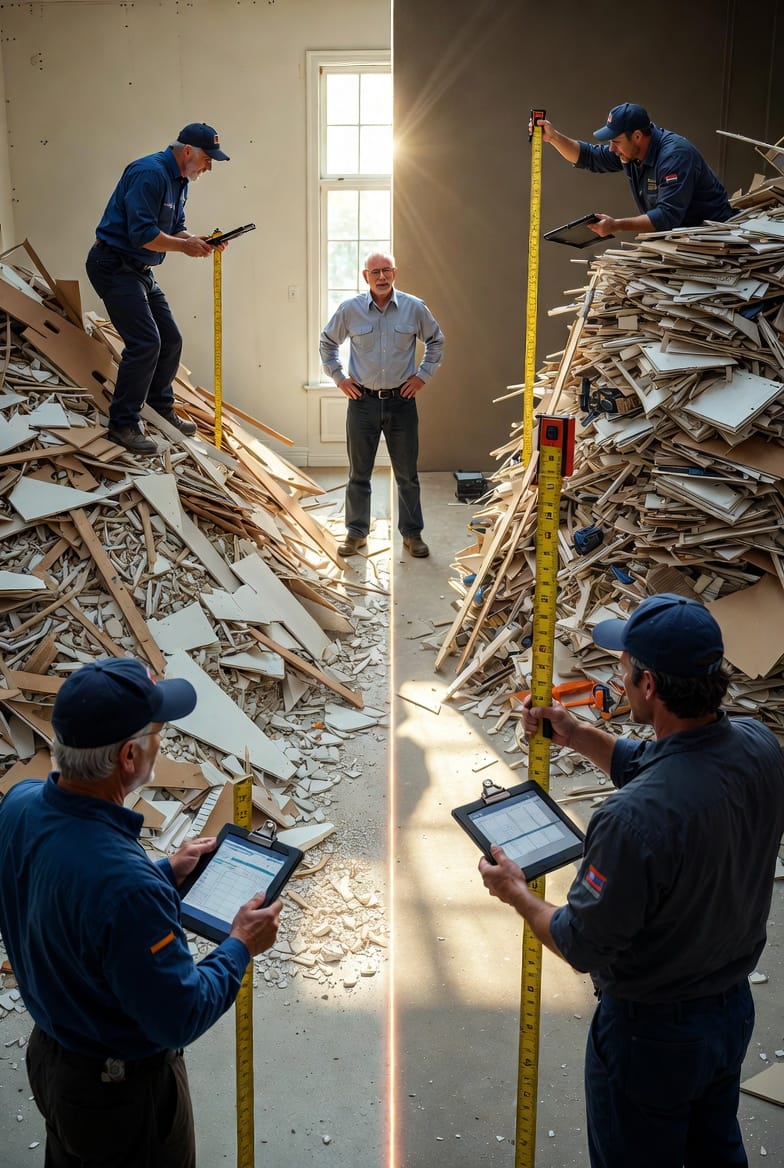
Renovation projects bring excitement and transformation, but they also generate significant debris. One of the most common challenges homeowners face is figuring out exactly how much waste their project will produce. Underestimating can lead to overflowing containers, extra rental fees, and project delays. Overestimating wastes money on oversized equipment you don’t need.
Need the Perfect Dumpster for Your Renovation? Call Today
That’s why a thorough renovation waste audit is essential. By learning to estimate debris volume accurately, you ensure the right dumpster sizing from the start. This guide walks you through every step with practical, room-by-room instructions, clear calculation formulas, and proven strategies. When you size your dumpster correctly, your renovation stays on budget, on schedule, and stress-free.
Accurate estimation isn’t guesswork—it’s a straightforward process that empowers you to make confident decisions. Whether you’re tackling a small kitchen update or a full-home overhaul, the right approach saves time and money while keeping your property clean and safe.
Why Accurate Dumpster Sizing Matters for Every Renovation
Proper debris volume estimation prevents costly surprises. A dumpster that’s too small forces multiple hauls, inflating rental costs and extending timelines. One that’s too large leaves you paying for unused space.
Beyond finances, correct sizing supports environmental responsibility by minimizing unnecessary trips and fuel consumption. It also keeps your worksite organized, reducing hazards for workers and family members.
At every stage of your project, knowing your waste output gives you control. You avoid last-minute scrambles and focus on what matters most—bringing your vision to life.
Understanding Key Measurements: Volume, Weight, and Dumpster Capacity
Dumpsters are typically sized in cubic yards (volume) with weight limits in tons or pounds. One cubic yard equals 27 cubic feet.
Volume tells you how much space the debris occupies. Weight determines whether your load stays within legal and equipment limits. Mixed construction debris usually averages 300–500 pounds per cubic yard, but heavier materials like concrete increase this number.
Use both measurements together for best results. The formulas below help you translate raw pile dimensions into practical rental needs.
Step-by-Step: Performing Your Own Renovation Waste Audit
Follow these simple steps for reliable results:
- Walk through every area and list all materials to be removed.
- Measure debris piles in length, width, and height (in feet).
- Apply the volume formula and adjust for material density.
- Add a 20–30% buffer for unexpected waste and compaction.
- Compare against standard room estimates for quick validation.
This methodical process takes only minutes yet delivers professional-level accuracy.
Room-by-Room Debris Estimation Guide
Different spaces produce different types and amounts of waste. Here’s a detailed breakdown with specific estimates and formulas tailored to common renovations.
Kitchen Renovations: Typically 1–2 Tons of Debris
Kitchens often involve cabinet removal, appliance disposal, flooring tear-out, and countertop demolition. These projects generate a mix of wood, metal, drywall, and tile—light to medium density overall.
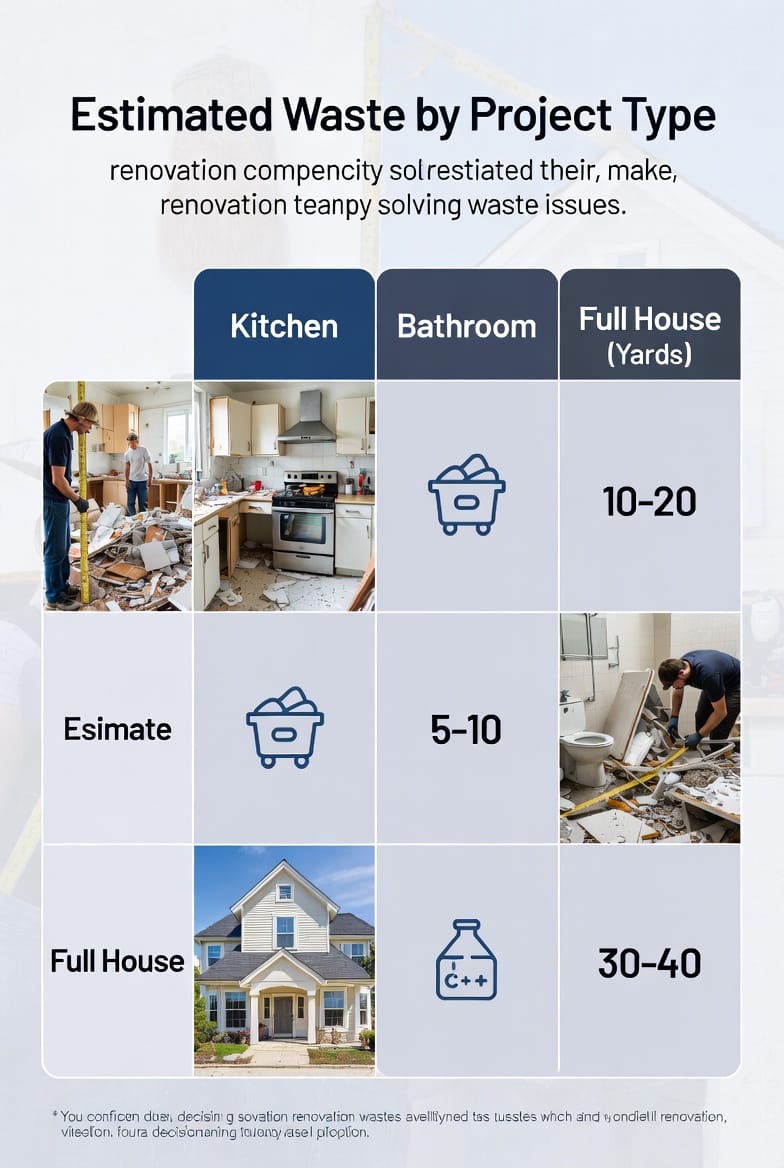
Expected output: 1–2 tons (2,000–4,000 pounds). In volume terms, this usually translates to 10–20 cubic yards.
Calculation formula example:
Suppose your debris pile measures 12 ft long, 8 ft wide, and 4 ft high.
\text{Volume (cubic yards)} = \frac{12 \times 8 \times 4}{27} = 14.2
Add 25% buffer: 14.2 \times 1.25 = 17.75 cubic yards.
This falls squarely in the 10–20 yard range. For heavier loads (concrete countertops), cross-check weight: multiply volume by 400 pounds per yard to confirm you stay under 2 tons.
Pro tip: Stack loose items tightly during measurement to avoid overestimation. If you’re replacing plumbing or electrical, include those extra materials in your initial walk-through.
Bathroom Renovations: 500–1,000 Pounds Typically
Bathrooms produce smaller but denser waste—porcelain fixtures, tile, drywall, and vanities. Moisture-damaged materials add weight quickly.
Expected output: 500–1,000 pounds (0.25–0.5 tons). Volume usually lands between 5–10 cubic yards.
Calculation formula example:
Debris pile: 8 ft × 6 ft × 3 ft.
\text{Volume} = \frac{8 \times 6 \times 3}{27} = 5.33
With 30% buffer: 5.33 \times 1.3 \approx 6.93 cubic yards.
Weight check: 6.93 yards × 400 pounds/yard ≈ 2,772 pounds—well within the 500–1,000 pound range after compaction. Always measure the tub and shower base separately if they’re being removed whole.
Basement Renovations and Cleanouts: 2–4 Tons of Debris
Basements often hold the heaviest loads—concrete blocks, old lumber, insulation, and accumulated junk. Flood damage or foundation work increases volume dramatically.
Expected output: 2–4 tons (4,000–8,000 pounds). Volume typically reaches 20–40 cubic yards or more.
Calculation formula example:
Pile dimensions: 20 ft × 15 ft × 6 ft.
\text{Volume} = \frac{20 \times 15 \times 6}{27} = 66.67
Apply 20% buffer: 66.67 \times 1.2 \approx 80 cubic yards total (often split across multiple dumpsters).
Weight adjustment for concrete-heavy debris: use 600–800 pounds per yard. This keeps you safely within 4-ton limits.
Important note: Basements frequently require roll-off dumpsters with higher weight ratings. Plan for phased removal if access is tight.
Expanding to Other Areas and Full-Home Projects
Living rooms and bedrooms usually generate 8–15 cubic yards from flooring, trim, and drywall. Full-house renovations combine all rooms for 30–40 cubic yards total—sometimes more with structural work.
Full-house formula approach: Sum individual room estimates, then add 15% for shared hallways and unexpected discoveries.
Example: Kitchen (15 yd³) + 2 bathrooms (7 yd³ each) + basement (30 yd³) = 59 yd³ → buffered total ≈ 68 yd³. Split into two 30–40 yard containers for efficiency.
Advanced Calculation Formulas for Precision
Master these formulas to refine every estimate:
- Basic Volume Formula
- V = \frac{L \times W \times H}{27}
- (where ( L, W, H ) are in feet)
- Weight Estimation
- W = V \times D
- (( D ) = density in pounds per cubic yard; use 300 for light debris, 600+ for heavy)
- Buffered Final Size
- \text{Final Size} = (V \times 1.25)
- (25% safety margin)
Practice with your actual measurements. These equations remove guesswork and deliver results you can trust.
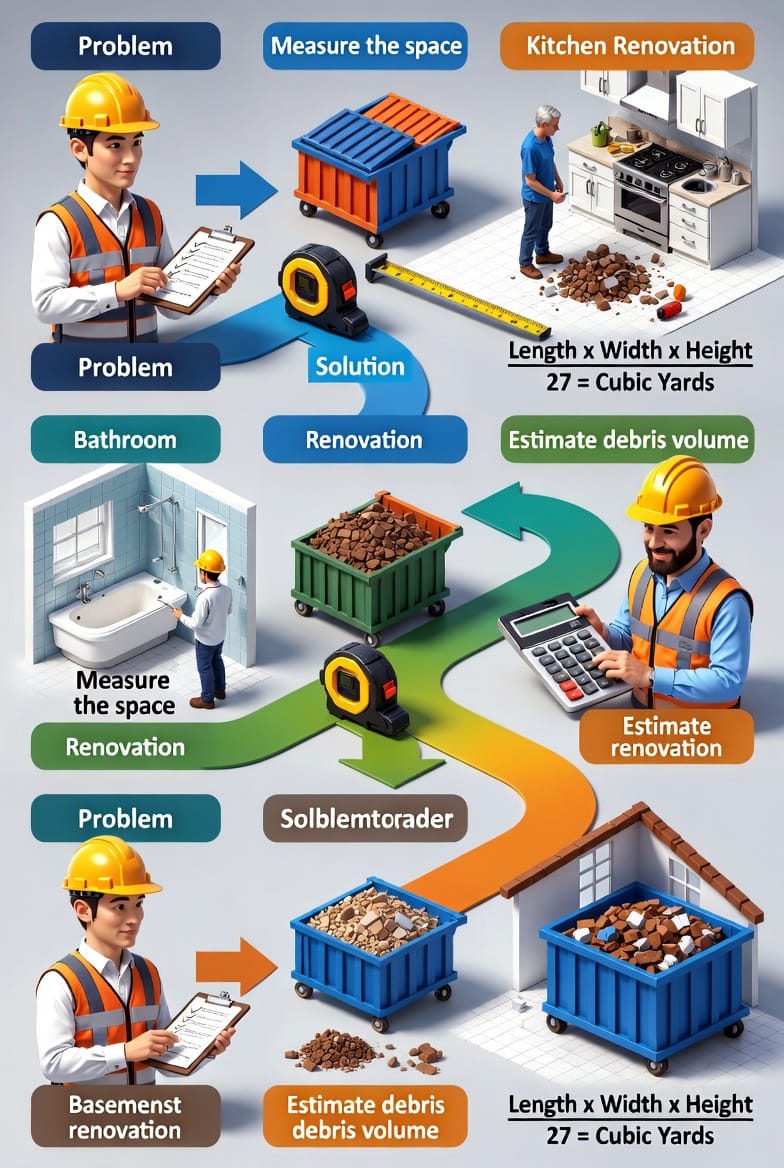
Common Pitfalls in Debris Estimation and How to Avoid Them
Even experienced DIYers make mistakes. Ignoring compaction leads to under-sizing. Forgetting hidden debris (behind walls, under floors) causes overflows. Misjudging material density results in overweight loads and fines.
Avoid these risks by:
- Measuring after demolition, not before.
- Separating heavy and light materials.
- Consulting a dumpster rental professional when in doubt.
With awareness and the formulas above, these pitfalls disappear.
Tools You Need for a Professional-Level Waste Audit
You don’t need fancy equipment. A sturdy tape measure, notepad, calculator app, and safety gloves are enough. For larger projects, a laser distance measurer speeds up the process. Digital photos of each pile provide helpful reference points later.
Real-World Examples: Successful Waste Audits That Saved Time and Money
Example 1 – Kitchen Remodel: A family measured their 14-yard pile using the formula above. They chose a 20-yard dumpster instead of two 10-yard units. Result: $450 saved and one less delivery.
Example 2 – Bathroom Update: Quick audit revealed only 7 yards needed. The homeowner avoided a 15-yard over-order and finished the project two days early.
Example 3 – Full Basement Cleanout: 3.5-ton estimate guided a 30-yard heavy-duty rental. No overweight fees, no extra hauls—project completed smoothly.
These real homeowners proved that a few minutes of planning deliver major rewards.
Partnering with Experts for Hassle-Free Dumpster Rental
While you can perform your own audit, professional guidance ensures every detail is covered. Experienced teams understand local regulations, access limitations, and optimal placement. They translate your estimates into the perfect container size without guesswork.
Final Thoughts: Size Your Dumpster Accurately
Mastering the renovation waste audit puts you in control of your project’s success. Use the room-by-room estimates, apply the clear calculation formulas, and always build in a practical buffer. You’ll enjoy smoother workflows, lower costs, and complete peace of mind.
Estimate Your Debris & Rent the Right Size – Call Now