The Re-Nesting Protocol: Legally Relocating Baby Wildlife and Reuniting Families When Possible
Discovering a baby animal alone in your yard or nearby wilderness can tug at the heartstrings, prompting an immediate urge to help. However, wildlife relocation and reunification require careful, informed approaches to avoid unintended harm. As experts in humane wildlife management, we emphasize that most baby animals are not truly orphaned—their mothers are often nearby, foraging or watching from afar. This comprehensive guide explores the re-nesting protocol, a structured method for legally and ethically handling such situations. We'll cover when to intervene, how professionals attempt family reunions, and the role of licensed rehabilitators, all while prioritizing the well-being of wildlife families.
Ethical Wildlife Reunification – Get Guidance Now
(855) 321-2977.
Our goal is to empower you with knowledge, ensuring you act responsibly. Remember, interfering prematurely can disrupt natural processes, but with the right steps, many families can be reunited successfully. Let's delve into this sensitive topic with compassion and expertise.
Understanding Baby Wildlife Encounters
Baby animals, from squirrels and rabbits to birds and fawns, often appear vulnerable when found alone. This is a common occurrence during spring and summer breeding seasons, known as baby wildlife season. Mothers strategically leave their young in safe spots to minimize predator attraction while they search for food. For instance, a fawn might lie motionless in tall grass, relying on its spotted camouflage, while the doe returns periodically to nurse.
Key misconception: Not every solo baby is abandoned. In fact, statistics from wildlife organizations indicate that up to 80% of reported "orphans" are healthy and under maternal care. Human intervention in these cases can lead to stress-induced health issues for the young or permanent separation from the family.
To assess the situation accurately:
- Observe from a distance without touching.
- Note the animal's condition: Is it injured, cold, or covered in insects?
- Check for signs of maternal presence, like fresh tracks or return visits.
By understanding these dynamics, homeowners can avoid unnecessary actions that might violate wildlife laws or ethics.
Legal Guidelines for Wildlife Handling
Navigating the legal landscape is crucial when dealing with baby wildlife relocation. In the United States, federal laws like the Migratory Bird Treaty Act and state-specific regulations govern the handling of native species. Possessing or relocating wildlife without a permit is often illegal, with penalties including fines up to $15,000 or imprisonment.
Important legal points:
- Protected species: Birds, mammals, and reptiles fall under protections. For example, songbirds and raptors require federal permits for any relocation.
- State variations: In California, only licensed rehabilitators can handle wildlife, while some states allow limited homeowner interventions for non-protected species like rabbits.
- Prohibited actions: Never attempt to raise wildlife at home—it's unlawful and increases the risk of imprinting, where animals lose fear of humans, hindering wild survival.
Always consult local wildlife agencies, such as the U.S. Fish and Wildlife Service or state departments of natural resources, before acting. Professional services like ours ensure compliance, using permitted methods to facilitate reunions.
Ethical Considerations in Reunification
Ethics play a pivotal role in wildlife family reunification. The guiding principle is "do no harm," balancing human compassion with ecological integrity. Interfering can disrupt family bonds, leading to higher mortality rates for young animals deprived of maternal teachings.
Ethical best practices:
- Prioritize observation over action.
- Use non-invasive monitoring, like trail cameras, to confirm orphan status.
- Consider the broader ecosystem: Removing animals can affect population dynamics and predator-prey balances.
As authoritative voices in the field, we advocate for humane solutions that respect nature's processes. Reuniting families not only saves lives but also maintains biodiversity.
When to Leave Baby Animals Be
Knowing when to step back is as important as knowing when to help. Many baby animals are fledglings or nestlings in a natural phase of independence. For example, baby birds learning to fly might hop on the ground, but parents continue feeding them.
Signs to leave them alone:
- The animal appears healthy, alert, and well-fed.
- No visible injuries, such as bleeding or broken limbs.
- Evidence of parental care, like droppings or food remnants nearby.
- Species-specific behaviors: Fawns rarely move, waiting for the doe's return; baby rabbits in shallow nests (forms) are visited briefly at dawn and dusk.
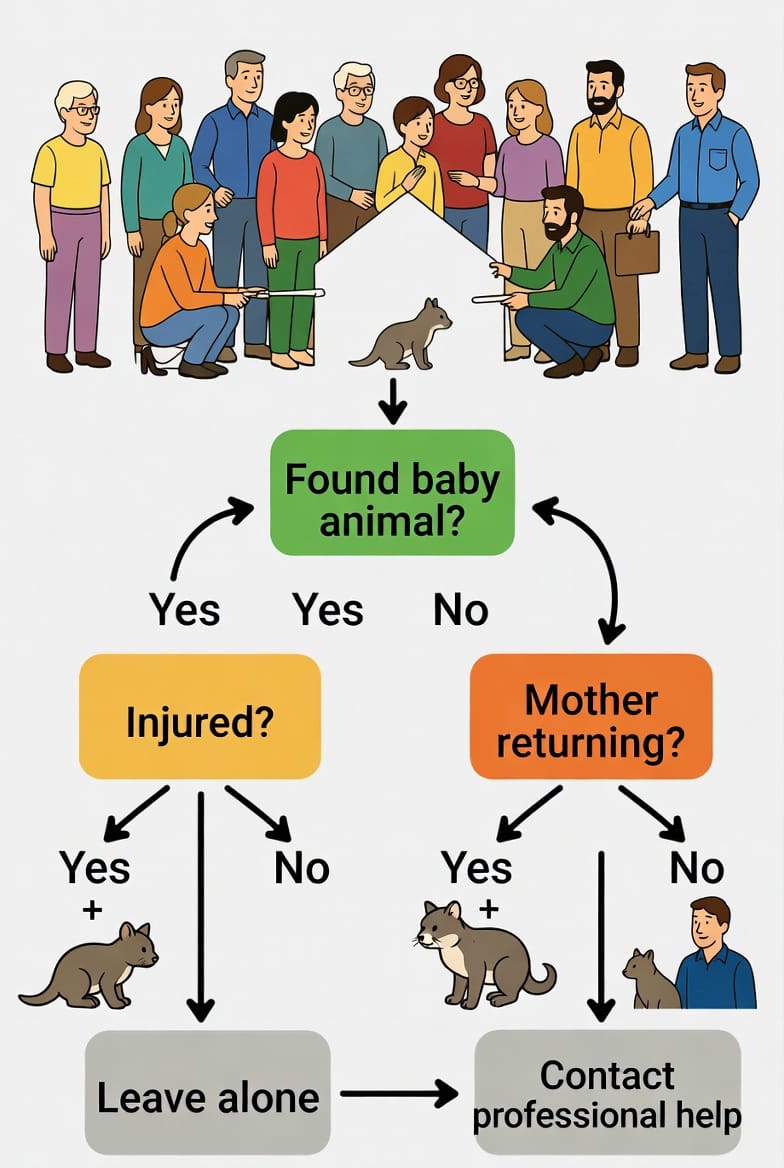
The Reunification Process: Step-by-Step
When intervention is warranted, the re-nesting protocol offers a safe, legal pathway. This involves attempting to reunite the young with their mother before considering rehabilitation.
Professional steps for reunification:
- Assessment: A licensed expert evaluates the animal's health and the site's safety.
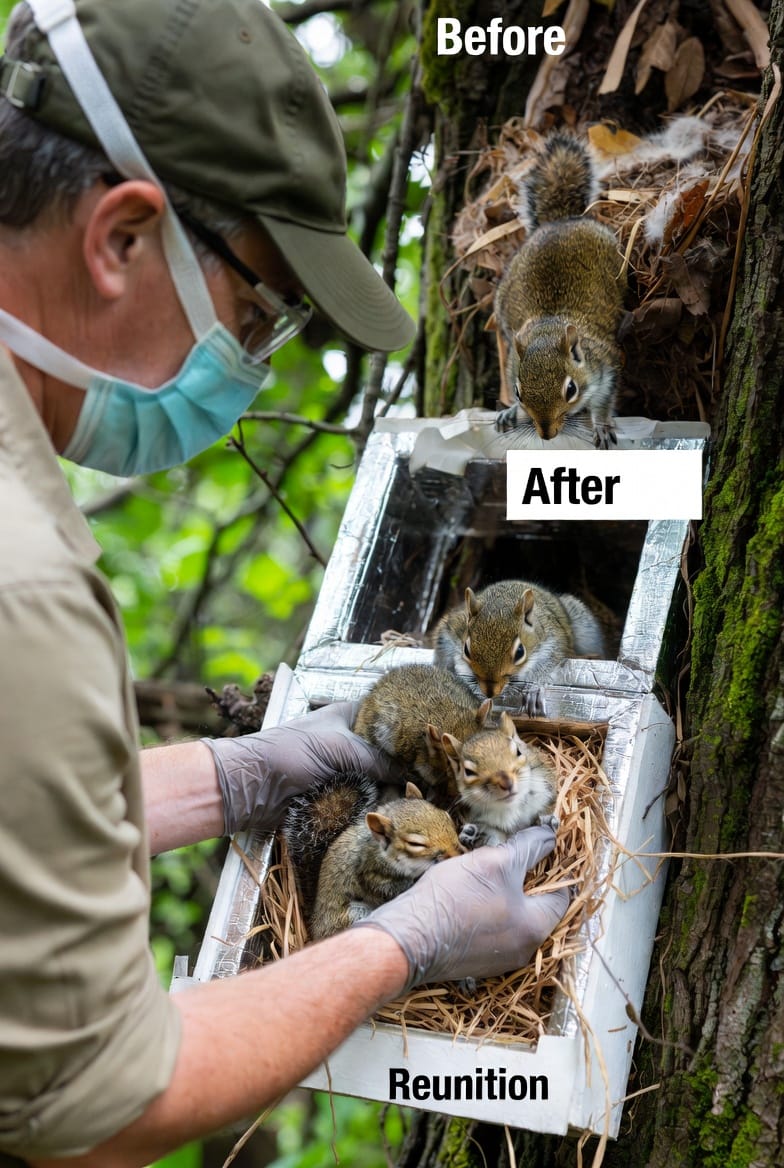
- Preparation: Place the baby in a warm, ventilated box (reunion box) with nesting material from the original site to retain familiar scents.
- Placement: Position the box near the discovery location, elevated if needed to deter predators.
- Monitoring: Use remote cameras or periodic checks to observe without disturbance. Wait up to 48 hours for the mother's return.
- Success indicators: The mother retrieves the young, confirmed by empty box or sightings.
If reunification fails—due to confirmed orphaning or injury—transfer to a rehabilitator ensues. This process has success rates exceeding 70% for species like squirrels and rabbits, per wildlife studies.
Case example: A homeowner finds baby raccoons after a tree fall. Professionals secure the area, place the kits in a reunion box, and monitor. The mother returns overnight, relocating her family safely.
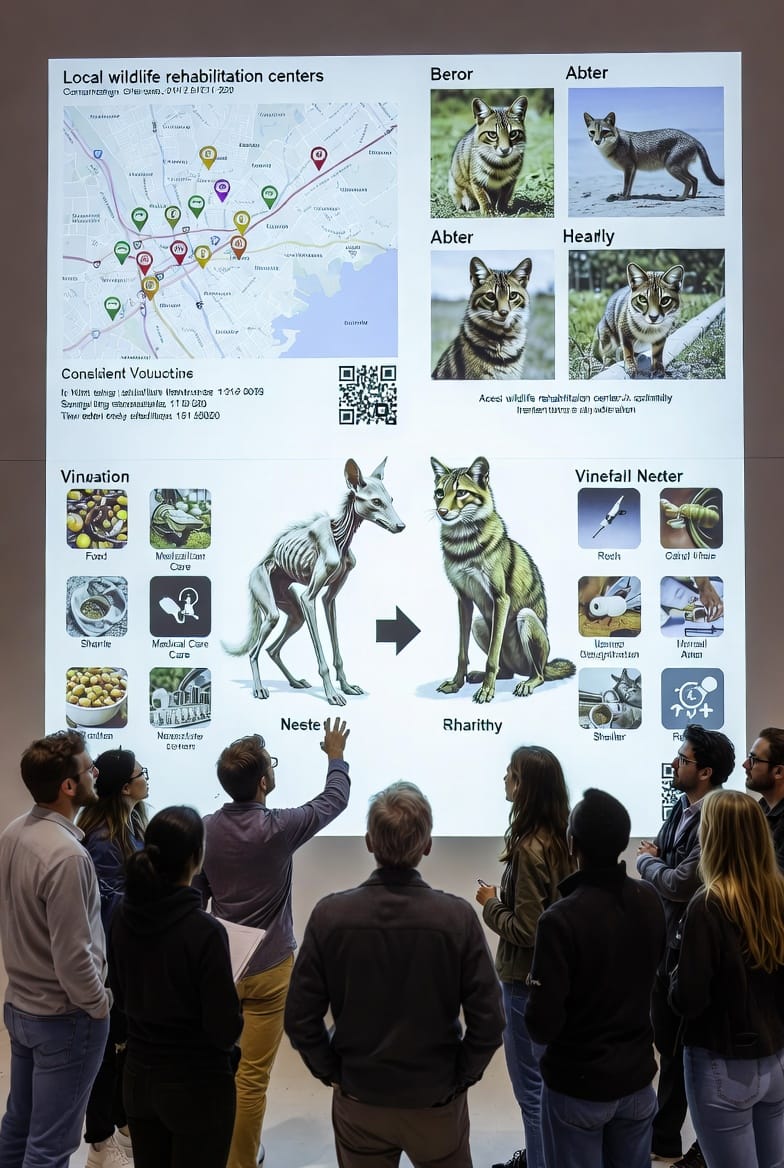
Protocols for Licensed Wildlife Rehabilitators
Licensed rehabilitators are the backbone of ethical wildlife care, following strict protocols to ensure releasable animals return to the wild.
Core protocols:
- Intake evaluation: Check for dehydration, parasites, or injuries using veterinary tools.
- Care regimen: Provide species-specific nutrition, like formula for mammals or insects for birds, in isolation to prevent disease spread.
- Rehabilitation stages: From stabilization to pre-release conditioning, teaching survival skills in enclosures mimicking natural habitats.
- Release criteria: Animals must be healthy, exhibit wild behaviors, and be released near the original site during appropriate seasons.
- Documentation: Maintain records for legal compliance and research.
Rehabilitators collaborate with agencies to track outcomes, contributing to conservation efforts. Only permitted individuals can perform these tasks—public involvement risks legal issues and animal welfare.
Risks of improper handling:
- Disease transmission: Wildlife can carry zoonotic diseases like rabies.
- Stress mortality: Handling causes cortisol spikes, potentially fatal for young.
- Failed reintroduction: Hand-raised animals may not survive in the wild.
Common Scenarios and Expert Tips
To illustrate, consider frequent encounters:
- Baby birds: If fallen from nests, re-nest if possible. Use a berry basket lined with tissue, secured high.
- Baby squirrels: Often displaced by storms. Reunion boxes work well; avoid feeding to prevent aspiration.
- Fawns: Rarely orphaned. If unmoving but breathing, leave be—the doe is likely nearby.
- Baby rabbits: Nests disturbed by mowing? Cover loosely and monitor.
Expert tips for homeowners:
- Wear gloves to minimize scent transfer.
- Keep pets indoors during monitoring.
- Document findings with photos for professional advice.
These scenarios underscore the importance of expertise in achieving positive resolutions.
The Impact of Compassionate Intervention
Adopting the re-nesting protocol fosters harmony between humans and wildlife. Successful reunions reduce the burden on rehabilitators and preserve natural behaviors. Ethically, it aligns with conservation goals, protecting biodiversity amid habitat loss.
Studies show that properly managed interventions boost survival rates by 50%, highlighting the value of informed actions. As urban expansion increases encounters, education becomes key to coexistence.
Conclusion: Prioritizing Wildlife Welfare
In summary, the re-nesting protocol provides a framework for legally and ethically addressing baby wildlife found alone. By understanding when to observe, reunite, or seek help, we can support family integrity and ecosystem health. Always err on the side of caution—nature often handles things best.
Family-First Wildlife Removal – Call Humane Pros Today