The Physics of Drainage: Understanding Vent Stacks, Trap Weirs, and Why Your Drains Flow (or Don't)
In the world of home maintenance, few systems are as crucial yet overlooked as your plumbing's drainage network. At its core, this setup relies on fundamental hydraulic principles to ensure waste flows efficiently while keeping harmful gases at bay. Whether you're dealing with a stubborn slow drain or mysterious gurgling sounds, understanding the physics behind vent stacks, trap weirs, and the overall flow dynamics can empower you to maintain a healthy system. Rest assured, these concepts aren't as complex as they seem – with the right knowledge, you can prevent common issues and keep your home's plumbing performing optimally.
Stop Gurgling & Sewer Smells – Call the Vent Experts
This article dives deep into the science of drainage, explaining how these elements work together to prevent siphoning, facilitate smooth waste removal, and block sewer gases. We'll explore the functions of key components, highlight risks of improper setups, and offer practical insights. By the end, you'll see why professional intervention is often the smartest path to restoring balance in your pipes.
The Fundamentals of Plumbing Hydraulics
Plumbing drainage isn't just about pipes carrying water away; it's a carefully engineered system governed by physics laws like gravity, pressure differentials, and fluid dynamics. At the heart of it all is the drain-waste-vent (DWV) system, which handles everything from kitchen sinks to toilets.
- Gravity's Role: Waste naturally flows downward due to gravitational pull, but without proper design, blockages or backups can occur.
- Pressure Balance: Air pressure must remain equalized to avoid vacuums that disrupt flow.
- Gas Containment: Sewer gases, rich in methane and hydrogen sulfide, pose health risks if they enter living spaces.
These principles ensure your drains "flow" reliably. When they don't, it's often a sign of underlying hydraulic imbalances. Fortunately, modern plumbing incorporates safeguards like vents and traps to maintain this equilibrium.
The Purpose of Trap Weirs and the Water Seal
Every fixture in your home – from sinks to showers – features a trap, a U-shaped bend in the pipe that holds a small amount of water. This water forms a seal, acting as a barrier against sewer gases. The trap weir is the critical point where water overflows into the drain line, maintaining the seal's depth.
The weir's design is ingenious: it allows waste to pass while retaining enough water (typically 2-4 inches) to block odors and gases. Here's how it functions:
- Seal Formation: After use, residual water settles in the trap's bend, creating an airtight plug.
- Weir Overflow: Excess water flows over the weir, preventing overfilling that could weaken the seal.
- Gas Prevention: Without this seal, noxious fumes could rise through the pipes, leading to unpleasant smells and potential health hazards like respiratory irritation.
Improper trap installation, such as a weir that's too high or low, can lead to frequent seal loss. But don't worry – these are fixable with standard adjustments, ensuring your system's reliability.
Delving deeper, the physics here involve hydrostatic pressure. The water column in the trap counters the pressure from sewer gases below. If the seal evaporates (due to disuse) or gets disrupted, gases escape. Regular use and proper venting keep this in check, providing peace of mind for homeowners.
How Vent Stacks Prevent Siphoning and Ensure Flow
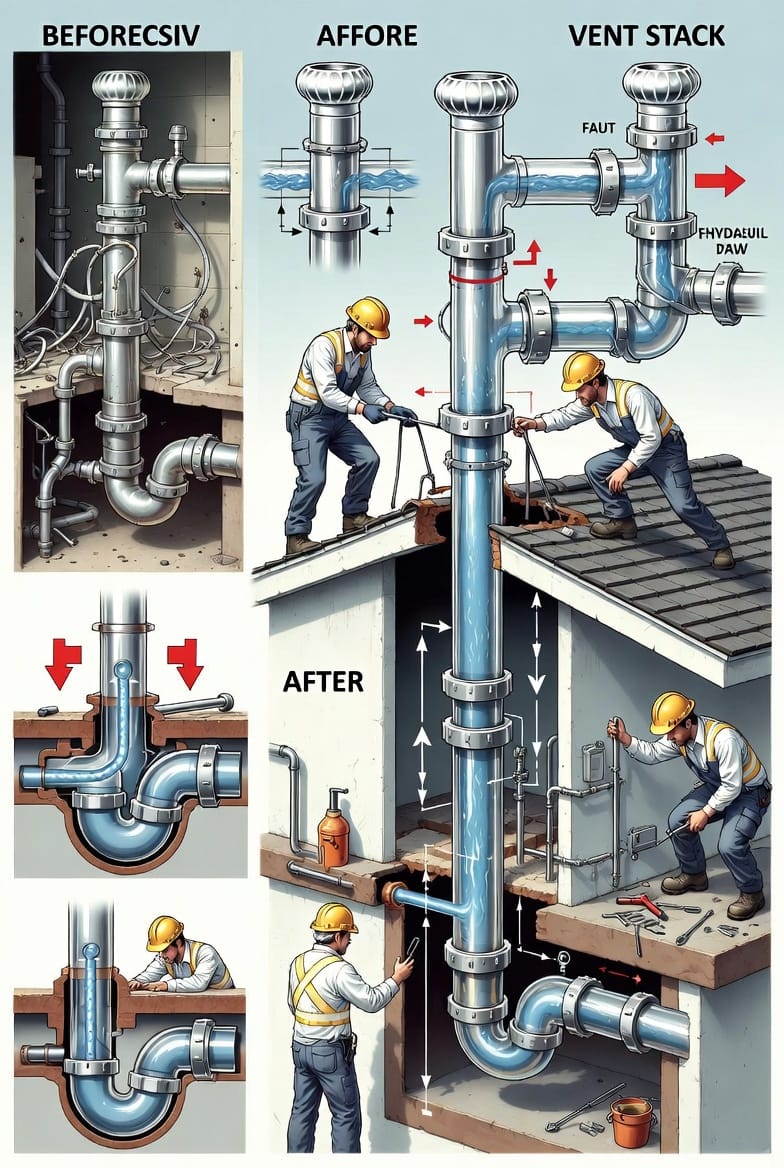
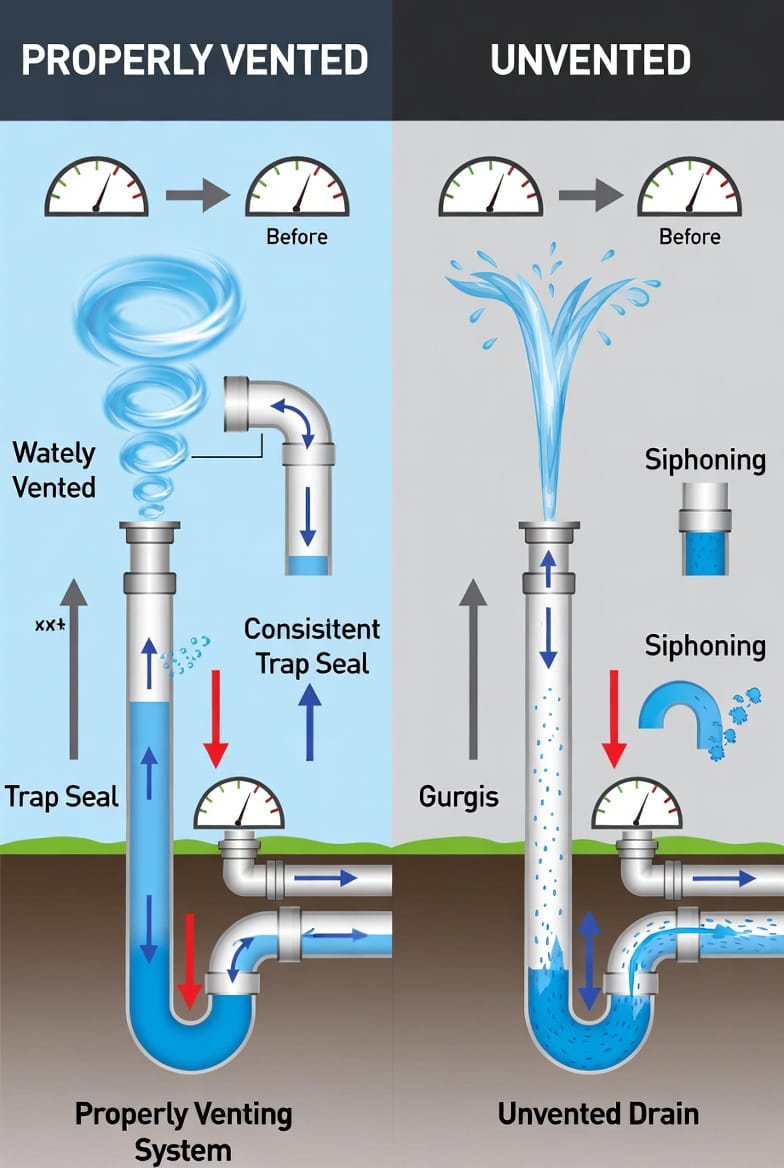
Vent stacks are the unsung heroes of your plumbing system. These vertical pipes extend from the drain lines up through the roof, allowing air to enter and exit freely. Without them, drainage would be prone to siphoning – a phenomenon where flowing water creates a vacuum, pulling the trap's water seal down the drain.
Imagine flushing a toilet: The rush of water generates negative pressure behind it. In an unvented system, this vacuum siphons water from nearby traps, breaking seals and allowing gases in. Vent stacks counteract this by:
- Admitting Air: They introduce atmospheric air to equalize pressure, preventing vacuums.
- Expelling Gases: Safely venting excess pressure or gases upward, away from interiors.
- Facilitating Flow: By maintaining neutral pressure, vents ensure waste moves smoothly without resistance.
The stack's rooftop termination is key – it prevents rainwater entry while allowing air exchange. Materials like PVC or cast iron are chosen for durability, resisting corrosion from moist environments.
In multi-story homes, branch vents connect to the main stack, extending protection to all fixtures. This networked approach embodies hydraulic efficiency, reducing risks of backups.
Common Issues from Improper Venting
When venting fails, your drains don't just slow down; they signal deeper hydraulic disruptions. Slow drains often stem from partial blockages or inadequate air intake, while gurgling sounds indicate air struggling to enter the system, creating bubbles and noise.
Key risks include:
- Sewer Gas Intrusion: Broken seals expose households to toxic fumes, potentially causing headaches or nausea.
- Backup and Overflows: Pressure imbalances force waste upward, leading to messy spills.
- Structural Damage: Chronic issues erode pipes, inviting leaks and costly repairs.
These symptoms are common in older homes with outdated venting or DIY modifications gone wrong. For instance, a clogged vent stack (from leaves or bird nests) mimics a blockage, but the fix is often simpler than you think – a professional clearing restores physics-driven flow.
Authoritatively speaking, ignoring these signs can escalate to health code violations. However, early diagnosis turns potential disasters into minor tune-ups.
Diagnosing Venting and Blockage Problems
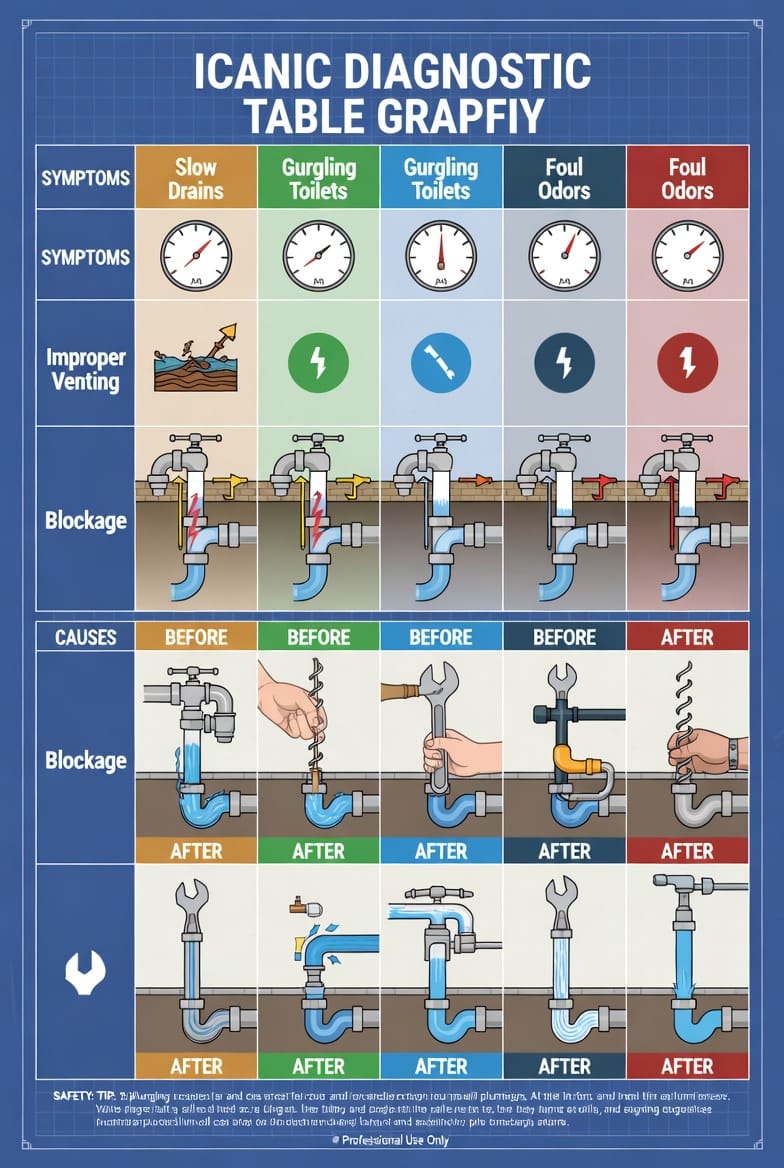
Spotting issues early is empowering. Start with observation: Does your sink drain sluggishly after running the dishwasher? Hear gurgles when the washing machine empties? These point to venting woes.
Use this step-by-step approach:
- Inspect Fixtures: Check traps for visible cracks or low water levels.
- Test Flow: Run water in multiple areas simultaneously to simulate load and listen for anomalies.
- Roof Check: Ensure the vent stack is unobstructed (safely, from ground level if possible).
If problems persist, professional tools like smoke tests or camera inspections reveal hidden flaws. Rest assured, master plumbers use physics-based diagnostics to pinpoint causes accurately.
Advanced Hydraulic Considerations in Modern Plumbing
Beyond basics, advanced hydraulics involve factors like pipe sizing and slope. Drains must slope at least 1/4 inch per foot to harness gravity without pooling. Oversized pipes can slow flow, while undersized ones cause clogs.
In high-rise buildings, stack venting evolves into sophisticated systems with relief vents to handle greater pressures. Materials science plays a role too – ABS pipes offer flexibility, reducing vibration-induced failures.
Energy efficiency ties in: Proper drainage minimizes water waste, aligning with sustainable home practices. Innovations like air admittance valves provide vent alternatives in tight spaces, maintaining physics without roof penetrations.
Preventing Future Drainage Failures
Prevention is the ultimate reassurance. Regular maintenance includes:
- Annual Inspections: Have vents and traps checked by pros.
- Avoid Chemical Drains: They corrode seals; opt for mechanical clearing.
- Mind What Goes Down: Grease and hair are common culprits; use strainers.
By respecting these hydraulic principles, your system stays robust. Remember, plumbing physics isn't about chance – it's engineered reliability.
The Impact of Environmental Factors
Weather affects drainage too. Freezing temperatures can crack vents, while heavy rains overload systems. In seismic areas, flexible joints prevent shifts that disrupt weirs.
Climate-conscious designs incorporate backflow preventers, ensuring seals hold against external pressures. This holistic view underscores why expert design matters.
Case Studies in Hydraulic Troubleshooting
Consider a typical scenario: A family notices slow bathroom drains and occasional odors. Diagnosis reveals a bird's nest in the vent stack, creating vacuum issues. Clearing it restores flow, preventing siphoning.
Another case: An improperly sloped trap weir leads to frequent seal loss. Releveling the fixture fixes it, eliminating gurgling.
These real-world examples highlight how understanding physics leads to swift resolutions.
Innovations in Drainage Technology
Emerging tech like smart sensors monitor pressure in real-time, alerting to imbalances. Bio-enzyme cleaners maintain traps without harsh chemicals.
Vent stack extenders improve airflow in low-roof homes. These advancements build on core physics, offering future-proof solutions.
Why Professional Help Matters
While DIY knowledge is valuable, complex hydraulics demand expertise. Missteps can worsen issues, like installing vents incorrectly and inviting leaks.
Trust certified plumbers who apply physics precisely, ensuring long-term performance.
In conclusion, mastering the physics of drainage – from vent stacks to trap weirs – demystifies why your drains flow or falter. By preventing siphoning, enabling waste movement, and sealing out gases, these elements safeguard your home. If you're facing slow drains, gurgling, or odors, it's time to restore the proper physics to your pipes.
Protect Your Home from Sewer Gases – Call Today