The Phosphorus Puzzle: Why Soil Phosphate Levels Matter and When to Use High-Phosphorus Fertilizers
In the world of lawn care, few nutrients create more confusion than phosphorus. Homeowners often hear conflicting advice: “Add more for strong roots,” or “Never use it – it’s bad for the environment.” This uncertainty leads to guesswork that can weaken your turf or harm local waterways.
Stop Guessing, Start Growing – Call Now!
The truth is simpler and far more empowering. Soil phosphate levels are the hidden foundation of every healthy lawn, yet most established yards already contain plenty. Knowing when – and when not – to reach for high-phosphorus fertilizers is the difference between a vibrant, resilient lawn and one that struggles year after year.
At its core, phosphorus drives root development and bloom production while powering the very energy plants use to grow. Over-application, however, triggers serious environmental risks, including harmful algae blooms. The solution lies in professional soil testing and targeted use only when truly needed.
Rest assured: with the right knowledge and a simple soil analysis, you can solve the phosphorus puzzle once and for all – delivering thicker grass, deeper roots, and peace of mind.
Understanding Phosphorus: The Quiet Powerhouse Behind Root Development and Bloom Production
Phosphorus is one of the three primary macronutrients (N-P-K) every lawn requires, yet it plays a uniquely critical role that nitrogen and potassium simply cannot replace.
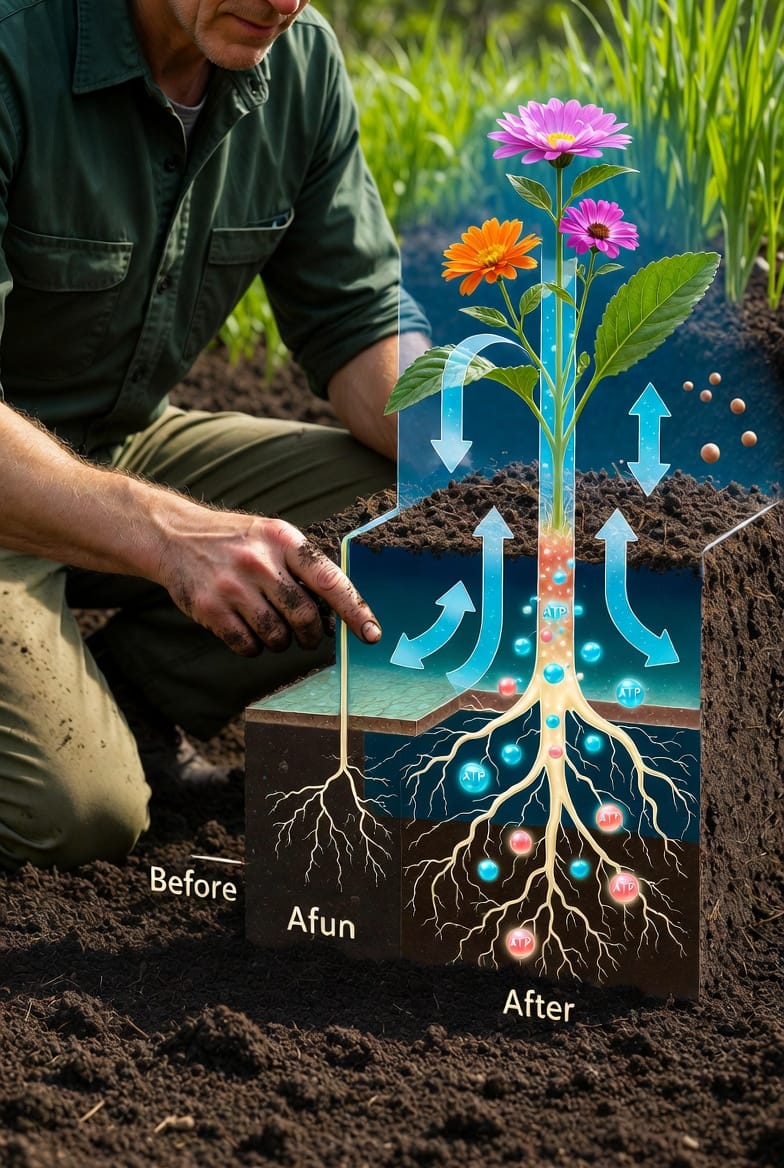
Inside every grass plant, phosphorus is essential for forming adenosine triphosphate (ATP) – the molecule that stores and transfers energy. Without adequate phosphorus, roots cannot expand efficiently, new shoots grow slowly, and flowering or seed production stalls. This is why phosphorus is nicknamed the “root and bloom” nutrient.
During early growth stages, phosphorus encourages strong, fibrous root systems that anchor grass against drought, traffic, and disease. In flowering ornamentals or warm-season grasses, it triggers richer blooms and faster establishment.
Key benefits of balanced phosphorus include:
- Deeper root zones that reach moisture during dry spells
- Faster recovery after mowing, aeration, or winter dormancy
- Improved stress tolerance against heat, cold, and foot traffic
- Enhanced bloom production in landscape beds integrated with lawns
Yet here is the reassuring truth most homeowners never hear: phosphorus does not disappear quickly from soil. Once applied, it binds tightly to clay particles and organic matter, remaining available for years. This built-in reservoir means many mature lawns already hold sufficient levels – often more than enough for ongoing health.
The Hidden Abundance: Why Most Soils Already Contain Adequate Phosphorus
Decades of lawn fertilization have left a legacy. Decades ago, starter fertilizers rich in phosphorus were standard practice for every new lawn. Over time, these applications accumulated in the topsoil, creating natural reserves that continue to support root growth today.
Modern soil tests frequently reveal phosphate levels in the “optimal” or even “high” range across established neighborhoods. When levels sit between 25–50 ppm (depending on your region and soil type), additional phosphorus offers zero measurable benefit.
Applying more anyway is like pouring extra gas into a full tank – wasteful and potentially harmful.
Signs your soil likely already has enough phosphorus:
- Grass establishes quickly after seeding or sodding
- Roots penetrate deeply when you pull a sample
- No widespread yellowing or stunting in cooler weather
- Previous soil tests (within the last three years) showed medium-to-high readings
This abundance is actually good news. It frees you from unnecessary spending and protects the environment at the same time.
The Risks of Over-Application: Environmental Concerns and Harmful Algae Blooms
Excess phosphorus does not stay put. Rain or irrigation carries unbound particles into storm drains, streams, and lakes. Once there, it fuels rapid growth of algae – creating thick, green mats that block sunlight and deplete oxygen.
These algae blooms devastate aquatic life, produce toxins, and turn once-clear water into murky, smelly hazards. Many states now restrict high-phosphorus fertilizers precisely because of these runoff risks.
Responsible lawn care means protecting more than your own yard. By applying phosphorus only when a soil test confirms a true deficiency, you safeguard local waterways while still achieving the thick, resilient turf you deserve.
The good news? Targeted use eliminates these risks entirely. When you fertilize based on actual data instead of guesswork, both your lawn and the environment win.
When to Use High-Phosphorus Fertilizers: Smart Timing for New Lawns and Specific Needs
High-phosphorus formulas (the “P” number on the bag is highest) are not obsolete – they remain powerful tools when used correctly.
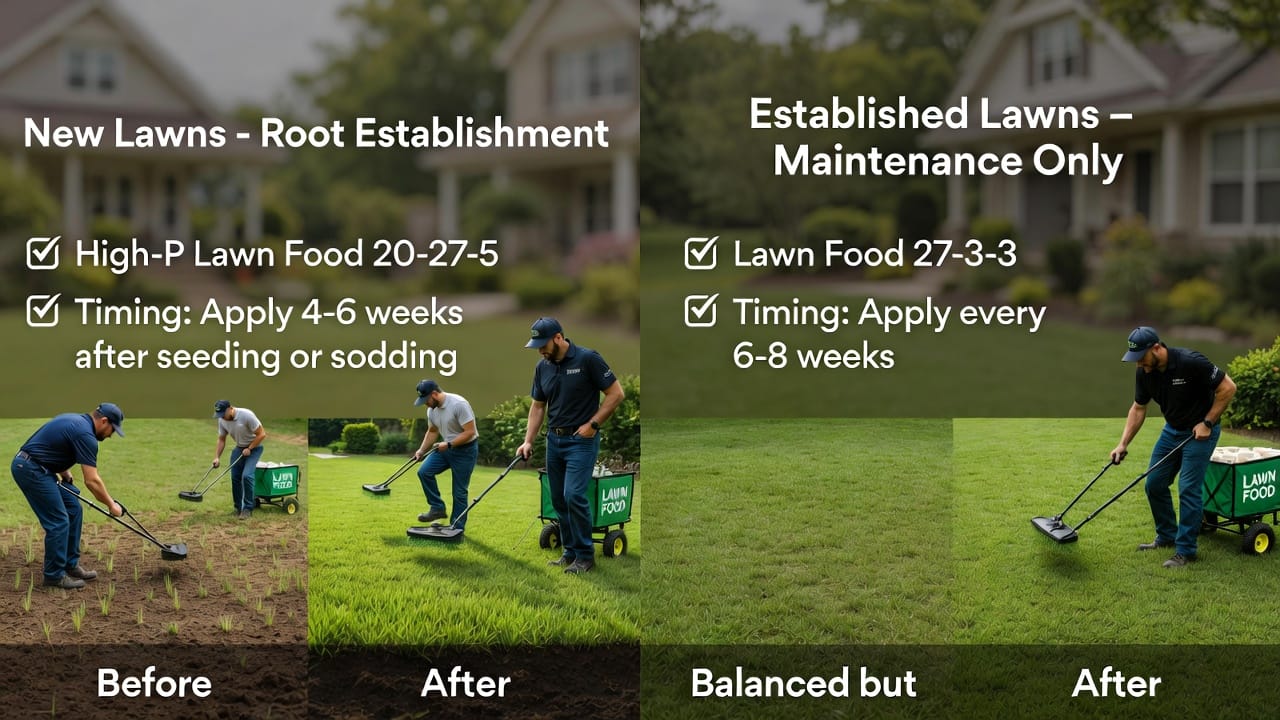
New lawns represent the clearest case for high-phosphorus fertilizer. Freshly tilled soil or new sod lacks established reserves. A starter fertilizer (typically 1-2-1 or similar ratio) jump-starts root establishment during the critical first 4–6 weeks. This single, targeted application creates the deep foundation that supports the lawn for years.
Established lawns rarely need extra phosphorus. Maintenance formulas with low or zero P (such as 24-0-11) keep nitrogen and potassium in balance without adding unnecessary phosphate.
Clear situations that still justify high-phosphorus use:
- Brand-new construction or complete lawn renovation
- Soil test shows low phosphate levels (below 15–20 ppm)
- Heavy clay soils that lock up nutrients
- Cool-season grasses recovering from severe winter damage
- Landscape beds where flowering plants need bloom support
Even in these cases, apply only the amount recommended by your soil test – never blanket the entire yard with extra P “just to be safe.”
Reading Your Soil Test: The Definitive Guide to Phosphate Levels
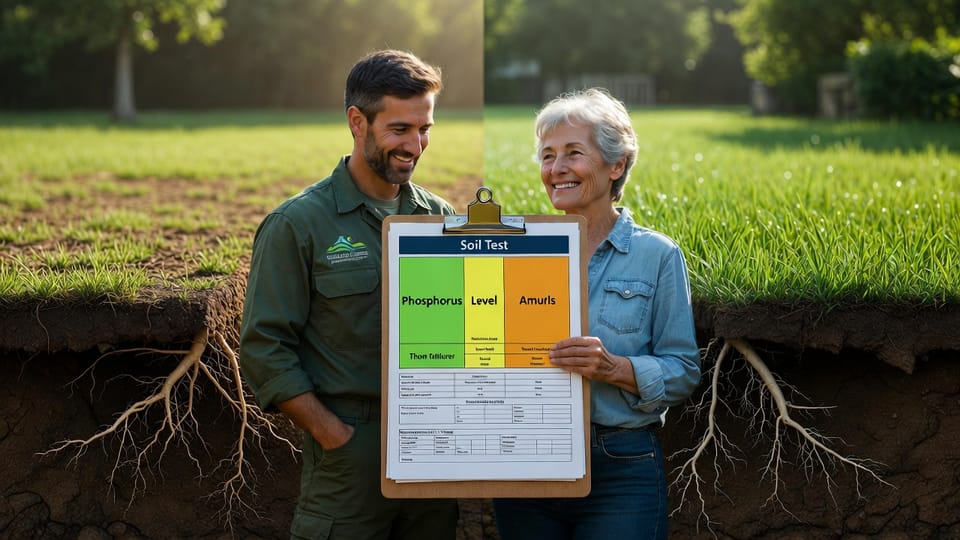
A professional soil analysis removes all guesswork. Laboratories measure available phosphate in parts per million and provide clear recommendations tailored to your grass type and region.
Typical interpretation ranges:
- Low (under 15 ppm): Apply high-P starter fertilizer
- Optimal (25–50 ppm): Use maintenance formulas only
- High (above 50 ppm): Avoid all phosphorus for 3–5 years
The report also flags pH, organic matter, and other nutrients so you address the full picture. Many services even include customized application maps that show exactly where – and how much – to apply.
Scheduling a soil test every 2–3 years keeps your lawn on track without over-fertilizing. It is the single smartest investment you can make for long-term lawn health.
Best Practices for Phosphorus Management in Your Lawn
Smart phosphorus management follows four simple rules that deliver outstanding results while protecting the environment:
- Always test first – never apply without current data
- Choose the right product – starter blends for new lawns, low-P formulas for ongoing care
- Time applications correctly – early spring or fall for cool-season grasses; late spring for warm-season
- Water lightly after spreading – to move granules into the root zone without runoff
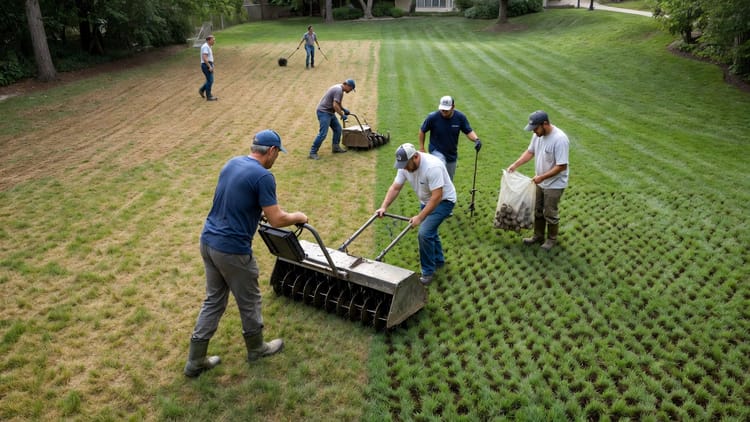
Core aeration and topdressing with compost further improve phosphorus availability naturally, reducing the need for any supplemental fertilizer.
These practices reassure every homeowner: you can achieve a show-stopping lawn without risking waterways or wasting money.
Solving the Phosphorus Puzzle for a Lifetime of Lawn Success
The phosphorus puzzle is solved the moment you shift from guesswork to guided decisions. Understanding its vital role in root development and bloom production, recognizing the natural abundance already present in most soils, and respecting the environmental risks of over-application empowers you to fertilize confidently.
High-phosphorus fertilizers remain valuable tools – but only for new lawns or documented deficiencies. For everything else, a balanced maintenance program keeps your turf thick, green, and resilient year after year.
Fertilize based on soil test, not guesswork. Get a soil analysis today and let the data guide you to the lawn you’ve always wanted. Your lawn – and local waterways – will thank you.
Discover Your Soil’s Phosphorus Secret – Call Today