The Pay-Per-Mile Insurance: An Option for Low-Mileage Drivers
In an era when many Americans drive far less than previous generations, traditional auto insurance often feels like paying full price for a service you barely use. Low-mileage drivers — whether they commute only a few days a week, enjoy retirement freedom, or maintain a second vehicle that rarely leaves the driveway — routinely overpay for coverage based on average mileage assumptions that simply do not reflect their reality.
Get Your Personalized Pay-Per-Mile Quote Today
Pay-per-mile insurance changes that equation. As a leading usage-based insurance alternative, it offers a fair, transparent way to insure your vehicle based on actual miles driven rather than estimates. This article provides a complete, authoritative guide to how pay-per-mile insurance works, who benefits most, and why it represents one of the smartest choices available for responsible drivers seeking lower premiums without sacrificing protection.
You deserve insurance that respects your lifestyle. With pay-per-mile insurance, you keep the peace of mind of full coverage while eliminating the waste of paying for miles you never travel.
Understanding Usage-Based Auto Insurance Alternatives
Usage-based insurance programs represent a modern evolution in auto coverage. Instead of relying solely on age, location, and driving record, these plans incorporate real-time data to customize premiums.
Several usage-based alternatives exist today:
- Pay-per-mile insurance focuses primarily on total distance driven.
- Telematics-based “pay-how-you-drive” programs track not only miles but also braking, acceleration, and speed.
- Hybrid snapshot programs combine short-term monitoring with traditional rating factors.
Among these options, pay-per-mile insurance stands out for its simplicity and direct appeal to low-mileage drivers. It removes the guesswork and rewards you for driving less — whether by choice or circumstance. Industry data consistently shows that drivers logging under 8,000–10,000 miles per year can achieve meaningful savings by switching to mileage-based plans, often reducing annual premiums by 30–60 % compared with conventional policies.
This approach aligns coverage with actual risk exposure. The less time your vehicle spends on the road, the lower the statistical chance of an accident or claim. Pay-per-mile insurance translates that reality into lower costs without compromising the comprehensive protection you expect.
How Pay-Per-Mile Insurance Works
Pay-per-mile insurance operates on a straightforward two-part structure that delivers both predictability and flexibility:
- A fixed base rate covers the vehicle and provides core liability, collision, and comprehensive protection regardless of mileage.
- A modest per-mile charge is added only for the actual miles you drive.
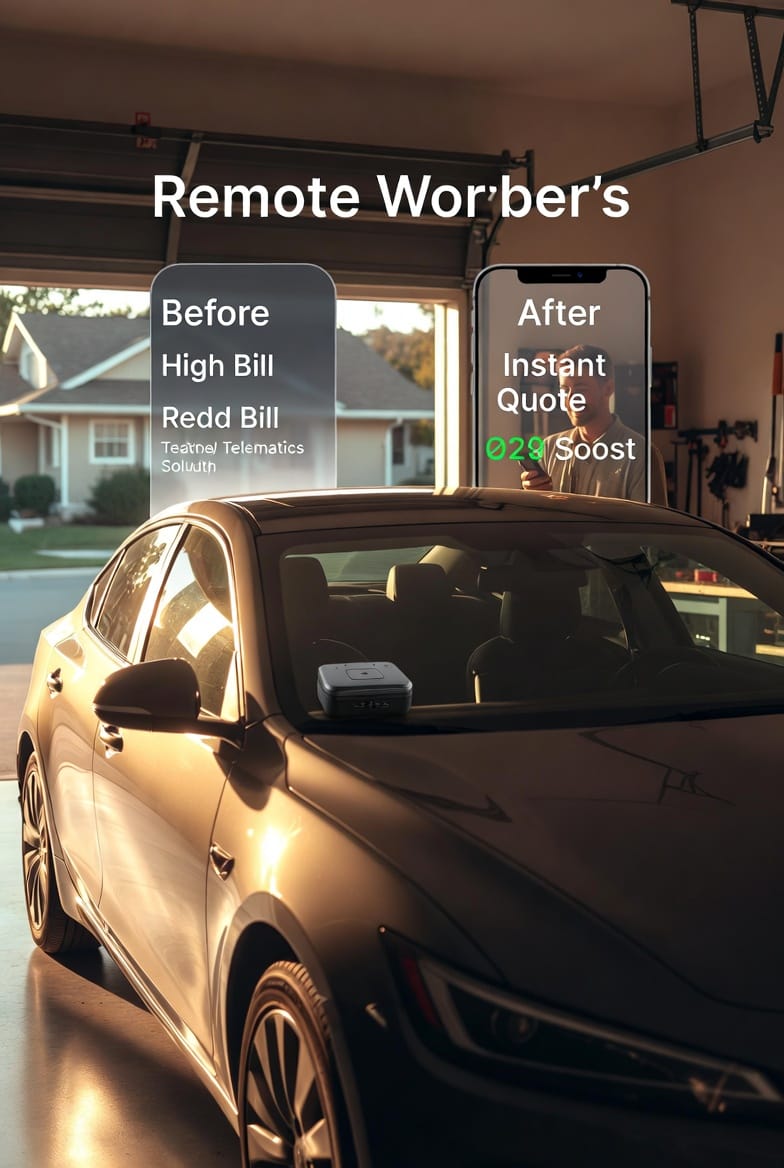
Installation is quick and non-intrusive. Most providers supply a small telematics device that plugs into your vehicle’s standard OBD-II port or, in newer models, pairs directly with a secure mobile app. The device simply records odometer readings or GPS-tracked mileage; it does not monitor speed, harsh braking, or location history in standard pay-per-mile plans.
Each month you receive a transparent bill: base rate plus the precise per-mile charge for verified miles driven. If you drive zero miles in a given month, you pay only the base rate — never more. Many programs also include a low-mileage cap or annual maximum, ensuring costs remain controlled even during occasional road trips.
The process is designed for convenience. No manual mileage reporting is required, and the technology is accurate to within a few miles. Best of all, you retain complete control: the device can be removed at any time if you decide to return to traditional coverage.
Low-mileage drivers especially appreciate this model because it eliminates the hidden subsidy built into conventional rates. You no longer subsidize high-mileage drivers who share the same risk pool.

Who Benefits Most from Pay-Per-Mile Insurance
Certain lifestyles align perfectly with pay-per-mile insurance. The program delivers maximum value to drivers whose vehicles spend more time parked than moving.
- Remote workers who traded daily commutes for home offices often see their annual mileage drop below 6,000 miles. Their cars remain in the garage most days, yet traditional insurers still charge the same rate as daily commuters.
- Retirees enjoy more flexible schedules and drive primarily for errands or leisure. Many log fewer than 5,000 miles annually while maintaining full coverage for occasional trips or emergencies.
- Stay-at-home parents frequently rely on a primary family vehicle for school runs and local errands while a second car sits idle for weeks at a time.
- Households with multiple vehicles benefit enormously when one car serves as a backup or seasonal vehicle. Why pay full mileage-based rates on a car that is driven only on weekends or vacations?
Each of these groups shares a common frustration: traditional policies treat all vehicles and drivers identically regardless of actual road time. Pay-per-mile insurance corrects that imbalance, delivering tailored rates that reflect real-world usage.
Real-World Savings and Cost Comparison
Consider a typical driver logging just 5,000 miles per year. Under a conventional policy in many states, annual premiums might average $1,400–$1,800 depending on vehicle, location, and driving record. With pay-per-mile insurance, the same driver could pay a base rate of approximately $400–$600 plus a per-mile fee of $0.03–$0.06, resulting in a total annual cost often under $800.
The difference is not trivial. Over five years, a low-mileage household could redirect thousands of dollars toward savings, family activities, or vehicle upgrades — all while enjoying identical or superior coverage levels.
These savings stem from actuarial fairness. Insurance companies use data showing that lower mileage correlates strongly with fewer claims. By pricing accordingly, pay-per-mile programs pass the savings directly to the policyholder.
Addressing Common Concerns with Confidence
Many drivers hesitate because they worry about technology, privacy, or unexpected costs. Rest assured: reputable pay-per-mile insurance providers prioritize security and simplicity.
Data is encrypted and used solely for mileage verification. No personal driving behavior beyond distance is tracked in pure pay-per-mile plans. You can review your mileage report anytime through a user-friendly portal, and most programs offer a grace period or low-mileage forgiveness if odometer readings occasionally vary.
Switching is straightforward. Coverage remains continuous, and many insurers allow you to test the program for 30–90 days with minimal commitment. If your driving habits change, you can revert to traditional coverage without penalty.
Taking the Next Step Toward Smarter Coverage
Transitioning to pay-per-mile insurance requires only a quick eligibility review and device installation — typically completed in under 30 minutes. The result is immediate peace of mind knowing your premium truly matches your lifestyle.

Don’t Pay for Miles You Don’t Drive
Pay-per-mile insurance represents more than a discount — it is a smarter, fairer way to protect what matters most. By aligning premiums with actual usage, it rewards responsible, low-mileage driving habits and frees up budget for the things you value.
If you drive less than average, now is the perfect time to explore your options. Contact a knowledgeable insurance professional today to review your current policy and see exactly how much you could save.
Don’t pay for miles you don’t drive.
Pay Only for the Miles You Actually Drive – Call Today