The Pantry Pest Invasion: Identifying and Eliminating Moths, Beetles, and Weevils from Your Food Storage
Discovering tiny winged insects fluttering around your kitchen or small bugs crawling in your flour can be alarming. These pantry pests—primarily Indian meal moths, flour beetles, and weevils—quietly invade food storage areas, contaminating dry goods and leading to costly waste. The good news? With proper identification, thorough elimination, and smart prevention strategies, you can reclaim your pantry and keep these invaders out for good.
Eliminate Pantry Moths & Beetles – Call Today!
Pantry pests thrive in warm, humid kitchens where grains, flours, cereals, nuts, and dried fruits provide ideal breeding grounds. Ignoring early signs allows populations to explode quickly. Acting promptly restores safety and peace of mind to your food storage.
Understanding Common Pantry Pests
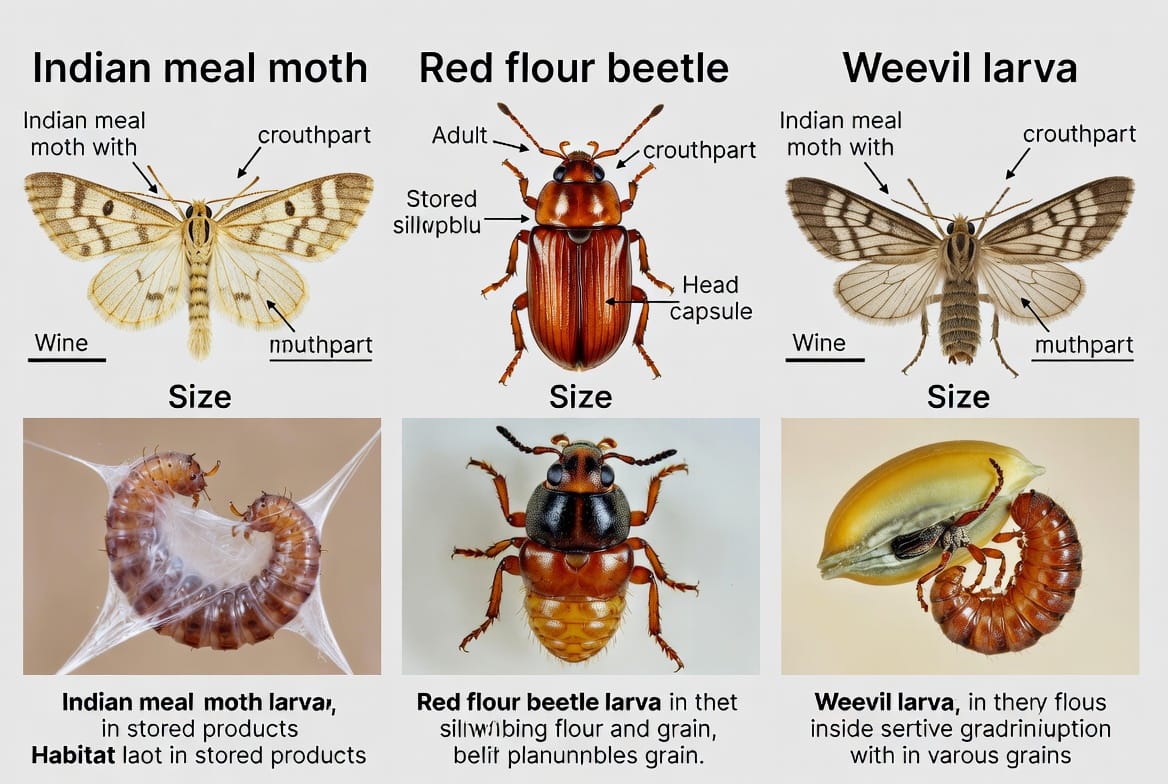
The most frequent culprits in kitchen infestations are Indian meal moths, red flour beetles (and confused flour beetles), and granary or rice weevils. Each has distinct appearances and behaviors that make identification straightforward once you know what to look for.
- Indian Meal Moths (Plodia interpunctella): Adults are small (about 1/2 inch wingspan), with grayish wings tipped in coppery-red. They fly erratically, often near ceilings. The real damage comes from creamy-white larvae that spin silky webbing over food surfaces, clumping grains together.
- Flour Beetles (Tribolium species): Tiny (1/8 inch), reddish-brown, and elongated. Adults move actively and are often seen crawling on walls or shelves. Larvae are small, worm-like, and feed on broken grains or flour dust.
- Weevils: Snout-nosed beetles (1/8–1/4 inch) with bent antennae. Rice weevils have four reddish spots on wing covers; granary weevils are uniformly dark. They bore into whole grains, leaving small exit holes.
Early detection relies on recognizing these traits before widespread contamination occurs.
Signs of Infestation in Your Pantry
Pantry pests rarely announce their arrival loudly, but subtle clues reveal their presence:
- Small moths flying in zigzag patterns around the kitchen, especially in the evening
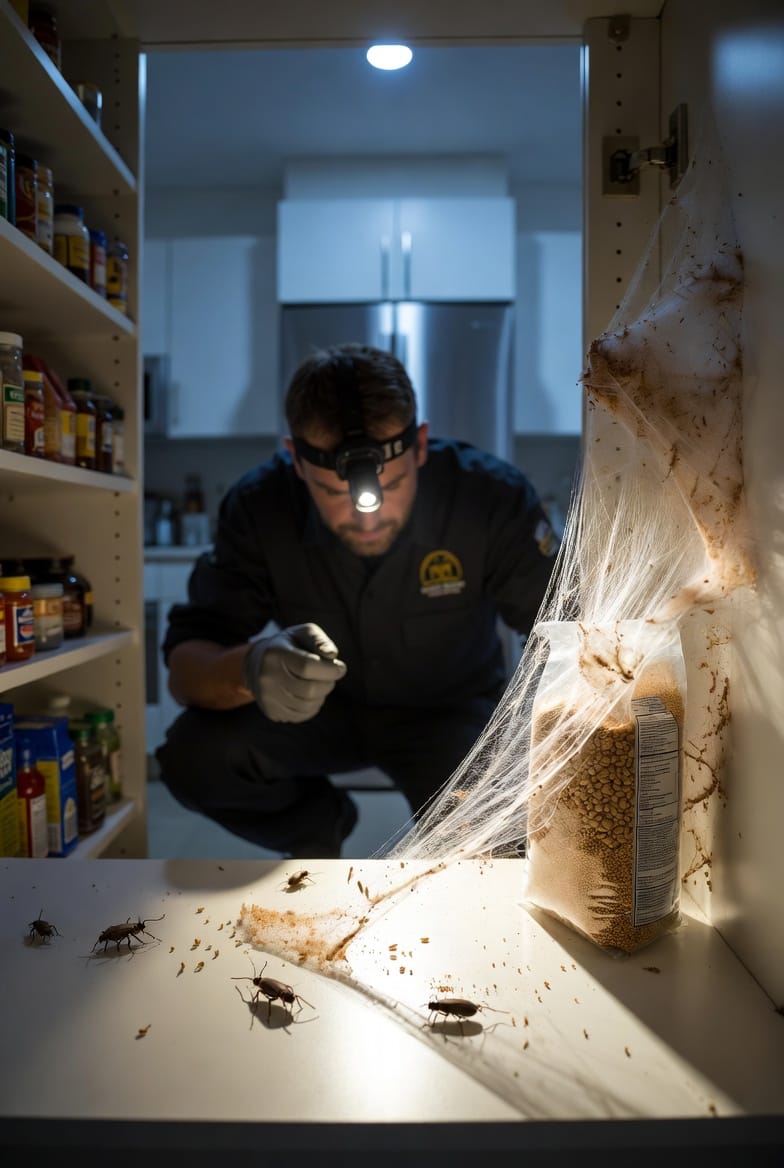
- Fine silky webbing draping over packages or corners of shelves
- Tiny holes in cardboard boxes or plastic bags
- Clumped or caked grains due to larval silk
- Small beetles or larvae inside opened flour, cereal, or pet food
- Powdery residue or frass (insect droppings) at the bottom of containers
These indicators often appear first in rarely used items like spices, baking supplies, or birdseed stored for months.
Step-by-Step: Finding and Discarding Infested Items
Once you suspect an infestation, immediate action limits spread. Follow this systematic approach:
- Empty the entire pantry — Remove every item from shelves, including those that appear sealed.
- Inspect each package closely — Look inside bags, boxes, and jars for live insects, larvae, webbing, or damage.
- Discard heavily infested goods — Place suspect items in sealed plastic bags and dispose of them outside immediately to prevent re-entry.
- Freeze salvageable items — For mildly affected dry goods, seal in bags and freeze at 0°F for 4–7 days to kill all life stages.
- Vacuum thoroughly — Use a crevice tool to suck up larvae, eggs, and debris from shelves, cracks, and corners. Empty the vacuum outside.
- Wash surfaces — Wipe shelves with hot, soapy water or a mild vinegar solution to eliminate residues and pheromones.
This thorough purge eliminates the current generation and breaks the breeding cycle.
Long-Term Prevention Strategies
Prevention beats reaction every time. Implement these proven habits to make your pantry inhospitable to pests:
- Use airtight containers — Transfer all grains, flours, cereals, and dried goods into glass, metal, or heavy-duty plastic containers with tight-fitting lids. This blocks adult moths from laying eggs and larvae from escaping.
- Practice first-in, first-out rotation — Label containers with purchase dates and use older items first to avoid long-term storage.
- Store properly — Keep the pantry cool and dry; avoid warm spots near ovens or appliances.
- Inspect new purchases — Check grocery items before storing—transfer bulk buys to containers right away.
- Clean regularly — Wipe spills immediately and vacuum shelves monthly to remove food particles.
- Consider bay leaves or natural repellents — Place whole bay leaves in containers as a mild deterrent (though not a substitute for proper storage).
Consistency with these steps dramatically reduces reinfestation risks.

When to Call Professional Help
DIY methods work well for minor issues, but severe or recurring infestations often require expert intervention. Professional pest control technicians use targeted, safe treatments to reach hidden areas, eliminate all life stages, and provide tailored prevention plans.
Don't let pantry pests compromise your family's food safety. Protect your food supply today.
Get Rid of Pantry Pests for Good – Call Now!