The Oven Igniter Failure: Why Your Gas Oven Won't Heat and How to Fix It
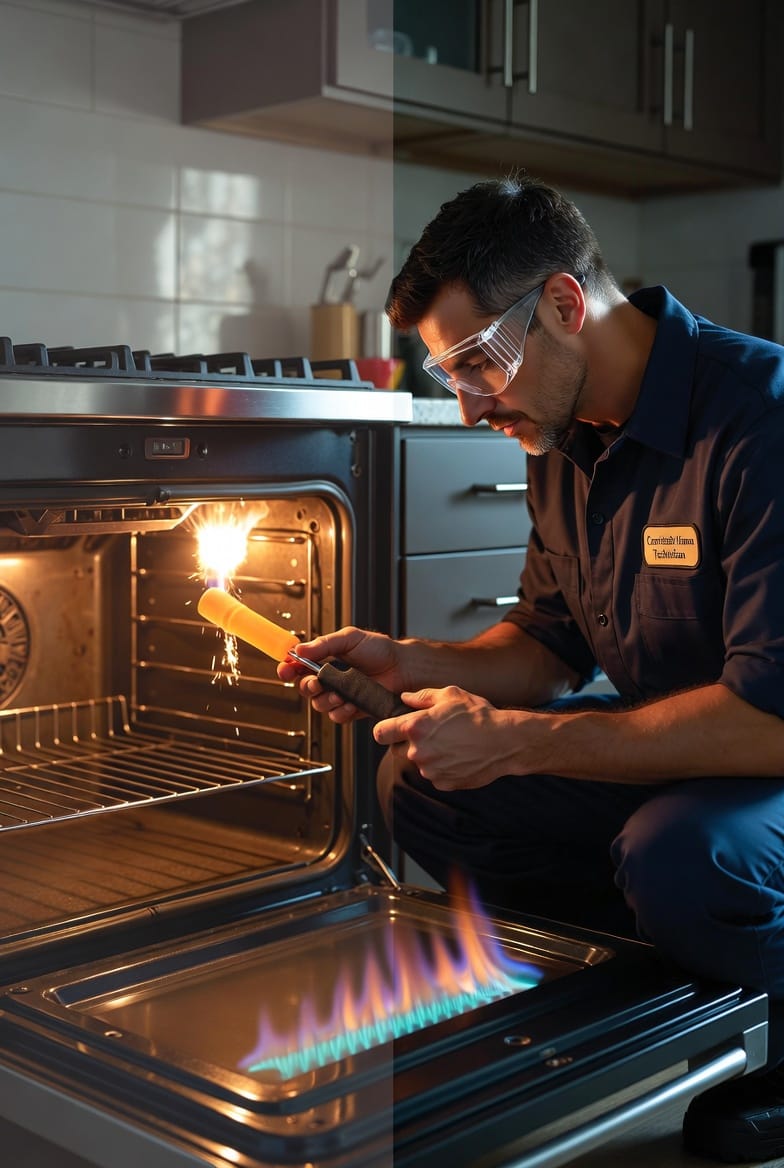
Gas ovens deliver consistent, powerful heat that many home cooks rely on every day. Yet one of the most frustrating moments in any kitchen is when you turn the dial, hear the familiar click, and… nothing happens. The oven won’t heat, even though the broiler or stovetop burners work fine.
Fix Your Oven Today – Call Now for Igniter Replacement!
This common issue almost always traces back to a single small but critical component: the oven igniter. Far from a minor inconvenience, an oven igniter failure can disrupt meal planning, waste food, and even pose safety concerns if left unaddressed. The good news? This problem is well understood, highly diagnosable, and completely fixable by trained professionals.
In this comprehensive guide, we walk you through exactly how the gas oven igniter functions, the clear warning signs of failure, why a weak igniter cannot open the gas valve, and the safest, most effective path to restoration. Whether you are troubleshooting at home or ready to schedule expert help, you will finish this article confident and informed.
How a Gas Oven Igniter Actually Works
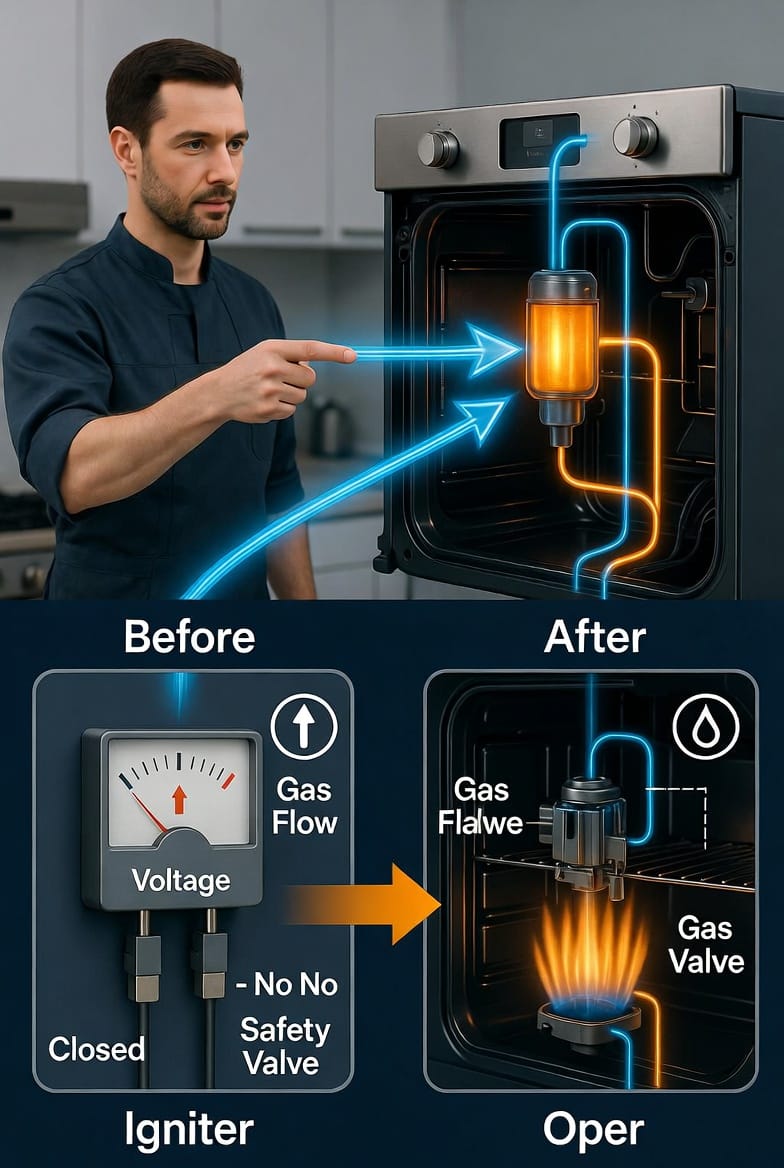
At the heart of every modern gas oven sits a simple yet brilliantly engineered safety device: the glow-bar igniter, also called a hot-surface igniter. Unlike older pilot-light systems that burned continuously, today’s igniters only activate when needed, making them far more energy-efficient and safer.
Here is the precise sequence that occurs every time you set the oven temperature:
- Electricity flows to the glow-bar igniter.
- The ceramic igniter element rapidly heats to approximately 1,800–2,500 °F (bright orange glow).
- Once the igniter reaches the correct temperature, it draws enough current to energize the gas safety valve.
- The valve opens, releasing gas to the burner.
- The super-heated igniter instantly ignites the gas, producing a clean blue flame.
This current-draw mechanism is the built-in safety feature. A weak or failing igniter never generates enough amperage to open the valve, so gas never flows—even if the igniter still glows faintly. That is why you can see an orange glow inside the oven yet no heat is produced. Understanding this process removes the mystery and explains every symptom you may be experiencing.
Key term to remember: The oven igniter is not a spark device; it is a high-resistance heating element that must reach a precise temperature before the gas safety valve will open. Any drop in performance—whether from age, corrosion, or electrical fatigue—breaks the entire heating cycle.
Common Causes of Oven Igniter Failure
Oven igniters typically last 5–10 years, but several factors accelerate wear:
- Repeated thermal cycling that gradually degrades the ceramic element
- Power surges or inconsistent household voltage
- Moisture or grease buildup inside the oven cavity
- Manufacturing variations in older models
Regardless of the root cause, the result is the same: the gas oven won’t heat properly, and the only reliable long-term solution is professional oven igniter replacement.
Recognizing the Signs of Oven Igniter Failure
Early detection prevents bigger headaches. Watch for these unmistakable symptoms:
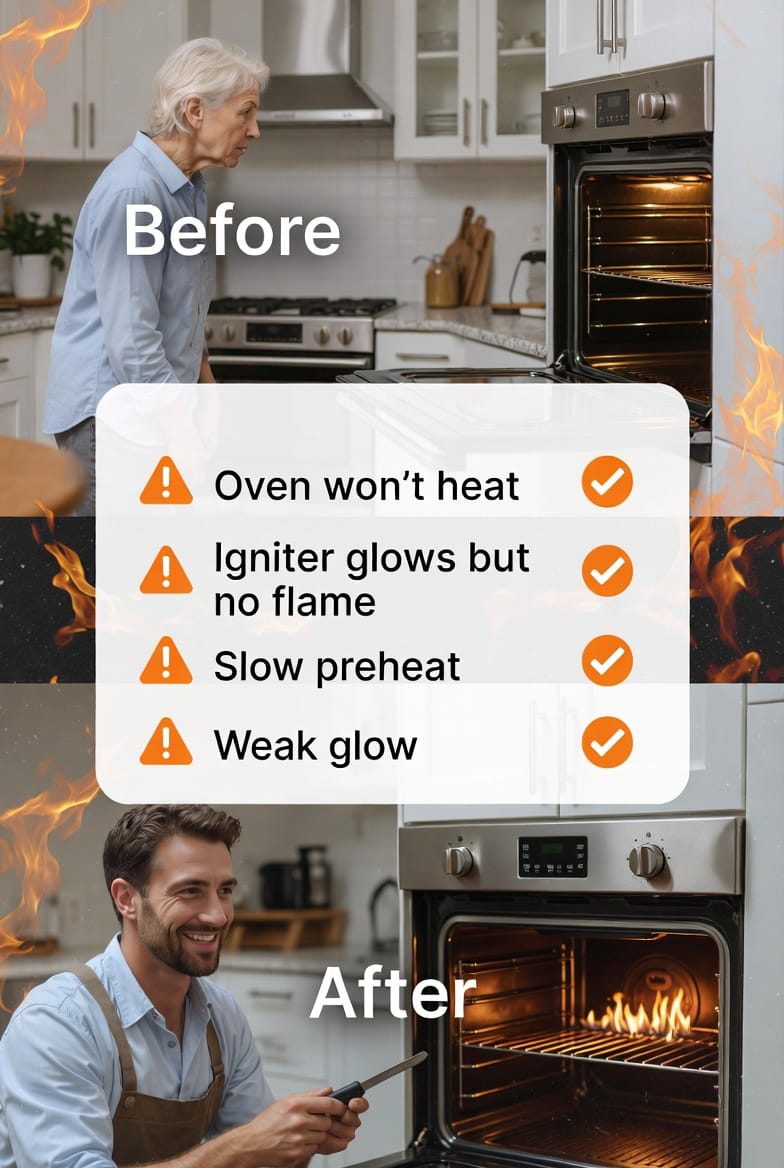
- Oven won’t heat at all despite the igniter glowing orange
- Igniter glows but no flame appears after several minutes
- Extremely slow preheat times—30 minutes or longer instead of the usual 8–12 minutes
- Weak or dim glow that never reaches bright orange
- Clicking sound from the gas valve attempting to open but failing
- Intermittent heating that starts strong then drops off
If your gas oven shows any combination of these signs, the oven igniter is almost certainly the culprit. Continuing to use a failing igniter wastes energy and risks incomplete combustion.
Why a Weak Igniter Will Never Open the Gas Valve
A common misconception is that “as long as it glows, the oven should work.” In reality, the gas safety valve is engineered to stay closed until the igniter draws a specific amount of current—typically 2.5–3.5 amps. A worn igniter may still produce a visible glow (around 1–2 amps) but never reaches the threshold required to open the valve. Gas remains safely locked away.
This design prevents dangerous raw gas accumulation. It also means visual inspection alone is not enough; accurate diagnosis requires both visual confirmation of the glow and electrical testing with a multimeter. Only a trained technician can perform this safely and confirm whether replacement is the correct fix.
Safe Diagnosis and Professional Replacement Process
Attempting DIY repair on a gas appliance carries real risks—gas leaks, electrical shock, and fire hazards among them. For your safety and peace of mind, we strongly recommend professional service.
A certified technician will:
- Shut off gas and power at the source
- Remove the oven racks and bottom panel for full access
- Disconnect the old igniter wiring (usually two simple spade connectors)
- Install the exact OEM or high-quality compatible replacement igniter
- Test amperage draw and verify full valve operation
- Reassemble and perform a complete heating cycle test
The entire process typically takes less than an hour in your home, restoring full oven function the same day.
Why Professional Oven Igniter Replacement Is the Smart Choice
While parts are available online, proper installation demands experience. Incorrect wiring, overtightening screws, or using the wrong amperage igniter can lead to repeated failures or safety issues. Professional service guarantees:
- Exact part match for your specific oven model
- Factory-calibrated safety testing
- Full warranty on both parts and labor
- Peace of mind that your kitchen is safe and efficient
Most importantly, you avoid the frustration of ordering the wrong part, struggling with tight spaces, and still facing the same problem a week later.
Preventive Maintenance to Extend Igniter Life
After repair, simple habits keep your new igniter performing longer:
- Wipe up spills immediately to prevent grease corrosion
- Avoid slamming the oven door
- Schedule annual professional appliance tune-ups
- Use the oven’s self-clean cycle sparingly, as extreme heat shortens component life
These small steps add years to your appliance’s reliable service.
Frequently Asked Questions About Oven Igniter Failure
Q: Can I temporarily use the oven if the igniter is glowing?
A: No. A glowing igniter that fails to ignite gas indicates the safety valve is not opening. Continuing use wastes energy and risks incomplete combustion.
Q: How long does an oven igniter last?
A: Most quality igniters provide 5–10 years of service with normal use. High-volume baking or frequent self-clean cycles can shorten this lifespan.
Q: Is it expensive to replace an oven igniter?
A: Professional replacement is surprisingly affordable and far less costly than purchasing a new oven. Same-day service is often available.
Q: Will my stovetop still work if the oven igniter fails?
A: Yes. The stovetop uses separate igniters, so you can continue cooking on the burners while the oven is repaired.
Q: Can I replace the igniter myself?
A: While possible for very experienced DIYers, the risks involved with gas lines make professional service the recommended and safest route for most homeowners.
Q: What should I do right now if my gas oven won’t heat?
A: Turn the oven off, note the symptoms, and contact a qualified technician immediately. Do not attempt to force ignition.
Restoring Reliability to Your Kitchen
A failing oven igniter is one of the most common yet easily resolved gas oven issues. Once you recognize the signs—oven won’t heat, glowing but no flame, slow preheat, or weak glow—the solution is straightforward: professional oven igniter replacement.
A weak igniter will never open the gas valve, but expert service restores full heating performance quickly, safely, and with a solid warranty.
Don’t let a small component disrupt your daily routine. Our experienced technicians arrive equipped, diagnose accurately, and leave your oven heating perfectly again—often the same day.
Your kitchen deserves to work exactly as designed. Trust the professionals who handle oven igniter failure every day and get back to cooking with confidence.
Expert Oven Igniter Replacement – Call Today!