The Refrigerator Thermistor: How This Small Sensor Controls Temperature
In today’s advanced refrigerators, temperature stability is no longer left to chance. At the heart of precise cooling sits one tiny but critical component: the refrigerator thermistor. This small sensor acts as the eyes and ears of your appliance’s control system, constantly monitoring internal conditions and communicating directly with the electronic control board. When it fails, the entire cooling cycle can spiral out of balance—leading to spoiled food, higher energy bills, and unnecessary stress.
Restore Perfect Cooling Today – Call for Thermistor Repair
At Domain House Appliance Repair, we see refrigerator thermistor failures more often than most homeowners realize. This common failure point is frequently overlooked until symptoms become obvious. Understanding how the thermistor works, recognizing the warning signs, and knowing when professional replacement is essential can save you hundreds in food loss and prevent costly compressor damage. In this comprehensive guide, we explain everything you need to know about this vital sensor and why expert thermistor replacement restores peace of mind.
What Exactly Is a Refrigerator Thermistor?
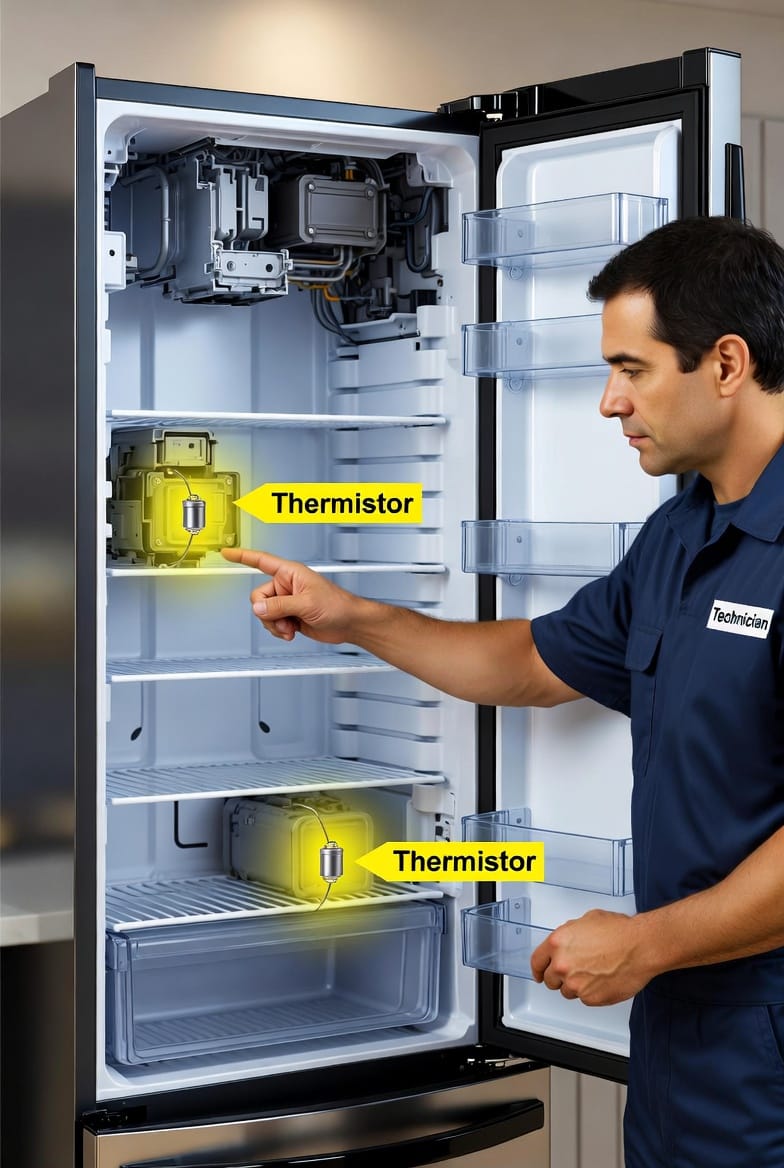
A refrigerator thermistor is a temperature-sensitive resistor designed specifically for appliance use. Unlike traditional thermostats that rely on mechanical switches, a thermistor provides continuous, highly accurate electronic feedback. Most modern refrigerators use NTC (Negative Temperature Coefficient) thermistors, meaning their electrical resistance decreases as temperature rises and increases as temperature falls.
This precise resistance change allows the control board to interpret real-time conditions inside both the fresh food and freezer compartments. The thermistor does not “decide” when the compressor turns on or off; instead, it supplies the data that enables the board to make intelligent decisions about cooling cycles, defrost timing, and fan operation.
Because the component is small, inexpensive to manufacture, and sealed within the appliance’s wiring harness, many homeowners never even know it exists—until it stops working correctly.
How the Thermistor Measures Temperature and Signals the Control Board
The science behind the refrigerator thermistor is elegantly simple yet remarkably effective. As air temperature inside the refrigerator changes, the thermistor’s internal semiconductor material responds instantly. This creates a measurable shift in electrical resistance that the control board translates into temperature readings.
The control board then compares these readings against the user-selected settings. If the compartment is too warm, the board signals the compressor and evaporator fan to run. If the temperature drops below the target range, the system cycles off. This constant communication ensures energy-efficient operation and consistent cooling throughout the appliance.
When the refrigerator thermistor functions properly, you enjoy stable temperatures, minimal frost buildup, and lower electricity costs. When it fails, however, the control board receives inaccurate or nonexistent data, causing the system to operate blindly. The result? Erratic cooling that can swing from freezing to warm in a matter of hours.
Common Symptoms of a Failing Refrigerator Thermistor
Recognizing the early warning signs of a bad thermistor can prevent major headaches. Here are the most frequent symptoms we encounter during service calls:
- Food freezing in the fresh food section – Items in the refrigerator compartment become rock-hard because the control board receives false “too warm” signals and keeps the compressor running excessively.
- Refrigerator compartment too warm – Milk spoils quickly, produce wilts, and leftovers reach unsafe temperatures while the freezer remains icy cold.
- Continuous compressor running – The appliance never cycles off, leading to higher energy bills, louder operation, and potential overheating of the compressor.
- Erratic temperature swings – One day the unit feels perfect; the next day sections are either frozen or warm without any change in settings.
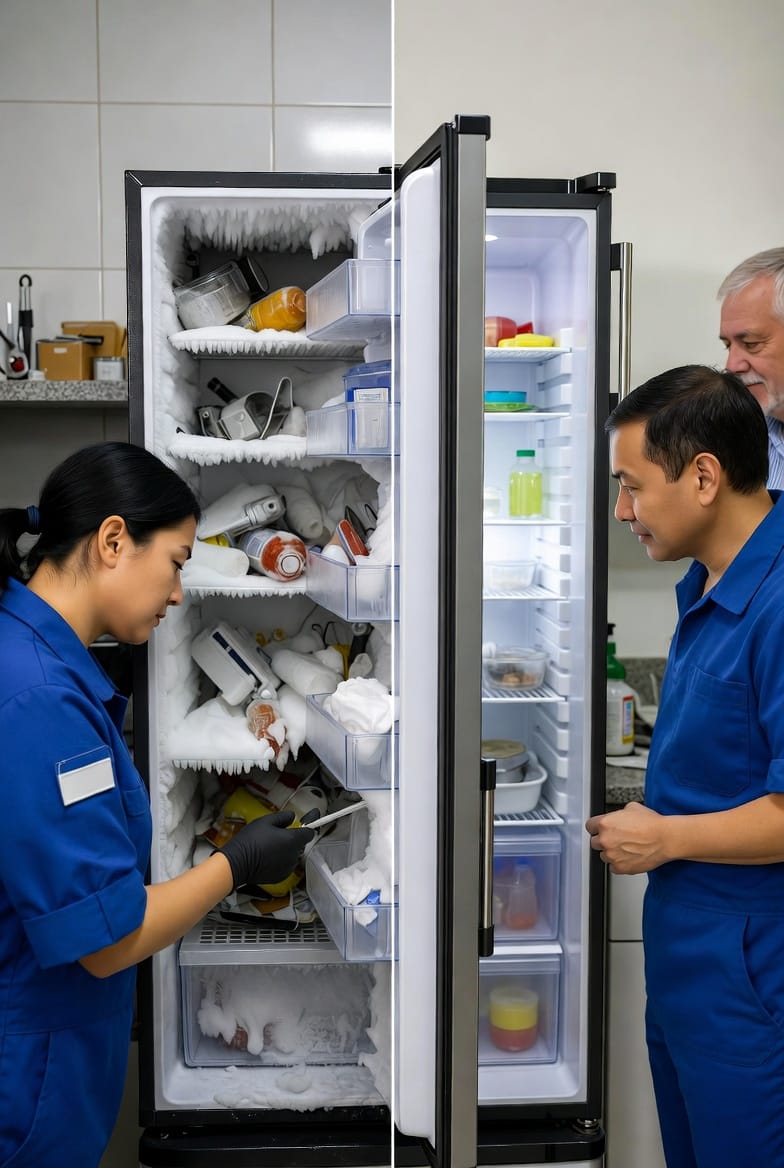
- Excessive frost buildup or inconsistent defrost cycles – The thermistor’s faulty data disrupts the automatic defrost system.
These symptoms often appear gradually, which is why many homeowners initially blame the thermostat or assume the refrigerator simply needs “more time to cool.” In reality, the refrigerator thermistor is frequently the hidden culprit.
Why Thermistors Fail and the Risks of Ignoring the Problem
Thermistors are built for durability, yet they operate in a harsh environment of constant temperature fluctuation, moisture, and vibration. Over years of service, the sensor’s internal material can degrade, wiring connections may corrode, or physical damage from ice buildup can occur.
Ignoring a faulty refrigerator thermistor carries real risks:
- Food safety concerns – Improper temperatures allow bacteria to multiply faster than expected.
- Increased energy consumption – A continuously running compressor can add 30-50% to your monthly electric bill.
- Premature compressor failure – The hardest-working part of your refrigerator suffers from overwork and may fail long before its expected lifespan.
- Voided warranty issues – Some manufacturers require professional diagnosis and repair for sensor-related problems to maintain coverage.
Professional intervention ensures the root cause is correctly identified rather than masked by temporary fixes.
Diagnosing a Faulty Thermistor with Professional Tools
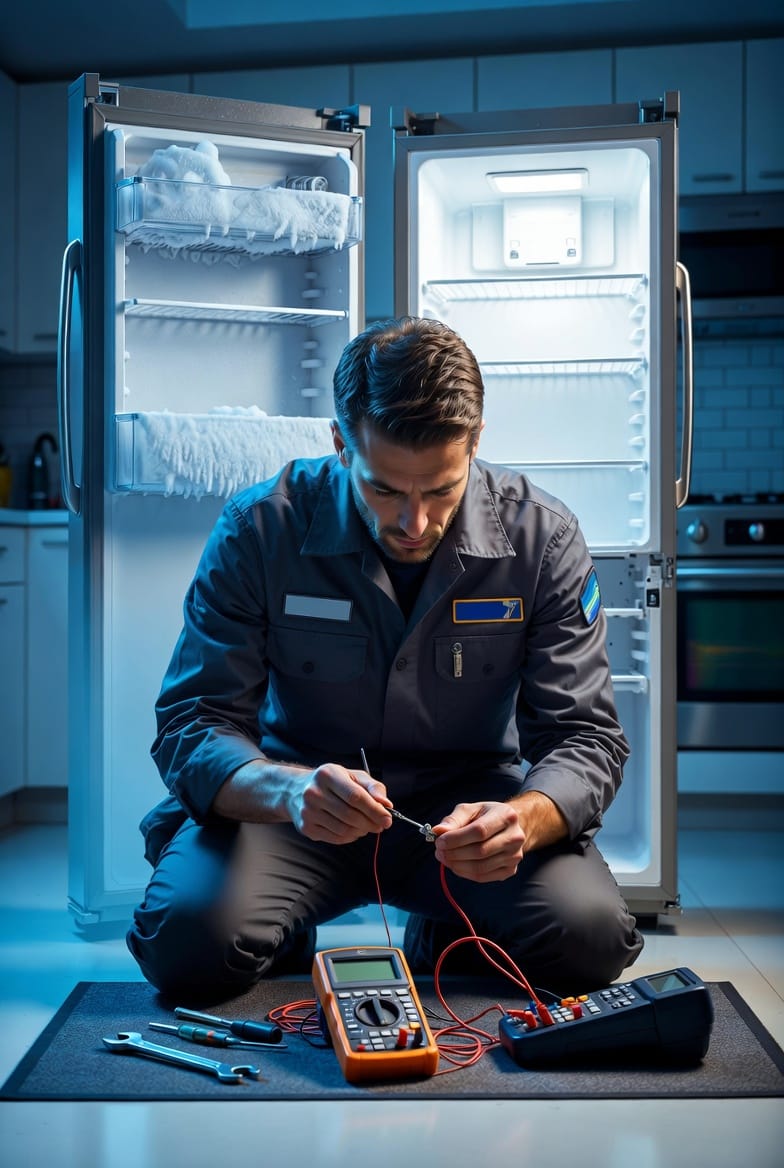
Accurate diagnosis requires more than guesswork. A qualified technician uses a digital multimeter to measure the thermistor’s resistance at known temperatures and compares the readings against manufacturer specifications. This quick, non-invasive test confirms whether the sensor is within tolerance or has failed open or shorted.
Homeowners should never attempt to bypass or “jump” the thermistor, as this can cause permanent damage to the control board. Trusting a trained professional protects both your appliance and your safety.
The Professional Thermistor Replacement Process
Replacing a refrigerator thermistor is a precise procedure best left to experienced technicians. The process typically includes:
- Safely unplugging the appliance and removing necessary panels or shelves for access.
- Carefully disconnecting the old sensor from its wiring harness without damaging surrounding components.
- Installing the new OEM-spec thermistor in the exact original location to ensure proper airflow and readings.
- Securing all connections, reassembling panels, and performing a full system test.
- Verifying stable temperatures in both compartments over multiple cycles.
Because thermistor placement varies by model and brand, professional knowledge prevents installation errors that could lead to repeated failures. At Domain House Appliance Repair, every replacement includes a post-service performance check and a clear explanation of the work performed.
Why DIY Replacement Is Rarely Recommended
While some online tutorials suggest homeowners can swap the sensor themselves, the risks often outweigh the savings. Incorrect placement, damaged wiring, or using non-OEM parts can trigger error codes, damage the control board, or create ongoing temperature instability. Professional service guarantees the correct part, proper installation, and full system calibration—ensuring your refrigerator operates exactly as the manufacturer intended.
Maintaining Your Refrigerator Thermistor for Long-Term Reliability
Prevention is always better than repair. Simple habits help extend the life of your thermistor and the entire cooling system:
- Keep both compartments clean and free of obstructions that block airflow.
- Avoid overloading shelves, which restricts air circulation around the sensor areas.
- Schedule annual professional maintenance to catch minor issues before they become major failures.
- Never force doors closed or overload the appliance beyond its designed capacity.
With proper care, your refrigerator thermistor can provide reliable service for many years.
Accurate Temperature Starts with a Good Sensor
Your refrigerator works hard every day to protect your family’s food and health. When the refrigerator thermistor fails, even the most advanced appliance cannot perform its job effectively. Recognizing the symptoms early and choosing professional thermistor replacement restores confidence in your appliance and prevents expensive secondary damage.
At Domain House Appliance Repair, our certified technicians specialize in precise sensor diagnostics and replacement across all major brands. We respond quickly, explain every step clearly, and stand behind our work with reliable parts and workmanship.
Accurate temperature starts with a good sensor.
If your refrigerator is showing signs of temperature instability, do not wait until food spoils or the compressor fails.
Our team is ready to restore reliable cooling to your home—quickly, professionally, and with the care your appliance deserves.
Don’t Let a Bad Thermistor Ruin Your Food – Call Now!