The Organic Transition: A Step-by-Step Plan to Convert Your Lawn to Chemical-Free Care
Homeowners across the country are discovering the power of chemical-free lawn care. Moving away from synthetic products protects your family, pets, and local waterways while building a lawn that stays greener with less work over time. This pragmatic, multi-year plan delivers a clear roadmap to reduce and eventually eliminate synthetic dependency. You will test and improve your soil, introduce beneficial microbes, switch to natural fertilizers, and manage weeds through proven cultural practices. The result is a resilient, living lawn ecosystem that thrives naturally.
Begin Your 3-Year Organic Journey – Free Consultation, Call Now
The organic transition is not an overnight project. It unfolds over three years with steady, confident steps. Expect visible changes each season as your soil biology strengthens. Early on, the lawn may look slightly uneven while residual synthetics flush out, but patience brings stronger roots, better drought tolerance, and fewer pests. By year three, most homeowners report a lawn that needs less mowing, less watering, and almost no intervention. This guide walks you through every phase with actionable steps, realistic timelines, and reassuring guidance so you feel confident at every stage.
Why Make the Switch to Organic Lawn Care?
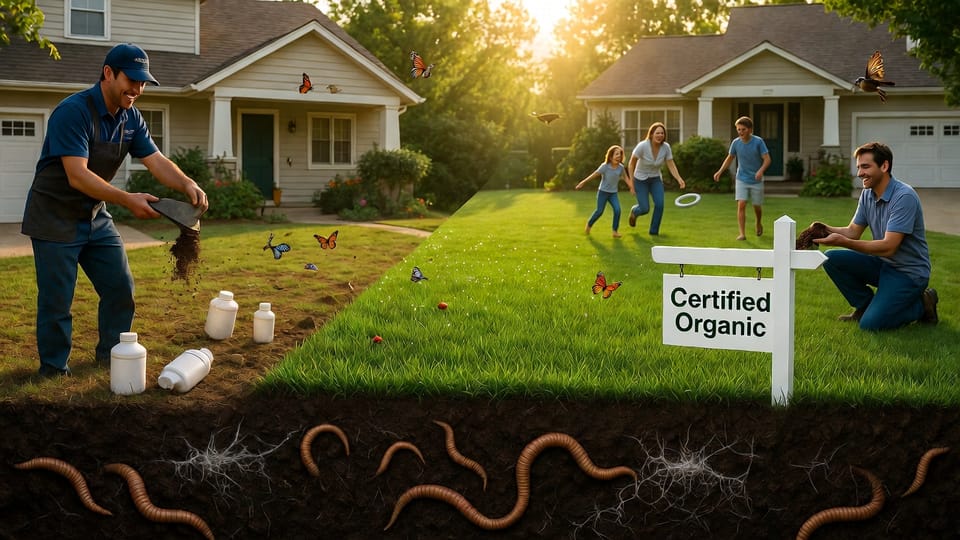
Synthetic fertilizers and pesticides deliver quick green-up but harm the very foundation of your lawn. They kill beneficial microbes that naturally cycle nutrients, compact soil over time, and run off into streams, affecting aquatic life. Families notice fewer skin irritations and respiratory issues once chemicals are removed. An organic lawn supports pollinators, improves carbon sequestration, and creates a safer play space for children and pets.
The transition rewards you with a self-sustaining system. Healthy soil holds moisture longer, resists disease, and grows thick turf that crowds out weeds naturally. This guide focuses on proven methods that deliver lasting results without shortcuts.
The Three-Year Roadmap at a Glance
A successful organic transition follows a logical progression:
- Year 1 – Focus on assessment and soil foundation building. Reduce synthetics by 50–70 % while introducing organic matter and microbes.
- Year 2 – Strengthen biology and refine cultural practices. Weed pressure drops naturally as turf density increases.
- Year 3 – Full maintenance mode. Your lawn is now resilient, requiring minimal inputs and delivering professional-level beauty.
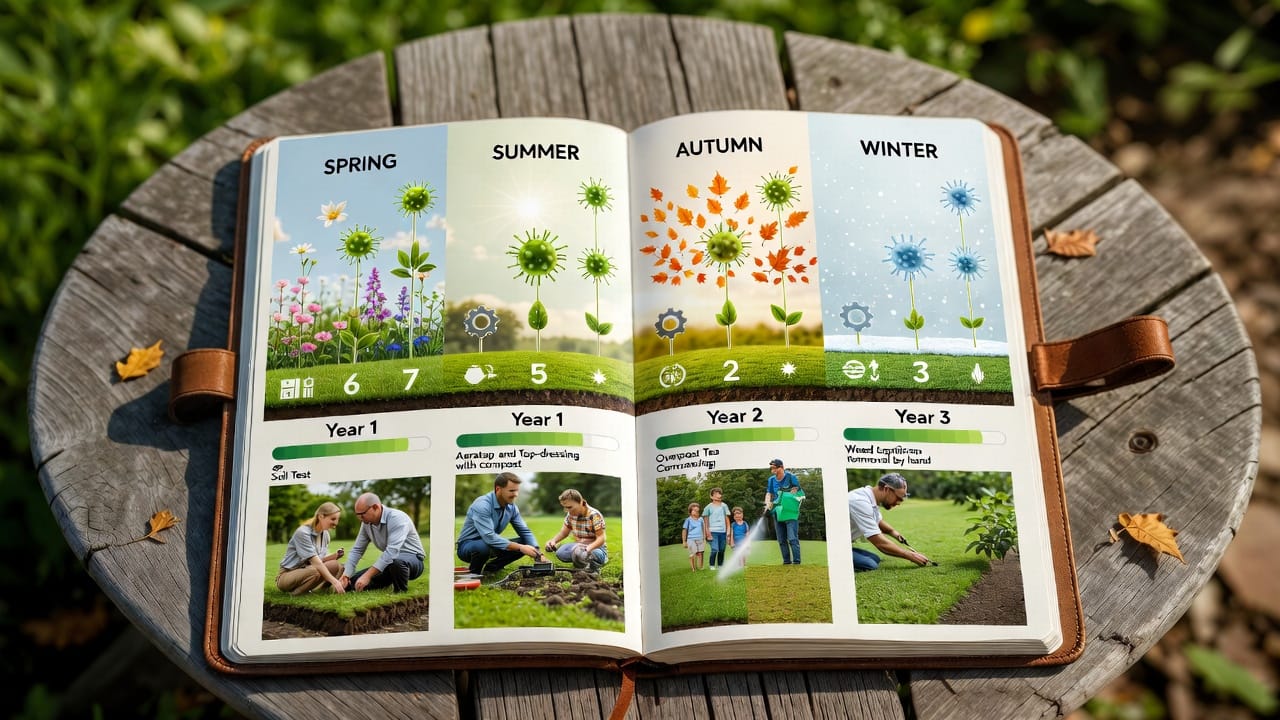
Follow the seasonal actions in the calendar above and adjust based on your soil test results and local climate.
Step 1: Begin with Professional Soil Testing
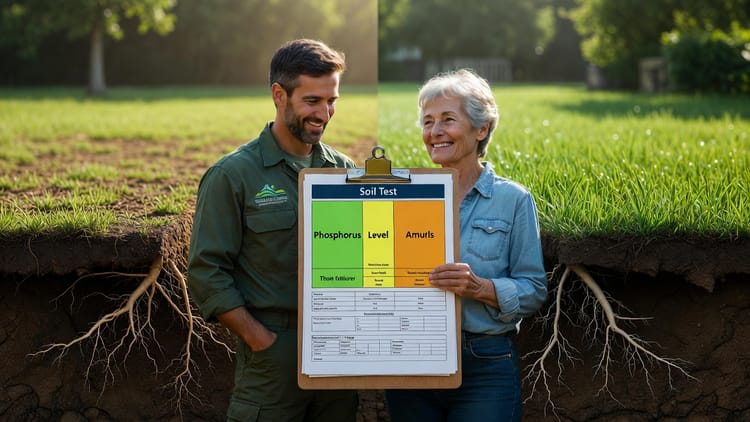
Every successful transition starts underground. Soil testing reveals pH, nutrient levels, organic matter percentage, and microbial activity. Aim for pH between 6.0 and 7.0 for most grasses. Organic matter should reach at least 5–8 % for optimal biology.
Collect samples from 10–15 random spots across the lawn, mix thoroughly, and send to a reputable lab. Many universities and private labs offer organic-focused reports. Review results carefully: low organic matter means you will need generous compost applications; phosphorus deficiencies respond well to compost and kelp.
Retest every spring for the first three years. Each test guides precise amendments and confirms your progress. Homeowners who skip this step often waste time and money applying the wrong products.
Step 2: Introduce Beneficial Microbes Early
Healthy soil teems with life. Beneficial microbes – mycorrhizal fungi, nitrogen-fixing bacteria, and beneficial nematodes – unlock nutrients, fight disease, and improve root depth. Synthetic products previously suppressed these organisms, so reintroducing them accelerates recovery.
Apply high-quality mycorrhizal inoculants at seeding or overseeding. Brew aerated compost tea every four to six weeks during the growing season: mix mature compost with unsulfured molasses and beneficial bacteria culture, aerate for 24 hours, then spray evenly. Top-dress with ¼ inch of finished compost twice per year to feed the microbes continuously.
Within one growing season, you will notice deeper green color and improved drought resistance as roots explore more soil volume.
Switching to Organic Fertilizers
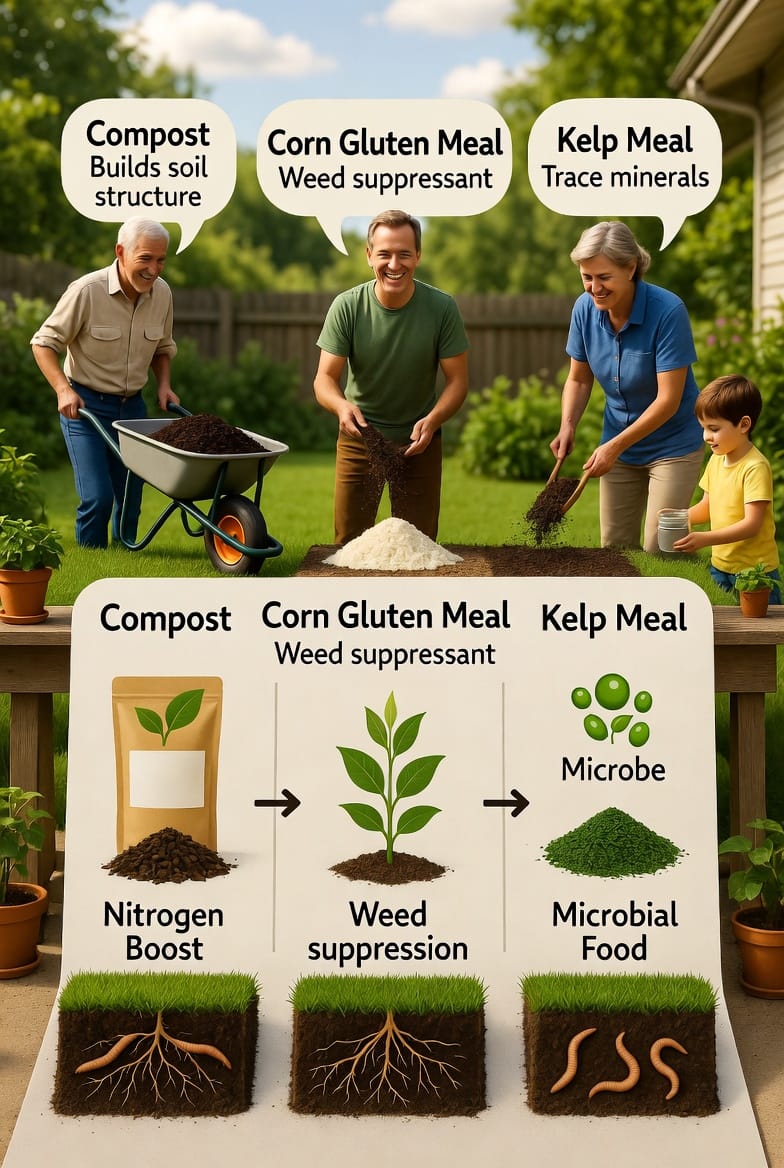
Replace synthetic quick-release nitrogen with slow-release natural sources that feed both grass and soil life. Focus on these proven organic amendments:
- Compost – Supplies balanced nutrients, improves soil structure, and introduces diverse microbes.
- Corn gluten meal – Acts as a natural pre-emergent weed suppressor while providing nitrogen.
- Kelp meal – Delivers trace minerals, growth hormones, and stimulates root development.
Apply compost at ½–1 inch depth in spring and fall. Spread corn gluten meal at 20 pounds per 1,000 square feet in early spring before weed seeds germinate. Kelp meal at 1–2 pounds per 1,000 square feet boosts stress resistance before summer heat.
These products release nutrients gradually, preventing burn and runoff. Your lawn greens steadily rather than in dramatic surges, creating even color and stronger cell walls.
Managing Weeds with Cultural Practices
Weeds thrive in weak, chemically dependent turf. Cultural practices create conditions where desirable grass dominates:
- Mow high (3–4 inches) to shade soil and encourage deep roots.
- Leave clippings on the lawn to return nitrogen and organic matter.
- Overseed bare spots every fall with locally adapted grass mixes.
- Water deeply but infrequently to promote drought-tolerant roots.
- Hand-pull persistent weeds before they set seed.
Corn gluten meal provides an extra layer of prevention. Within two seasons, weed pressure typically drops by 70–80 % as the lawn becomes thicker and healthier.
Year-by-Year Detailed Action Plan
Year 1 – Foundation Building
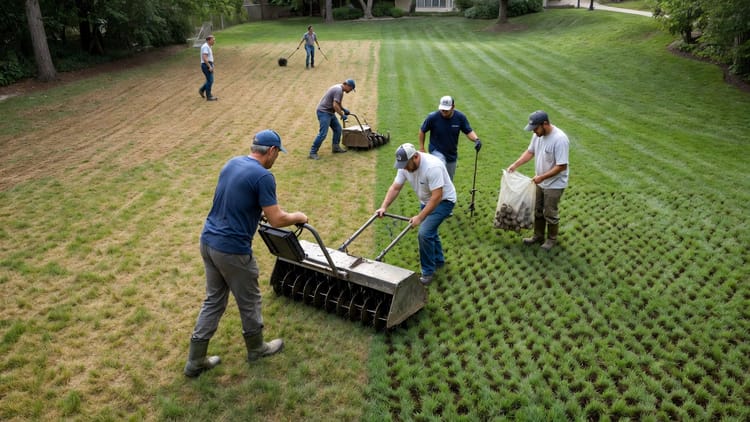
Spring: Soil test, aerate compacted areas, apply mycorrhizal inoculant and ½ inch compost.
Summer: Mow high, water deeply, spray compost tea monthly, reduce synthetic fertilizer by half.
Fall: Overseed, top-dress with compost, apply kelp meal.
Winter: Plan next year’s amendments based on soil results.
Year 2 – Strengthening Biology
Spring: Light aeration if needed, full organic fertilizer program using compost and kelp, pre-emergent corn gluten.
Summer: Monitor for even color, continue compost tea, introduce beneficial nematodes if grubs appear.
Fall: Heavy overseeding, ¾ inch compost top-dressing.
Winter: Mulch leaves into lawn for extra organic matter.
Year 3 – Maintenance Excellence
Spring: Maintenance soil test, minimal amendments based on results.
Summer: Enjoy the lawn – mowing and occasional compost tea suffice.
Fall: Light overseed and compost only where needed.
Winter: Rest and admire the resilient ecosystem you created.
Setting Realistic Expectations
The first season may show some thinning as residual chemicals leave the system. Weeds may temporarily increase before cultural practices take hold. By late summer of year one, most lawns show improved color and texture. Year two brings noticeable density and fewer weeds. By year three, the lawn requires 30–50 % less water and almost no pest treatments.
Celebrate small wins: deeper green after compost application, earthworms appearing after aeration, children playing safely without chemical warnings.
Monitoring Progress and Troubleshooting
Keep a simple lawn journal noting mowing height, amendment dates, and observations. Yellowing may signal nitrogen shortage – respond with compost tea. Patchy areas usually improve after overseeding and consistent organic top-dressing. If progress feels slow, consult professionals for customized adjustments.
Your Lawn’s Organic Journey Starts Today
You now possess a complete, pragmatic plan to create a chemical-free lawn that stays beautiful for decades. The organic transition builds soil health that lasts far longer than any synthetic quick fix.
Transform Your Lawn Organically – Call Our Specialists Today