The Not-At-Fault Accident: Navigating the Decision to File Through Your Own Policy or the Other Driver's

Imagine this: You're stopped at a red light when suddenly, another vehicle rear-ends yours. It's clear the other driver is at fault, but now you're faced with a critical choice—should you file the claim through their insurance or your own? This common dilemma can feel overwhelming in the heat of the moment, but understanding your options empowers you to make an informed decision. As experienced auto insurance advisors, we're here to guide you through the process with clarity and confidence. In this article, we'll explore the pros and cons of each approach, delve into key concepts like subrogation, and provide practical advice to protect your interests.
Protect Your Rates – Get Free Claim Guidance Today
Whether you're dealing with a minor fender-bender or something more serious, knowing how to navigate insurance claims ensures you get back on the road swiftly and fairly. Let's break it down step by step.
Understanding the Basics of Not-At-Fault Claims
In a not-at-fault accident, liability typically falls on the other party. This means their insurance should cover your damages, including vehicle repairs, medical expenses, and lost wages if applicable. However, the path you choose to file the claim can significantly impact your experience—from deductibles and processing speed to potential effects on your premiums.
Filing a claim isn't just about getting compensated; it's about minimizing hassle and long-term financial repercussions. Many drivers instinctively turn to the at-fault party's insurer, but there are scenarios where using your own policy makes more sense. We'll weigh these options to help you decide.
Why File Through the Other Driver's Insurance?
Opting to file with the at-fault driver's insurer is often the go-to choice for good reason. This approach aligns with the principle that the responsible party should bear the costs. Here's a closer look at the advantages:
- No Deductible Required: Unlike using your own collision coverage, you won't have to pay out-of-pocket upfront. The other insurer covers the full amount, saving you potentially hundreds or thousands of dollars.
- Preserves Your Claim History: Claims filed through another party's policy don't typically appear on your personal insurance record. This helps avoid rate increases that could stem from multiple claims on your policy.
- Direct Accountability: It holds the at-fault driver responsible, which can be satisfying and straightforward if liability is undisputed.
However, this route isn't always smooth. Delays can occur if the other insurer disputes fault or drags their feet on investigations. If the at-fault driver is uninsured or underinsured, you might end up shortchanged, forcing you to fall back on your own coverage anyway.
When to Use Your Own Collision Coverage
Sometimes, speed and certainty trump waiting on the other side. Filing through your own policy—specifically under collision coverage—can expedite the process, especially in tricky situations. Consider this option if:
- The Other Driver Is Uninsured or Underinsured: Without adequate coverage from them, your insurer steps in to handle repairs quickly, then pursues reimbursement.
- You Need Immediate Repairs: Your policy might allow you to get your vehicle fixed sooner, avoiding prolonged downtime.
- Disputed Liability: If fault isn't crystal clear, starting with your insurer ensures progress while details are sorted.
Of course, this comes with trade-offs. You'll likely pay your deductible first (though it may be refunded later), and the claim could affect your premiums if not fully subrogated. But in urgent cases, the peace of mind is invaluable.

The Role of Subrogation in Reclaiming Costs
A key player in this decision is subrogation—the process where your insurance company recovers costs from the at-fault party's insurer after paying your claim. Think of it as your insurer acting as your advocate behind the scenes.
Here's how subrogation works:
- Initial Payment: If you file through your policy, your insurer covers your damages minus the deductible.
- Pursuit of Reimbursement: They then "subrogate" or step into your shoes to seek repayment from the other side, including your deductible.
- Potential Refund: Once successful, you get your deductible back, and the claim may be removed from your record, mitigating premium hikes.
Subrogation isn't guaranteed—it depends on clear fault and the other party's cooperation. In cases of uninsured motorists, your policy's uninsured/underinsured motorist (UM/UIM) coverage kicks in, but subrogation might target the driver personally through legal means.
This mechanism reassures many drivers that using their own policy isn't a permanent hit. It's a strategic tool designed to protect you, ensuring fairness even when the other side falters.
Weighing the Pros and Cons: A Balanced View
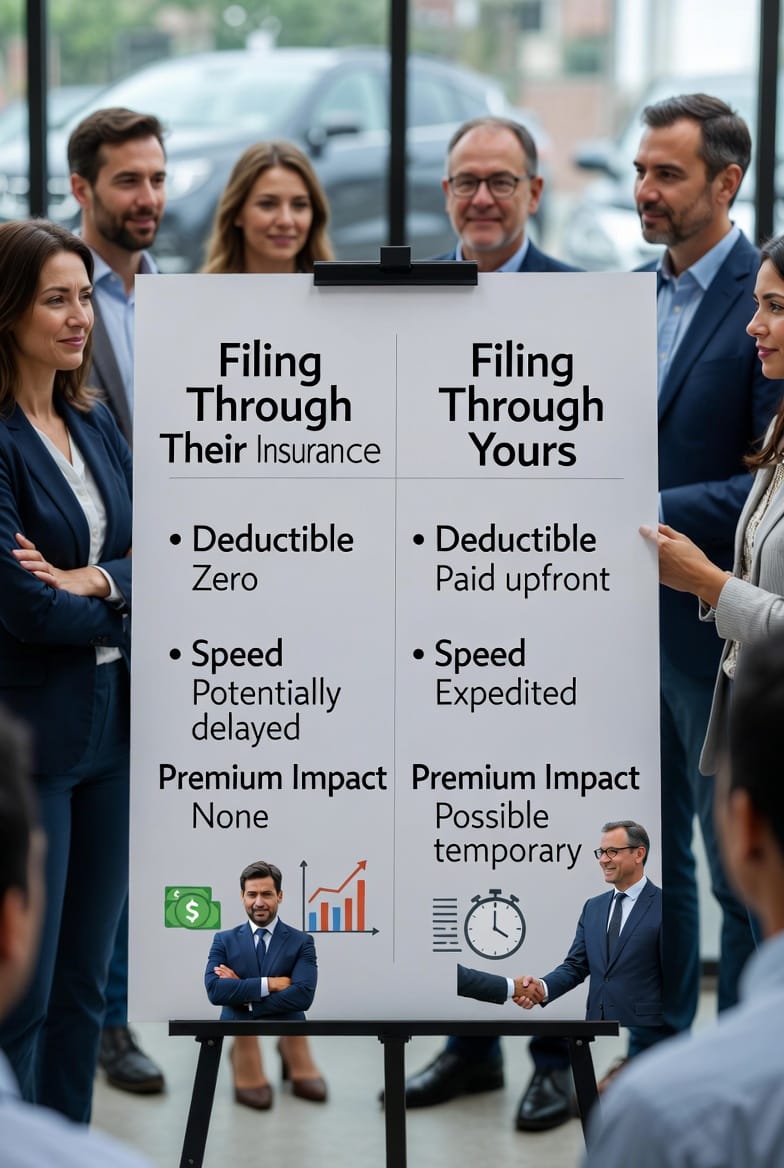
To make the best choice, let's compare the two paths side by side. Factors like your policy details, state laws, and the accident's severity all play a role.
- Filing Through Their Insurance:
- Pros: No deductible, no impact on your rates, direct from the source.
- Cons: Slower processing, risk of denial if fault is contested, limited if they're underinsured.
- Filing Through Your Own:
- Pros: Faster resolution, coverage certainty, subrogation for recovery.
- Cons: Upfront deductible, potential short-term premium effects.
Remember, many policies include rental car reimbursement or roadside assistance, which can ease the burden regardless of the filing method. Consulting your policy documents or an advisor is crucial for personalized insights.
State-Specific Considerations and Legal Nuances
Insurance regulations vary by state, adding another layer to your decision. For instance, in no-fault states like Florida or Michigan, you might file medical claims through your own policy regardless of fault. In at-fault states, liability determines the primary payer.
Always report the accident to both insurers promptly—most policies require notification within 24-72 hours. Document everything: photos, witness statements, and police reports strengthen your case.
If the other driver contests fault, an independent adjuster or arbitration might be needed. In severe cases involving injuries, consulting a personal injury attorney alongside your insurer ensures comprehensive protection.
Final Advice: Prepare and Seek Expert Guidance
The key to handling a not-at-fault accident is preparation. Know your policy limits, deductibles, and add-ons like UM/UIM coverage before an incident occurs. This knowledge turns a stressful situation into a manageable one.
Ultimately, the best path depends on your unique circumstances. If the other driver is clearly insured and at fault, starting with their policy often works well. But for speed or uncertainty, your own coverage provides a reliable safety net, with subrogation handling the rest.
We're committed to getting you the resolution you deserve, swiftly and fairly.By understanding these options, you're not just reacting; you're proactively protecting your future on the road. Stay safe, and drive with confidence.
Subrogation Questions? Call for Personalized Answers