The New Car Replacement Coverage: Driving Off the Lot Without Depreciation Worry
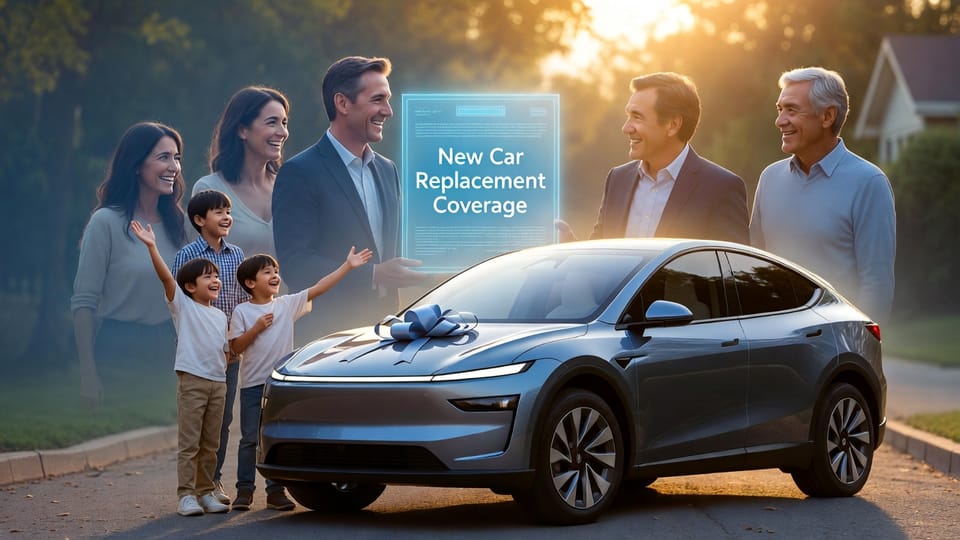
Imagine this: You've just driven your dream new car off the dealership lot—sleek, shiny, and packed with the latest features. The thrill is electric. But fast-forward a few months, and an unexpected accident totals it. Under standard auto insurance, you're handed a check for the car's depreciated value—often thousands less than what you paid. Suddenly, that new car dream turns into a financial headache.
Secure Zero-Depreciation Protection – Call Immediately
This scenario plays out for thousands of drivers every year, but it doesn't have to. Enter new car replacement coverage—a powerful endorsement that transforms how insurers handle total losses on brand-new vehicles. As your trusted guide in auto insurance, we're here to break it down clearly, so you can make informed decisions that safeguard your investment.
In this comprehensive guide, we'll explore how this coverage works, why it's a game-changer for new car owners, and how it delivers peace of mind from the very first mile. Whether you're a first-time buyer or upgrading your fleet, understanding new car replacement coverage could save you from the sting of depreciation. Let's dive in.
Understanding the Stealthy Threat: Car Depreciation
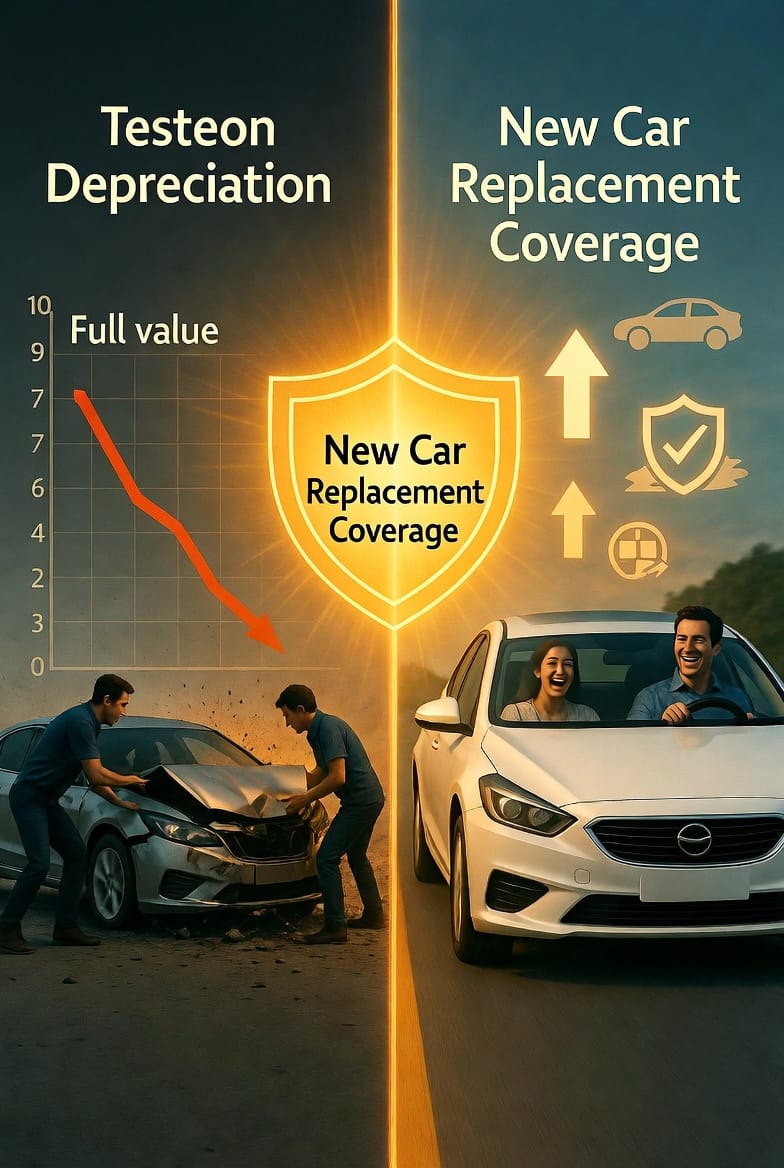
Car depreciation is the silent thief of automotive value. Right after you sign the papers and hit the open road, your new car's worth begins to plummet. Industry data reveals that vehicles lose an average of 16-20% of their value in the first year alone. By year two, that figure climbs to around 30%, and within five years, many cars retain just 40-50% of their original price.
Why does this happen? Multiple factors play a role:
- Market saturation: Dealerships flood lots with the latest models, making yours "used" instantly.
- Wear and tear: Even minor mileage signals age to buyers.
- Technological shifts: Newer features quickly outdate your ride.
For a $40,000 new car, that first-year hit could mean a $6,400-$8,000 loss. Total it in an accident? Standard collision coverage pays the actual cash value (ACV)—your depreciated amount—minus your deductible. You end up short, scrambling to replace it.
This is where new car replacement coverage steps in as your hero. It's not just insurance; it's a strategic safeguard for those critical early years when depreciation hits hardest.
What Is New Car Replacement Coverage?
New car replacement coverage is an optional endorsement you can add to your full-coverage auto insurance policy. Unlike basic comprehensive and collision protections, which reimburse based on your car's current market value, this coverage ensures you receive a brand-new equivalent vehicle—same make, model, trim, and options—if yours is declared a total loss due to an accident, theft, or other covered event.
Think of it as "zero-depreciation protection" for your prized possession. Insurers like Travelers, Liberty Mutual, and others offer variations, often covering vehicles in their first 1-5 years of ownership. The result? You drive off the lot in a fresh replacement, not a diminished shadow of what you had.
This endorsement shines for high-value or rapidly depreciating vehicles, such as luxury sedans, SUVs, or electric models. It's designed for original owners who want to preserve that "new car smell" without the financial fallout.
How New Car Replacement Coverage Works in Practice
The process is straightforward and empowering. Here's a step-by-step breakdown:
- Qualifying event: Your new car suffers a total loss—deemed irreparable by the insurer—or is stolen and unrecovered. This must occur within the policy's eligibility window (typically the first few years and low mileage).
- Claim filing: You report the incident promptly, providing details like police reports and photos.
- Payout mechanism: Instead of ACV, the insurer calculates the cost of a new comparable vehicle. They cover this amount, minus your deductible. No haggling over blue book values or market dips.
- Vehicle delivery: You select and take delivery of the replacement—often with minimal out-of-pocket costs beyond the deductible.
Real-world example: Sarah, a marketing executive, bought a $55,000 new crossover. Six months later, a distracted driver rear-ended her, totaling the car. Without this coverage, she'd receive about $48,000 (after 12% depreciation). With new car replacement coverage, she drove home in a 2026 model of the exact same vehicle, fully equipped.
This coverage isn't a blanket policy—it's precise, reliable, and focused on your new-car window.
Who Qualifies? Key Eligibility Requirements
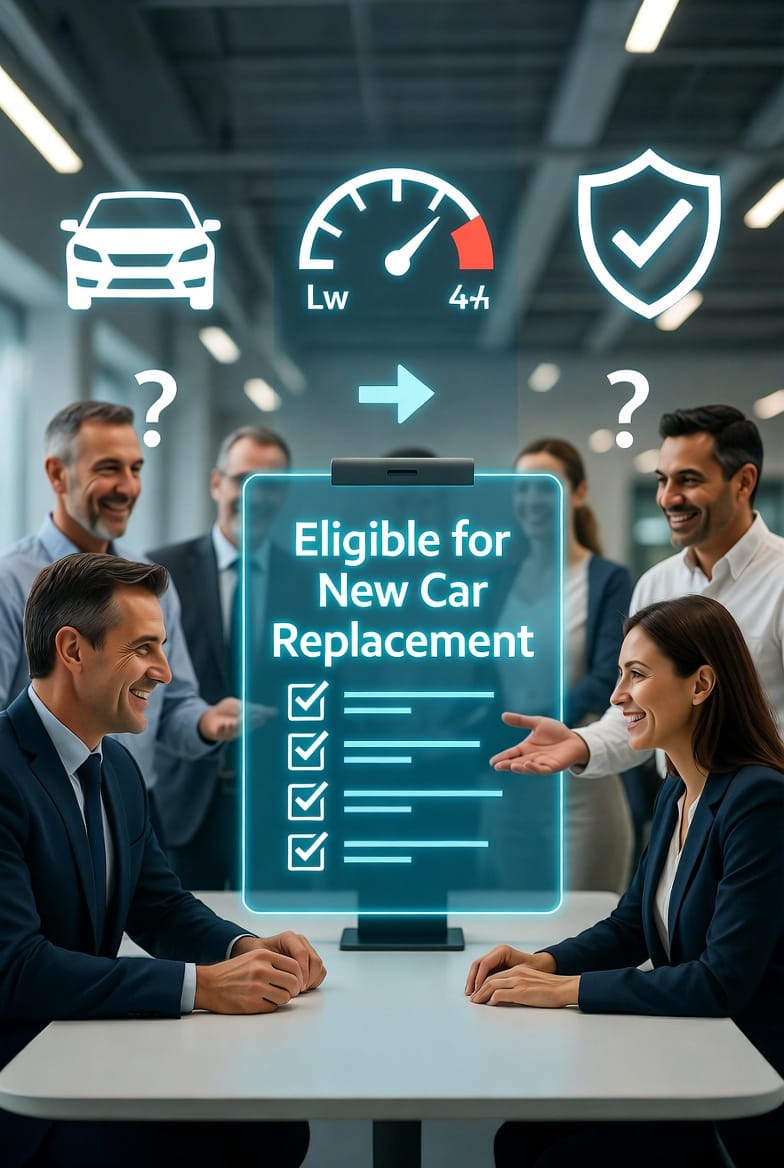
Not every vehicle or driver qualifies, but the criteria are clear and achievable for most new buyers. Typical requirements include:
- Vehicle age: Must be 1-2 years old (some extend to 3-5 years, depending on the insurer).
- Mileage limits: Often capped at 15,000-36,000 miles total.
- Ownership status: You must be the original owner—no prior titles or leases.
- Policy basics: Collision and comprehensive coverage are mandatory add-ons.
- No modifications: Stock vehicles with factory options qualify; heavy customizations may not.
The Tangible Benefits: Why It Pays to Add This Endorsement
New car replacement coverage delivers more than financial relief—it's about reclaiming control. Key advantages include:
- Depreciation-proof peace of mind: Drive worry-free, knowing your new investment is shielded.
- Faster recovery: Skip the used-car market scramble; step into a new model seamlessly.
- Equity protection: Ideal for financed vehicles, preventing "upside-down" loans.
- Customizable fit: Pairs perfectly with gap insurance for comprehensive coverage.
- Long-term savings: Avoids the cycle of trading in depreciated assets prematurely.
For families, professionals, or anyone valuing reliability, it's a low-cost way to future-proof your mobility.
New Car Replacement vs. Gap Insurance: Clearing the Confusion
A common mix-up: Gap insurance covers the difference between your loan/lease balance and the ACV payout. It's lender-focused and essential if you owe more than the car's worth.
New car replacement coverage, however, goes further—providing a full new vehicle regardless of financing. It's vehicle-centric, not debt-centric.
Together, they form an unbeatable duo for new car owners.
Is New Car Replacement Coverage Worth the Investment?
Absolutely—for the right driver. The added premium is modest (often $20-50 per six months), but the protection is priceless during peak depreciation years. If your new car costs $30,000+, and you can't absorb a $5,000+ hit, it's a no-brainer.
Consider your driving habits, vehicle type, and risk tolerance. Consult your agent to run the numbers—it's often far cheaper than the alternative.
Adding New Car Replacement Coverage: Simple Steps
- Review your policy: Confirm you have full coverage.
- Contact your insurer: Ask about availability and quotes.
- Verify eligibility: Share your vehicle's details.
- Activate: It's often instant, effective immediately.
Pro tip: Shop around—insurers vary in terms, so compare options for the best fit.
Frequently Asked Questions About New Car Replacement Coverage
Does it cover theft?
Yes, if your car is stolen and not recovered, it qualifies as a total loss.
What if my car is repaired instead?
This coverage only kicks in for total losses. Repairs fall under standard collision.
Can I add it later?
Typically, yes—within the eligibility window, but act soon after purchase.
Is it available everywhere?
Most major carriers offer it; availability depends on your state and provider.
What happens at the end of eligibility?
It expires automatically. Transition to gap coverage or reassess needs.
Final Thoughts: Secure Your New Car Journey Today
New car replacement coverage isn't just an add-on—it's your assurance that life's unexpected turns won't derail your dreams. By bridging the depreciation gap, it lets you enjoy every mile of ownership with confidence.
Protect your new investment from day one. Don't leave your prized vehicle vulnerable to the hidden costs of depreciation.
Add New Car Replacement Coverage – Call for Details