The Moss Invasion: Why Moss Grows in Lawns and How to Correct the Underlying Conditions
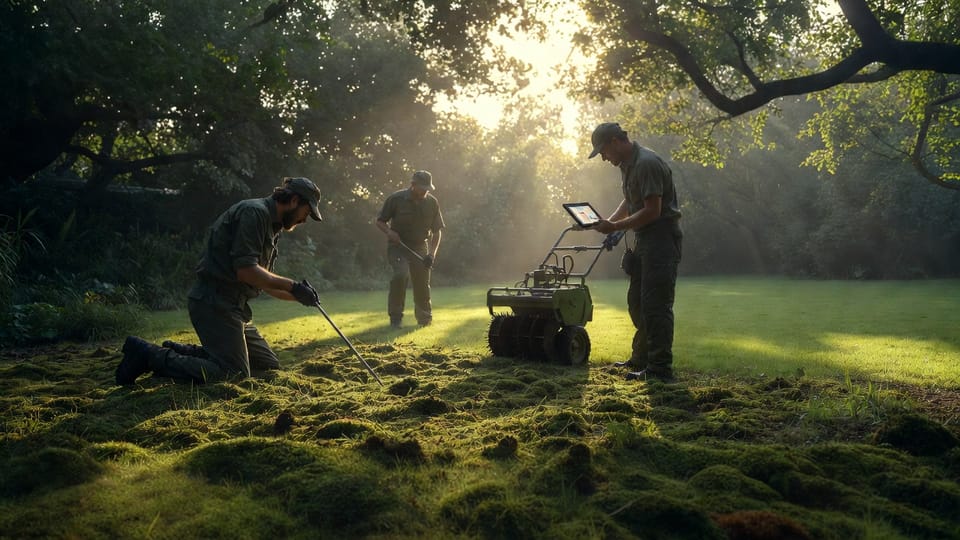
If your once-vibrant lawn now looks more like a green carpet of velvet under the trees, you’re not alone. Moss is marching across backyards everywhere, especially in shaded, older neighborhoods. Homeowners often reach for quick-kill sprays the moment they see it, only to watch the invader return stronger the following season.
Stop Moss at the Source – Get Your Plan Today!
Here’s the truth: moss is never the real problem. It is a symptom—a living alarm bell telling you that your soil, drainage, or light conditions are no longer suitable for healthy grass.
At our lawn care service, we have restored thousands of moss-plagued lawns by treating the root causes instead of the surface invader. The result? Lawns that stay thick, green, and moss-free for years. In this comprehensive guide, we’ll walk you through exactly why moss appears, the four hidden conditions that invite it, and the proven, step-by-step remediation plan that actually works.
Ready to reclaim your lawn? Let’s dig in.
Understanding the Moss Takeover
Moss thrives where grass struggles. It loves moisture, acidity, and low competition. While grass needs at least 4–6 hours of direct sunlight, well-aerated soil, and a near-neutral pH to dominate, moss can survive on almost nothing.
That’s why you’ll find it flourishing in the exact spots where your lawn is thinnest—under mature trees, along north-facing slopes, and in low-lying areas that stay damp after rain.
Key insight: Killing moss with iron sulfate or potassium salts gives you a temporary brown-out, but unless you fix what invited the moss in the first place, it will return. We never recommend “moss killer” as a standalone solution. Instead, we correct the conditions that made moss comfortable in your yard.
The Four Underlying Conditions That Welcome Moss
1. Compacted Soil – The Silent Killer of Roots
Years of foot traffic, lawn mowers, and heavy clay soils slowly compress the earth beneath your grass. Roots can no longer penetrate. Water and nutrients sit on the surface instead of reaching deep.
Result: Grass thins out. Moss moves in because it doesn’t need deep roots at all.
Visual proof you can check right now: Push a screwdriver into your lawn. If it stops after two inches, your soil is compacted.
2. Acidic Soil (pH Below 6.0)
Most turfgrasses prefer a pH between 6.0 and 7.0. When soil becomes too acidic—often from years of rainfall leaching calcium or overuse of chemical fertilizers—grass roots struggle to absorb essential nutrients. Moss, however, loves pH levels as low as 5.0.
Common trigger in shaded lawns: Falling leaves and pine needles add organic acids over time.
3. Poor Drainage and Constant Moisture
Moss is essentially a water-loving sponge. Any area that stays soggy for more than a few hours after rain becomes a moss magnet. Compacted soil + shade = perfect storm for standing water.
4. Excessive Shade
Even the best grass varieties need sunlight. When trees mature or new homes block southern exposure, light levels drop below the 4-hour daily minimum. Grass weakens. Moss takes over.
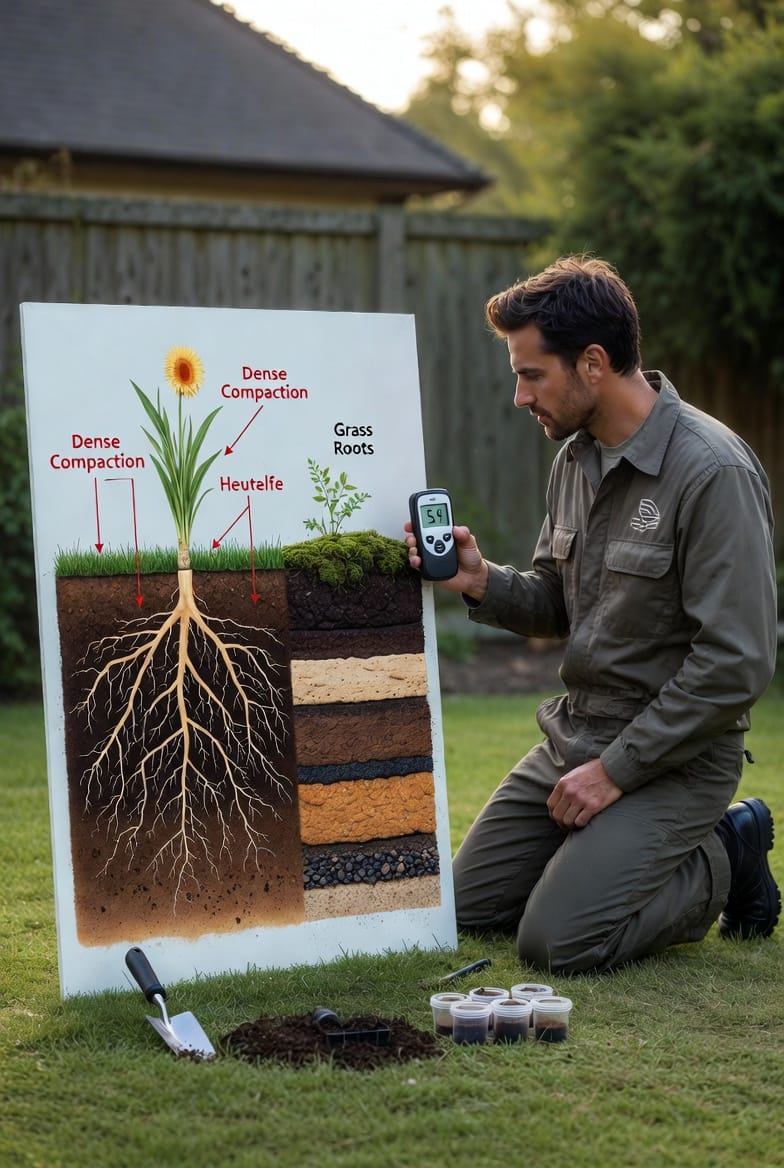
Diagnosing Your Lawn – The Professional Approach
Before we touch a single tool, we always start with data.
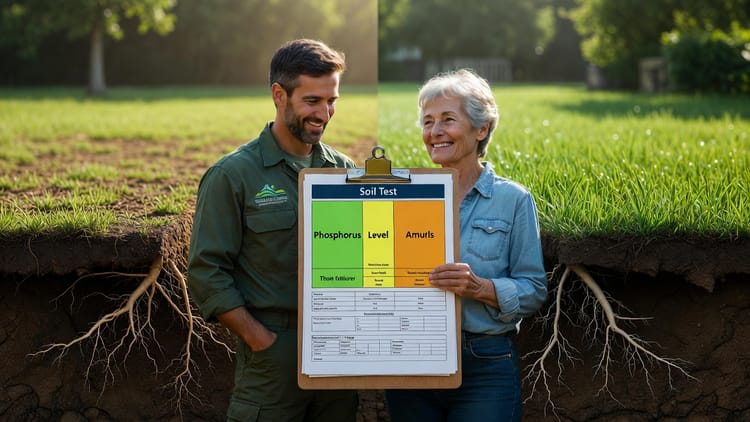
Step 1: Soil Test
Send a sample to a certified lab (or use our in-house testing kit). You’ll receive exact pH, nutrient levels, and organic matter percentage.
Step 2: Light Audit
We measure daily sunlight hours in each zone of your lawn using specialized meters.
Step 3: Compaction and Drainage Check
Core samples and percolation tests tell us exactly how much work is needed.
Most homeowners are shocked to learn their “moss problem” is actually a combination of three of the four conditions above.
Your Complete Moss Remediation Roadmap
Phase 1: Kill the Visible Moss (Temporary Step Only)
We use targeted, organic-based moss control that is safe for pets and children. Within 48 hours the moss turns black and can be raked away. This step buys us time to fix the real issues.
Phase 2: Correct the Soil Chemistry
- Lime application – We calculate the exact amount of pelletized dolomitic lime needed to raise pH to 6.5. Applied in fall and spring for fastest results.
- Organic matter boost – High-quality compost top-dressing improves soil structure and feeds beneficial microbes that naturally compete with moss.
Phase 3: Relieve Compaction with Core Aeration
Our heavy-duty aerators pull 4-inch soil cores every 4 inches across the entire lawn. The holes allow oxygen, water, and nutrients to reach roots again. We leave the cores on the lawn—they break down and feed the soil.
Pro tip: Aeration is 400% more effective when combined with the right amendments.
Phase 4: Solve Drainage Issues
- Install French drains in chronically wet areas
- Re-grade low spots
- Add sand and organic matter to heavy clay soils
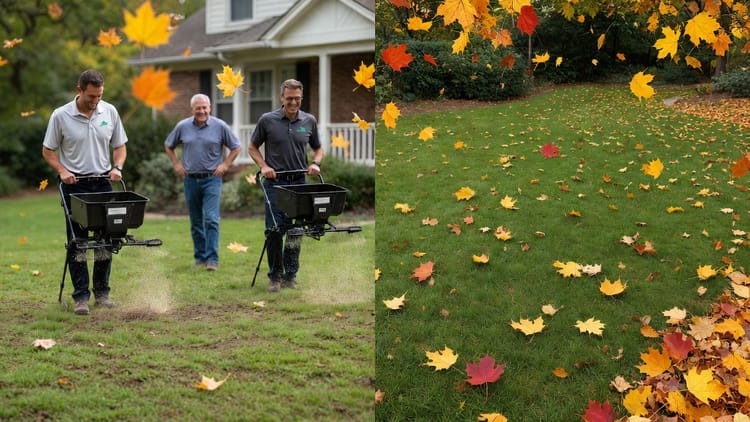
Phase 5: Bring Back the Grass – Strategic Overseeding
We select shade-tolerant grass blends (fine fescues, creeping red fescue, and perennial ryegrass mixes) that perform beautifully with as little as 3–4 hours of sun.
Seeding timeline:
- Fall (best) or early spring
- 8–10 lbs per 1,000 sq ft
- Light top-dressing of compost
Within 21 days you’ll see new grass pushing through.
Phase 6: Long-Term Shade Management
- Strategic tree pruning (never more than 25% at once)
- Removal of lower limbs to allow dappled light
- In extreme cases, we recommend beautiful moss-resistant ground covers like mondo grass, ajuga, or native ferns in the darkest corners.
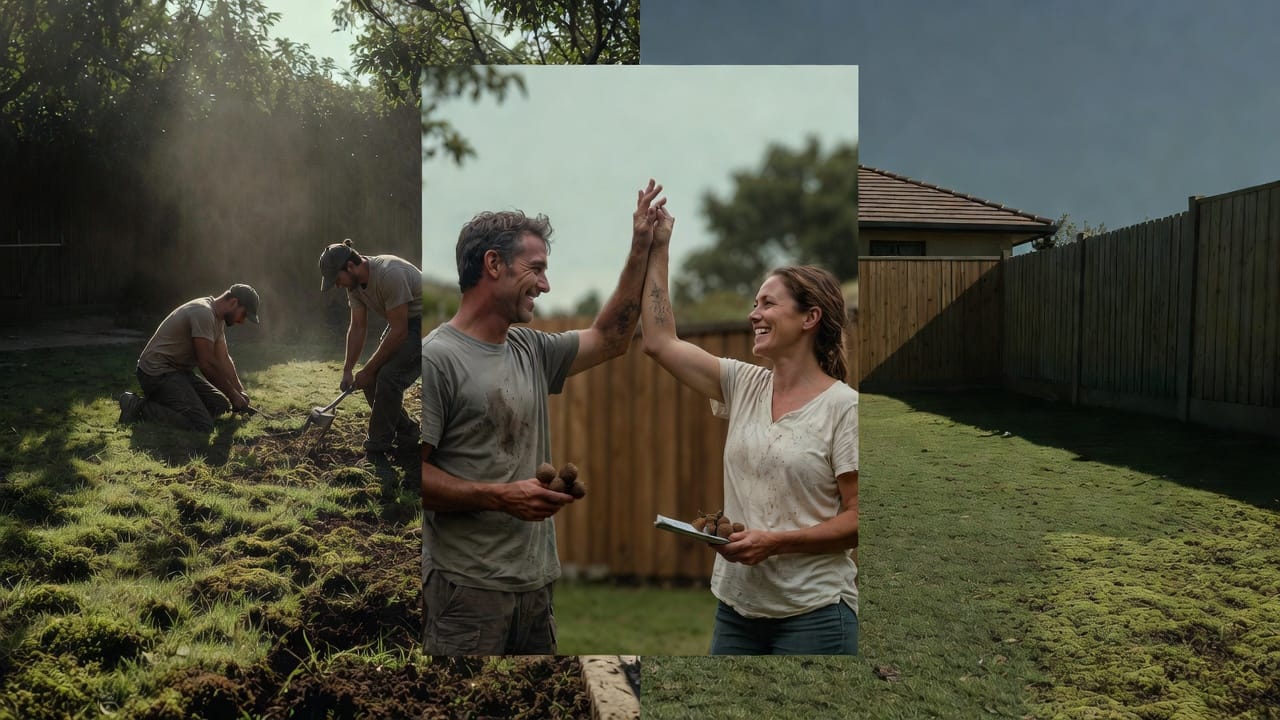
What Results Can You Expect?
Clients who follow our full protocol see:
- 90–100% moss elimination within the first year
- Dramatic increase in lawn density
- Reduced water usage because healthy grass needs less irrigation
- Lower long-term maintenance costs
One recent client in a heavily treed neighborhood went from “I’m ready to pave the whole thing” to winning the neighborhood lawn contest in just 14 months.
Common Mistakes That Keep Moss Coming Back
- Using moss killer every spring without fixing soil
- Overwatering shaded areas
- Skipping aeration year after year
- Planting sun-loving grass in deep shade
- Ignoring soil pH for decades
Avoid these pitfalls and you’ll break the cycle permanently.
Prevention: Keeping Moss Out for Good
Once your lawn is restored, protect it with:
- Annual soil testing
- Fall aeration + overseeding
- Proper fertilization schedule (we create custom blends)
- Smart watering—deep and infrequent
- Regular tree maintenance
When to Call the Professionals
If your moss covers more than 30% of the lawn, or if you’ve tried DIY solutions for two seasons with no lasting results, it’s time to bring in experts.
Our Moss Remediation Program includes:
- Comprehensive soil and light analysis
- Full aeration and amendment
- Custom grass seeding
- 12-month guarantee
Treat the cause, not the symptom.
Your beautiful, moss-free lawn is closer than you think.
Fix the Real Problem Behind Moss – Free Consultation Now