The Mindfulness-Based Relapse Prevention: Awareness Skills for Long-Term Sobriety

In the challenging path of addiction recovery, mindfulness-based relapse prevention (MBRP) offers a proven, compassionate framework that empowers individuals to build lasting sobriety. This therapeutic approach blends mindfulness practices with traditional relapse-prevention strategies, helping people develop the inner awareness needed to navigate triggers, cravings, and stress without returning to old patterns. At its core, MBRP teaches that sobriety is not just about abstinence — it is about cultivating a new relationship with your thoughts, emotions, and automatic behaviors.
Develop Your Mindfulness Skills for Recovery – Call Now
Unlike traditional methods that focus solely on avoiding high-risk situations, MBRP emphasizes present-moment awareness. It equips you with practical skills to observe internal experiences without judgment, reducing the power that urges once held. Research-supported and widely used in modern rehab programs, this approach has helped countless individuals achieve long-term sobriety by transforming how they respond to life’s inevitable challenges. Whether you are early in recovery or seeking to strengthen your foundation, these awareness skills can become your most reliable allies.
What Is Mindfulness-Based Relapse Prevention?
Mindfulness-based relapse prevention is an eight-week structured program designed specifically for substance use recovery. It integrates mindfulness meditation with cognitive-behavioral relapse-prevention techniques. Participants learn to recognize the early warning signs of relapse and respond with intention rather than reaction.
The beauty of MBRP lies in its simplicity and depth. It does not require any prior meditation experience. Instead, it gently guides you to slow down, breathe, and notice what is happening inside and around you. By doing so, you interrupt the automatic pilot mode that often leads back to substance use. This method is particularly effective because it addresses the root causes of relapse — not just the external triggers, but the internal emotional and cognitive processes that fuel them.
How Mindfulness Helps Identify Triggers
One of the foundational benefits of mindfulness-based relapse prevention is its ability to sharpen your awareness of triggers. Triggers are the people, places, emotions, or thoughts that spark cravings. In the fast pace of daily life, these cues often go unnoticed until the urge feels overwhelming.
Through consistent mindfulness practice, you begin to notice subtle signals much earlier. You might recognize the tightening in your chest when stress builds, the familiar restlessness before entering a certain environment, or the specific thought patterns that precede a craving. This early detection gives you precious time to choose a different response.
Key triggers commonly addressed in MBRP include:
- Emotional triggers such as anxiety, anger, or boredom
- Environmental triggers like specific locations or social settings
- Cognitive triggers involving thoughts of “just one time” or romanticizing past use
- Physical triggers such as fatigue, pain, or withdrawal sensations
By identifying these patterns with clarity and without self-criticism, you reclaim control. You move from being reactive to being proactive — a powerful shift that supports long-term sobriety.
Observing Cravings Without Acting on Them
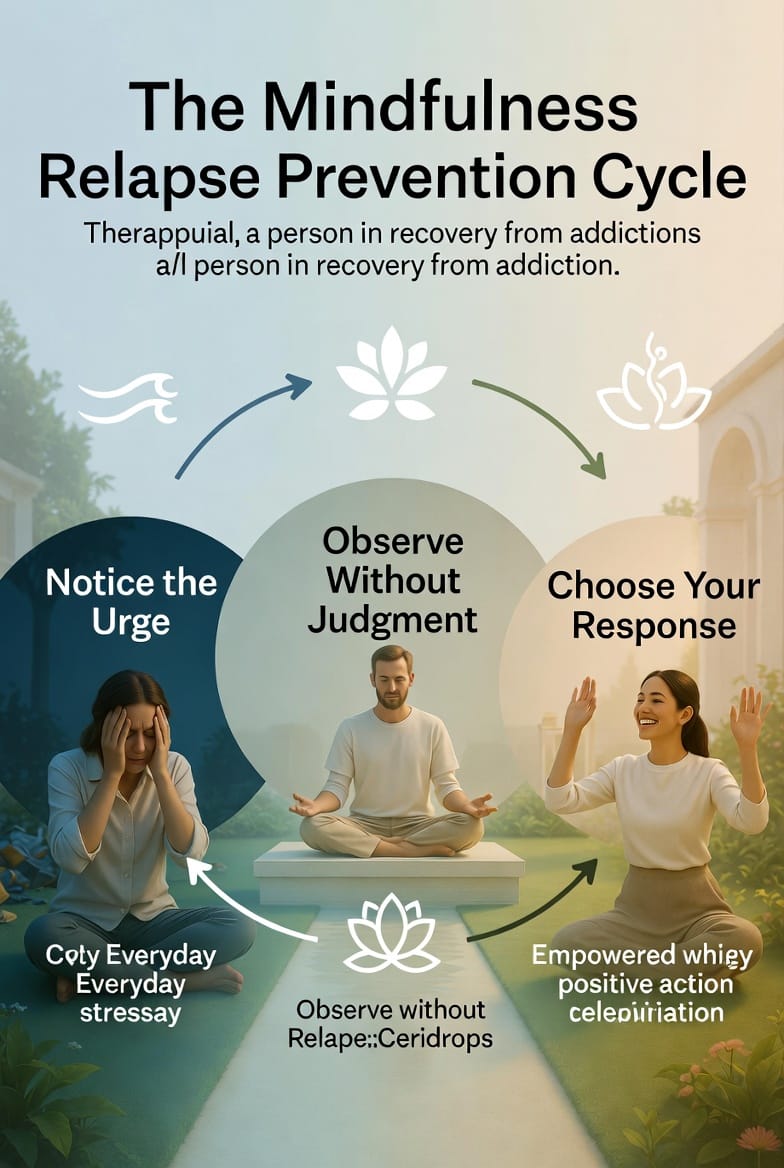
Cravings can feel like tidal waves — intense, urgent, and all-consuming. Traditional advice often suggests distraction or avoidance, but MBRP takes a different, more effective path: urge surfing.
Instead of fighting the craving or giving in, you learn to observe it mindfully. You notice the physical sensations, the thoughts that accompany it, and the emotions that rise and fall. Like a surfer riding a wave, you stay balanced on the experience until it naturally crests and subsides. Most cravings last only 10 to 20 minutes when met with non-reactive awareness.
This practice builds confidence. You prove to yourself, again and again, that cravings are temporary and do not have to dictate your actions. Over time, the automatic link between urge and use weakens. You develop the awareness skills that turn moments of vulnerability into opportunities for growth and resilience.
Reducing Stress Through Mindfulness
Chronic stress is one of the strongest predictors of relapse. Mindfulness-based relapse prevention directly targets this by teaching simple yet profound ways to lower physiological and emotional arousal.
When you practice mindfulness, your nervous system shifts from “fight-or-flight” to “rest-and-digest.” Breathing slows, muscles relax, and racing thoughts quiet. Regular practice has been shown to lower cortisol levels and improve emotional regulation — two critical factors in maintaining sobriety.
You learn that stress itself is not the enemy; it is your automatic reaction to stress that can become problematic. By observing stress mindfully, you create space between the stressor and your response. This space is where freedom lives.
Developing Awareness of Automatic Patterns
Many people in recovery describe feeling like they are “on autopilot” when old habits resurface. MBRP shines a gentle light on these automatic patterns — the habitual thoughts, behaviors, and emotional sequences that once led to substance use.
Through daily awareness exercises, you begin to see the chain of events clearly: a difficult conversation leads to self-doubt, which leads to isolation, which leads to craving. Once visible, these patterns lose their power. You can insert mindful pauses and choose healthier alternatives at any point in the chain.
This heightened awareness fosters self-compassion. You stop judging yourself for having automatic thoughts and instead respond with kindness and skill. The result is greater confidence and a stronger foundation for long-term sobriety.
Core Mindfulness Techniques That Drive Lasting Change
Mindfulness-based relapse prevention introduces several accessible practices that become lifelong tools. Each technique builds on the others, creating a comprehensive skill set for recovery.
- Body Scan: A systematic mental sweep from head to toe that increases bodily awareness and releases stored tension. Practiced regularly, it helps you notice early physical signs of stress or craving.
- Breath Awareness: Simple focus on the natural rhythm of your breathing anchors you in the present moment and calms the mind within minutes.
- Urge Surfing: The mindful observation of cravings as they rise, peak, and fall, teaching you that you can ride out discomfort without acting on it.
- Mindful Walking: Bringing full attention to each step and the sensations of movement turns ordinary walks into powerful grounding exercises.
These techniques are not complicated. They require only willingness and a few minutes each day. Yet their cumulative effect is profound: you develop an internal compass that guides you toward healthier choices.

Integrating MBRP Skills Into Daily Recovery
The true power of mindfulness-based relapse prevention emerges when you weave these practices into everyday life. Start small: five minutes of breath awareness upon waking, a mindful walk during lunch, or a quick body scan before bed. Over time, these moments compound into a new way of being.
Many rehab programs now incorporate MBRP as a core component because it complements other therapies beautifully. It enhances 12-step work, supports medication-assisted treatment, and strengthens family relationships by improving emotional regulation.
The Proven Benefits for Long-Term Sobriety
Individuals who master these awareness skills report fewer and less intense cravings, better stress management, improved mood stability, and a deeper sense of self-efficacy. They describe feeling more present with loved ones, more capable at work, and more hopeful about the future.
Long-term sobriety becomes not just possible but sustainable because you are no longer fighting yourself — you are working with yourself. You have tools that travel with you everywhere, available in any moment of need.
Overcoming Common Challenges
It is normal to face hurdles when first learning mindfulness. Some worry their mind wanders too much; others feel impatient with the process. The reassuring truth is that these experiences are part of the practice itself. Every time you gently bring your attention back, you are strengthening the very skills that support recovery.
Patience and consistency matter far more than perfection. Professional guidance from experienced therapists can help you navigate these early stages and customize the approach to your unique needs.
Developing Awareness Skills for Lasting Recovery
Mindfulness-based relapse prevention offers a clear, compassionate path to long-term sobriety. By learning to identify triggers early, observe cravings without acting on them, reduce stress effectively, and interrupt automatic patterns, you build a resilient foundation for a fulfilling life in recovery.
These awareness skills are gifts you give yourself — tools that continue to serve you long after formal treatment ends. You deserve to live free from the cycle of relapse, fully present and empowered in each moment.
Develop awareness skills for lasting recovery. Our compassionate team is ready to support your journey toward lasting sobriety through evidence-based mindfulness practices tailored to your needs.
Transform Cravings into Confidence – Call for Mindfulness Support