The Mattress Disposal Challenge: Rules, Fees, and Proper Recycling Options
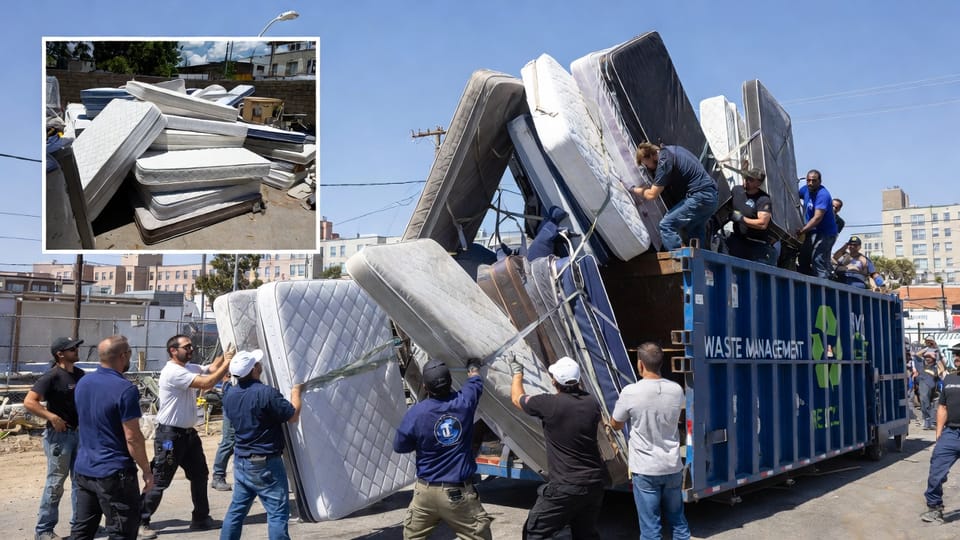
Disposing of an old mattress can feel like a daunting task, but with the right knowledge and options, it's manageable and environmentally responsible. Mattresses are one of the most common bulky items that homeowners and businesses need to discard, yet they pose unique challenges due to their size, composition, and impact on waste systems. In this comprehensive guide, we'll explore why mattresses are problematic for landfills, the rules and fees involved in their disposal, and the best recycling options available. Whether you're renovating your home or upgrading your sleep setup, understanding these aspects ensures you handle mattress disposal legally and sustainably. Rest assured, professional services are here to simplify the process.
Tackle Bulky Mattress Disposal – Get Your Dumpster Today
Why Mattresses Are Problematic in Landfills
Mattresses aren't just another piece of trash—they're a significant headache for waste management facilities. Their bulkiness makes them inefficient to handle, often requiring special equipment and extra space in landfills. A standard queen-size mattress can measure up to 60 inches by 80 inches and weigh over 100 pounds, occupying the volume equivalent to several regular trash bags.
Beyond size, the internal components exacerbate the issue. Most mattresses contain metal springs or coils, which can tangle with landfill machinery, causing breakdowns and safety hazards for workers. These springs don't compact easily under pressure, leading to voids in landfill layers that accelerate decomposition and methane production—a potent greenhouse gas.
Additionally, mattresses absorb moisture quickly, becoming breeding grounds for pests and mold. In landfills, they contribute to leachate (toxic liquid runoff) that can contaminate groundwater. According to environmental studies, millions of mattresses end up in U.S. landfills annually, taking up to 40 years to decompose partially. This not only strains limited landfill space but also misses opportunities to recover valuable materials. By choosing proper disposal methods, you help mitigate these risks and support a circular economy.
Understanding Disposal Rules and Regulations
Navigating the rules for mattress disposal varies by location, but common guidelines ensure safety and environmental protection. Many municipalities classify mattresses as bulky waste, prohibiting them from curbside pickup without prior arrangement. In some areas, like New York or California, state laws mandate recycling programs to divert mattresses from landfills entirely.
Key regulations include:
- Preparation Requirements: Mattresses must often be wrapped in plastic to prevent contamination and pest spread. Unwrapped items may be rejected.
- Bans in Certain Areas: States like Connecticut, Rhode Island, and California have outright bans on landfilling mattresses, requiring recycling instead.
- Health and Safety Protocols: If a mattress shows signs of bed bugs or severe soiling, it may need fumigation or special handling to avoid public health risks.
Failing to comply can result in fines ranging from $50 to $500, depending on local ordinances. Always check with your city's waste department or use online tools to verify rules. Professional dumpster rental services can guide you through these, ensuring compliance without the hassle.
Fees Associated with Mattress Disposal
Cost is a practical concern when dealing with mattress disposal. Fees vary based on method, location, and service provider, but understanding them upfront avoids surprises.
- Landfill Fees: If recycling isn't mandated, landfills charge $20 to $50 per mattress. This covers tipping fees and any special handling for bulky items.
- Curbside Pickup Fees: Municipal services might offer bulky item collection for $10 to $30, but availability is limited and often requires scheduling weeks in advance.
- Recycling Center Drop-Off: Many centers accept mattresses for $15 to $40, with fees supporting the labor-intensive dismantling process.
- Professional Hauling Services: Expect $50 to $150 for pickup and disposal, including transportation and any required permits. This is ideal for multiple items or hard-to-access locations.
Additional special handling fees apply for infested or oversized mattresses, adding $10 to $20. Some areas offer free recycling events or rebates for eco-friendly choices. By budgeting for these, you invest in responsible practices that benefit the community long-term.
The Mattress Recycling Process Explained
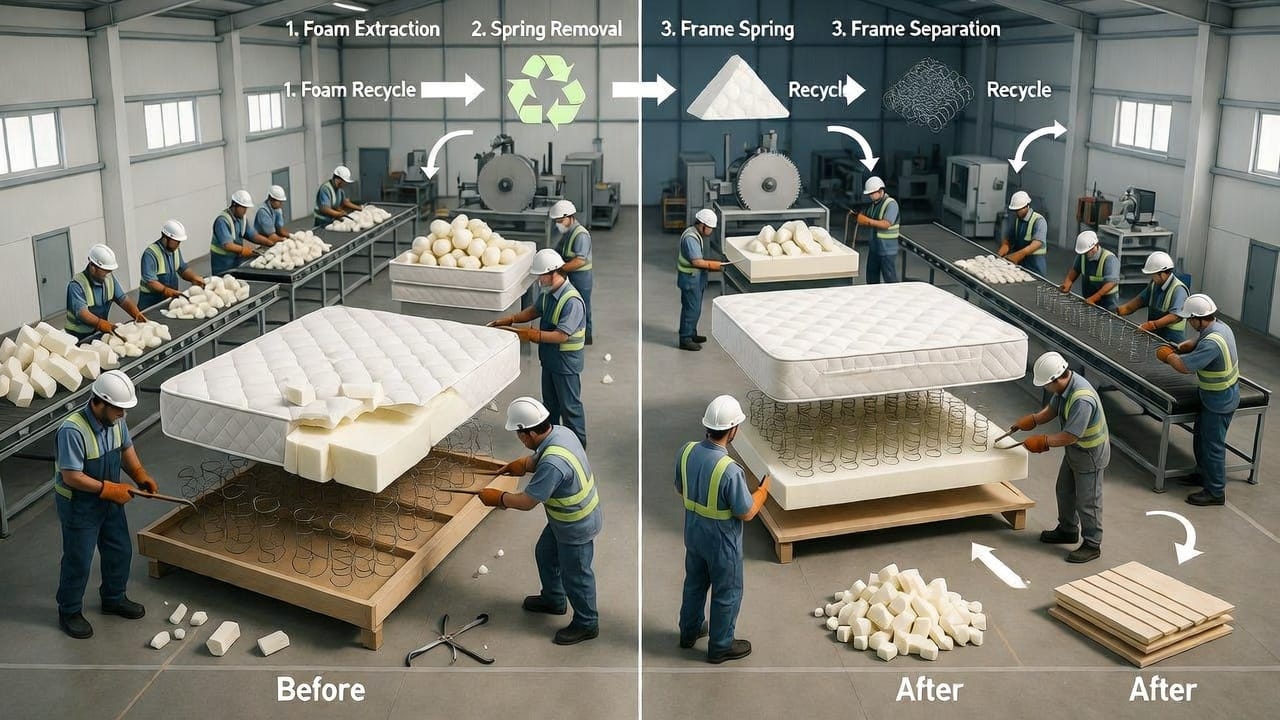
Recycling transforms a problematic waste item into valuable resources. The process begins with collection, where mattresses are transported to specialized facilities equipped for safe disassembly.
Here's a breakdown of the recycling steps:
- Inspection and Sanitization: Upon arrival, mattresses are checked for contaminants. Clean ones proceed; infested ones may be treated or rejected.
- Manual Dismantling: Workers use tools to cut open the fabric cover, removing padding and foam layers. This foam, often polyurethane, is shredded for reuse in carpet underlay or insulation.
- Spring Extraction: Metal coils are pulled out using hydraulic presses or cutters. These are baled and sent to steel mills for melting into new products like construction rebar.
- Wood Frame Separation: Box springs' wooden frames are disassembled, with lumber chipped into mulch or biomass fuel.
- Material Sorting and Baling: Remaining textiles are recycled into felt or filters. Up to 75% of a mattress's materials can be recovered this way.
Facilities like those partnered with the Mattress Recycling Council process thousands annually, diverting waste from landfills. The entire procedure takes about 10-15 minutes per mattress, making it efficient and scalable. Opting for recycling not only complies with rules but also reduces your environmental footprint.
Exploring Proper Recycling and Disposal Options
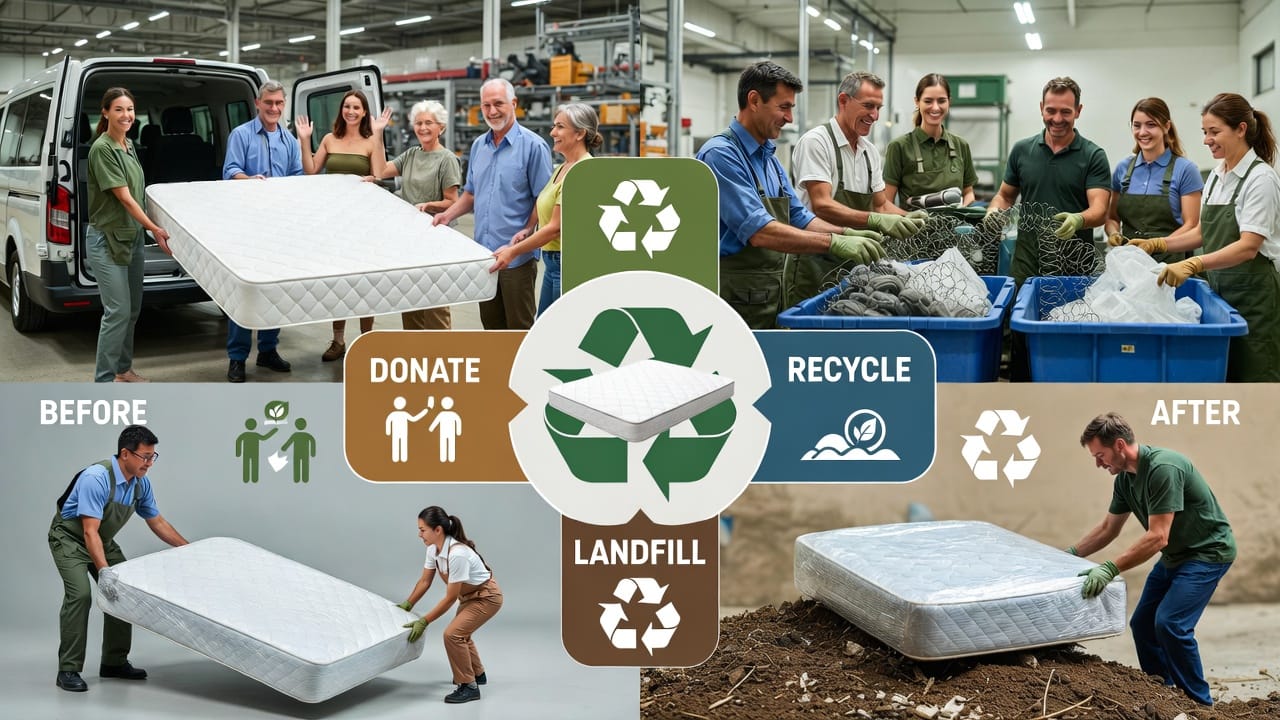
You have several mattress disposal options, each suited to different conditions and preferences. Choosing the right one depends on the mattress's state and your location.
- Donation: If clean and in good condition, donate to charities like Habitat for Humanity or Salvation Army. They often provide free pickup, extending the item's life and helping those in need.
- Specialized Recycling Services: Programs like Bye Bye Mattress offer drop-off or pickup for a fee, ensuring full material recovery. Search for local recyclers via online directories.
- Landfill with Preparation: As a last resort, prepare by wrapping and scheduling bulky waste collection. Avoid illegal dumping, which incurs heavy fines.
- Retailer Take-Back Programs: When buying a new mattress, many stores like IKEA or Mattress Firm haul away the old one for $20-50.
- DIY Breakdown: For handy individuals, disassemble at home and dispose of parts separately, but check local rules first.
Professional services streamline these options, handling logistics so you don't have to.
Benefits of Responsible Mattress Disposal
Embracing proper methods yields multiple advantages. Environmentally, it conserves resources—recycled steel from springs saves energy equivalent to powering a home for days. Economically, recycling creates jobs in green industries. For you, it provides peace of mind, knowing you've avoided fines and contributed positively.
Communities with strong recycling programs see reduced illegal dumping, cleaner streets, and lower waste management costs. As awareness grows, more incentives like tax credits for eco-disposals may emerge.
Common Mistakes to Avoid
To ensure smooth disposal:
- Don't assume curbside trash includes mattresses—always confirm.
- Avoid free online listings if condition is poor, as it may lead to rejection.
- Never burn mattresses, as toxic fumes pose health risks.
- Skip unlicensed haulers to prevent fly-tipping liabilities.
By steering clear of these pitfalls, you maintain compliance and safety.
How Professional Services Can Help
Enlisting experts like dumpster rental companies simplifies everything. They provide appropriately sized containers, handle permits, and often include recycling coordination. With their knowledge, you navigate fees and rules effortlessly, focusing on your project instead.
In conclusion, dispose of mattresses responsibly to protect the environment and comply with regulations.
Ready to Clear Out Mattresses? Call for Professional Dumpster Rental