The Inverter's Role: String, Micro, and Optimizer Systems Compared for Shade, Monitoring, and Longevity
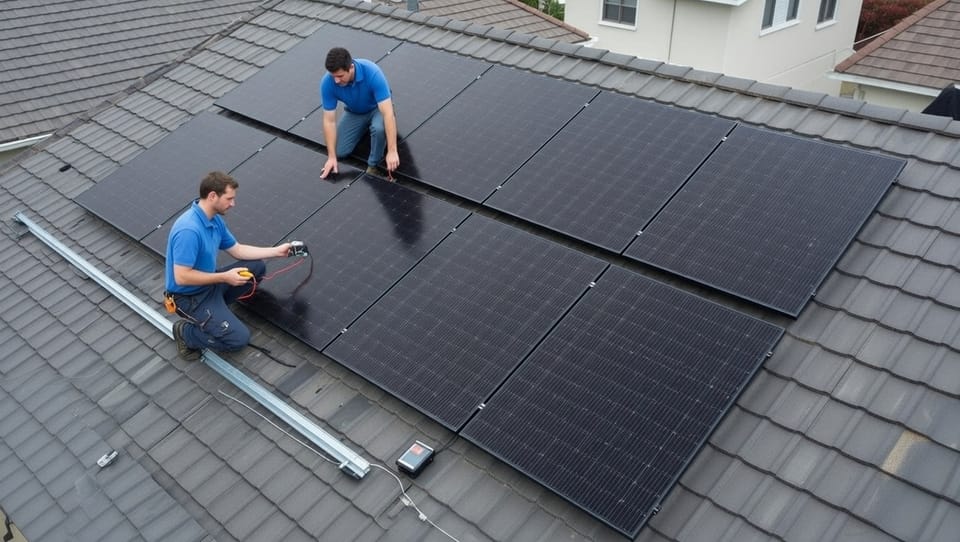
Solar inverters serve as the critical brains of any photovoltaic system. They convert the direct current (DC) electricity produced by solar panels into usable alternating current (AC) power for your home or the grid. Choosing the right inverter architecture directly impacts energy harvest, system reliability, shade tolerance, monitoring capabilities, and long-term longevity.
Solar Power Your Home – Call for a Custom Design Today
In this comprehensive guide, we compare three leading technologies: central string inverters, microinverters, and DC optimizers paired with a string inverter. Homeowners and solar professionals will gain clear insights to select the best solution for their roof conditions and energy goals. Whether facing partial shading challenges or seeking granular performance data, the proper inverter setup ensures maximum return on investment and decades of dependable service.
Key factors this analysis evaluates include performance under partial shade, panel-level monitoring, system expandability, warranty coverage, and overall longevity. Each architecture offers distinct advantages and trade-offs, but all can deliver excellent results when matched correctly to site-specific needs.
Understanding Central String Inverters
String inverters represent the traditional, centralized approach used in many solar installations. Multiple panels connect in series to form one or more “strings,” feeding DC power into a single inverter typically mounted on a wall or in a garage.
Advantages include:
- Lower upfront equipment cost per watt
- Simpler installation with fewer components
- Proven reliability in unshaded, uniform conditions
- Fewer points of potential failure on the roof
Limitations become evident in real-world scenarios. Because panels are wired in series, the current of an entire string is limited by the weakest panel. Even minor partial shade from a chimney, tree branch, or debris can significantly reduce output across all panels in that string.
String inverters typically provide string-level monitoring only, making it difficult to pinpoint underperforming panels. Warranty periods commonly range from 10-12 years, with optional extensions up to 20-25 years.
Microinverters: Independent Panel-Level Conversion
Microinverters attach directly beneath each solar panel, converting DC to AC right at the source. Each panel operates independently, eliminating the series connection bottleneck.
Key benefits of microinverters:
- Superior shade tolerance — shaded panels do not drag down others
- Panel-level monitoring with detailed production data for every module
- Excellent system expandability — easily add panels later without string redesign
- Longer warranties, often 25 years on both equipment and labor
Considerations include higher initial cost and more rooftop components exposed to weather. However, modern microinverters feature robust weatherproofing and high reliability ratings, offering peace of mind for homeowners prioritizing performance and visibility.
DC Optimizers with String Inverter: The Hybrid Solution
DC optimizers combine benefits of both previous systems. A small optimizer unit mounts under each panel to perform maximum power point tracking (MPPT) individually, while a central string inverter handles the final DC-to-AC conversion.
Strengths include:
- Strong shade tolerance approaching microinverter levels
- Panel-level monitoring capabilities
- More cost-effective than full microinverter systems
- Ability to use higher-efficiency central inverters
- 25-year warranties typically provided on optimizers
Potential drawbacks involve slightly more complex installation and continued reliance on the central inverter for final conversion. The architecture still delivers impressive performance gains over basic string inverters, particularly on roofs with moderate shading or varying panel orientations.
Shade Performance: Critical Comparison
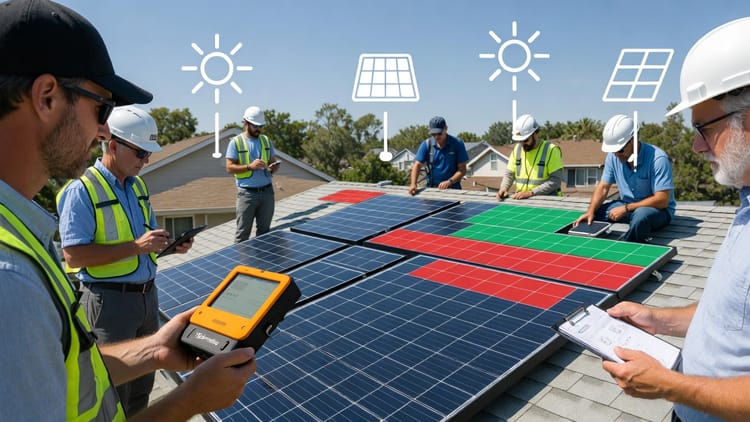
Partial shade represents one of the most common challenges for solar arrays. Even brief shading can cause disproportionate losses depending on inverter design.
- String inverters suffer the most: output drops for the entire string to match the shaded panel’s reduced current
- Microinverters excel: each panel produces at its maximum capability independently
- DC optimizers perform nearly as well as microinverters by adjusting voltage/current at the panel level before reaching the string inverter
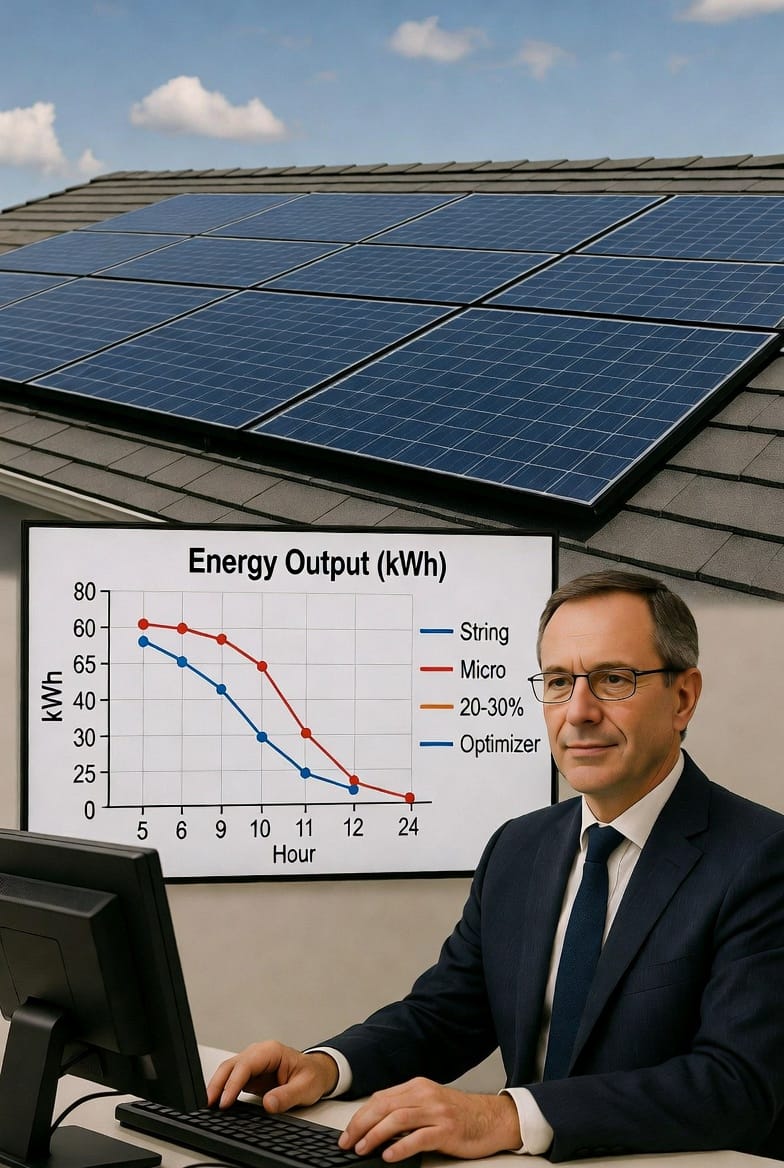
Studies and field data consistently show microinverters and optimizers can deliver 5-25% more annual energy than string inverters on partially shaded roofs. Homeowners in tree-lined neighborhoods or with architectural obstructions gain significant reassurance knowing their system will still harvest efficiently.
Panel-Level Monitoring for Actionable Insights
Panel-level monitoring empowers owners and installers to detect issues quickly and optimize performance. Microinverters and DC optimizers both provide granular data via cloud platforms, displaying production, voltage, and temperature for each panel. Users receive alerts for underperformance, shading patterns, or potential maintenance needs.
String inverters typically offer only string or array-level data, requiring more manual troubleshooting to isolate problems. Advanced monitoring features contribute to longevity by enabling proactive maintenance, reducing downtime, and preserving system efficiency over decades.
Longevity and Warranty Considerations
Longevity depends on component quality, operating temperature, and environmental exposure.
Microinverters and DC optimizers generally achieve longer service lives thanks to distributed architecture and advanced thermal management. Manufacturers commonly back these with 25-year product warranties and performance guarantees.
String inverters, while durable, usually carry shorter 10-12 year base warranties due to their centralized role handling higher power loads. Extended warranty options exist but add cost.
All three technologies benefit from proper installation and routine inspections. Choosing reputable brands with strong track records ensures your solar investment continues generating clean energy for 25+ years with minimal degradation.
System Expandability and Future-Proofing
Future energy needs often evolve. Microinverter systems allow seamless addition of panels without rewiring existing strings or replacing the central inverter.
DC optimizers also support expansion well, though string length limits must be observed. String inverters require careful planning upfront, as adding capacity may necessitate additional inverters or complete string reconfiguration.
Selecting an expandable architecture provides long-term flexibility and protects your investment as battery storage, EV chargers, or increased consumption become priorities.
Cost Analysis and Return on Investment
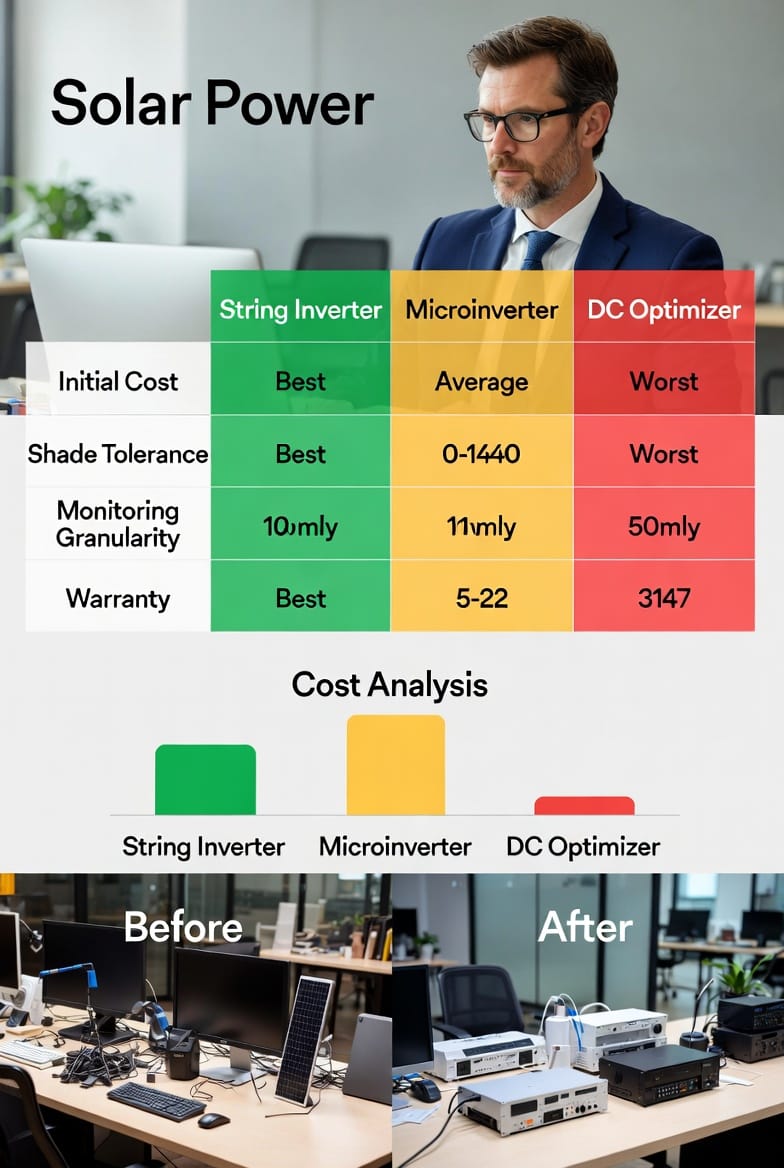
Initial costs rank as follows: string inverters lowest, followed by optimizers, then microinverters. However, lifetime energy production differences often offset higher upfront prices through increased savings and faster payback periods.
Homeowners should evaluate total ownership cost, including monitoring value, maintenance expectations, and potential energy yield gains in shaded conditions. Professional site assessment ensures the chosen system delivers optimal return on investment tailored to your roof and usage profile.
Choose the Right Inverter Architecture for Your Roof
The ideal inverter solution depends on your roof’s shading patterns, orientation, budget, and monitoring preferences. String inverters suit simple, unshaded installations seeking cost efficiency. Microinverters deliver maximum performance and visibility on complex roofs. DC optimizers strike an excellent balance for many residential applications.
No single choice fits every scenario, but understanding these differences empowers confident decision-making. A properly designed system will maximize energy production, withstand environmental stresses, and provide reliable service for decades.
Choose the right inverter architecture for your roof.
Ready for Lower Bills & Energy Independence? Call Us Today