The Induction Cooktop: How It Works, Common Failures, and Repair Considerations
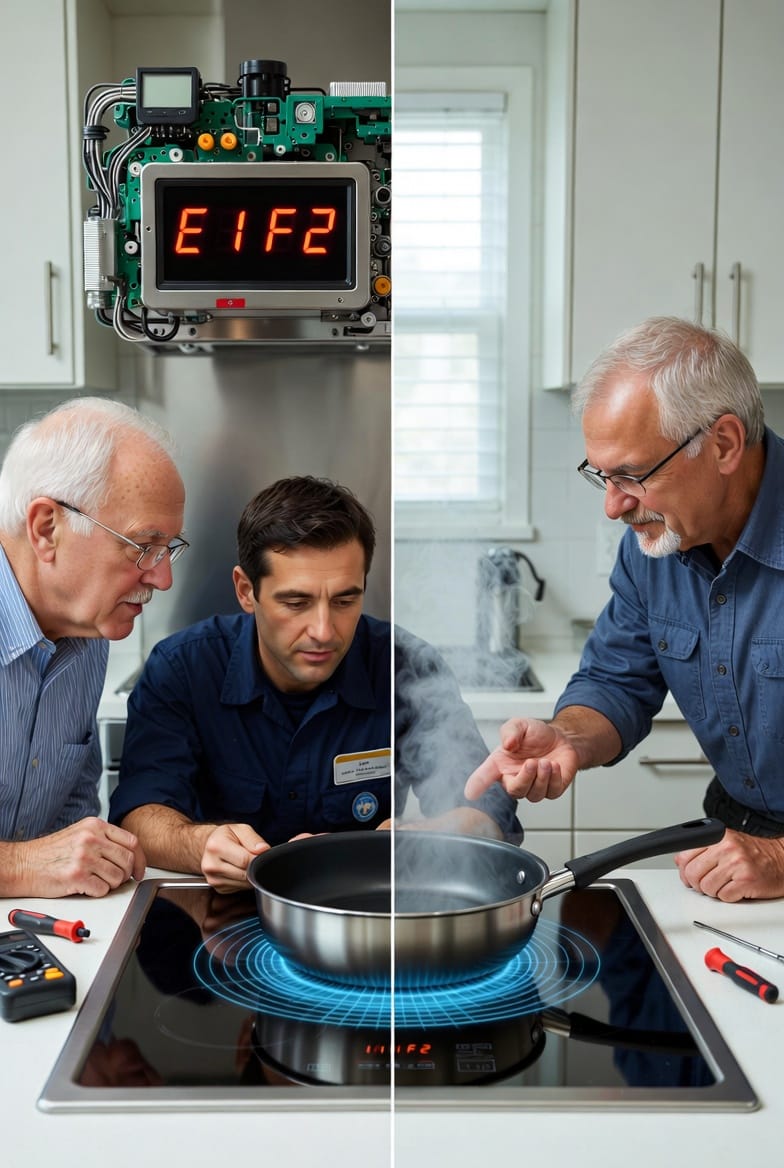
Induction cooktops represent one of the most significant advances in modern cooking technology. Unlike traditional gas or electric coil burners that heat the surface first, induction cooktops generate heat directly inside the cookware itself. This delivers faster, more precise, and safer performance while keeping the cooktop surface remarkably cool to the touch.
Expert Induction Cooktop Repair – Call Now for Reliable Service
Homeowners love the sleek design, energy efficiency, and instant response. Yet when something goes wrong, the advanced electronics behind the glass can feel intimidating. Understanding how these appliances work, recognizing common failures, and knowing the right repair considerations empowers you to act confidently. Rest assured, most issues are fixable when handled by trained professionals who respect the technology’s complexity.
How Induction Cooktops Work
At the heart of every induction cooktop lies the principle of electromagnetic induction. Beneath the smooth ceramic-glass surface sit copper induction coils. When you turn the unit on and place a compatible pan on the surface, an alternating electric current flows through the coils. This creates a rapidly oscillating magnetic field that passes through the glass and into the base of the pan.
If the pan contains ferromagnetic material — typically cast iron, stainless steel with a magnetic base, or certain layered cookware — the magnetic field induces swirling electrical currents called eddy currents inside the metal. These currents meet resistance within the pan’s material and instantly produce heat. The cooktop itself stays cool because the energy transfers directly to the pan, not the glass.
This process explains why induction offers unmatched advantages. Heat-up times are dramatically shorter than gas or radiant electric elements. Temperature control is precise down to the degree, perfect for simmering delicate sauces or searing steaks at high heat. Safety improves because the surface only warms from residual heat of the pan, reducing burn risks for children and pets. Energy efficiency reaches impressive levels since almost no heat is wasted on the surrounding air or unused cooktop area.
Modern units also incorporate sophisticated sensors that detect the pan’s presence, size, and temperature. Microprocessors continuously monitor power draw, adjust frequency, and protect against overheating. Some models feature touch-sensitive controls, boost functions for rapid boiling, and automatic shut-off timers. These smart features make induction cooking feel almost magical — until an issue appears and the “magic” stops.
The technology continues to evolve with better power modules, quieter fans, and improved coil designs. Yet the core remains the same: invisible magnetic fields transforming electrical energy into focused heat inside your cookware. When everything functions correctly, the experience is seamless. When it does not, targeted repair knowledge becomes essential.
Common Failures and What They Mean
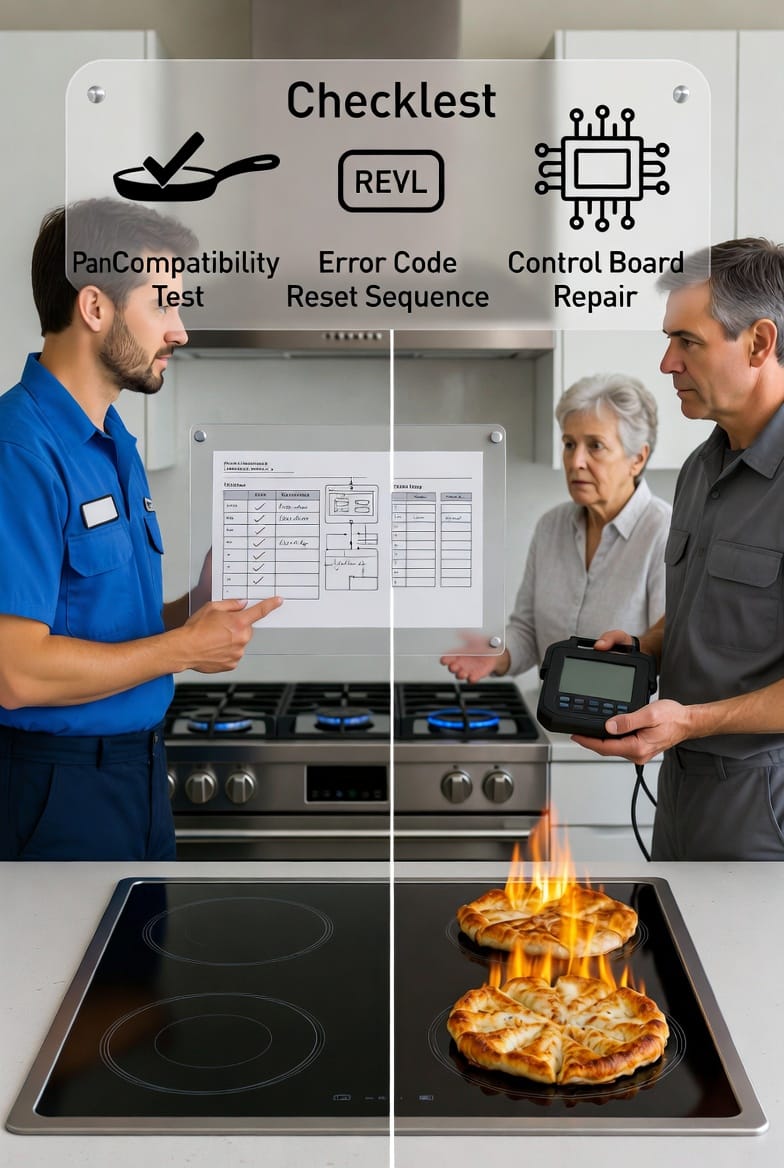
Even the most reliable induction cooktop can develop issues over time. The most frequent complaint is pan detection failure. The unit powers on but refuses to heat or displays a flashing “U” or “no pan” message. This usually stems from incompatible cookware that lacks sufficient ferromagnetic content. A quick magnet test on the pan base confirms compatibility. In other cases, the pan is fine but the detection sensors or coil alignment have drifted, requiring professional recalibration.
Error codes appear next as the second most common issue. Manufacturers use alphanumeric displays — E0, E1, F1, or similar — to signal specific faults. Some indicate overheating of the power module, others point to fan motor problems or sensor malfunctions. While a simple power cycle sometimes clears temporary glitches, persistent codes often reveal deeper electronic problems. Ignoring them risks further damage to expensive components.
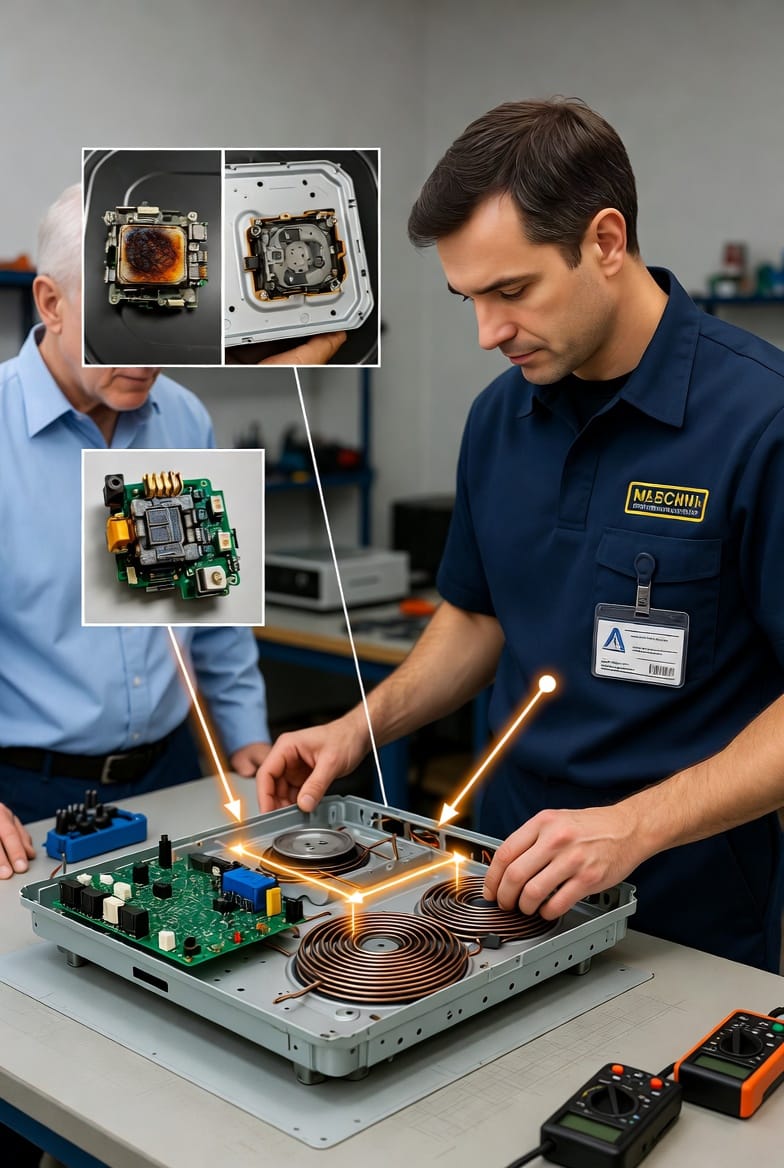
The control board ranks as the most critical and costly failure point. This printed circuit board manages all the cooktop’s intelligence — power regulation, pan sensing, temperature feedback, and safety interlocks. Voltage spikes, liquid spills that seep under the glass, or simple component aging can cause it to fail. Symptoms include no response to touch controls, erratic heating, or complete shutdown even when power is present. Because the board integrates with high-voltage circuits, DIY replacement is rarely safe or successful.
Induction coils themselves can crack, warp, or lose insulation after years of intense thermal cycling. When a coil fails, one or more cooking zones stop working while others remain fine. Repair involves precise removal of the glass top, coil replacement, and careful re-sealing to maintain waterproof integrity.
Power modules and IGBT transistors (the high-speed switches that control current to the coils) also degrade. These failures often produce buzzing sounds, uneven heating, or sudden tripping of household breakers. Each component interacts tightly; a fault in one area frequently stresses others, turning a single issue into a cascade of problems.
Homeowners sometimes notice reduced performance gradually — longer heat-up times or weaker boost function — before total failure. These early warning signs deserve attention rather than dismissal. Addressing them promptly prevents more expensive repairs later.
Repair Considerations and Why Expertise Matters
Repairing an induction cooktop differs sharply from fixing a traditional electric range. High-voltage capacitors store dangerous energy even after the unit is unplugged. Sensitive electronics demand anti-static handling and precise torque on fasteners. The glass-ceramic surface, while durable, cracks easily if mishandled during disassembly. Proper repair therefore requires specialized diagnostic tools, OEM parts, and manufacturer-specific training.
Many well-meaning homeowners attempt fixes with online videos or basic multimeters. While basic continuity checks can confirm obvious issues, they cannot replicate the full system test that certified technicians perform. Incorrect reassembly often leads to new faults, water ingress, or even fire hazards. The reassuring truth is that professional service restores full factory performance safely and efficiently.
Certified technicians bring more than tools — they bring pattern recognition developed across hundreds of identical models. They know which error codes commonly mask control board failure versus simple wiring issues. They carry updated firmware for reprogramming smart boards and maintain inventories of hard-to-find power modules. Their work includes thorough testing after repair so the cooktop meets original safety and efficiency standards.
Cost considerations also favor professionals in the long run. A DIY attempt that damages the glass top can double the final repair bill. Factory-authorized parts paired with proper installation preserve the manufacturer warranty where still applicable. Most importantly, expert repair protects your home’s electrical system and your family’s safety.
Safe Troubleshooting Steps You Can Try First
Before calling for service, a few simple checks can sometimes resolve the issue quickly:
- Verify pan compatibility using a magnet; the pan base must attract strongly.
- Ensure the pan is centered on the cooking zone and covers at least 50 % of the marked area.
- Power cycle the entire cooktop by unplugging it for 60 seconds to reset temporary error codes.
- Clean the glass surface and underside of the pan thoroughly; debris can interfere with sensors.
- Check the circuit breaker and confirm adequate voltage supply to the unit.
- Review the owner’s manual for model-specific reset procedures.
If the problem persists after these steps, stop troubleshooting. Further attempts risk voiding warranties or creating safety hazards. At that point, professional diagnosis becomes the smartest choice.
When to Call Certified Technicians
Induction cooktop repairs demand specialized knowledge that goes far beyond basic appliance service. The combination of high-frequency electronics, precision magnetic components, and safety-critical circuitry means only trained experts should open the unit. Our certified technicians arrive equipped with the latest diagnostic equipment, genuine replacement parts, and years of focused experience on modern induction systems.
We understand how frustrating it feels when your high-end cooktop suddenly stops working. That is why we prioritize rapid response, clear explanations, and transparent pricing. Whether the issue is a simple pan detection failure, a stubborn error code, or a full control board replacement, we restore performance efficiently and leave your kitchen safer and more reliable than before.
Do not let a malfunctioning induction cooktop disrupt your cooking routine or compromise safety. The technology that makes induction so convenient also makes repair more technical — and that is exactly why professional service delivers the best outcome.
We are ready to bring your modern cooking technology back to perfect working order.
Induction Cooktop Not Heating? Call for Professional Repair Now