The Home Addition Dumpster: Phased Waste Management for Construction
Home additions represent exciting opportunities to expand living space and increase property value. However, they also generate substantial amounts of construction debris that must be handled systematically. A well-planned home addition dumpster strategy ensures your project stays on schedule, safe, and compliant with local regulations.
Get Phased Dumpster Rental for Your Home Addition – Call Now!
Unlike single-phase renovations, home additions unfold over multiple stages. Each phase produces different types of waste at varying volumes. Renting one oversized dumpster for the entire project often leads to inefficiency and higher costs. Instead, phased waste management with strategic dumpster rentals keeps your site organized and your budget controlled.
This comprehensive guide explores how to implement effective phased dumpster solutions for your home addition. Whether you're adding a master suite, kitchen expansion, or family room, proper waste planning makes all the difference.
Why Home Additions Require Specialized Waste Management
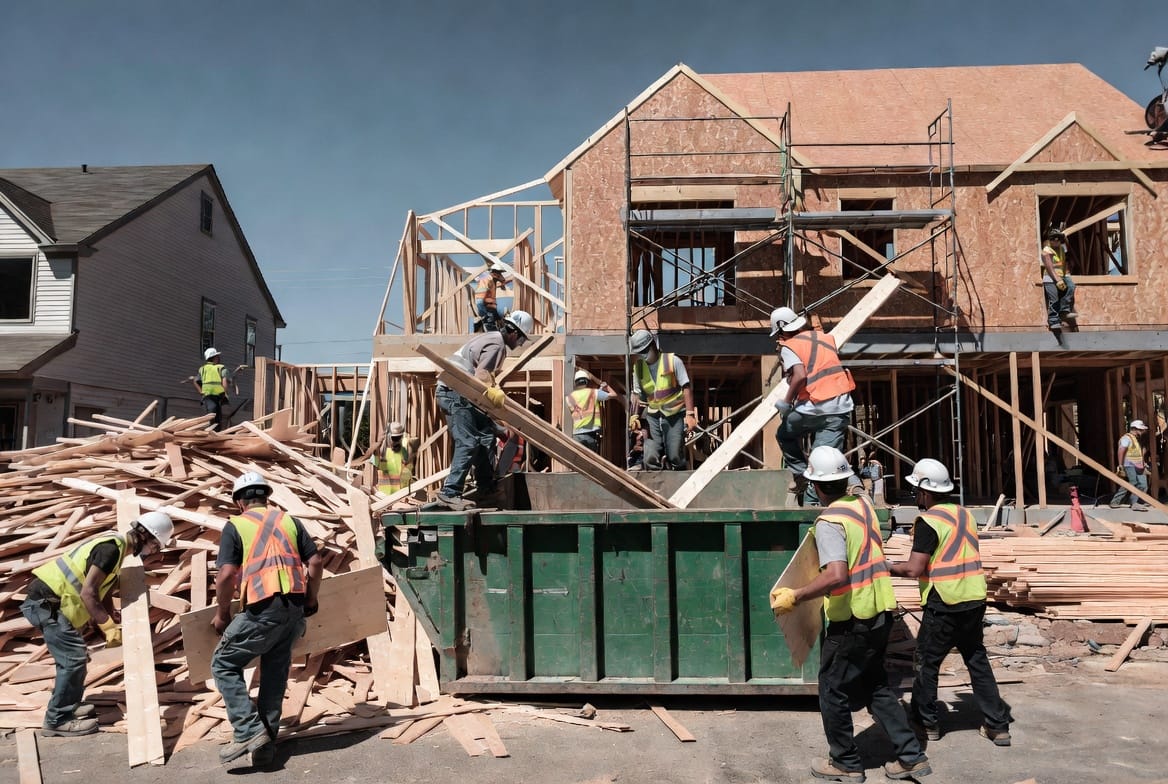
Construction projects create waste that accumulates quickly. A typical home addition can generate several tons of debris across its timeline. Without proper planning, sites become cluttered, creating safety hazards and potential delays.
Key benefits of phased dumpster rental include:
- Reduced safety risks by maintaining clear work areas
- Cost efficiency through right-sized containers for each phase
- Environmental responsibility by enabling better material separation
- Compliance assurance with local disposal regulations
Professional contractors and experienced homeowners understand that strategic dumpster scheduling prevents minor issues from becoming major setbacks.
Understanding Waste Generation Across Project Phases
Every home addition follows a logical sequence. Waste types and volumes change dramatically between phases. Recognizing these patterns allows for precise dumpster rental planning.
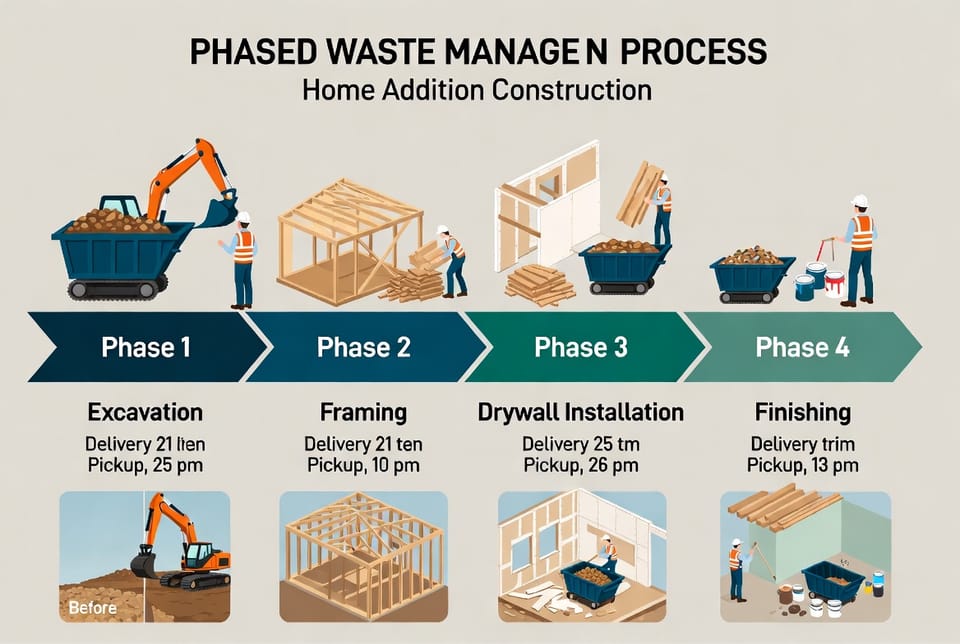
Phase 1: Site Preparation and Excavation
The initial phase involves clearing space and digging foundations. This creates heavy, bulky waste that fills containers rapidly.
Primary debris includes:
- Excavated soil and dirt
- Removed vegetation and tree roots
- Old foundation materials (if applicable)
- Concrete chunks and broken masonry
Heavy materials like dirt require sturdy roll-off dumpsters rated for dense loads. Overfilling during this phase risks overweight charges and unsafe pickup conditions.
Scheduling a dumpster delivery at project start ensures immediate waste handling. Many experts recommend a 10-15 yard dumpster for smaller additions and 20-30 yards for larger expansions during excavation.
Phase 2: Framing and Structural Work
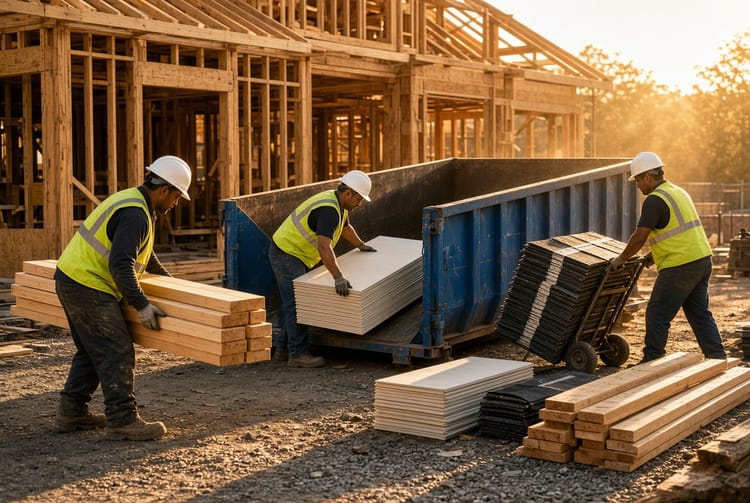
Once foundations are set, framing begins. This phase produces large quantities of wood waste but lighter overall weight compared to excavation.
Common materials in this phase:
- Cut lumber scraps and offcuts
- Damaged or defective framing members
- Packaging from delivered materials
- Temporary bracing and formwork
Framing phase dumpsters benefit from slightly larger capacities since wood takes up more space. The image of workers efficiently loading a dumpster during framing highlights how proper equipment keeps momentum high.
Proper scheduling prevents valuable workspace from becoming obstructed by scrap piles, allowing carpenters to maintain productivity.
Interior Construction and Drywall Phase
As the structure closes in, interior work generates fine dust and specialized waste. This phase requires attention to both volume and material type.
Drywall and interior debris typically includes:
- Scrap drywall sheets and dust
- Metal studs and screws
- Insulation offcuts
- Electrical and plumbing packaging
Drywall dumpsters often need more frequent service because fine particles can compact and create heavy loads. Professional teams recommend sealed or covered containers during this stage to control dust.
Careful separation of materials at this point can unlock recycling opportunities, potentially reducing overall disposal costs.
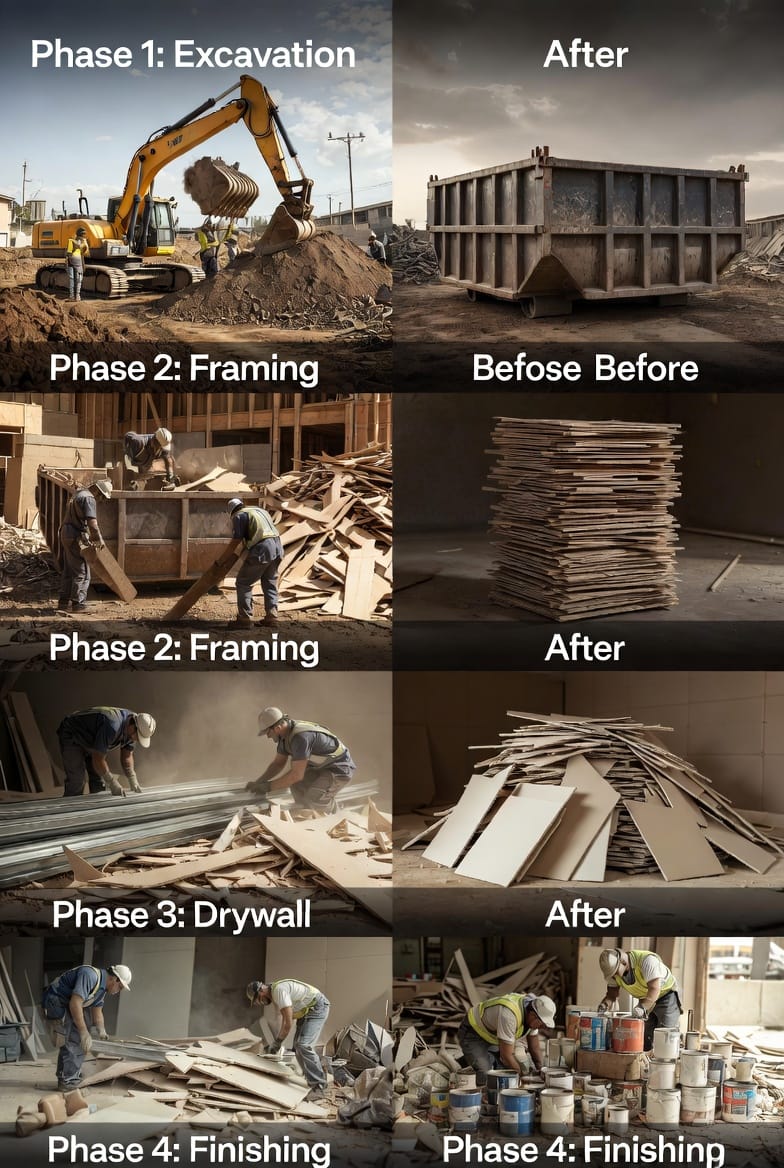
Final Finishing Phase: Trim, Paint, and Cleanup
The concluding phase focuses on aesthetics and produces lighter but varied waste streams.
Finishing materials commonly disposed:
- Trim and molding offcuts
- Paint containers and related materials
- Flooring scraps and underlayment
- Packaging from fixtures and appliances
This phase often requires smaller dumpsters or even mini-roll-off containers as waste volume decreases but cleanup precision increases.
Best Practices for Scheduling Dumpster Deliveries
Effective phased waste management depends on precise timing. Consider these proven strategies:
- Assess total project timeline with your contractor
- Coordinate dumpster swaps between major phases
- Monitor waste accumulation to avoid overflow
- Plan for weather impacts that might affect scheduling
- Maintain clear access for delivery trucks throughout
Authoritative tip: Build a 2-3 day buffer into your dumpster schedule. Unexpected delays in one phase shouldn't force emergency waste solutions in the next.
Choosing the Right Dumpster Size for Each Phase
Matching container size to phase requirements prevents both under-capacity and wasteful over-capacity issues:
- Excavation: 20-30 yard dumpsters for heavy loads
- Framing: 15-20 yard containers for bulky wood
- Drywall/Interior: 10-15 yard with dust control
- Finishing: 10 yard or smaller for final cleanup
Rental companies experienced in construction understand these nuances and can provide expert guidance tailored to your specific addition.
Cost Management and Environmental Benefits
Phased dumpster rental typically costs less than a single long-term rental of an oversized unit. You only pay for the capacity you need when you need it.
Environmentally, this approach supports better material sorting and recycling. Clean wood, metal, and certain plastics can often be diverted from landfills when managed phase by phase.
Homeowners who implement these strategies frequently report:
- Smoother project flow
- Fewer contractor delays
- Reduced stress during construction
- Better neighborhood relations
Avoiding Common Phased Waste Management Mistakes
Several pitfalls can undermine even well-intentioned plans:
- Underestimating waste volume in early heavy phases
- Poor site access planning for multiple deliveries
- Mixing incompatible materials that complicate disposal
- Waiting too long between phase transitions
By addressing these proactively with professional guidance, you protect both your timeline and investment.
The Value of Professional Partnership
Successful home additions require collaboration between homeowners, contractors, and service providers. A reputable dumpster rental company becomes an essential partner in your construction journey.
Their experience with multi-stage projects allows them to anticipate needs before they become problems. This expertise translates into smoother execution and professional results.
Conclusion: Match Dumpster to Construction Phase
The key to successful home addition waste management lies in understanding that each construction phase has unique requirements. Match dumpster to construction phase rather than using a one-size-fits-all approach.
By implementing phased waste management strategies, you ensure safety, efficiency, and environmental responsibility throughout your project.
Ready to plan your home addition with professional waste management support? We provide reliable solutions tailored to your specific timeline and requirements.
With proper planning and the right partnerships, your home addition will proceed smoothly from groundbreaking to beautiful completion.
Professional Home Addition Dumpster Planning – Call Now