The Healthier Home: How Flooring Material Choices Impact Indoor Air Quality and Allergens.

The healthier home starts from the ground up—literally. Your choice of flooring material plays a surprisingly significant role in indoor air quality (IAQ) and allergen control. Poor selections can trap dust mites, mold spores, pet dander, and other irritants, while smart choices promote cleaner breathing air and reduced allergy symptoms.
Create a Healthier Home – Call Our Specialists Now
In this comprehensive guide, we explore how various flooring options influence allergens and volatile organic compounds (VOCs). You'll learn why hard surfaces often outperform carpets for health-conscious households and discover low-VOC installation strategies for lasting wellness.
Why Indoor Air Quality Matters for Health
The air inside our homes can be 2–5 times more polluted than outdoor air, according to environmental health experts. Allergens and airborne irritants contribute to respiratory issues, asthma flare-ups, skin irritations, and chronic fatigue. Flooring acts as a major reservoir: it accumulates particles over time and can release them back into the air through foot traffic, vacuuming, or simple movement.
Key risks include:
- Dust mites thriving in warm, humid fibers
- Mold growth in damp or poorly ventilated areas
- Pet dander embedding deeply into porous surfaces
- VOCs off-gassing from adhesives, finishes, or synthetic materials, leading to headaches, eye irritation, and long-term health concerns
Selecting hypoallergenic flooring reduces these exposures, supporting better sleep, fewer allergy symptoms, and overall well-being.
How Different Flooring Materials Handle Allergens
Not all floors are created equal when it comes to trapping or resisting allergens.
Carpeting: The Allergen Magnet
Traditional wall-to-wall carpet offers comfort and noise reduction but poses notable health challenges.
- Deep pile traps dust mites, pet dander, and pollen—often harboring up to 200,000 dust mites per square meter in older installations.
- Difficult to deep-clean thoroughly; even regular vacuuming misses embedded particles.
- Can foster mold in high-humidity climates if moisture seeps underneath.
- Synthetic fibers may release VOCs, especially when new.
While low-pile, natural-fiber carpets perform slightly better, most experts recommend limiting carpet to low-traffic bedrooms and opting for area rugs that can be washed frequently.
Hard Surfaces: Superior Allergen Resistance
Hard flooring options excel at promoting cleaner indoor air.
- Tile (ceramic, porcelain): Non-porous, impervious to moisture; wipes clean easily and resists mold and mite growth. Ideal for kitchens, bathrooms, and allergy sufferers.
- Hardwood: Natural wood resists allergens when properly sealed; smooth surface prevents deep particle accumulation. Requires occasional refinishing, but modern low-VOC sealants minimize emissions.
- Luxury Vinyl Plank (LVP) and Luxury Vinyl Tile (LVT): Engineered for durability and water resistance; non-porous wear layers block allergens from embedding. Click-lock systems reduce adhesive use, lowering VOC exposure.
- Laminate: Affordable and easy to clean; modern versions with sealed edges perform well against spills and allergens, though not as moisture-resistant as true vinyl.
Hard surfaces allow allergens to stay on top—where they’re easily swept or mopped away—rather than burrowing deep.
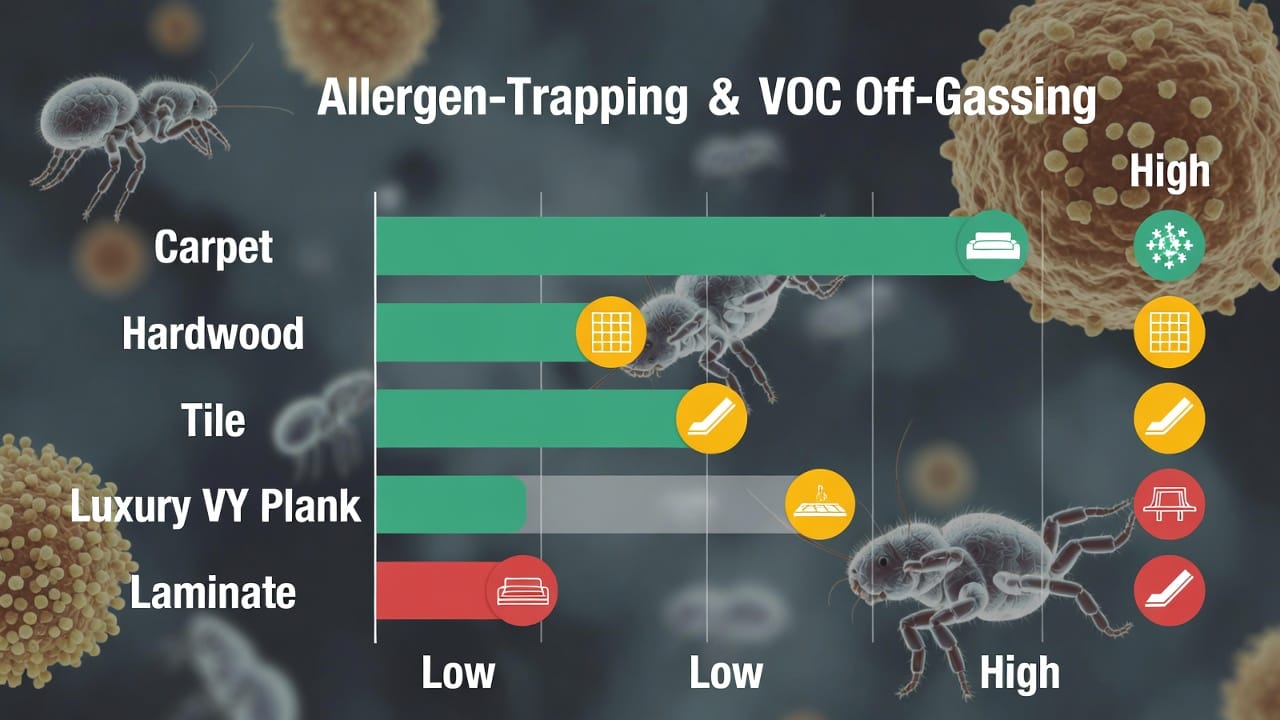
Comparing Hypoallergenic Properties: Hard Surfaces vs. Carpets
Hard surfaces consistently rank higher for hypoallergenic performance, especially in homes with allergy sufferers, asthma patients, or pets.
The Role of Low-VOC Materials in Healthier Installations
Even the best flooring can compromise air quality if installation introduces harmful chemicals.
VOCs evaporate from glues, underlayments, and finishes, peaking during and shortly after installation. Prolonged exposure links to respiratory irritation and other issues.
Solutions for low-emission installations:
- Choose FloorScore-certified products tested for low VOC emissions.
- Opt for adhesives and grouts labeled low- or zero-VOC.
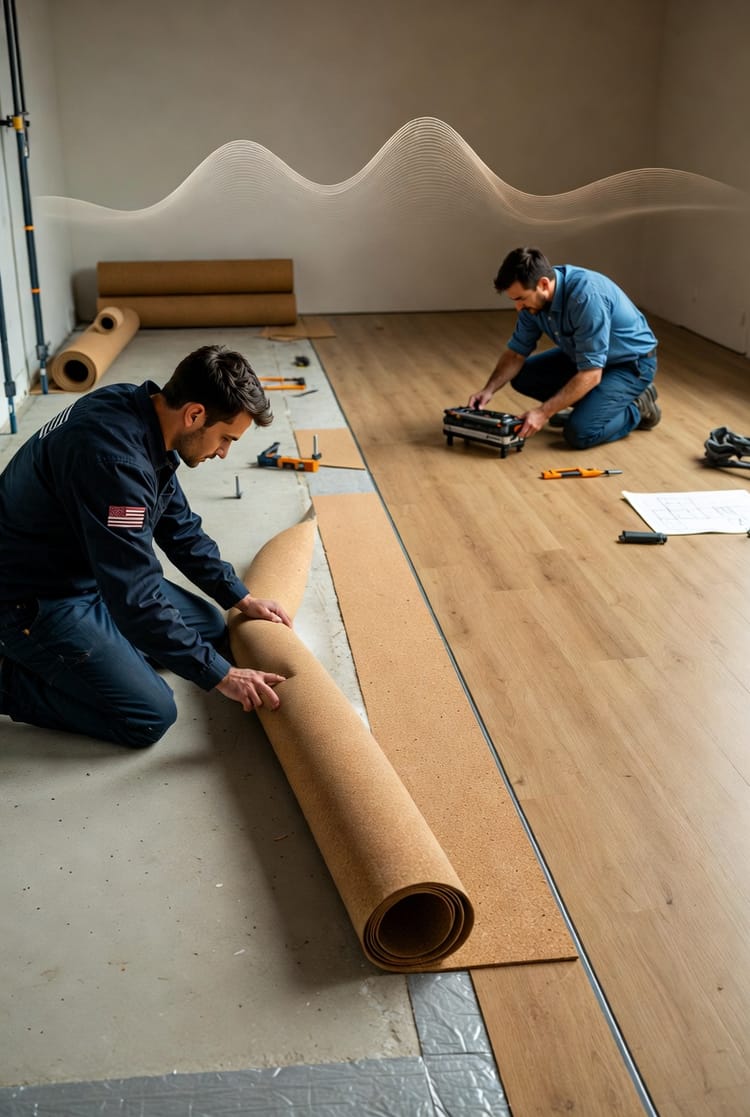
- Select click-lock or floating systems (common in LVP and laminate) to avoid glue altogether.
- Ensure proper ventilation during and after installation.
- Allow new floors to off-gas in well-ventilated spaces before full occupancy.
These steps dramatically reduce chemical exposure while preserving flooring performance.
Certifications to Trust for Healthier Flooring
Look for independent third-party certifications when shopping.
Key seals include:
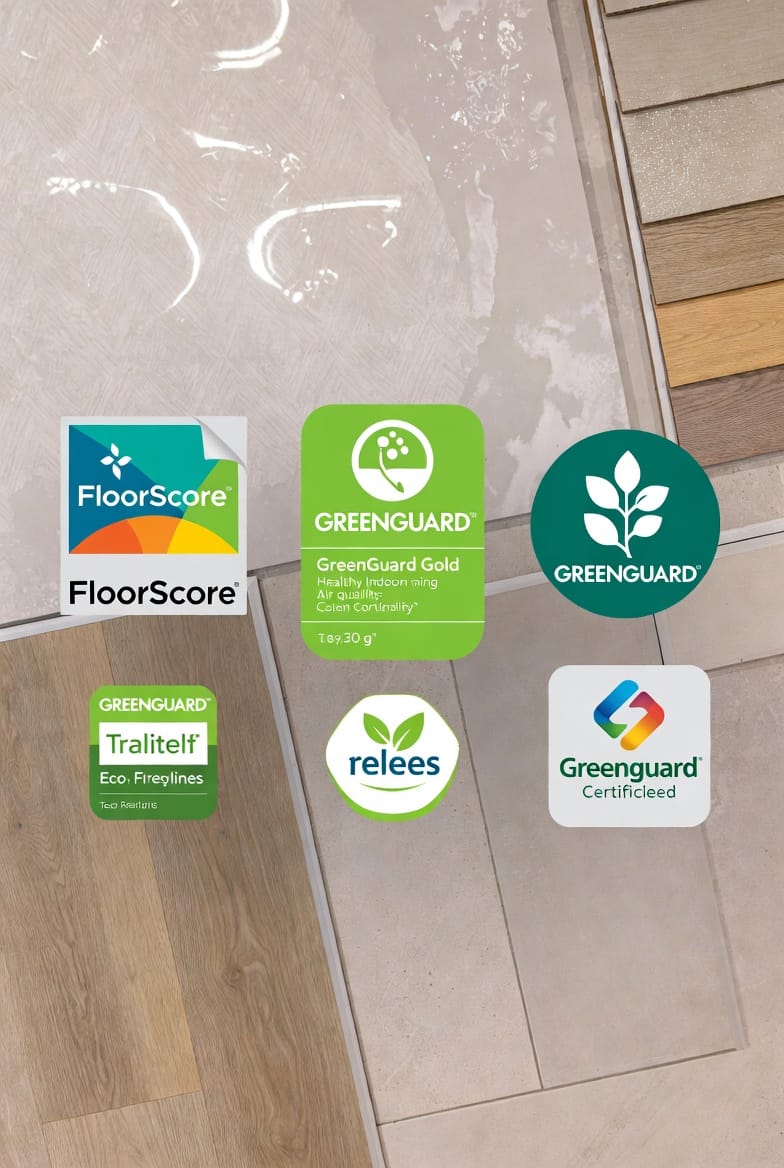
- FloorScore: Verifies low VOC emissions from flooring and adhesives.
- GreenGuard Gold: Strict limits on emissions, ideal for sensitive environments like schools and homes with children.
- GREENGUARD: Focuses on indoor air quality standards.
- FSC (for wood products): Ensures sustainable sourcing, often paired with low-emission finishes.
Products bearing these marks undergo rigorous testing, giving you confidence in their health benefits.
Practical Tips for a Healthier Floor
To maximize benefits:
- Vacuum and mop regularly with HEPA-filtered equipment.
- Use doormats and remove shoes indoors to reduce tracked-in allergens.
- Control humidity (ideally 30–50%) to discourage mold and mites.
- Wash area rugs frequently if used over hard floors.
- Consider zoning: hard surfaces in high-traffic/allergy-prone areas, soft accents sparingly.
Conclusion: Invest in Flooring That Supports Wellness
Your floor isn’t just a surface—it’s a foundation for indoor health. By prioritizing hypoallergenic, low-VOC materials like tile, hardwood, or luxury vinyl plank, you reduce allergens and create a cleaner breathing environment for your family.
Small changes yield big results: fewer sneezes, better sleep, and peace of mind.
Choose a floor that contributes to a healthier home.
Reduce Allergens & VOCs – Get Your Free Consultation