The Garage Door Spring Types: Torsion vs. Extension Springs Explained.
Garage door springs are the unsung heroes of your home’s largest moving part. Without them, lifting a 200- to 400-pound door would be impossible for the average opener or homeowner. Yet not all springs perform the same way. Understanding the critical differences between torsion springs and extension springs helps you make informed decisions about safety, longevity, and performance.
Replace Risky Extension Springs with Torsion – Call Today
In this comprehensive guide, we break down both systems side by side. You’ll discover why torsion springs have become the gold standard in modern garage door installations and how choosing the right type protects your family, your property, and your peace of mind. Whether you’re troubleshooting an aging door or planning a full upgrade, this expert comparison delivers the clarity you need.
How Garage Door Springs Counterbalance Heavy Doors
Every garage door relies on springs to offset its considerable weight. The springs store energy when the door is closed and release it as the door rises, making operation feel nearly effortless. The type of spring you have determines not only how smoothly the door moves but also how safely it operates and how often it needs service.
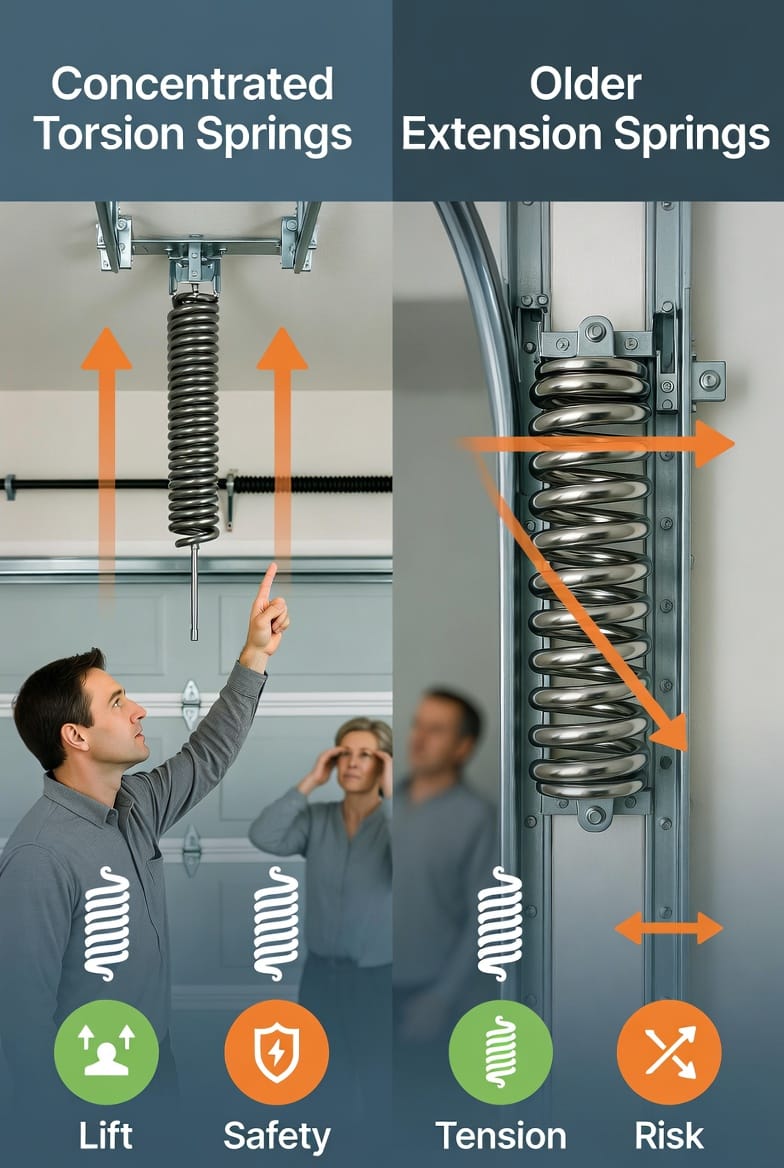
Torsion springs and extension springs achieve this counterbalance through completely different mechanical principles. One concentrates the energy in a single, controlled location; the other spreads it along the sides of the door. These design choices create significant differences in safety, durability, and daily performance.
What Are Torsion Springs and How Do They Work?
Torsion springs are mounted horizontally on a steel shaft directly above the garage door. When the door closes, the springs twist tightly around the shaft, storing rotational energy. As the door opens, the springs unwind, transferring that stored energy to the cables and drums that lift the door in a smooth, balanced motion.
Because the energy is concentrated in one central location, torsion springs deliver even lifting power across the entire width of the door. This centralized design eliminates side-to-side imbalance and reduces stress on tracks, rollers, and cables. Most modern residential and commercial doors now come equipped with torsion springs as the factory standard.
What Are Extension Springs and How Do They Work?
Extension springs are the older-style system still found in many homes built before the mid-1990s. These springs run along the sides of the door, parallel to the horizontal tracks. They stretch when the door is closed and contract when it opens, pulling the door upward through tension in the cables.
While extension springs were once the primary choice due to lower manufacturing costs, their side-mounted design creates inherent challenges. The pulling force is applied at two separate points, which can lead to uneven movement if one spring wears faster than the other. This older technology is gradually being phased out in favor of safer, more reliable alternatives.
Key Differences: Torsion Springs vs. Extension Springs
Choosing the right spring system comes down to five critical factors. Here’s a clear comparison:
- Mounting Location — Torsion springs sit safely above the door on a shaft; extension springs run along the sides near the tracks.
- Energy Storage Method — Torsion springs twist to store rotational energy; extension springs stretch linearly.
- Balance and Operation — Torsion springs provide perfectly balanced, smooth lifting; extension springs can create side-to-side imbalance over time.
- Safety Features — Torsion springs include built-in safety mechanisms that prevent sudden failure; extension springs rely on separate safety cables that can snap under stress.
- Typical Lifespan — Torsion springs often last 15,000–20,000 cycles (roughly 10–15 years of normal use); extension springs typically last 5,000–10,000 cycles.
These differences translate directly into real-world performance, maintenance costs, and homeowner satisfaction.
Why Torsion Springs Are the Preferred Choice in Modern Installations
Today’s building codes, manufacturer standards, and homeowner expectations all point toward torsion springs. Their centralized design offers superior balance, which means less strain on the opener, tracks, and rollers. The result is quieter operation, fewer repairs, and a door that feels noticeably smoother every single day.
Torsion springs also rank higher in safety. Because they are mounted above the door and enclosed within the shaft assembly, they are far less likely to cause injury if a component fails. In contrast, extension springs under high tension can break with significant force, sending pieces flying—a risk that has led many municipalities to require torsion conversions during replacements.
Homeowners who upgrade consistently report longer intervals between service calls, reduced noise, and greater confidence that their garage door will operate reliably for years to come.
Safety Risks You Should Know About Extension Springs
While extension springs can still function, they carry documented risks that torsion springs largely eliminate. A worn extension spring can snap suddenly, releasing stored energy that may damage the door, opener, or surrounding structures. The cables that accompany them can also fray and fail, creating a dangerous situation for anyone standing nearby.
Torsion springs, by design, incorporate protective features that contain any failure within the shaft housing. This built-in safety margin gives families peace of mind, especially in homes with children or frequent foot traffic near the garage. When you choose torsion springs, you’re choosing a system engineered with modern safety standards in mind.
Lifespan, Maintenance, and Long-Term Value
Torsion springs typically outlast extension springs by a wide margin. Their twisting motion creates less metal fatigue than the repeated stretching and contracting of extension springs. Because the load is evenly distributed, components such as cables, drums, and bearings experience less wear.
Routine maintenance for torsion springs is straightforward and less frequent. Professional technicians can inspect and adjust the shaft-mounted system quickly, often extending service life even further. With proper care, a quality torsion spring set can provide well over a decade of reliable daily use.
Cost Considerations: Is the Upgrade Worth It?
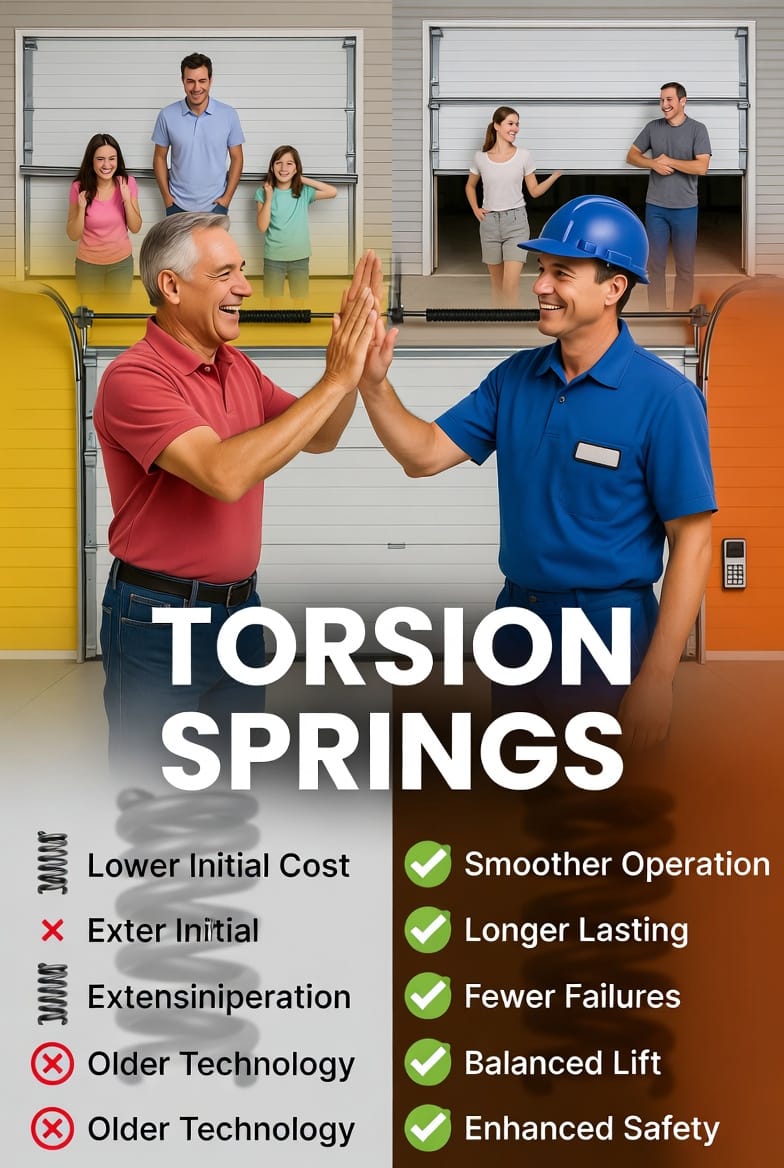
Many homeowners initially hesitate because extension springs carry a lower upfront cost. However, the total cost of ownership tells a different story. Frequent repairs, emergency service calls, and eventual full replacement often make the older system more expensive over time.
Upgrading to torsion springs represents a smart investment in safety and reliability. The slightly higher initial cost is quickly offset by reduced maintenance, fewer breakdowns, and the added value it brings to your home. Most professional installations include a warranty that protects your peace of mind for years ahead.
Signs It’s Time to Upgrade from Extension to Torsion Springs
Not sure whether your current springs need attention? Watch for these common indicators:
- The door feels heavier than usual or requires manual assistance to open
- Unusual noises such as loud bangs, squeaks, or grinding during operation
- Visible gaps or uneven movement when the door travels up or down
- Rust, fraying cables, or stretched springs visible along the sides
- The opener struggles or reverses unexpectedly
If any of these symptoms sound familiar, a professional inspection can confirm whether your extension springs are reaching the end of their service life. Early action prevents costly emergency repairs and keeps your family safe.
Real-World Results: Before and After the Upgrade
Consider a typical family whose garage door had served them faithfully for 18 years with extension springs. Daily use eventually caused one spring to lose tension, creating an annoying “bump” on the left side and forcing the opener to work harder. After switching to a torsion spring system, the difference was immediate: the door glided up smoothly, the opener ran quieter, and the family no longer worried about sudden failures. The upgrade paid for itself through reduced energy use and zero service calls in the first three years.
Stories like this are common. Homeowners who make the switch consistently describe the new system as “night and day” better—proof that the right spring choice transforms daily convenience and long-term reliability.
Frequently Asked Questions About Garage Door Springs
Can I convert my extension springs to torsion springs?
Yes. Most existing garage doors can be safely upgraded to a torsion spring system by a qualified technician.
How long do torsion springs typically last?
With normal residential use, high-quality torsion springs last 10–15 years or more.
Are torsion springs more expensive to repair?
Initial installation is slightly higher, but long-term maintenance and repair costs are significantly lower due to their durability.
Do I need a professional for the upgrade?
Absolutely. Garage door springs are under extreme tension. Only trained technicians should handle removal and installation to ensure safety and proper balance.
Will a torsion spring upgrade work with my existing opener?
In nearly all cases, yes. The smoother operation often reduces strain on the opener, extending its lifespan as well.
Make the Smart Choice for Safety and Performance
Your garage door works hard every day. Give it the best possible support by choosing the superior technology that modern homes deserve. Torsion springs deliver smoother operation, longer life, fewer failures, and most importantly, greater safety for your family.
Don’t wait for an inconvenient breakdown or safety concern. Upgrade to safer, longer-lasting torsion springs today. Our experienced team is ready to provide a free assessment and professional installation tailored to your home.
Get a Free Torsion Spring Assessment – Call Now