The Garage Door Opener Safety Reverse: Testing and Troubleshooting
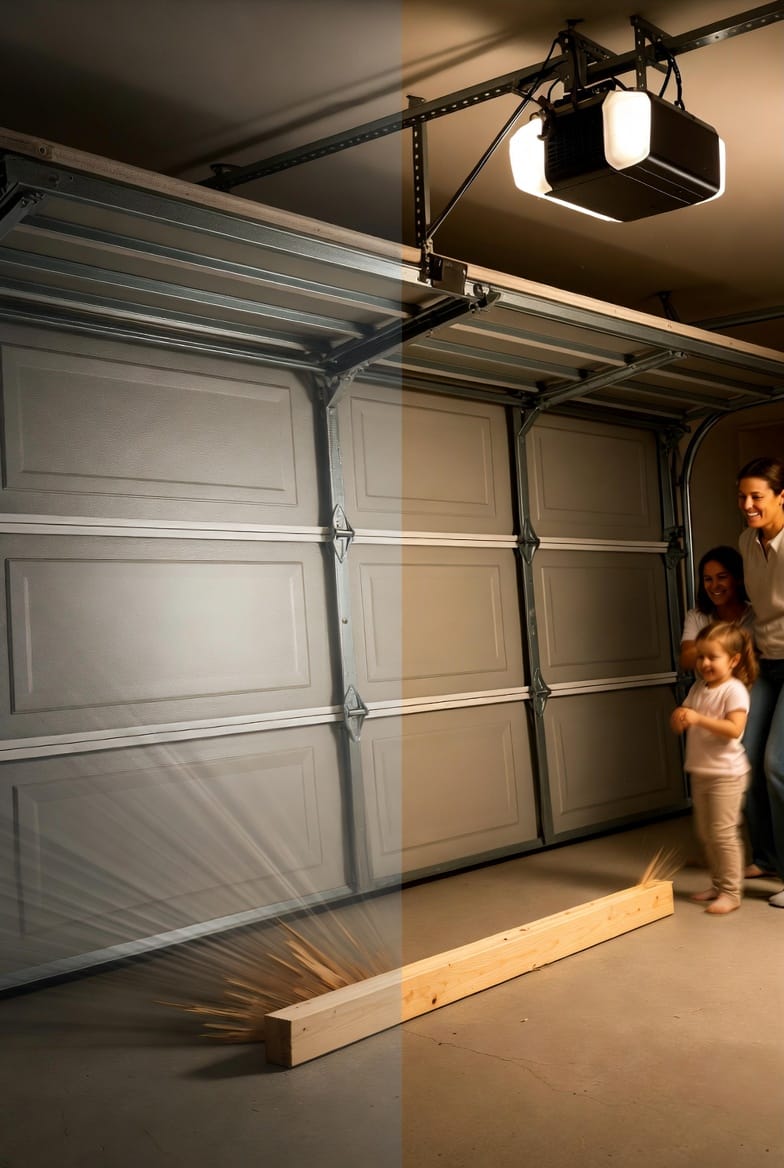
Your garage door opener safety reverse feature is one of the most critical safety components in your home. It exists to prevent serious injury or damage by automatically stopping and reversing direction the moment it detects an obstruction in its path. At first glance, it may seem like a simple convenience, but this life-saving technology demands regular attention. Neglecting it can turn a routine garage entry into a hazardous situation.
Protect Your Family with Safe Garage Door Service – Call Now
Bold safety reminder: Every garage door opener manufactured after 1993 is required to have this auto-reverse capability. Yet, many homeowners assume it will always work perfectly without ever checking. The truth is, everyday wear, environmental factors, and minor adjustments can compromise its performance. That is why monthly testing is not optional—it is essential for protecting your family, pets, and property.
In this comprehensive guide, we walk you through exactly how to test the garage door opener safety reverse using the industry-standard 2x4 method. We will also explore common causes of failure, step-by-step troubleshooting, and when it is time to call a trained professional. By the end, you will feel confident maintaining this vital safety system with authority and peace of mind.
Understanding the Auto-Reverse Mechanism
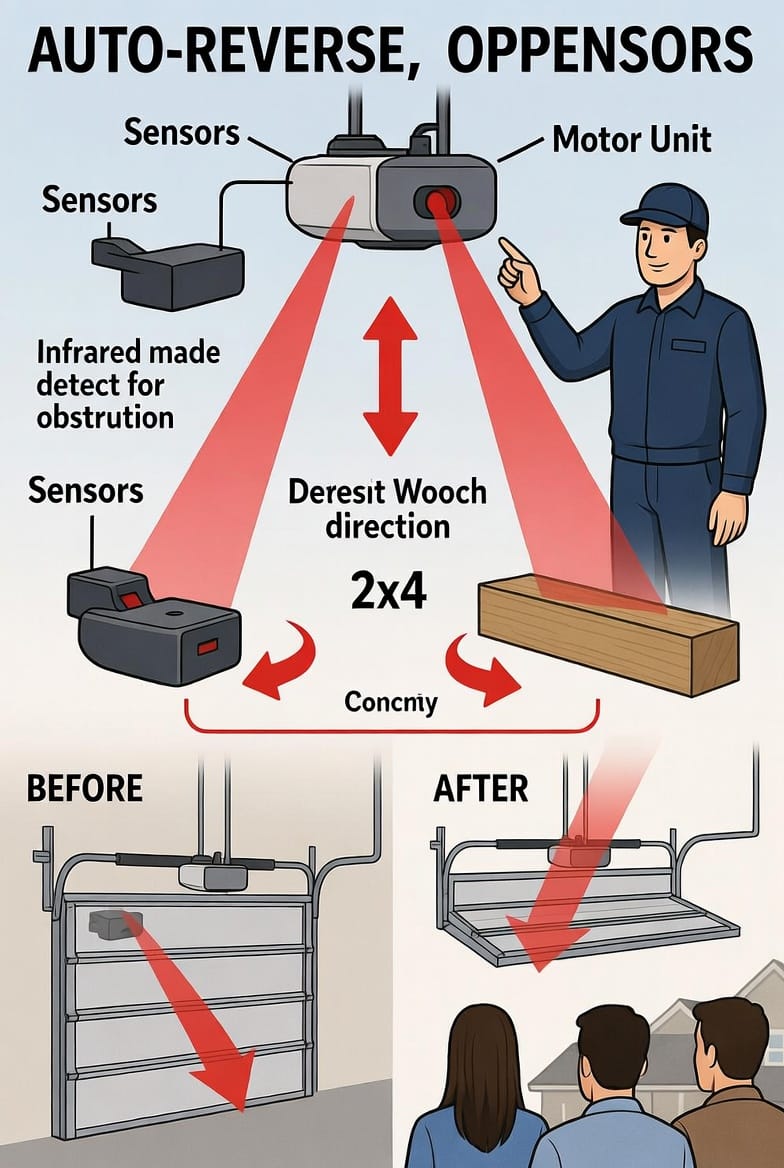
The auto-reverse feature relies on a combination of mechanical force sensing and electronic safety sensors (commonly called photo-eyes). When the door encounters resistance—such as a toy, a pet, or even a person—the opener’s internal logic immediately halts downward travel and sends the door back up. This rapid response is designed to limit force and reduce injury risk.
Key point: The system does not rely on a single technology. It combines physical force detection at the opener motor with infrared beams positioned approximately six inches above the floor. If either system detects a problem, the door reverses. This dual-layer protection gives you layered reassurance that your garage door opener safety reverse is working as engineered.
Regular testing confirms both layers remain calibrated. Without it, you may unknowingly rely on a compromised system that could fail when you need it most.
Why You Must Test Your Garage Door Opener Safety Reverse Every Month
Life gets busy. Schedules fill up. It is easy to forget that your garage door is a heavy, moving piece of machinery weighing hundreds of pounds. Monthly testing keeps you ahead of potential issues before they become dangerous.
Consider the risks: A malfunctioning auto-reverse could allow the door to continue pressing down on an obstruction with significant force. Children playing nearby, pets wandering underneath, or even a parked bicycle could face serious consequences. Monthly checks take less than two minutes yet deliver months of confidence.
Reassuring fact: Consistent testing not only catches problems early but also extends the overall lifespan of your garage door system. It encourages you to notice other maintenance needs, such as lubrication or weather stripping, before they escalate into costly repairs.
Think of it as your family’s monthly safety drill. Just as you check smoke detectors, you verify this feature to maintain a secure home environment.
How to Test the Auto-Reverse Feature – Step-by-Step Guide
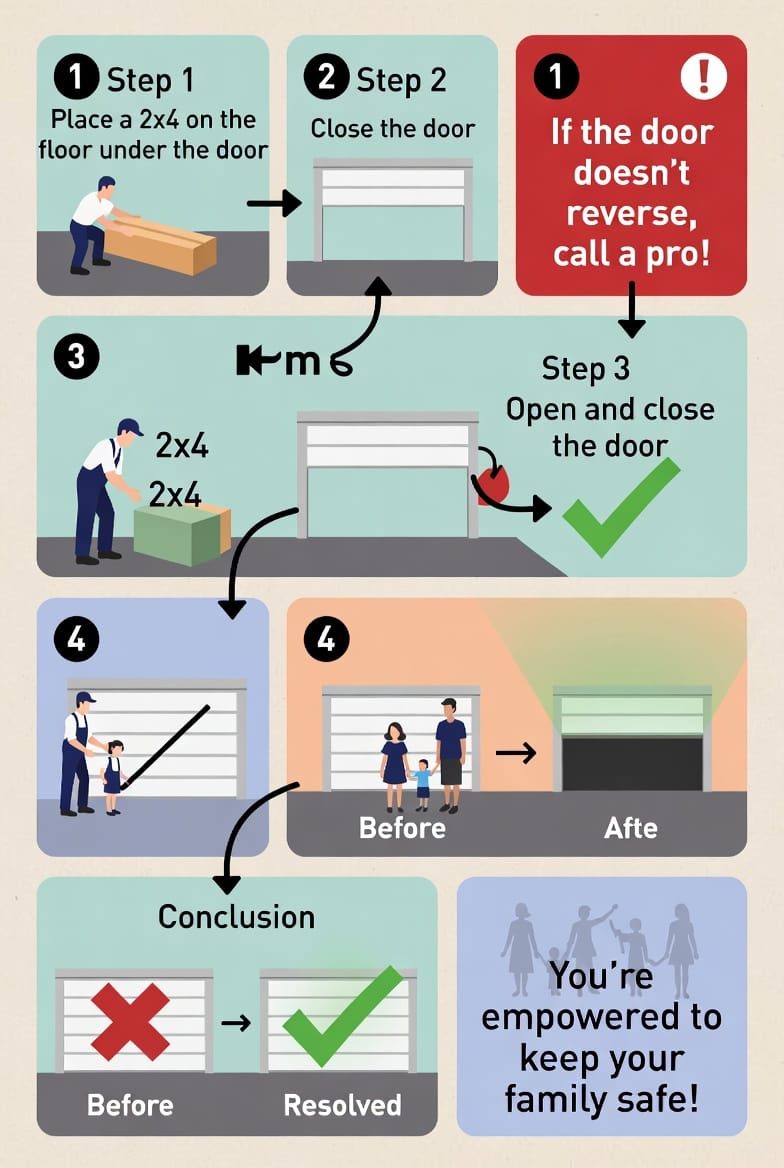
Testing the garage door opener safety reverse is straightforward and requires only a standard 2x4 piece of lumber. Follow these steps precisely every month:
- Step 1: Place the 2x4 flat on the garage floor directly in the center of the door’s path, oriented lengthwise so the door will make full contact.
- Step 2: Use your remote or wall control to close the door. Observe carefully as the door descends.
- Step 3: When the door contacts the 2x4, it should immediately stop, reverse direction, and travel fully upward without hesitation.
- Step 4: If the door reverses correctly, remove the 2x4 and test the photo-eye sensors separately by waving an object through the beam path while the door is closing. The door must reverse again.
Safety note: Never stand under the door during testing. Always keep children and pets clear of the area.
Perform this test during daylight when you can clearly see the door’s movement. If the door passes both the 2x4 contact test and the sensor beam test, your system is functioning properly for the month. Celebrate that quick win—it means your garage door opener safety reverse is ready to protect your household.
Common Causes of Failure and How to Troubleshoot Them
Even the most reliable systems can develop issues over time. Here are the most frequent reasons the auto-reverse feature stops working, along with clear troubleshooting steps:
1. Sensor Misalignment
Photo-eye sensors can shift from vibrations, accidental bumps, or seasonal garage movement. When misaligned, the infrared beam fails to register properly.
Troubleshooting: Visually inspect both sensors. They should face each other directly with no obstructions. Use the small alignment lights (usually red or green) to confirm they are communicating. Gently adjust the brackets until the lights indicate solid alignment. Retest immediately.
2. Incorrect Force Settings
The opener’s force setting determines how much resistance triggers reversal. If set too high, the door may not reverse on contact.
Troubleshooting: Locate the force adjustment screws on the opener unit (usually labeled “Up Force” and “Down Force”). Turn them slightly counterclockwise to reduce sensitivity, then retest with the 2x4. Make small adjustments only—never force the settings beyond manufacturer recommendations.
3. Dirty or Obstructed Sensors
Dust, spider webs, or moisture can block the beam path.
Troubleshooting: Wipe both lenses with a soft, dry cloth. Check for any objects hanging near the sensor height. Clean monthly as part of your routine.
4. Worn or Damaged Components
Over years of use, springs, cables, rollers, or wiring may degrade, affecting the entire safety system.
Troubleshooting: Listen for unusual noises during operation. Visually inspect cables and springs for fraying. If you notice anything unusual, stop using the door and contact a professional immediately.
Important reminder: Never attempt to bypass safety features or adjust internal electronics yourself. These actions can void warranties and create new hazards.
When to Call a Professional for Garage Door Opener Safety Reverse Issues
If your door fails the 2x4 test after basic troubleshooting, it is time to bring in an expert. Professional technicians have specialized tools to diagnose force calibration, sensor voltage, and circuit board performance that homeowners simply cannot replicate safely.
Reassuring assurance: Certified technicians can restore your garage door opener safety reverse to full factory performance quickly and affordably. They also perform a complete system inspection, catching other potential problems you might miss.
Do not wait. A non-working safety reverse is not a minor inconvenience—it is a serious liability. Schedule service the same day you discover an issue.
Additional Safety Tips to Complement Your Monthly Test
Beyond the 2x4 test, adopt these habits to maximize garage door safety:
- Keep the area around sensors clear of storage items.
- Lubricate rollers, hinges, and tracks twice per year.
- Never disconnect or cover the photo-eye sensors.
- Teach children that the garage door is not a toy.
- Always use the wall control’s emergency release only when the door is fully closed.
These small practices reinforce the protection provided by your garage door opener safety reverse feature.
The Long-Term Benefits of Regular Maintenance
Investing just minutes each month in testing yields years of reliable, worry-free operation. You gain peace of mind knowing your family is protected. You avoid expensive emergency repairs. Most importantly, you demonstrate proactive care for the largest moving object in your home.
Homeowners who maintain their garage door systems report fewer unexpected breakdowns and greater overall satisfaction with their opener performance. Your monthly test is the cornerstone of that success.
Test Your Door’s Safety Today
Your garage door opener safety reverse is only effective when properly maintained. Take two minutes right now—grab a 2x4 and perform the test. Confirm that your system is ready to protect what matters most.
If the door does not reverse immediately or you notice any hesitation, do not ignore it. Our trained technicians are ready to restore your peace of mind with prompt, professional service.
Stay safe, stay proactive, and enjoy the confidence that comes with a properly functioning garage door system. Your family deserves nothing less.
Don’t Risk It – Test & Repair Your Safety Reverse Now